

Free visual inspection and a written scope of work before any mitigation begins - photos, moisture readings, and drying logs go in your claim file
The scope we write is the scope we bill. Anything new gets shown to you, in writing, before we touch it.
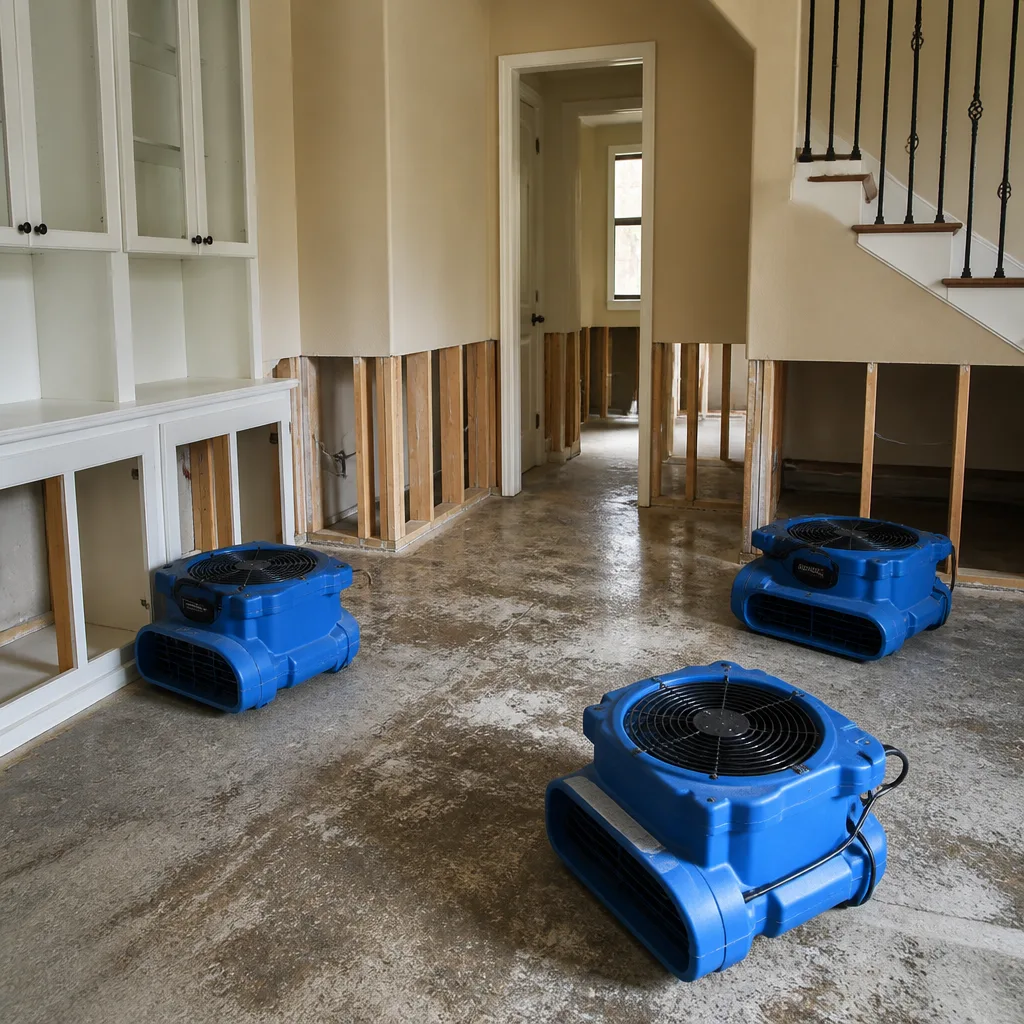
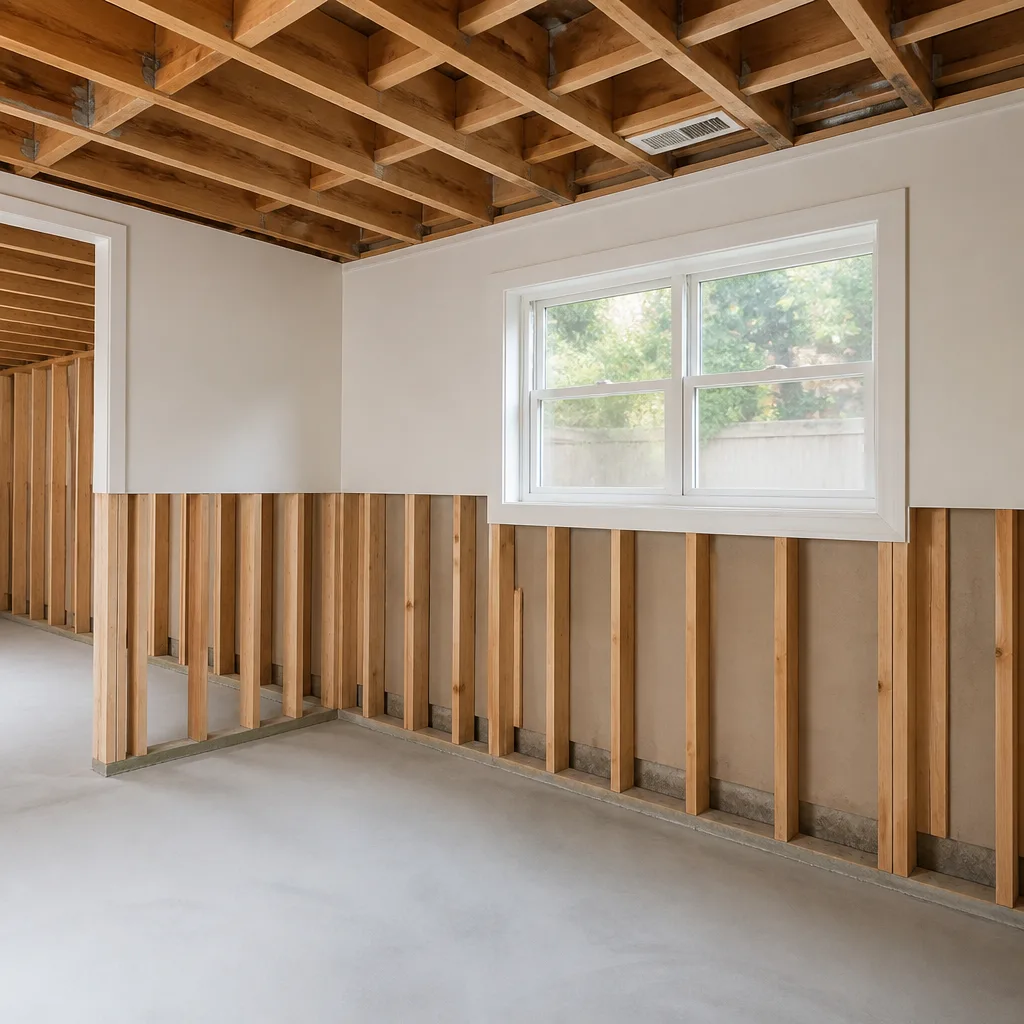
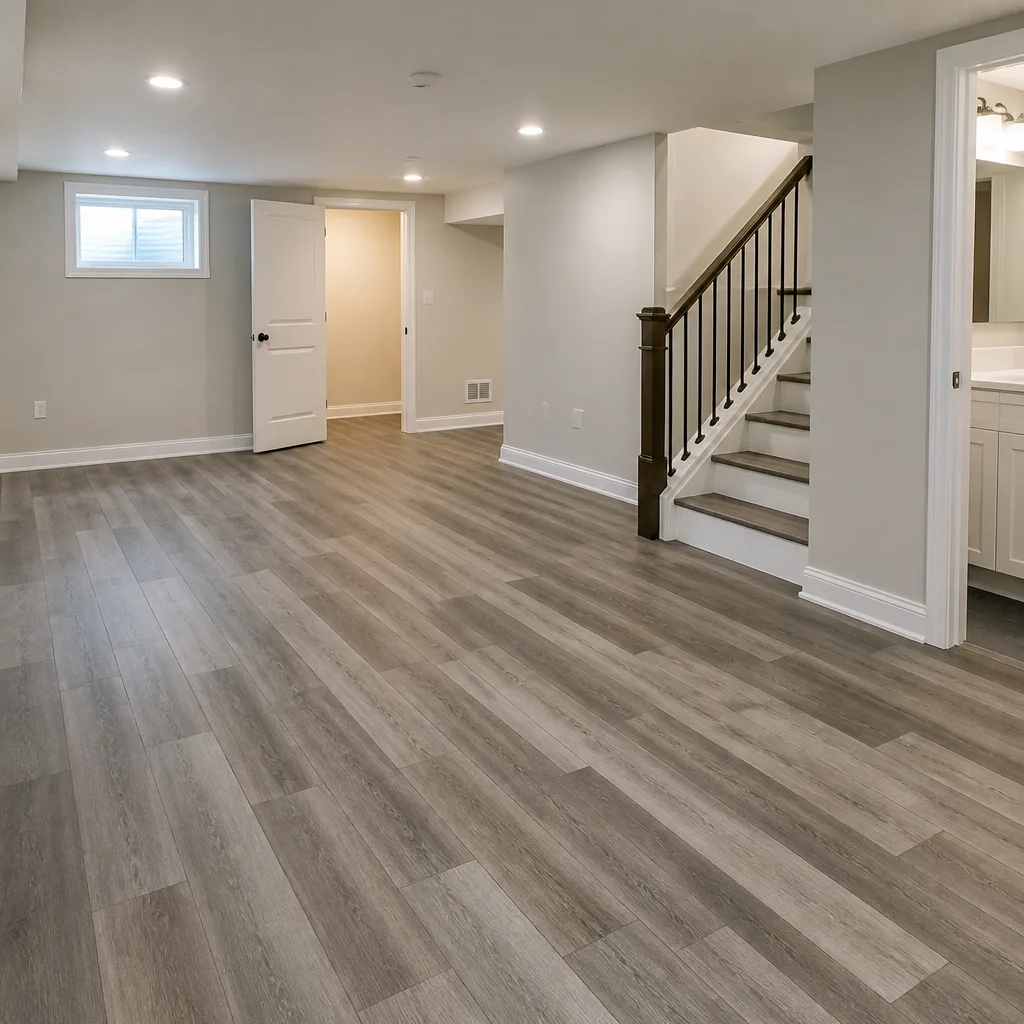
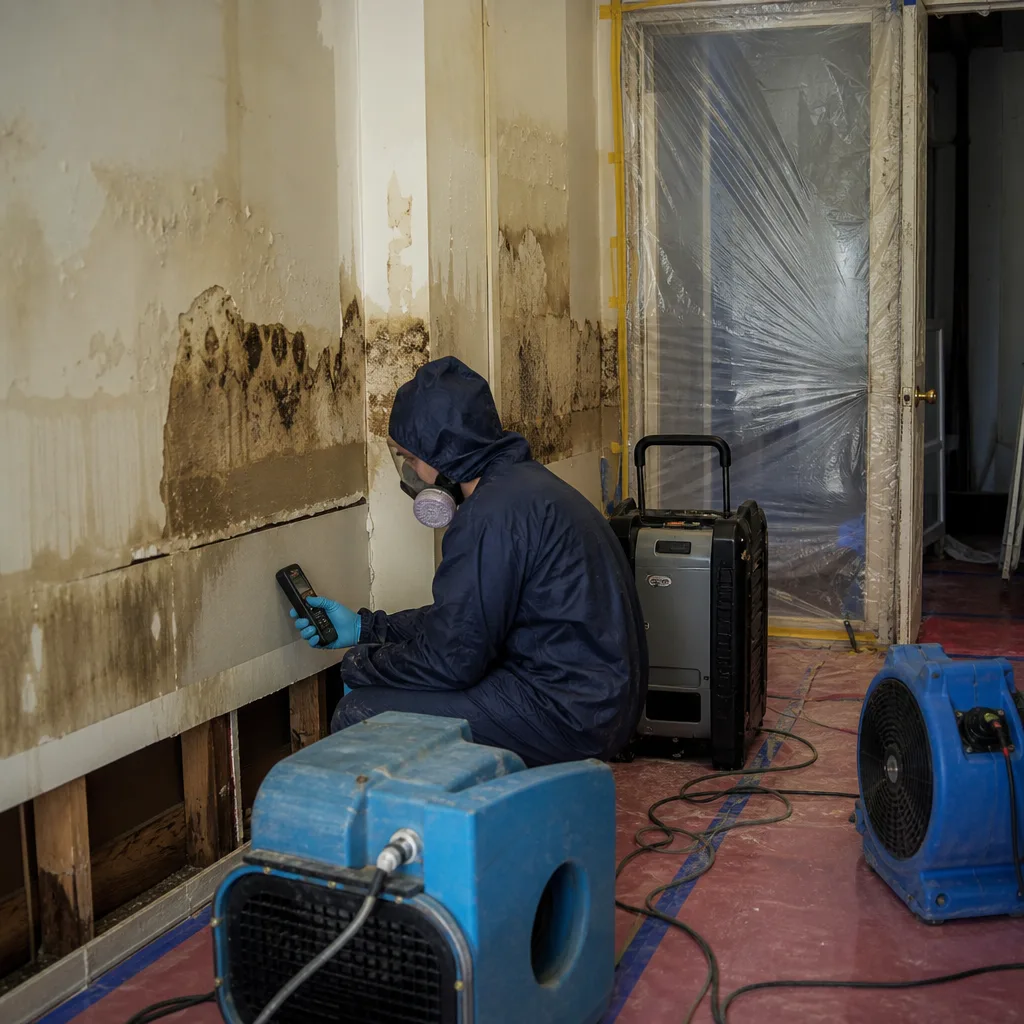 Before
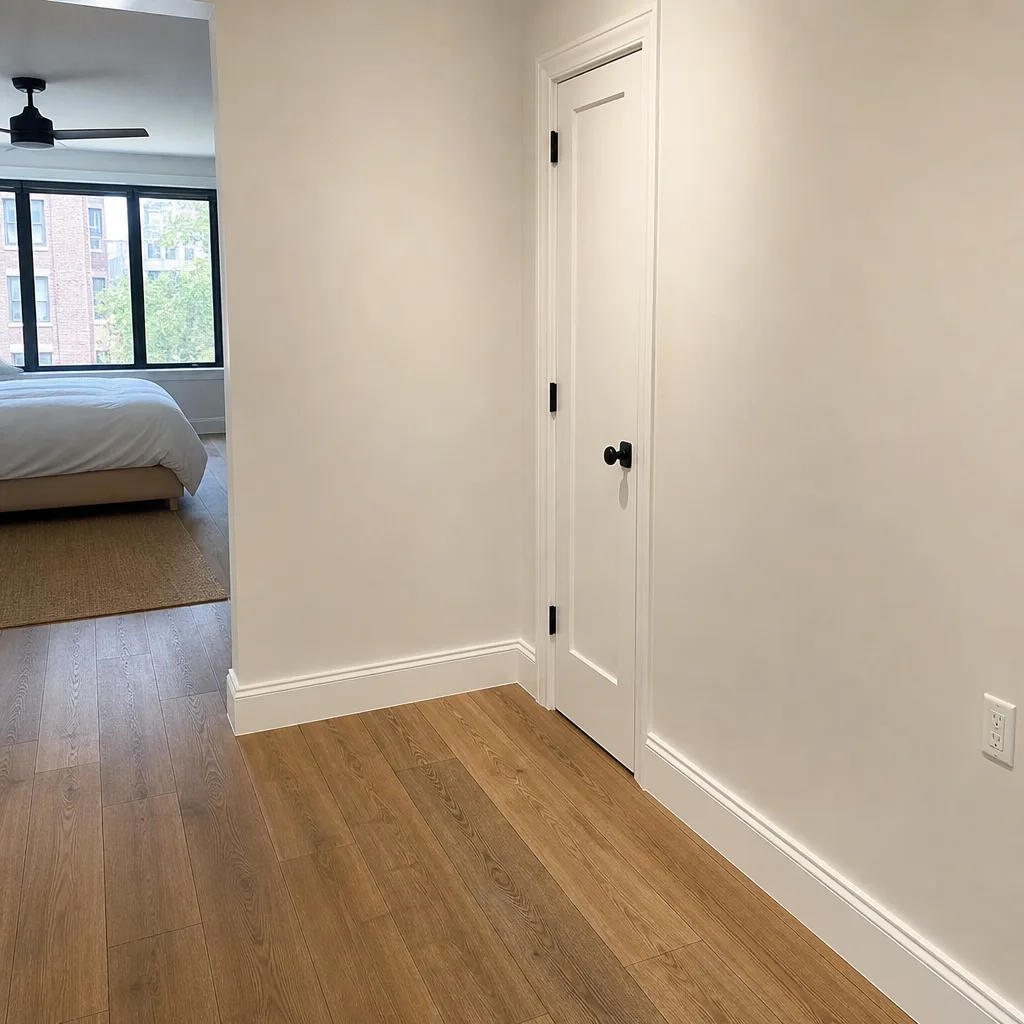 After
After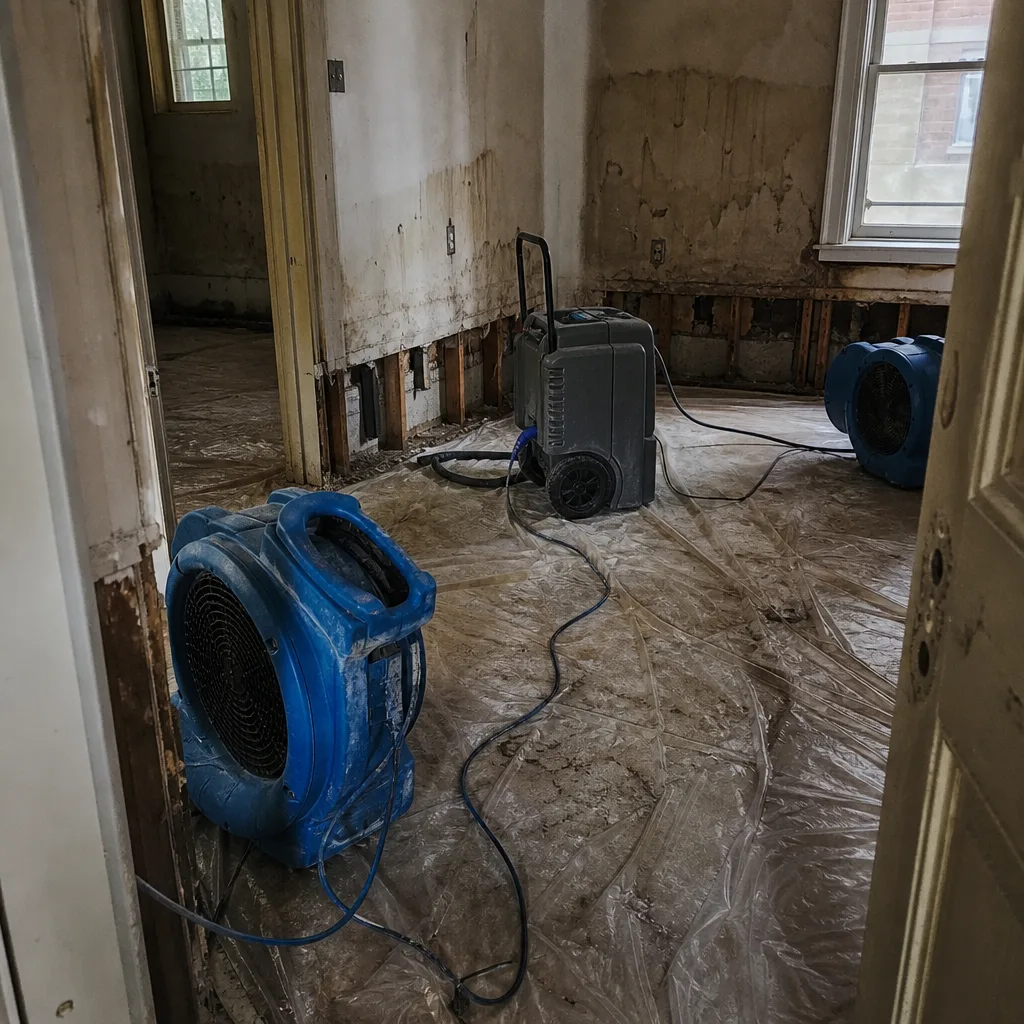 Before
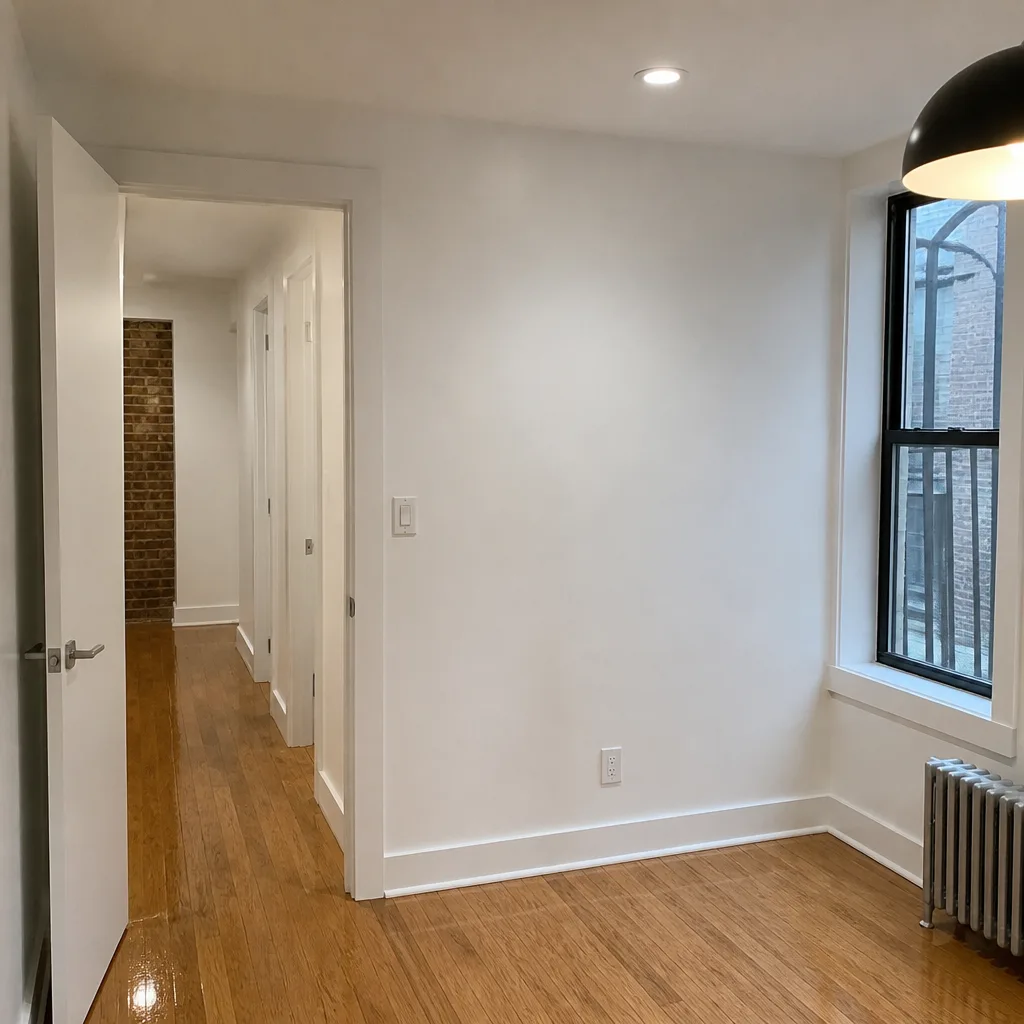 After
After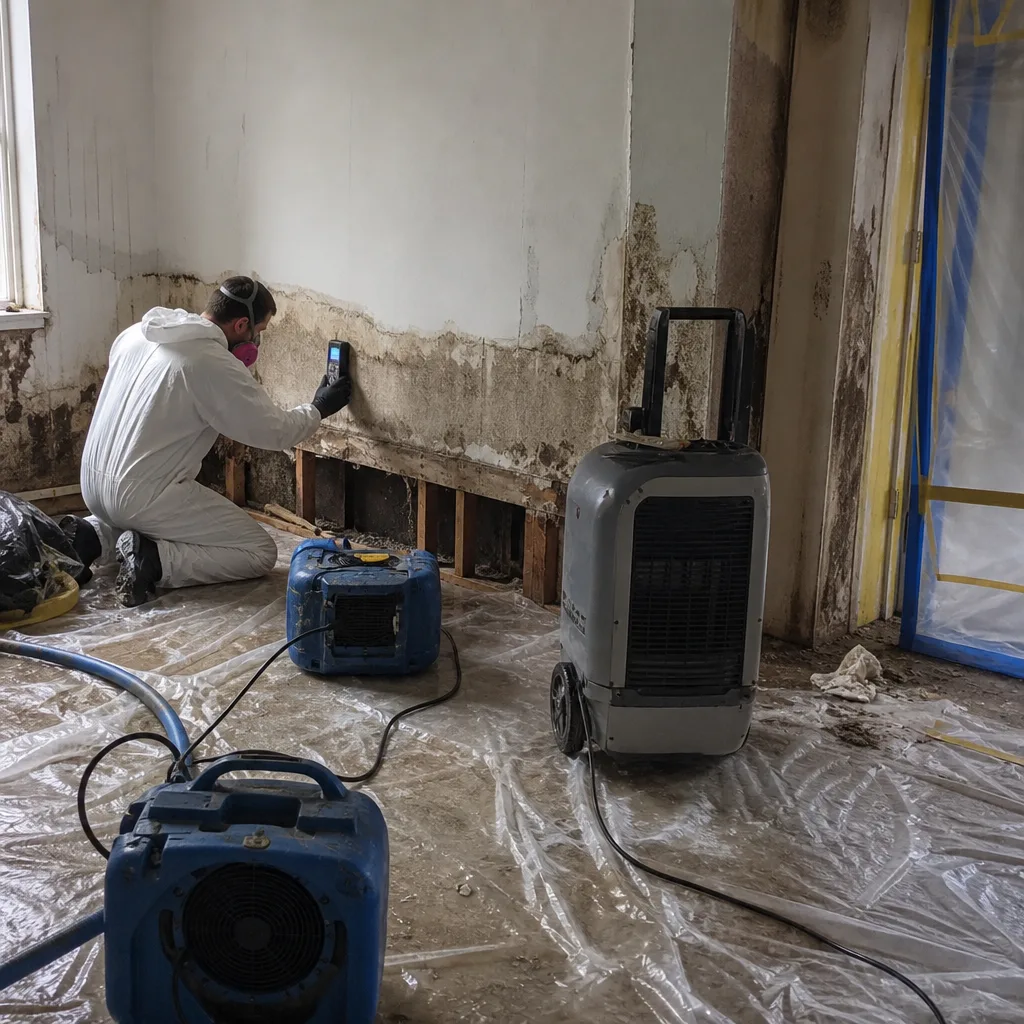 Before
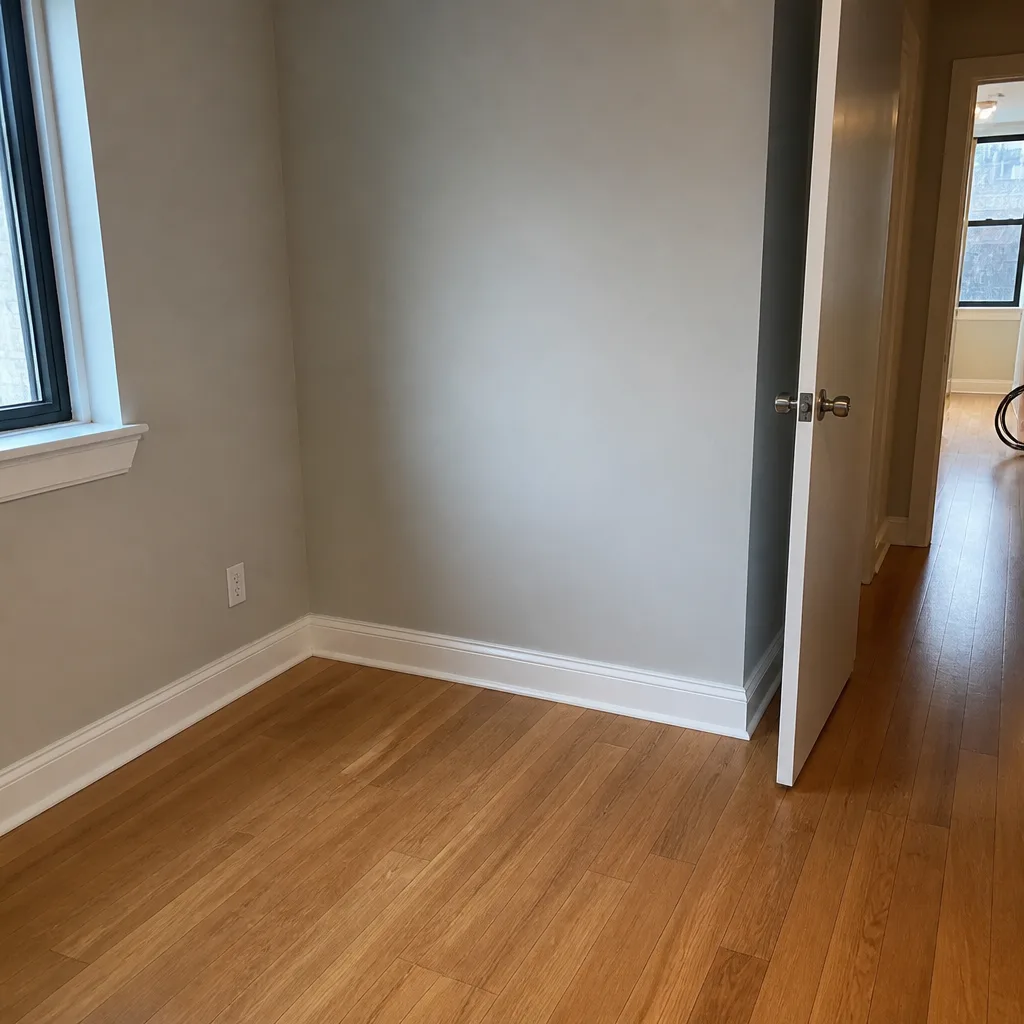 After
After24/7 Emergency Water Damage Restoration in Central Harlem
Water damage restoration in Central Harlem typically costs $2,800-$7,400 for a full multi-room dry-out, and emergency extraction crews should reach you within 45 minutes of your call. When water is moving through a pre-war brownstone, every hour it sits multiplies the damage, especially in plaster-and-lath walls that hold moisture far longer than drywall. Floodline Restoration Co. answers live at (845) 305-5737 around the clock, and we dispatch certified crews into Central Harlem the moment you hang up. The first hour decides whether you’re drying out a room or rebuilding three floors.
Understanding Water Damage Restoration Severity in Central Harlem Properties
Central Harlem’s housing stock presents a specific set of severity factors you won’t find in newer construction. The four-to-six-story brownstones and tenement walk-ups built between 1880 and 1920 use horsehair-and-plaster over wood lath, which absorbs water like a sponge and holds it against structural framing. We classify water by contamination level: Category 1 is clean water from a supply line, Category 2 carries contaminants from appliances or steam condensate, and Category 3 is sewage or floodwater requiring full containment. Moisture mapping with thermal imaging and penetrating hygrometers shows us how far water has wicked behind plaster and through party walls, because in a Central Harlem rowhouse, the visible stain is rarely the full extent of the damage. Shared walls between adjacent brownstones mean one burst riser can saturate three stacked units and the neighbor’s wall cavity before anyone notices.
Why Central Harlem Property Owners Choose Floodline Restoration Co.
- 45-minute response commitment - our Central Harlem crews are dispatched from points throughout Manhattan, so extraction equipment is running on your block within the hour, not the afternoon.
- Live answer, 24/7, every day - a real dispatcher picks up at 2 a.m., not a recording, and a certified crew reaches your building the same visit.
- IICRC-certified crews - our technicians hold WRT and ASM certifications and train to RIA and IFA standards before they ever touch a Central Harlem plaster wall.
- Free visual inspection - we document the full scope before any work begins, so you see exactly what we see, with no charge for the assessment.
- Direct insurance billing - we bill your carrier directly and hand you the moisture log, so you never play messenger between us and the adjuster.
- One team from extraction to reconstruction - the same Floodline crew that extracts on day one handles daily moisture readings and rebuilds what needs rebuilding. No mid-job handoff to a subcontractor you’ve never met.
Our Water Damage Restoration Process
Inspection & Assessment
We walk every affected room with thermal imaging cameras and pin-type moisture meters, mapping water migration through plaster, lath, and subflooring. In Central Harlem buildings, this includes checking the party-wall cavities and cast-iron stack chases where water travels between units.
Extraction / Stabilization
We run truck-mounted and portable extraction units to pull standing water from floors, wall cavities, and basement slabs. When a plaster wall can’t be opened due to the asbestos hold, we extract through baseboard gaps and drill small access points to relieve saturated cavities.
Drying & Dehumidification
Dri-Eaz and Phoenix LGR dehumidifiers, paired with XPOWER air movers, run continuously with daily moisture readings logged until we hit the dry standard. Central Harlem plaster-and-lath assemblies often need 30-50% more drying cycles than drywall, and we budget for that from day one.
Cleaning & Sanitization
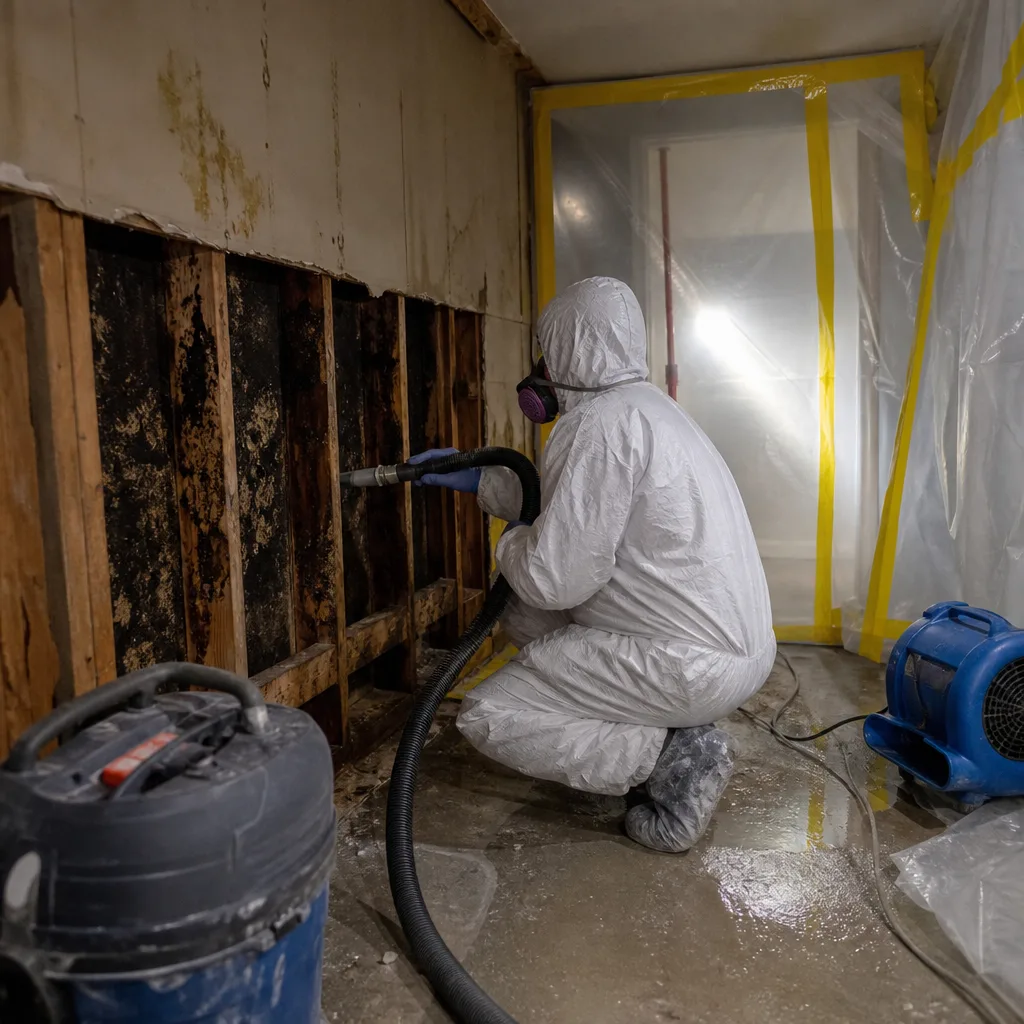
Category 2 and 3 water require antimicrobial treatment on all affected surfaces. We HEPA-vacuum, treat with EPA-registered products, and air-scrub affected rooms to remove airborne contaminants before any rebuild begins.
Asbestos Coordination & Specialty Treatment
Because virtually every Central Harlem building predates 1987, NYC DEP mandates an asbestos survey before any plaster wall or ceiling is opened. We coordinate the licensed inspector, manage the hold, and schedule demolition only after clearance comes through, so no one is exposed and no regulation is skipped.
Repairs & Restoration
Once the building is dry and clearance is granted, our own carpenters and finishers replace lath and plaster, match moldings, restore floors, and repaint. You get one crew, one scope, and a written 90-Day Done Right Promise when the job is finished.
Need Emergency Water Damage Restoration in Central Harlem Now?
Crews minutes away, answering live 24 hours a day. The sooner we start, the less it costs.
Working With Your Insurance Company
Most Central Harlem water damage claims are covered, but coverage hinges on documentation that starts the first hour and stays consistent through final dry-out. We photograph every affected room before we move a single piece of furniture. Moisture readings, equipment placement, and daily drying logs go to your adjuster in a format they recognize. When your carrier pushes back on a line item, we talk to them directly. Our project manager has handled claims on Lenox Avenue walk-ups and Mount Morris Park brownstones alike, and our line-item scopes are written to the same Xactimate standards carriers use. You didn’t create this damage, and you shouldn’t have to argue about it.
What We Provide Your Insurer
- Thorough documentation of the loss
- Photos of all damage, room by room
- Moisture readings and drying logs
- A detailed, line-item scope of work
- Direct coordination with your carrier
Built for Central Harlem’s Loss Calendar
January and February in Central Harlem are when the calls spike. Building supers run steam systems at full pressure to meet the city’s 68-degree daytime requirement, and original radiator valves and cast-iron risers that have held for a century finally let go. Water cascades down through stacked apartments, and because plaster and horsehair hold that moisture, the damage compounds every 12 hours. March brings freeze-thaw stress to flat tar-and-gravel rowhouse roofs, where membrane cracks have been quietly admitting water for weeks. By April, those hidden leaks show up as yellowed ceiling stains and musty top-floor bedrooms. Summer thunderstorms overwhelm the old basement drains and façade leaders built for a different climate, sending water under basement doors and up through floor drains. And all year, aging supply lines, original shutoffs that no longer close, and non-standard plumbing from decades of SRO conversions mean one corroded pipe can require a building-wide scope. We plan staffing around Central Harlem’s calendar because the water doesn’t wait.
Water Damage Restoration Across Central Harlem’s Neighborhoods
From the Strivers’ Row brownstones on West 138th and 139th Streets between Adam Clayton Powell Jr. Boulevard and Frederick Douglass Boulevard, we regularly see steam-riser failures that pour water down four floors of original plasterwork. Those limestone and brownstone rowhouses have ornate interior moldings that can’t simply be pulled and replaced with drywall, so our restoration approach prioritizes saving original material wherever the drying data allows. Around Mount Morris Park Historic District, flat-roof ponding on low-pitched brownstones drives the top-floor ceiling losses, and the landmark commission adds another layer of care around any exterior access. East of Lenox Avenue, the reconverted SRO tenements and walk-ups have the most complex plumbing configurations, where a leak in a fourth-floor apartment migrates through shared stacks and party walls into units that were never piped to any logical plan. Over near Morningside Avenue and the 125th Street corridor, we answer calls from older co-ops and converted rentals, where superintendents and shareholders both need documentation fast for building-wide claims. And up near St. Nicholas Park, hillside rowhouses on West 140s and 150s see basement water intrusion from runoff that the original drainage was never sized to handle.
Specialized Water Damage Restoration Services We Offer in Central Harlem
Emergency Water Extraction
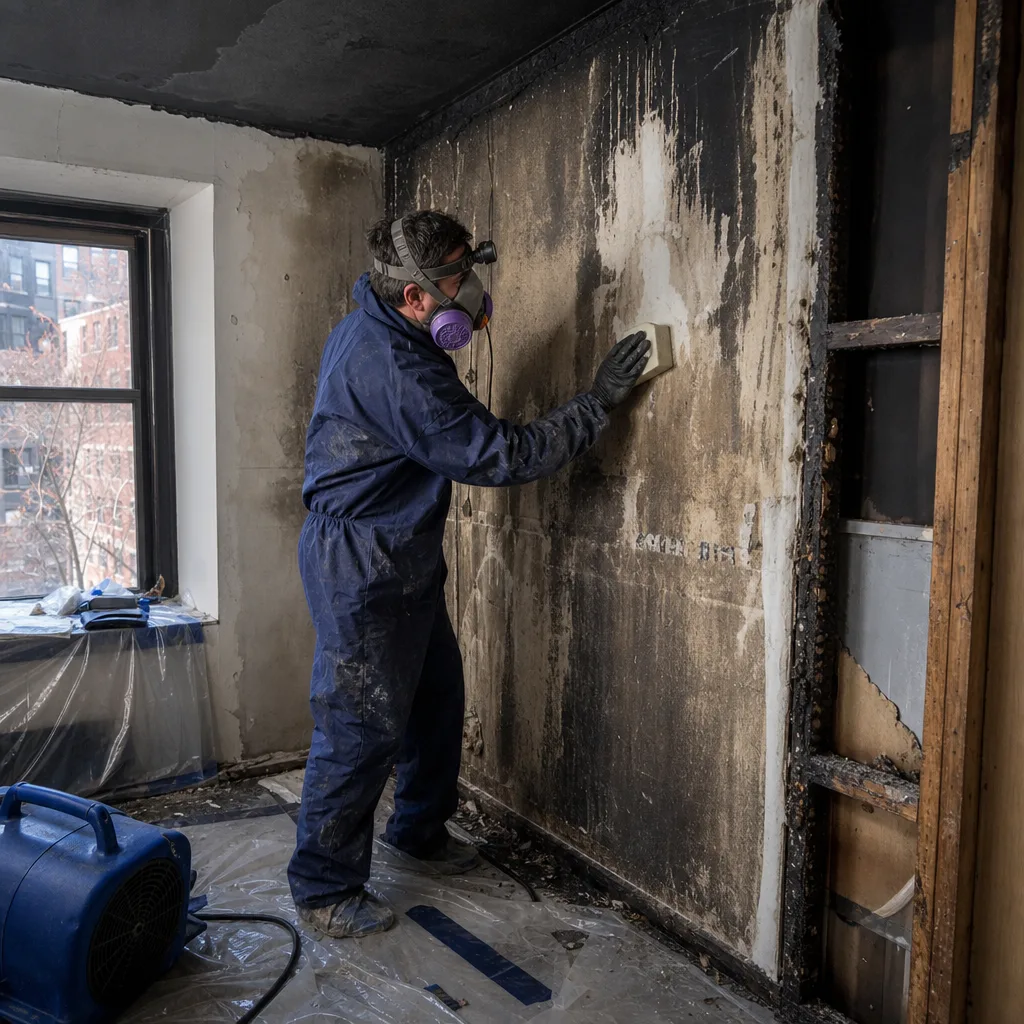
Standing water in a Central Harlem basement or a top-floor brownstone apartment has to come out now, not when the schedule opens up. Our extraction crews arrive with truck-mounted units capable of pulling hundreds of gallons an hour, plus the smaller extractors needed for tight walk-up stairwells and narrow kitchen galleries on the upper floors of pre-war buildings.
Structural Drying & Dehumidification
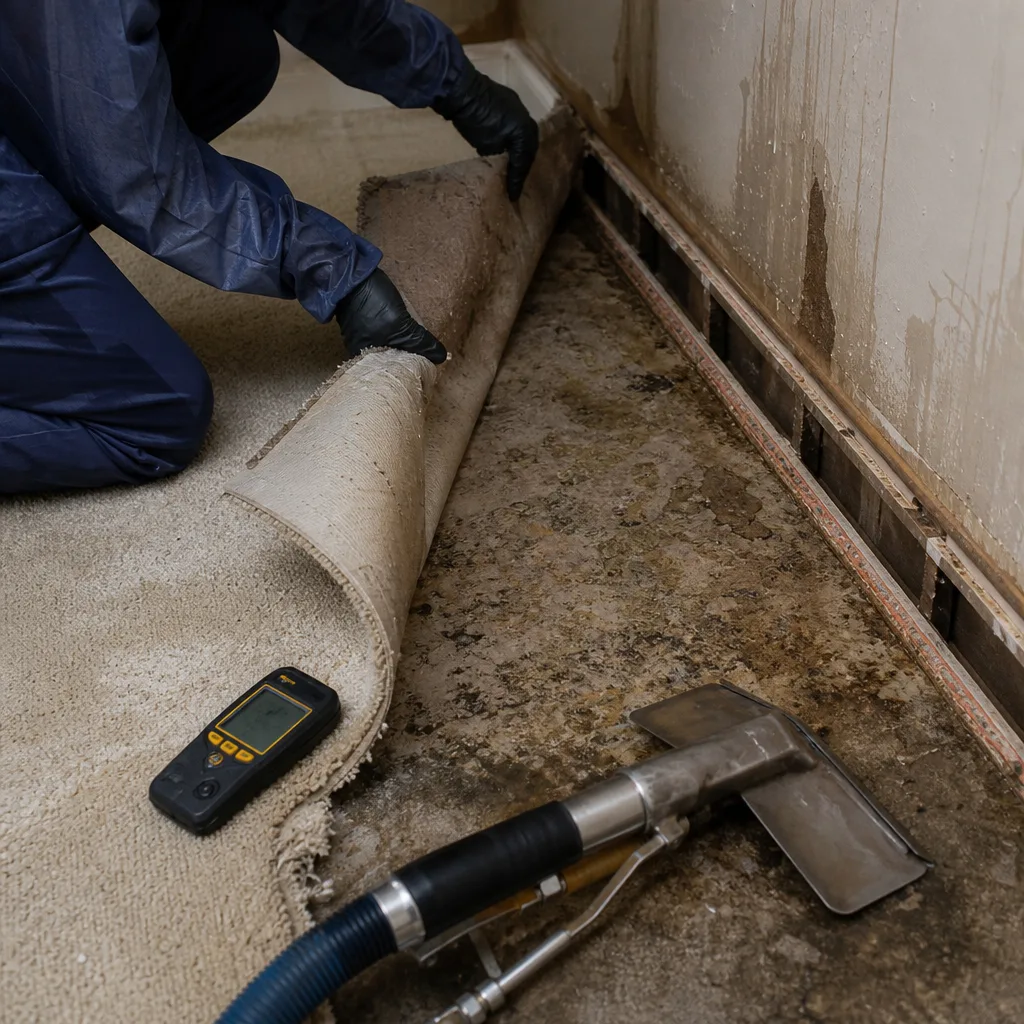
Plaster-over-lath demands a longer, flatter drying curve than drywall. We set up Dri-Eaz and Phoenix LGR dehumidifiers with XPOWER air movers positioned to force air through wall cavities and floor framing, logging moisture readings every 12 hours until the dry standard is met and documented for the carrier.
Burst Pipe Restoration
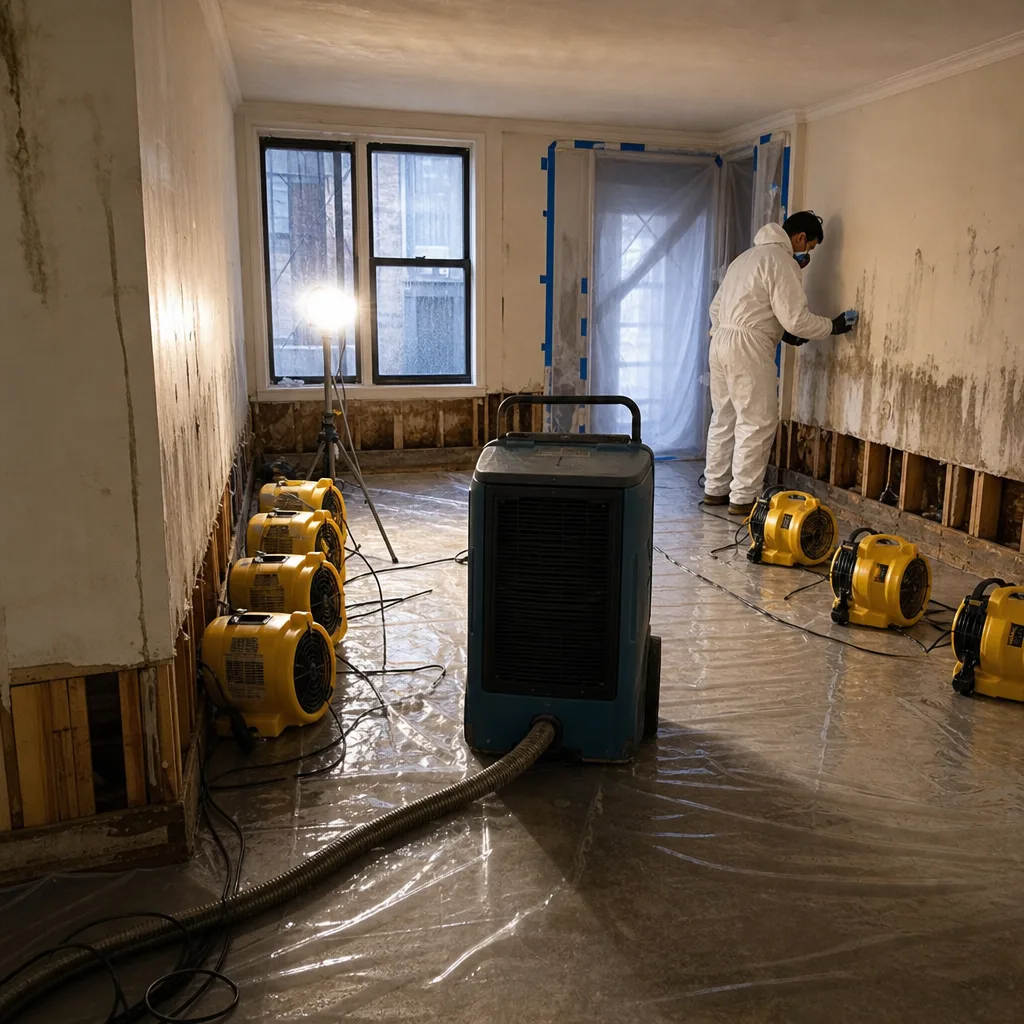
The dominant failure point in Central Harlem is original galvanized and cast-iron supply lines, some holding pressure since the Roosevelt administration. When one fails, water follows the path of least resistance, which in these buildings means down, through lath, and into the apartment below. We extract, dry, and coordinate the asbestos clearance so repair can begin without a weekend lost.
Ceiling & Roof Leak Water Damage
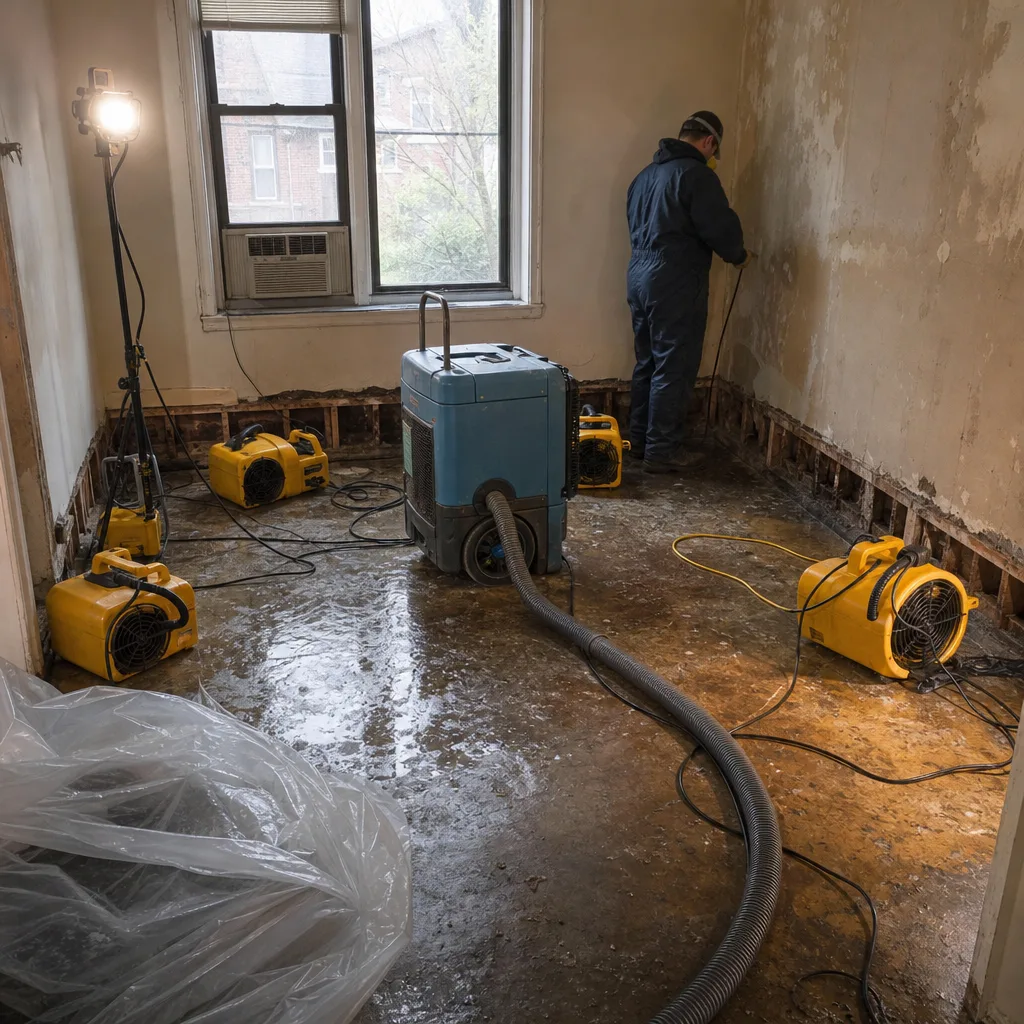
Flat tar-and-gravel roofs on Harlem brownstones pond water, and when a membrane cracks, moisture works into top-floor plaster for weeks before the stain appears. By the time we arrive, the plaster is saturated, the lath is swelling, and in too many cases mold is already established behind the surface. We’re equipped for full top-floor dry-outs, including ceiling containment and controlled demolition after clearance.
Flood Cleanup
Summer storms and backed-up basement drains send Category 2 and 3 water into Central Harlem cellars and garden-level apartments. We handle the full cleanup: extraction, antimicrobial treatment, deodorization, and structural drying, with the documentation your carrier needs for a flood claim.
What happens when you call
- 1
A real person answersNo phone trees - you reach a local pro.
- 2
You get an upfront price rangeHonest numbers before anyone is dispatched.
- 3
A background-checked tech heads outLicensed & insured, dispatched right away.
- 4
You approve before work beginsNothing starts until you say go.
Water Damage Restoration Costs in Central Harlem, NY
Central Harlem pricing runs higher than outer-borough averages because the buildings are older and the materials demand more care. A single-room Category 1 extraction and dry-out in a Central Harlem apartment typically runs $1,800-$3,200. A multi-floor steam-riser loss with plaster saturation across two or three units generally lands between $4,500-$9,000. A full brownstone basement flood with sewage contact and required containment can reach $12,000-$18,000. What moves the price most: how long the water sat before we arrived, whether plaster must be opened, and whether asbestos clearance adds a regulatory hold to the schedule. Insurance covers the majority of these claims; out-of-pocket scenarios are usually limited to deductible amounts or excluded maintenance failures. Our visual inspection is free, and we hand you a line-item scope before any work begins, so the number on paper is the number you approve.
We Also Serve Cities Near Central Harlem
Our Water Damage Restoration crews regularly respond across the Upper West Side, Upper Manhattan, Morningside Heights, and East Harlem. We’re minutes from Central Harlem in every direction, and our Water Damage Restoration in Central Harlem team knows these blocks firsthand.
Serving Central Harlem, NY - Our Local Coverage Area
We’re based in the Central Harlem area and know this community well. Use the map below to see our service coverage - if you’re nearby, we can almost certainly help.
Central Harlem Water Damage Restoration Questions, Answered
Why does drying take longer in a Central Harlem brownstone than in a newer Queens apartment?
Plaster-on-lath walls absorb water deeply and release it slowly, so a Central Harlem brownstone can require 30-50% more drying cycles than a drywall apartment built in the 1990s. Horsehair plaster holds moisture against the wood lath and structural framing, and rushing the process means the wall looks dry on the surface while rot and mold continue behind it. We log moisture readings until the dry standard is met, not until the stain fades.
Can you start cutting open wet plaster on a Saturday when our pipe burst, or do we have to wait?
No responsible contractor can open plaster in a Central Harlem building constructed before 1987 without a NYC DEP asbestos survey clearance first. That’s a regulation, not our preference. What we do when a pipe bursts on a weekend: extract through baseboard gaps and access points, run dehumidifiers and air movers continuously, and take moisture readings every 12 hours until the inspector clears the opening Monday. The building stays drying even if demolition can’t start yet. Call (845) 305-5737 and we’ll explain exactly how the hold affects your building.
Our steam radiator valve failed in January and water soaked through two floors. How do you handle a multi-unit brownstone claim like that?
We treat it as one interconnected loss, not three separate claims. Our crew sets up containment on each affected floor, maps moisture through the party walls and cast-iron stack chases, and documents every unit with photographs and readings. Because the walls and floor assemblies are shared, drying has to be coordinated across all affected apartments simultaneously. We handle the documentation and direct adjuster communication for the whole building, so owners and tenants each get a clear picture.
What is category 2 water, and should we be worried about it in a 1910 Central Harlem tenement walk-up?
Category 2 water contains significant contamination: think steam condensate, dishwasher overflow, or water that has passed through building materials. In a 1910 tenement, that water has likely picked up decades of dust, old paint, and whatever was inside the wall cavities. It requires antimicrobial treatment and more rigorous drying, because the older the building, the more it has lived through. We treat Category 2 as a real health and structural concern, not just a clean-up.
Our roof leak has been dripping onto the top-floor plaster for weeks but we just noticed the stain. Is mold already there?
Almost certainly yes. On a Harlem brownstone flat roof, water works through the membrane and into the top-floor plaster long before the stain appears, and by the time you see it, moisture has been present for weeks. Mold establishes in 48-72 hours given moisture and warmth, and top-floor apartments in summer have both. We run moisture mapping and air sampling where needed, then set up containment and begin drying before any mold assessment or remediation begins.
How fast can someone actually get to Central Harlem?
A Floodline crew reaches most Central Harlem addresses within 45 minutes of your call, and extraction is running the same visit. Emergency response for water damage moves fast because the damage moves fast, and we staff the area around the clock specifically so a burst pipe on West 130th Street at midnight doesn’t wait until morning. Call (845) 305-5737 and the dispatcher will tell you exactly when the crew arrives.
Will my insurance cover this, and who deals with my adjuster?
Most Central Harlem water damage claims are covered under standard homeowners or co-op policies, though maintenance failures and long-standing leaks can face exclusions. We document from the first hour, bill your carrier directly, and communicate with the adjuster on your behalf using line-item scopes written to industry standards. You get copies of everything, and you never play messenger.
Do I need full restoration, or can you just dry the unit and clean it?
That depends on the moisture readings, not on what the stain looks like. We don’t oversell. If the plaster is saturated to the lath, drying alone leaves you with swollen lath, cracked plaster, and a future mold problem. If readings show surface moisture only, we dry and clean. The inspection is free, and the scope we hand you reflects what the instruments say.
Water damage in a Central Harlem brownstone or tenement asks for a crew that knows plaster, steam systems, asbestos holds, and party walls. Floodline Restoration Co. has been answering that call since 2010. Every job ends with a written 90-Day Done Right Promise, and every call starts with a live person at (845) 305-5737. Standing offers always apply: $50 off any repair over $250, the $89 seasonal tune-up, and 5% off for seniors and veterans. Call today for a free estimate, and we’ll be there when we say.
Written by Curt Bowman, Owner at Floodline Restoration Co., serving Central Harlem since 2010.