
Free visual inspection and a written scope of work before any mitigation begins - photos, moisture readings, and drying logs go in your claim file
The scope we write is the scope we bill. Anything new gets shown to you, in writing, before we touch it.
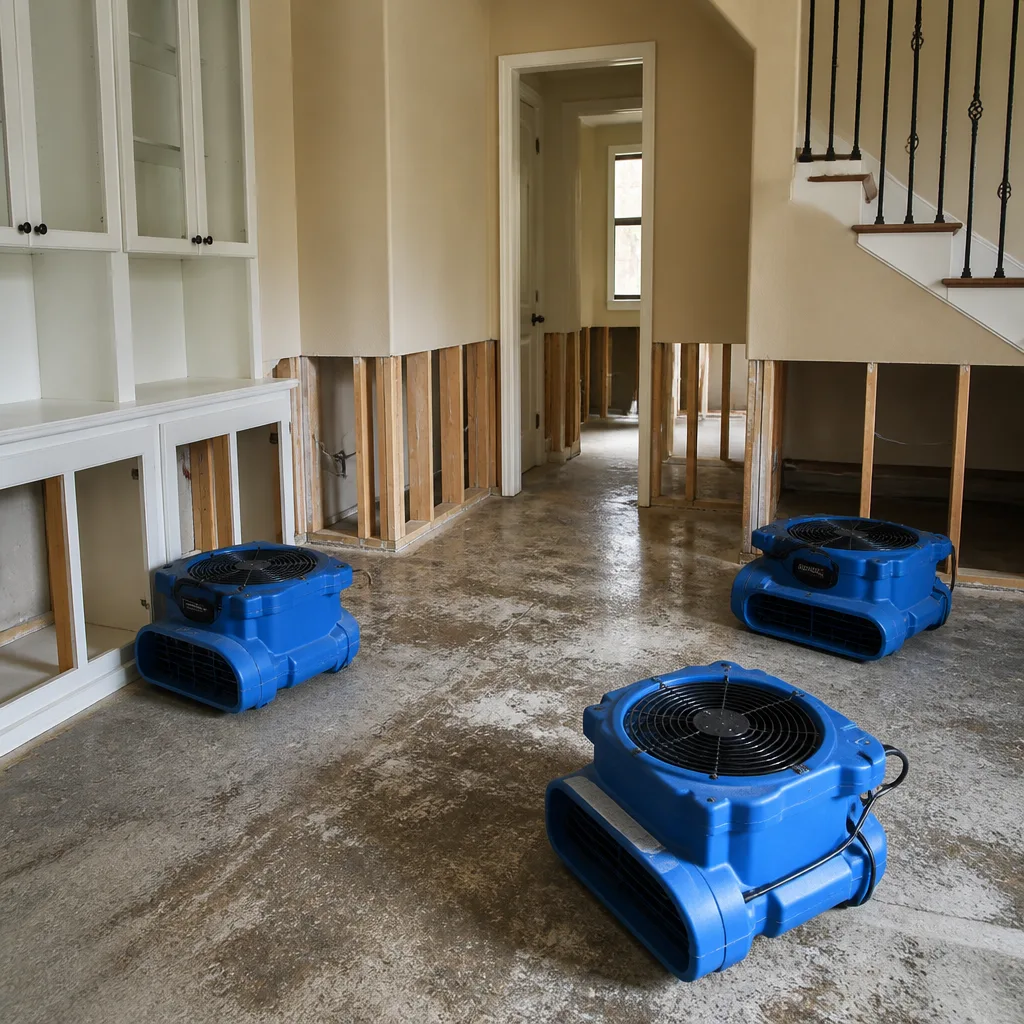
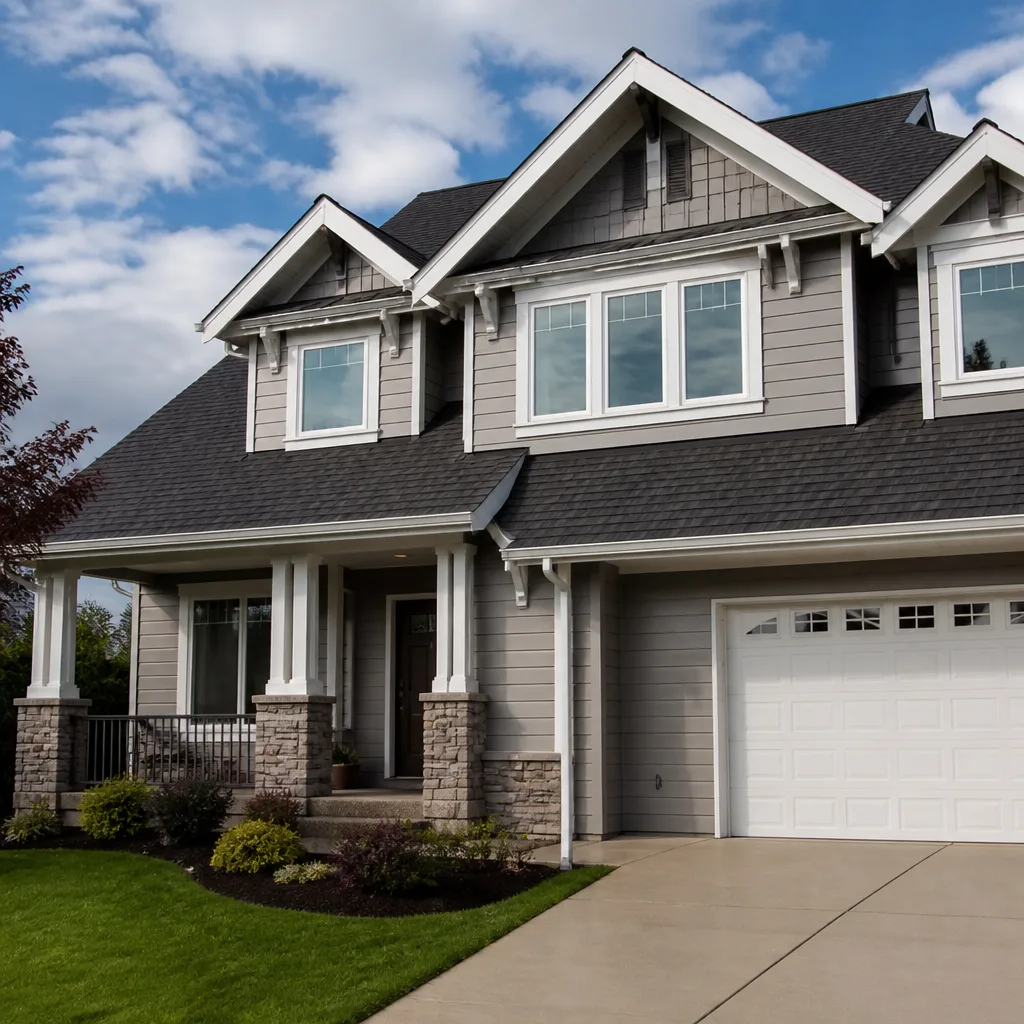
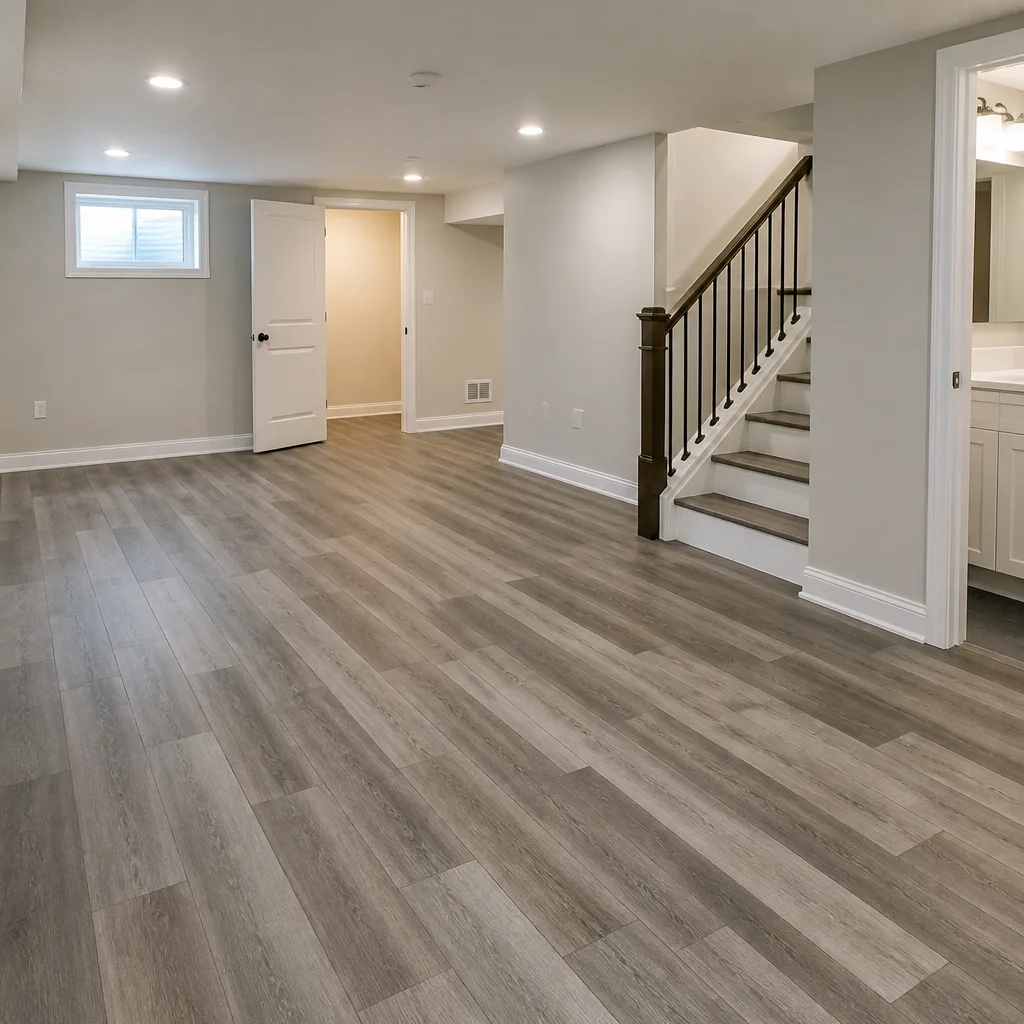
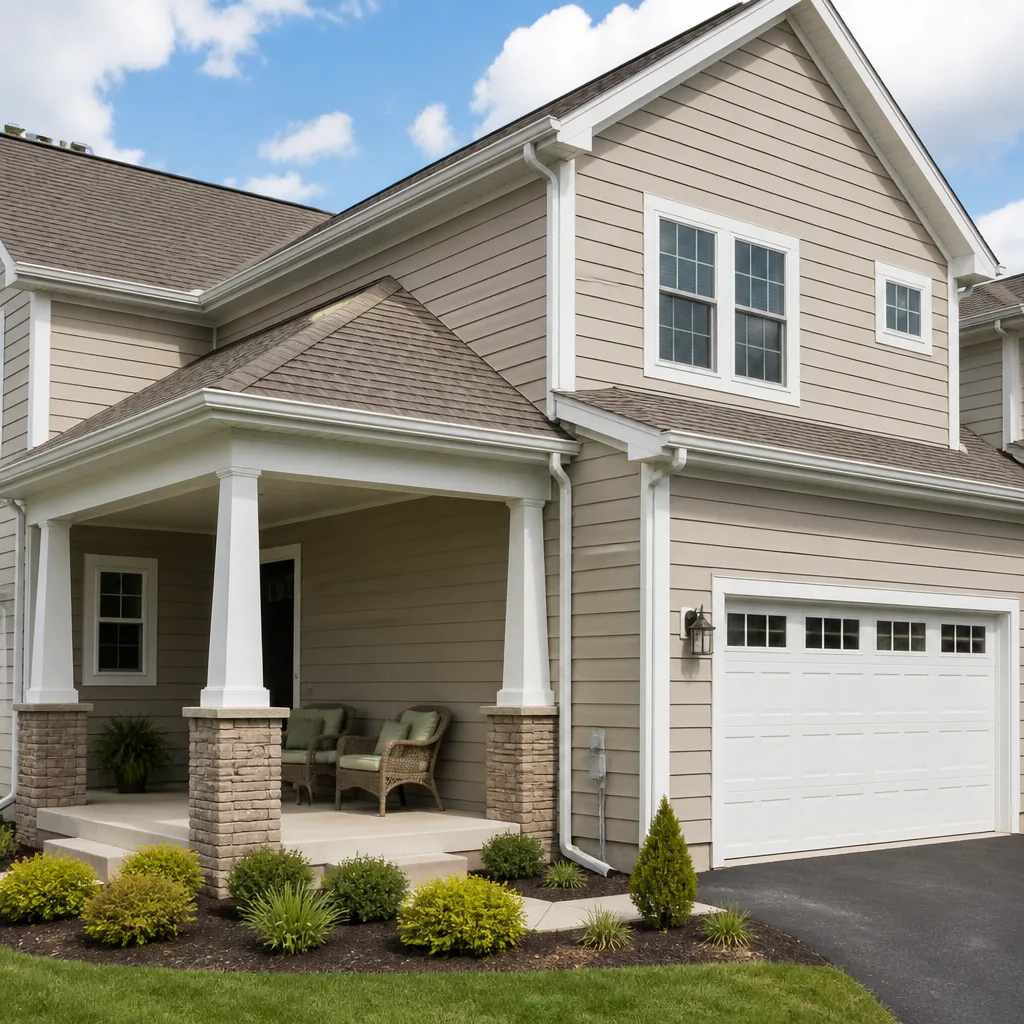
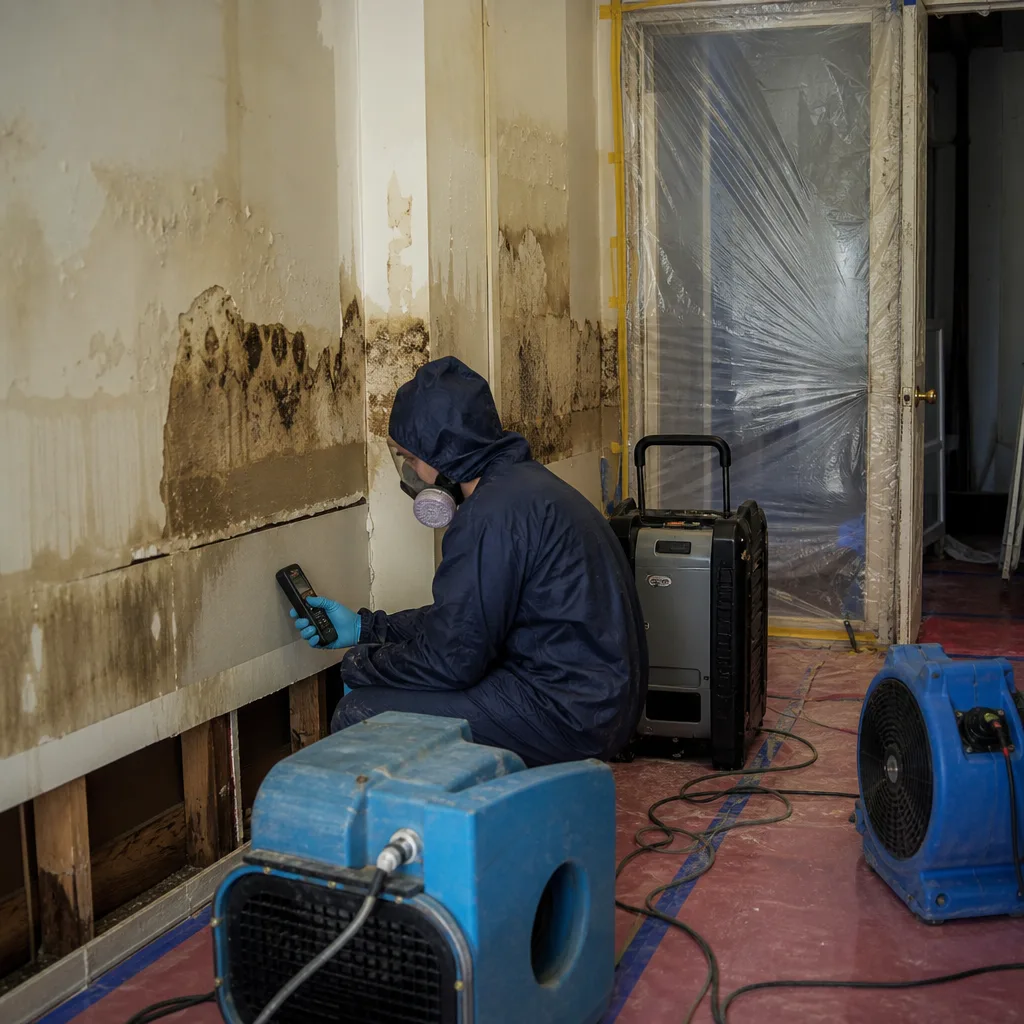 Before
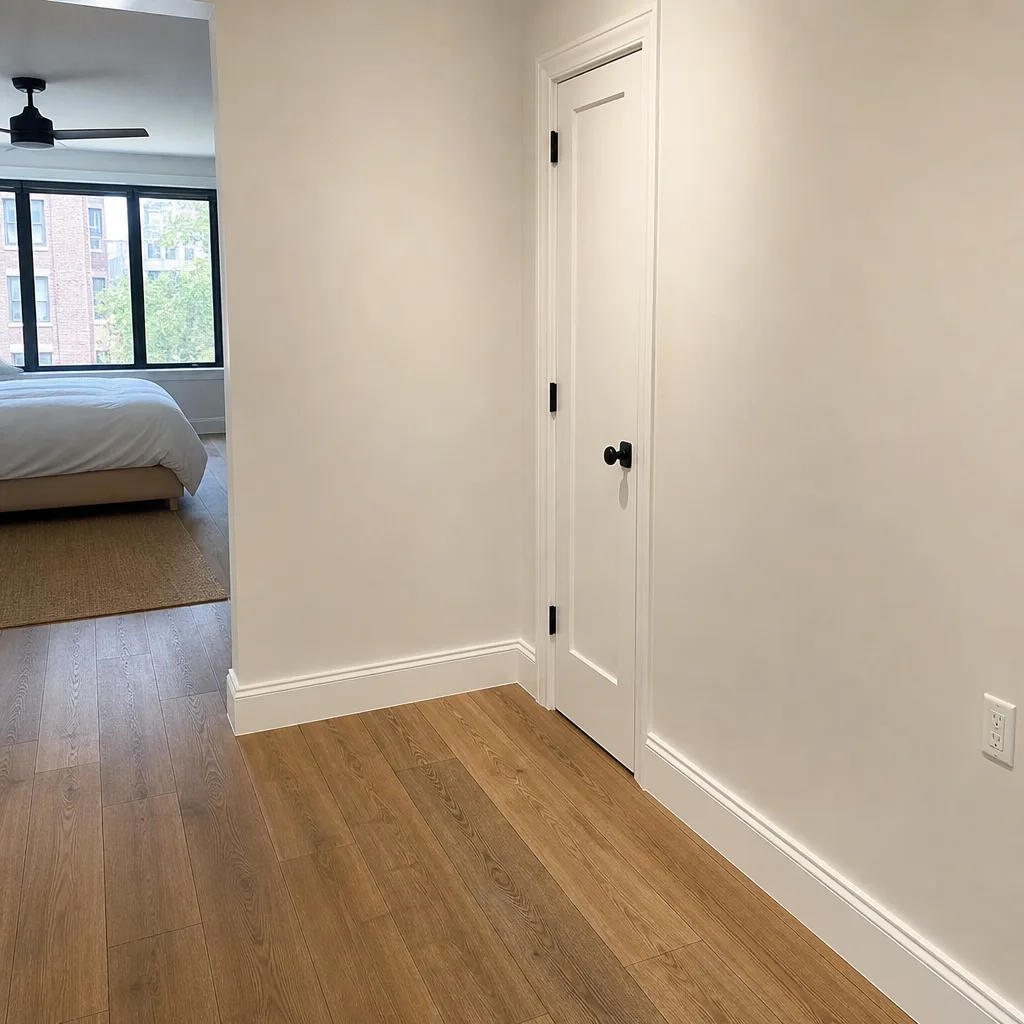 After
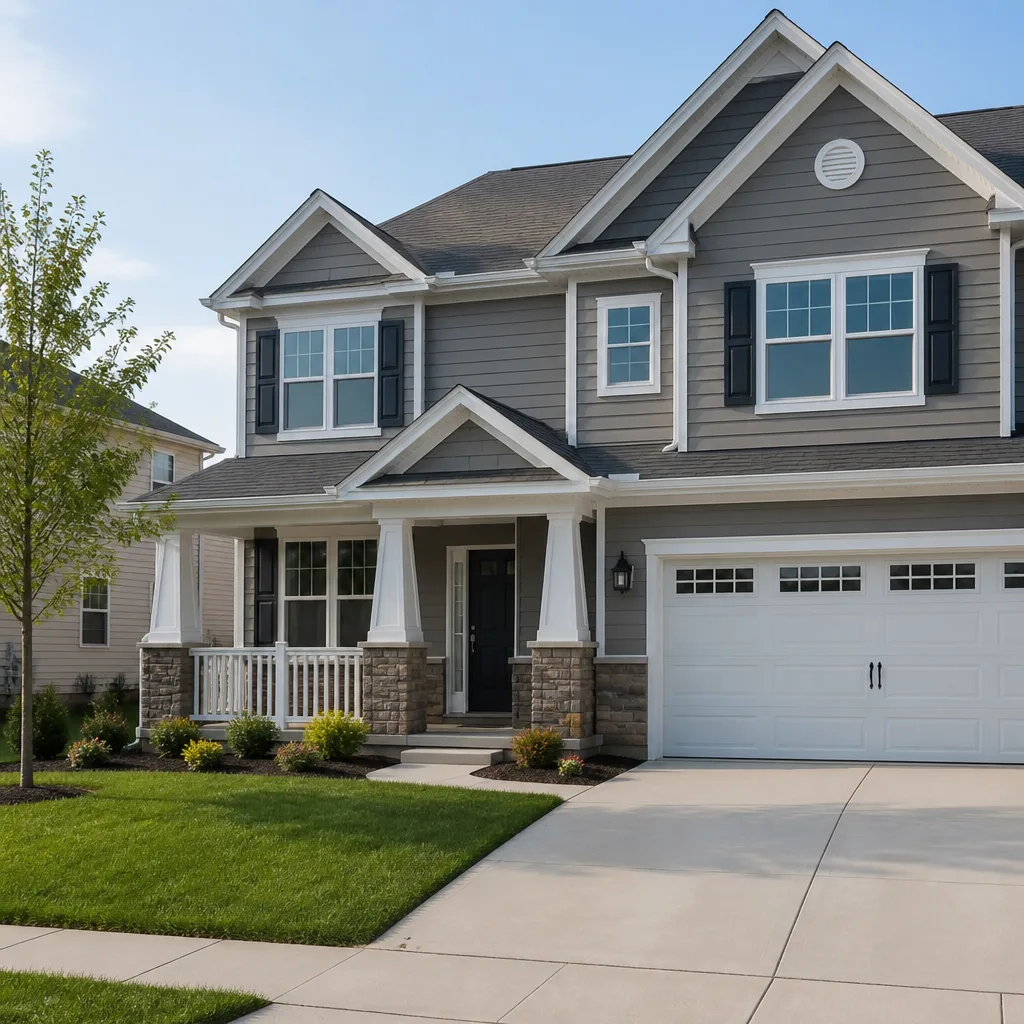
After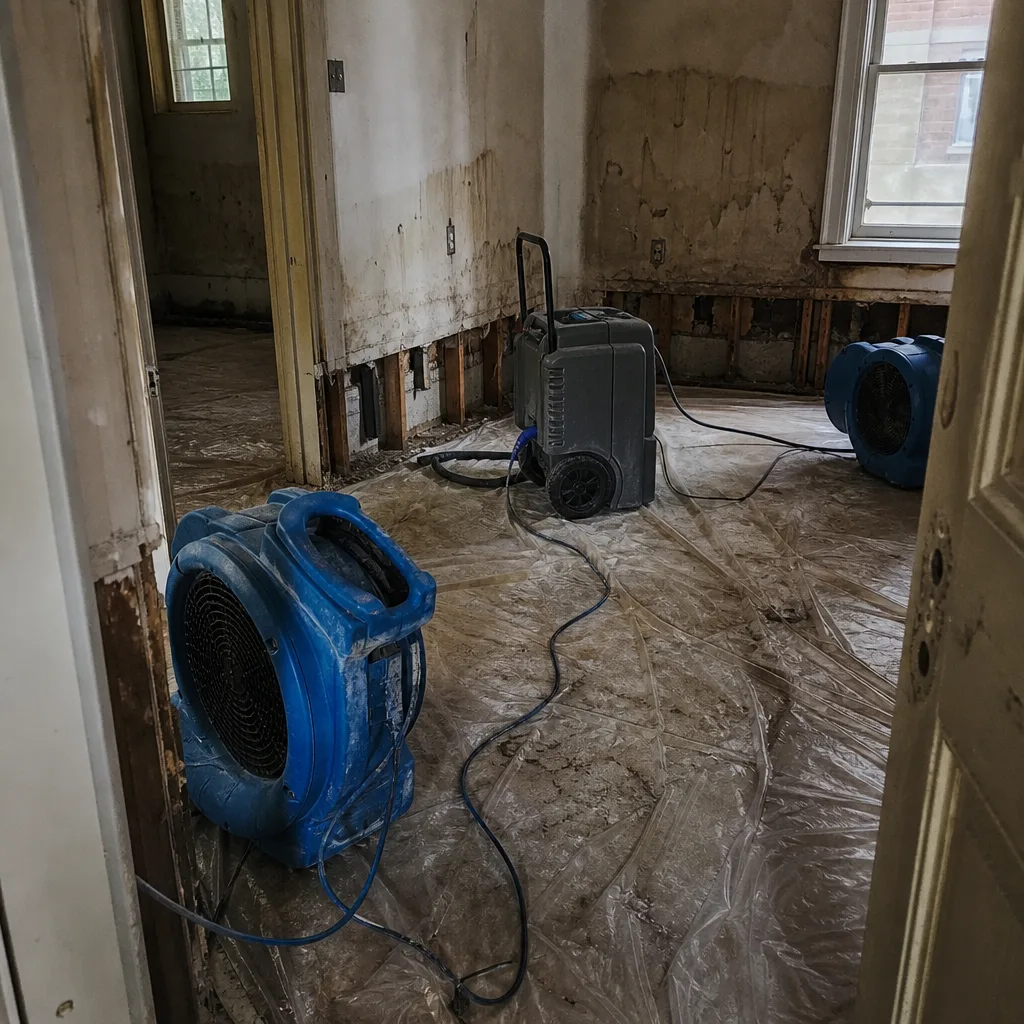 Before
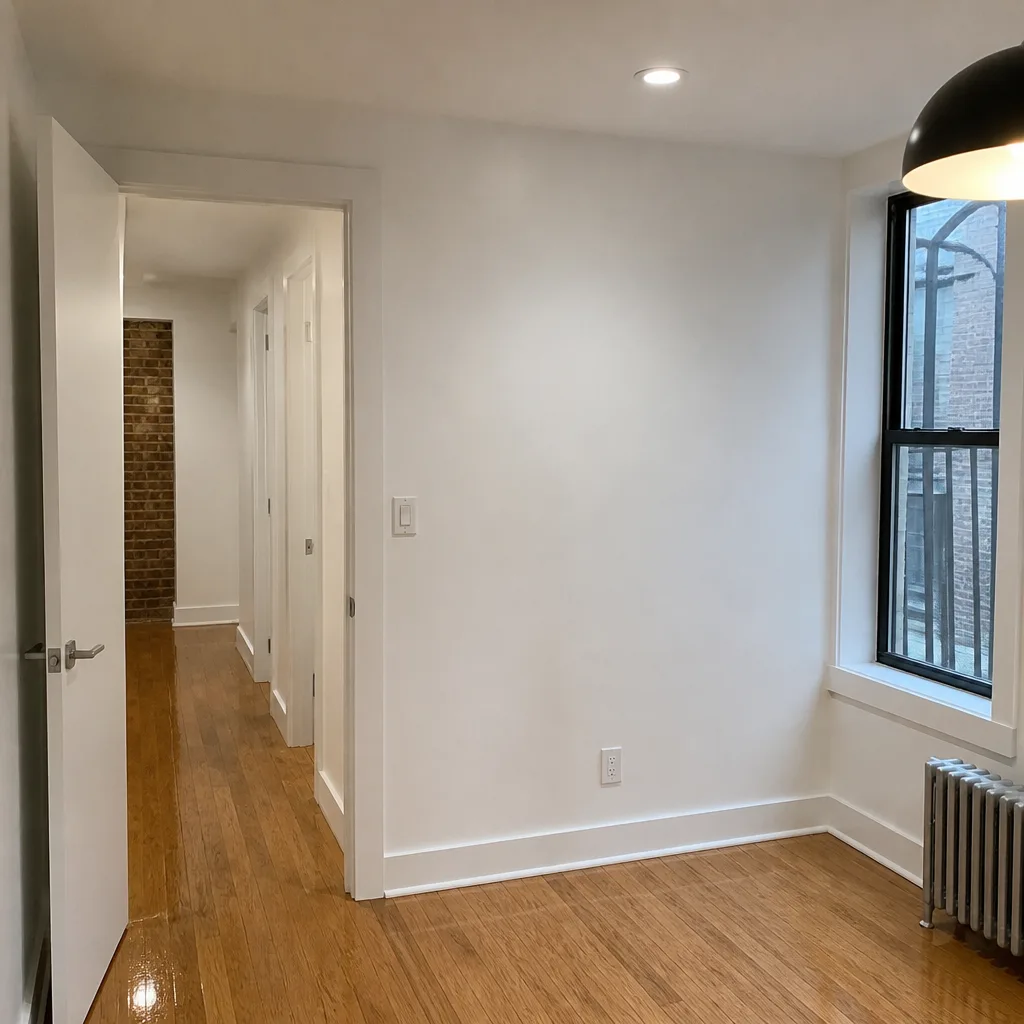 After
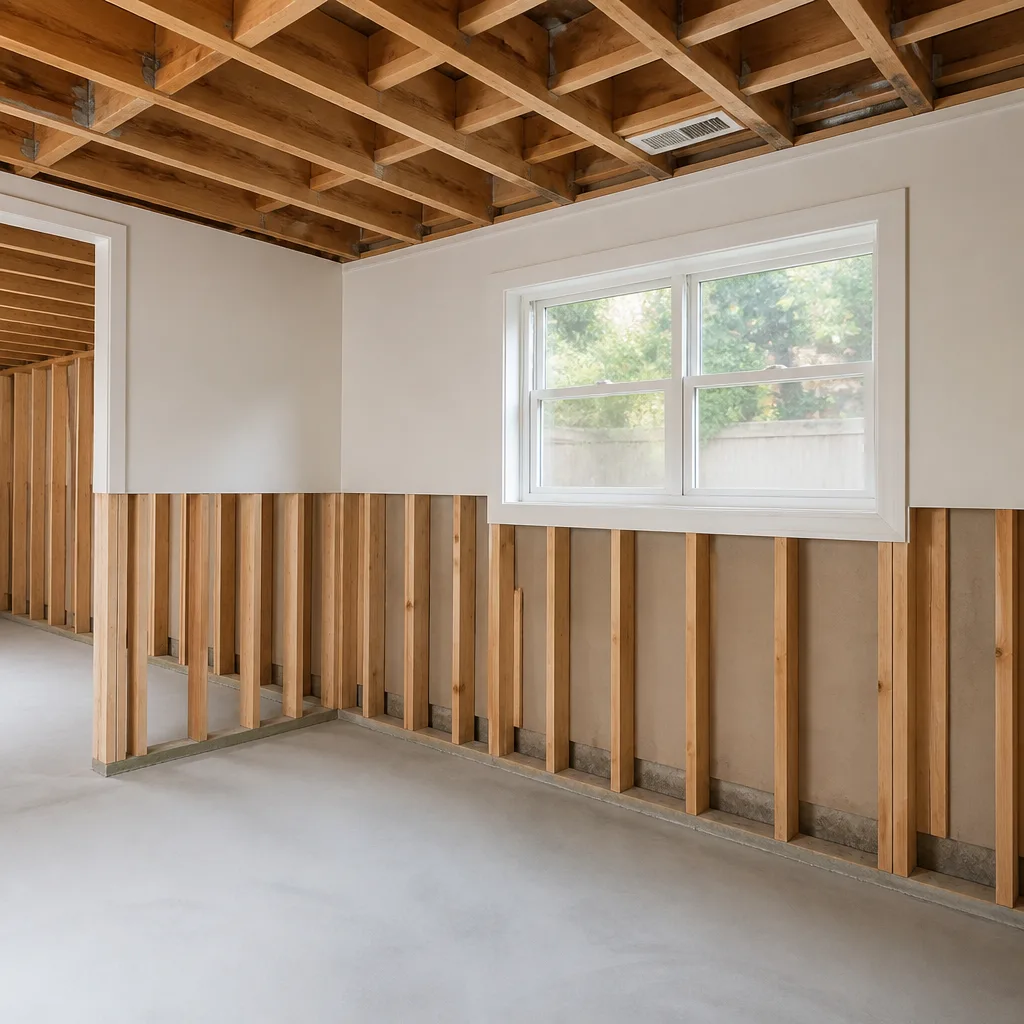
After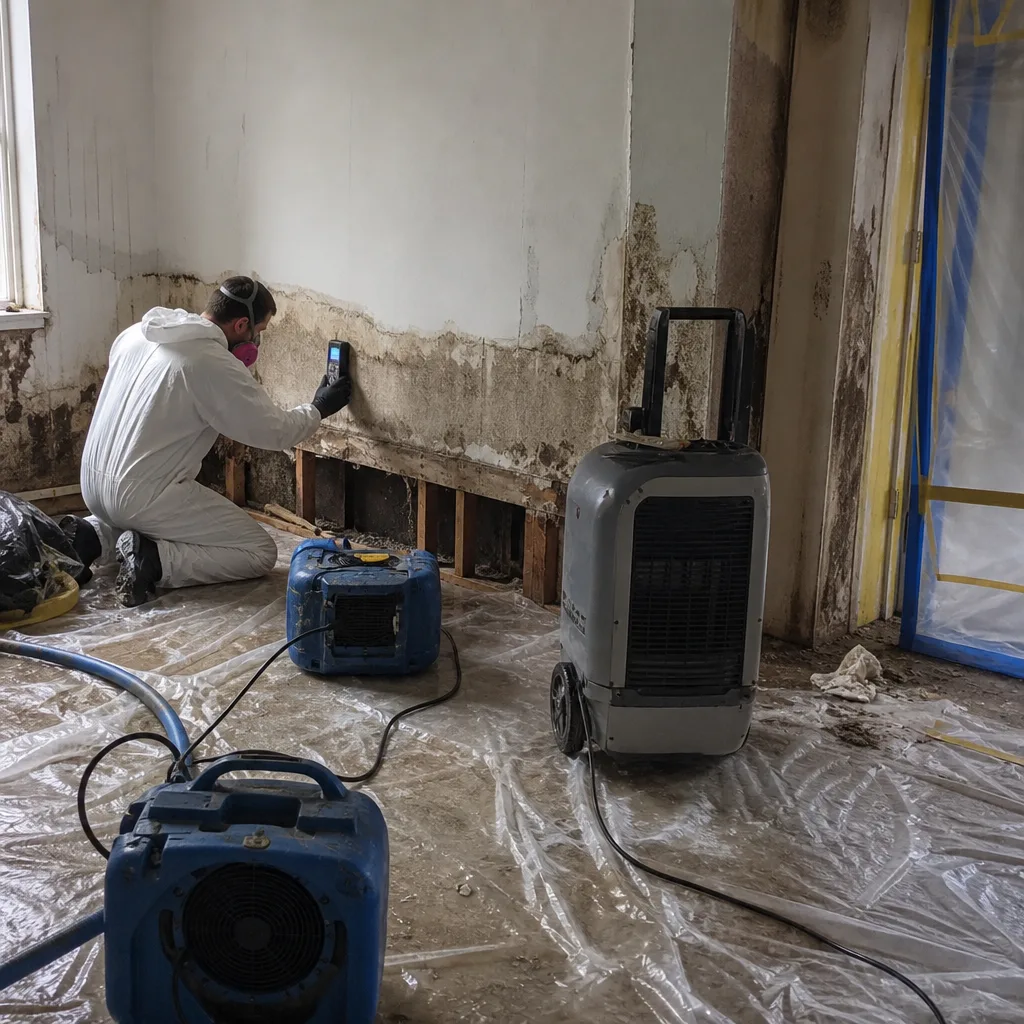 Before
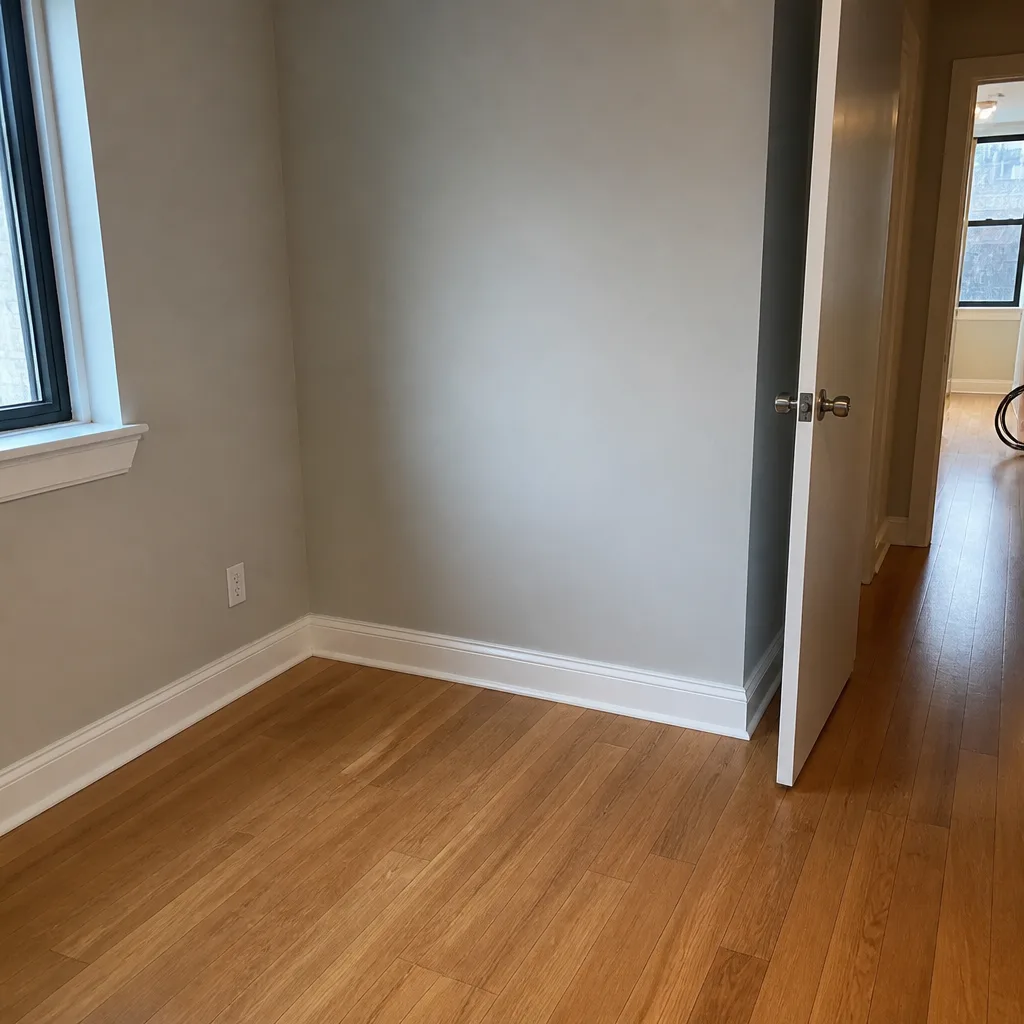 After
After24/7 Emergency Storm & Disaster Restoration in Midtown West
Storm damage in Midtown West doesn’t wait for business hours, and neither do we. Floodline Restoration Co. answers the phone with a live person at 2 a.m., and we dispatch certified crews into Hell’s Kitchen, Clinton, and the Hudson Yards corridor the same night. If wind-driven rain is coming through a failed roof membrane or a nor’easter just blew out a window on West 49th Street, call (845) 305-5737 right now. We’ll send a background-checked, uniformed crew for a free visual inspection, and extraction or stabilization starts that same visit. The first hour matters because water behind pre-war plaster doesn’t dry on its own. It soaks into lath, wicks down through ceilings, and starts feeding mold inside 48 hours.
Understanding Storm & Disaster Restoration Severity in Midtown West Properties
Storm damage in Midtown West splits into three categories, and the building stock here makes each one behave differently than it would in a suburban house. Category 1 water comes from a clean source, like a broken supply line feeding a steam radiator. Category 2 carries contaminants, common after storm-driven roof leaks that pick up decades of dust, soot, and pigeon droppings from a flat roof. Category 3 water is the serious one: flood surge from the Hudson, sewage backups during heavy rain, or anything that has passed through a floor assembly. Pre-war walkups between Ninth and Eleventh Avenues are mostly plaster-and-lath over wood framing. Plaster holds moisture longer than drywall and hides it well. Water travels along steel I-beams and pipe chases, so a roof leak on the sixth floor can present days later in a third-floor unit two apartments over. Hudson Yards towers are a different animal entirely: curtain-wall construction with modern MEP systems, but their low-slope roofs and mechanical penthouses still take wind-load stress, and building management requires documented moisture mapping before we open one wall. We carry thermal imaging cameras and hygrometers to trace exactly where water has gone, then run the numbers against the dry standard for the specific material in that specific apartment.
Why Midtown West Property Owners Choose Floodline Restoration Co.
- 45-minute response commitment to Midtown West. Our dispatch desk routes the nearest available crew the moment you call, not the next morning.
- 24/7 live answer from a real person. No automated phone tree, no voicemail at midnight. A dispatcher picks up and starts the clock.
- IICRC-certified crews trained to WRT and FSRT standards. Water restoration and fire-smoke restoration certifications, plus AMRT for mold applications where a storm has left organic material wet for more than 48 hours.
- Free visual inspection with photo documentation. We scope the damage with a thermal camera and document everything before any work is authorized.
- Direct insurance billing. We work with your adjuster and bill the carrier directly. You never play messenger between us and the insurance company.
- One team from extraction to reconstruction. The same Floodline crew that sets equipment on day one handles the rebuild. No mid-job handoff, no inherited subcontractor.
Our Storm & Disaster Restoration Process
Inspection & Assessment
We arrive with thermal imaging cameras and moisture meters. On a Midtown West pre-war floor, we walk the unit above, below, and adjacent to the visible damage, because water here rarely stays where it started.
Extraction & Stabilization
Standing water comes out first with truck-mounted extraction, and we tarp or board up any opening before wind can push more rain in. Stabilization happens the same visit as the initial call.
Drying & Dehumidification
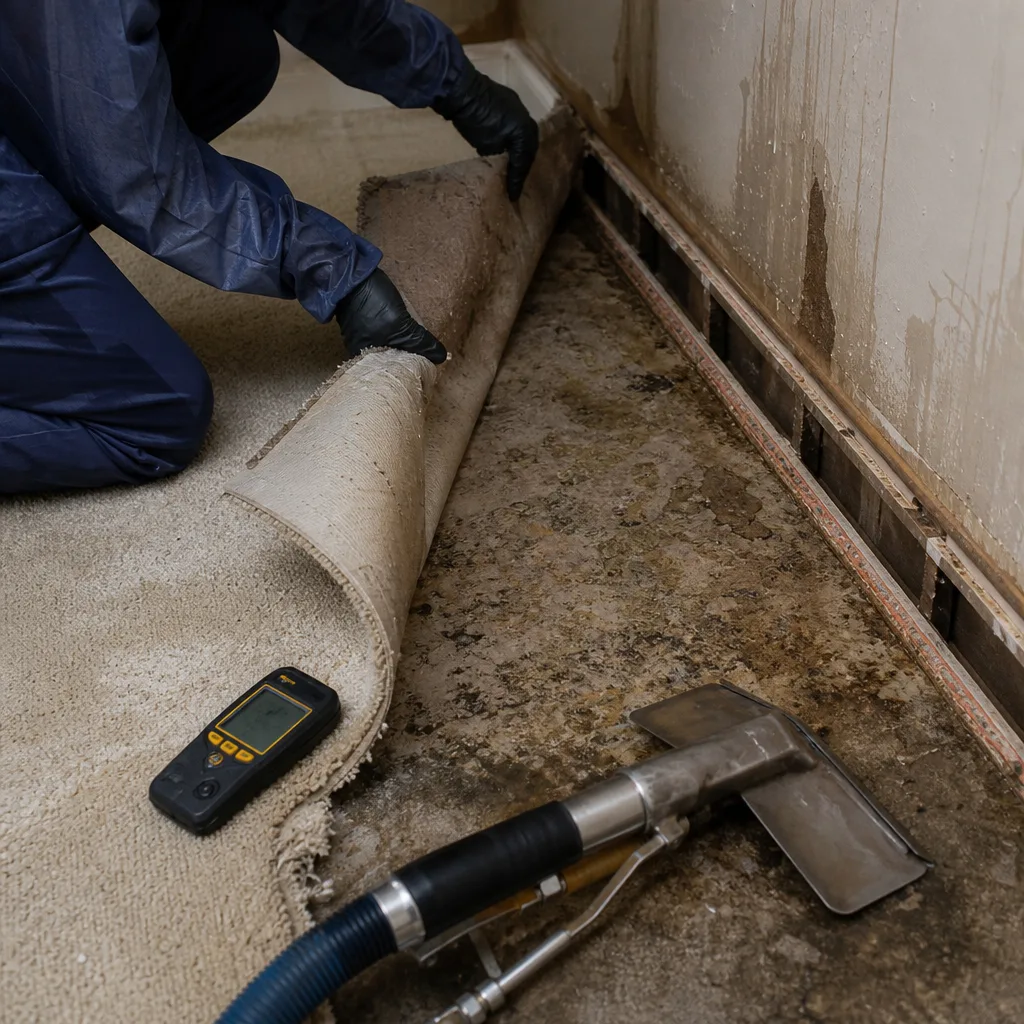
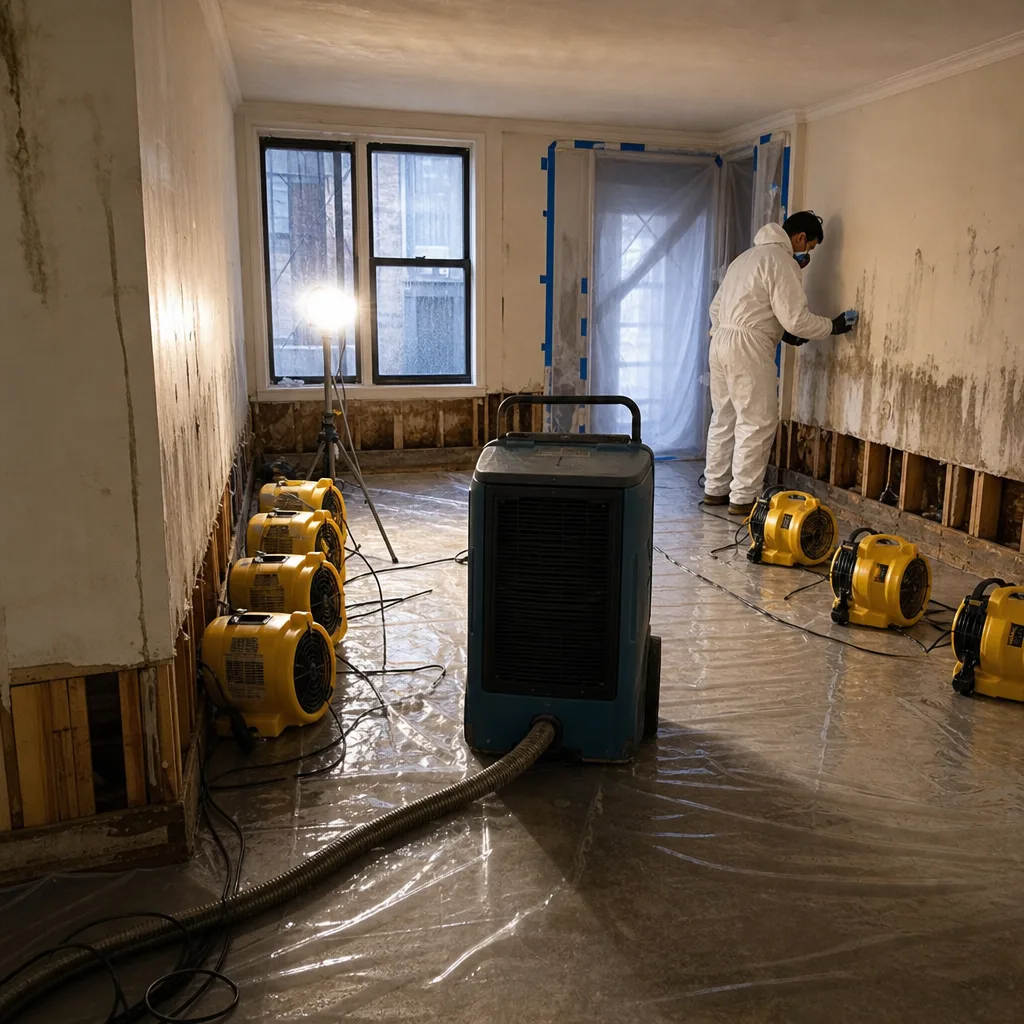
We set Dri-Eaz and Phoenix air movers and LGR dehumidifiers inside every affected room and cavity. For plaster-and-lath walls, we pull baseboards and drill small holes to get airflow behind the plaster, reading moisture levels daily until the dry standard is met.
Cleaning & Sanitization
After drying comes antimicrobial application on any surface that held stormwater, plus HEPA air scrubbing to pull particulates out of the air after demolition or wind-blown debris intrusion.
Wind & Storm Specialty Work
For wind-damaged doors, roof penetrations, and envelope breaches, we address the structural opening first, then the interior finishes. This includes emergency board-up, roof tarping, and replacement of wind-rated doors where required.
Repairs & Restoration
Once the structure is dry and stable, the same Floodline crew handles rebuild: new plaster or drywall, baseboards, paint, and finish work. We hand you the moisture log and the 90-Day Done Right Promise in writing.
Need Emergency Storm & Disaster Restoration in Midtown West Now?
Crews minutes away, answering live 24 hours a day. The sooner we start, the less it costs.
Working With Your Insurance Company
Insurance claims after a Midtown West storm loss go smoother when the adjuster gets documentation that matches the actual building conditions, not a generic template. From the first hour we are on site, we photograph everything room by room, take moisture readings with calibrated meters, and log drying progress daily. Our line-item estimates follow industry-standard pricing software that adjusters recognize. We speak directly with your carrier, send them the documentation they need, and bill them directly when coverage applies. You do not shuttle paperwork back and forth. Curt Bowman built Floodline Restoration Co. around exactly this: a restoration company that handles the insurer relationship so the homeowner can focus on getting life back to normal. And every job we do is backed by the 90-Day Done Right Promise, in writing.
What We Provide Your Insurer
- Thorough documentation of the loss from the first hour
- Photos of all damage, room by room and unit by unit
- Moisture readings and daily drying logs for every affected cavity
- A detailed, line-item scope of work with local Midtown West pricing
- Direct coordination with your carrier until the claim closes
Built for Midtown West’s Loss Calendar
Midtown West gets its storm losses in waves, and the calendar is predictable if you’ve worked here long enough. January and February bring deep freezes that pop supply lines in pre-war buildings along West 44th through West 52nd, where original galvanized pipe has been in service since Calvin Coolidge was president. March and April are the thaw months: water from melting snow finds every failed membrane and loose flashing on the neighborhood’s flat roofs, especially on walkups in Hell’s Kitchen and Clinton. Summer thunderstorms roll in off the Hudson and hit upper-floor windows and roof equipment hard, with wind-driven rain pushing through aging window seals on pre-war frames. Late summer into fall, hurricane remnants and nor’easters test every roof membrane, parapet cap, and exterior door between Eleventh Avenue and Central Park. And for buildings near 11th Avenue, the Hudson proximity makes lower-level mechanical rooms and below-grade spaces a documented flood-surge risk, a fact that has been on insurers’ radar since Sandy in 2012. We schedule around this calendar, and we keep crews and equipment staged to respond inside Midtown West within 45 minutes when any of it happens.
Storm & Disaster Restoration Across Midtown West’s Neighborhoods
Midtown West is not one neighborhood. It stretches from the Hudson River to Eighth Avenue and from roughly West 34th up to West 59th, and the restoration work differs block by block. In Hell’s Kitchen, the dominant stock is pre-war walkup tenements and mid-rise apartments with flat roofs, steam risers, and shared vertical chases; wind damage here usually means water getting behind plaster and traveling down interior walls. Clinton, the northern slice of the same fabric, has more larger rental buildings with freight elevator windows that dictate our equipment schedule. The Hudson Yards area is newer curtain-wall construction where post-storm work often involves failed window gaskets, roof decking, and mechanical penthouse enclosures, with building management systems that require documented moisture mapping before we can touch a wall. Around Times Square and the West 40s, mixed-use buildings put commercial spaces below residential units, so a storm leak at 3 a.m. in a fifth-floor apartment can be dripping into a restaurant dining room by dawn. And along West 57th Street, the supertall residential towers have their own wind-load engineering; damage there usually shows up in roof bulkheads, terrace doors, and exterior components rather than interior framing. The geography shapes the job, and our crews know the difference between a West 47th walkup and a West 57th tower.
Specialized Storm & Disaster Restoration Services We Offer in Midtown West
Storm Damage Cleanup
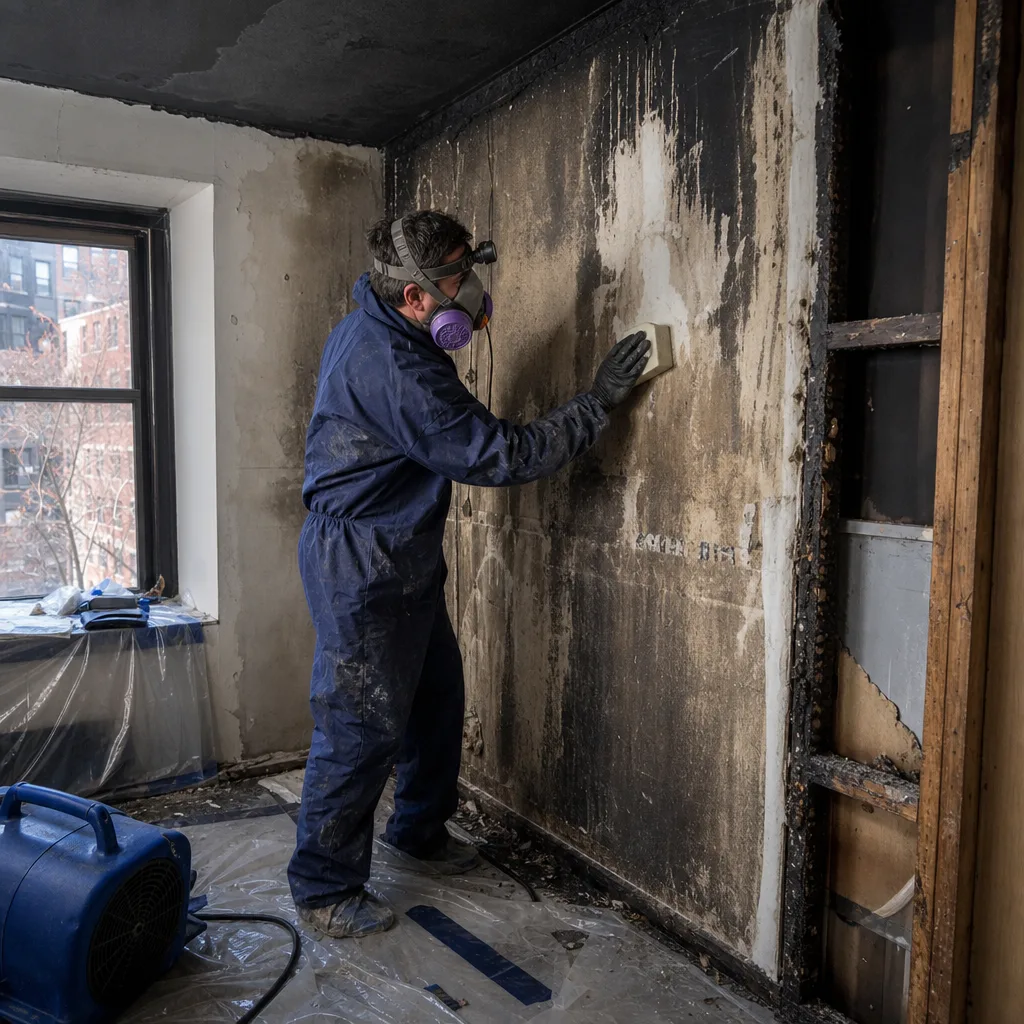
When wind-driven rain or a failed roof membrane soaks a Midtown West apartment, cleanup starts with extraction and containment, then moves to demolition of what cannot be saved. We work in pre-war plaster buildings where disturbed materials may require asbestos abatement before we open walls or ceilings, and we sequence that work with building management and DOB requirements so the job doesn’t stall.
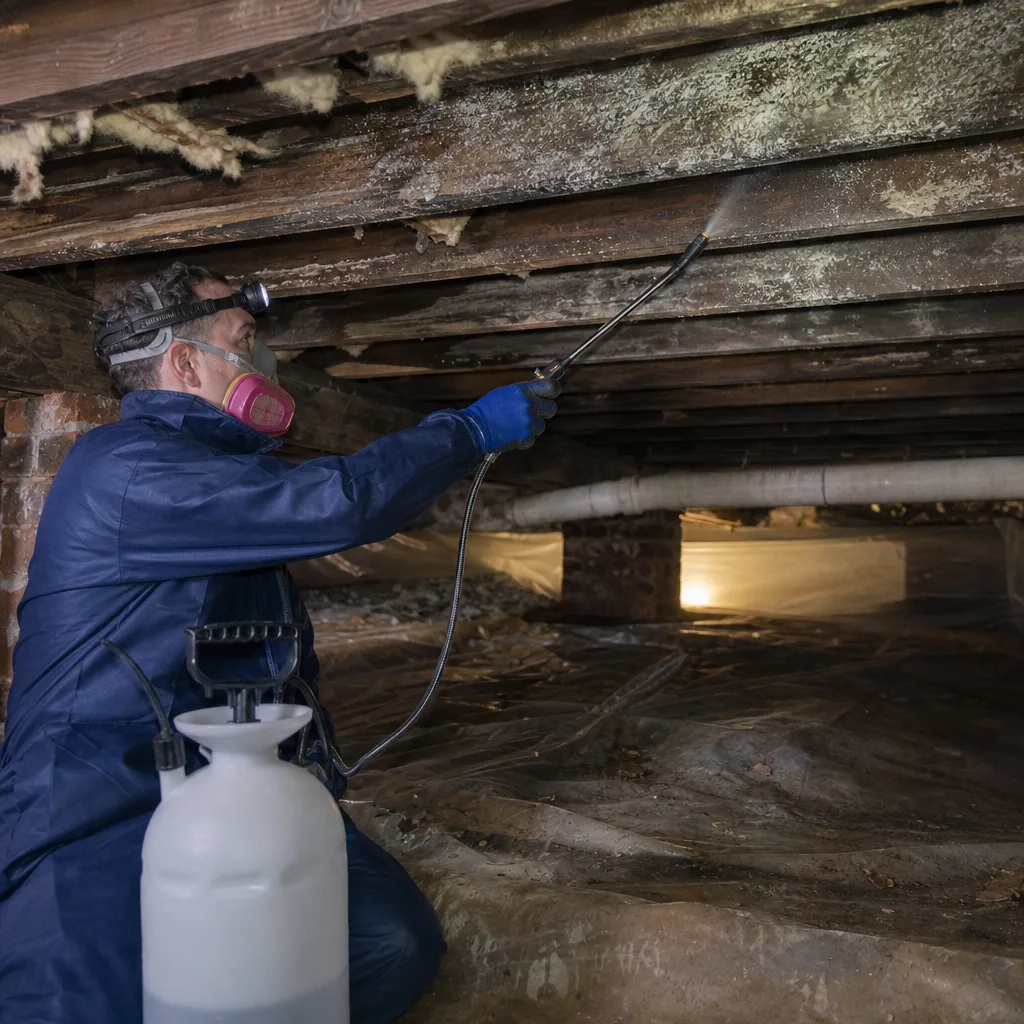
Flood Damage Restoration
Midtown West buildings near the Hudson and along the 11th Avenue corridor sit in a documented flood-surge zone. Floodwater is Category 3 by default, carrying river water, sewage, and street runoff. We treat it as contaminated from the first hour: full extraction, removal of saturated porous materials, antimicrobial treatment, and structural drying with Dri-Eaz and Phoenix equipment, logged daily until the dry standard is met.
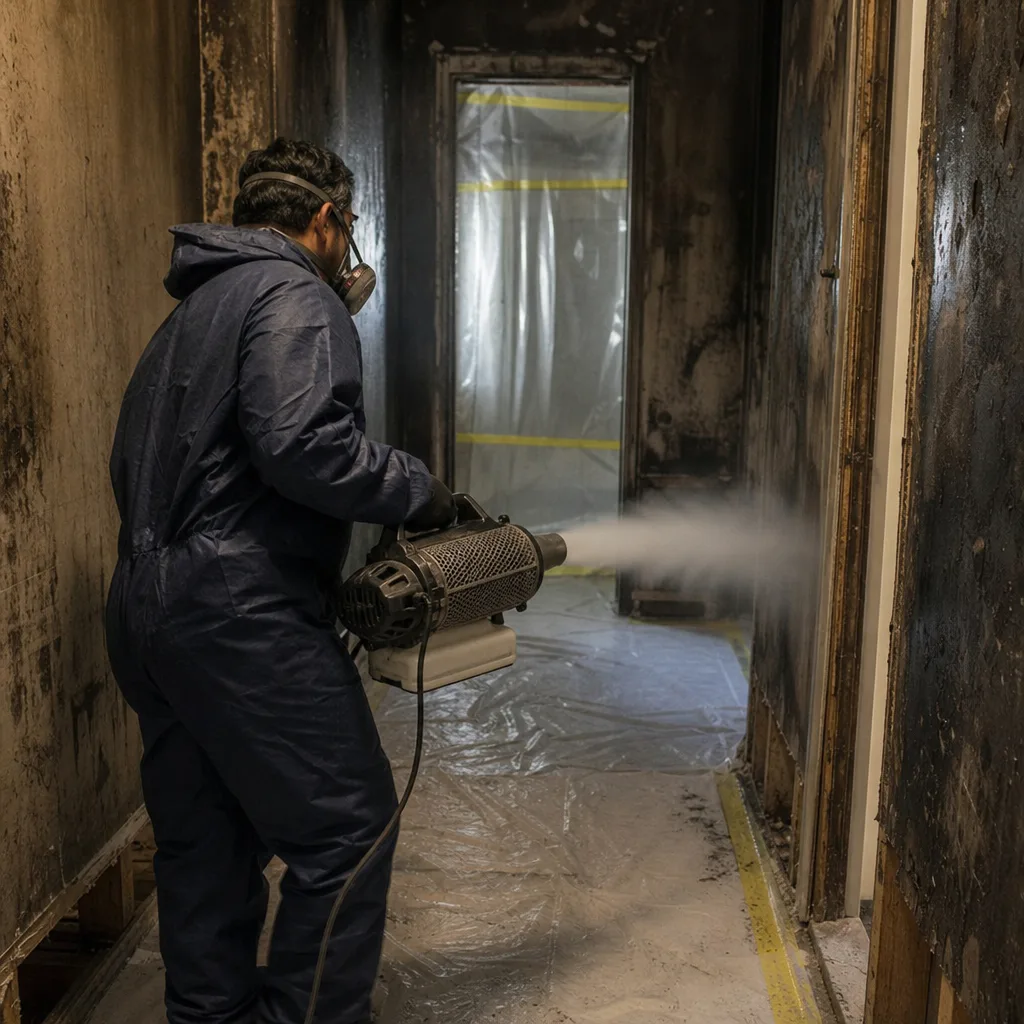
Emergency Board-Up
A blown-out window or damaged door on a Midtown West street-level or upper-floor unit leaves the building open to weather, theft, and further damage. We board and secure openings the same visit, and we know the difference between temporary plywood and a code-compliant board-up that satisfies a DOB inspector. When the freight elevator window is two hours on a Tuesday, we work within it.
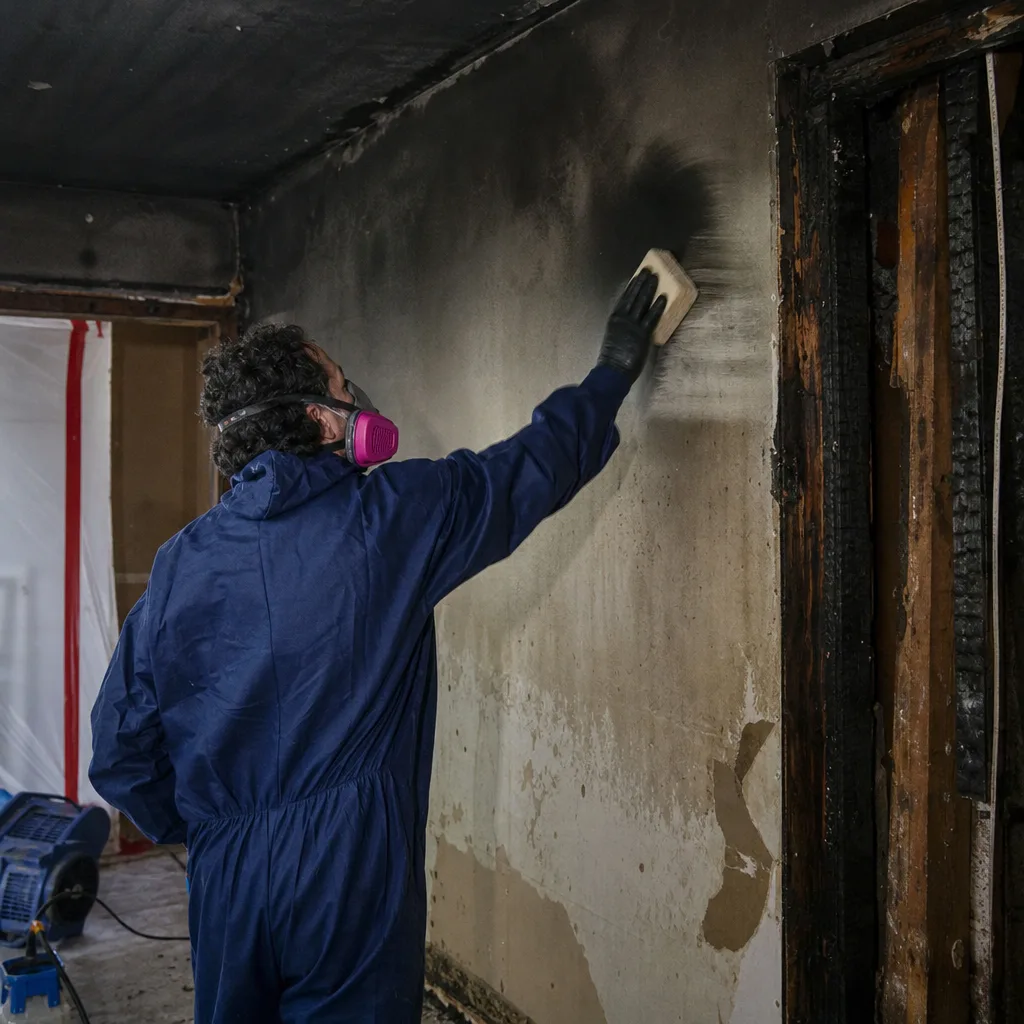
Roof Tarping
Flat and low-slope roofs on Hell’s Kitchen and Clinton pre-war buildings are the first thing to fail in a nor’easter. We deploy reinforced tarps and secure them against wind uplift, then document the temporary cover so water stops entering while a permanent roof repair is scoped. In Midtown West, a roof tarp on a sixth-floor walkup has to survive wind loads off the Hudson, so we tie them down right.
Debris Removal
Storm debris in Midtown West is not just tree limbs. It’s roof gravel, dislodged masonry, broken glass, and damaged mechanical equipment from rooftop penthouses. We remove it, document it for the insurer, and dispose of it legally, including any material that tests positive for asbestos from older building components.
Wind Damage Repair
Wind damage in Midtown West often shows up at the building envelope: exterior doors, windows, roof parapets, and terrace enclosures. Replacing a wind-damaged exterior door on a pre-war building may require NYC Department of Buildings permitting, and we handle that paperwork rather than leaving you with a stop-work order and an open hole in your wall.
What happens when you call
- 1
A real person answersNo phone trees - you reach a local pro.
- 2
You get an upfront price rangeHonest numbers before anyone is dispatched.
- 3
A background-checked tech heads outLicensed & insured, dispatched right away.
- 4
You approve before work beginsNothing starts until you say go.
Storm & Disaster Restoration Costs in Midtown West, NY
Storm damage restoration in Midtown West runs on a different cost curve than almost anywhere else because the building stock is old, dense, and regulated. A straightforward storm cleanup with extraction and drying in a Hell’s Kitchen apartment typically runs $2,800-$5,500. Water intrusion behind plaster-and-lath walls that requires opening cavities and rebuilding surfaces lands between $6,000 and $14,000, depending on the number of units affected. Emergency board-up on a Midtown West storefront or apartment runs $450-$1,200 the same day. Roof tarping on a six-story walkup runs $1,500-$3,800, with wind-load anchoring and fall protection included. A full wind-damage restoration with door replacement, interior drying, and rebuild in a pre-war building can reach $20,000-$45,000 when asbestos abatement, DOB permits, and freight elevator logistics are in play. What moves the price: number of stacked units affected, whether the freight elevator window aligns with our equipment schedule, whether asbestos testing is required, and whether the roof membrane itself must be replaced. Insurance covers most storm losses, and we bill your carrier directly. The fastest way to a firm number is a free visual inspection; call (845) 305-5737 and we’ll scope it in writing before any work begins.
We Also Serve Cities Near Midtown West
Floodline Restoration Co. runs the same 45-minute response and live 24/7 dispatch into the neighborhoods around Midtown West, including Upper West Side, Upper Manhattan, Morningside Heights, and Central Harlem. If your building is anywhere in Manhattan’s west-side storm zone, we can get to you.
Serving Midtown West, NY - Our Local Coverage Area
We’re based in the Midtown West area and know this community well. Use the map below to see our service coverage - if you’re nearby, we can almost certainly help.
Midtown West Storm & Disaster Restoration Questions, Answered
Does replacing a wind-damaged exterior door on a Midtown West pre-war building require a NYC Department of Buildings permit?
Yes, in most cases replacing an exterior door in a Midtown West pre-war building requires a DOB permit, and we handle the filing rather than leaving you exposed to a stop-work order. The permit requirement applies when the door is part of the building envelope and its replacement alters the existing opening or involves structural anchoring. A simple same-size swap may qualify as a minor alteration, but if wind damage has compromised the surrounding frame, lintel, or masonry, the DOB will want a permit and possibly an engineer’s sign-off. In Hudson Yards and newer towers, building management layers their own approval process on top of the city requirements. Call (845) 305-5737 and we’ll tell you exactly what your building needs before we touch the opening.
How do you handle emergency board-up in a Midtown West walkup when the freight elevator has a two-hour window?
We schedule board-up and equipment moves inside the freight elevator window, and we stage material at street level before the window opens. In pre-war walkups off Tenth and Eleventh Avenues, the freight elevator reservation is often two hours, and missing it means waiting until the next day while the apartment stays open to weather. We confirm the window with building management before we arrive, stage plywood, tools, and anchors in the lobby, and do the board-up on the first trip. If the elevator fails or the super double-books, our crew carries what’s needed up the stairs rather than leaving the building unsecured overnight.
What does a failing wind-rated door look like before a storm in Midtown West?
A wind-rated door that’s about to fail shows specific signs: visible light through the jamb, a latch that doesn’t seat fully, rusted or missing through-bolts at the hinges, and deflection when you push on the face of the door. On Midtown West pre-war buildings, the original doors were never wind-rated by modern standards; they held their strength through mass and tight frames, and once the frame starts rusting or the threshold gasket peels, wind-driven rain gets pushed straight into the unit. If you see water staining under the door after a moderate storm, or the door rattles in its frame during high wind off the Hudson, that’s a door that will fail the next time a nor’easter makes landfall. We inspect it for free and tell you honestly whether it needs reinforcement or full replacement.
After a storm, how do you dry a Midtown West apartment with plaster-and-lath walls if water got behind the plaster?
We don’t just set air movers and hope. For plaster-and-lath, we pull baseboards, drill small access holes behind where the baseboard will cover them, and direct airflow into the wall cavity with Injectidry panels or an equivalent method. We read moisture levels daily with probes that go into the plaster and the lath behind it, because plaster dries slower than drywall and the lath behind it holds water even when the surface feels dry. If we can’t get the cavity to dry standard within a reasonable window, we open the wall, remove the wet plaster and lath, dry the framing, and rebuild. Rushing this step is how mold gets a foothold inside Midtown West walls. The moisture log we hand you at the end is your proof it was done right.
What’s the difference between category 1 and category 3 water in a Midtown West flood from a broken steam riser?
A broken steam riser in a pre-war Midtown West building is usually Category 1 at first: water that started clean, even if the riser is old. But it becomes Category 2 or Category 3 quickly if it passes through a floor assembly, picks up decades of dust and debris inside the pipe chase, or sits for more than 48 hours. Steam condensate running through a wall cavity can also pull asbestos fibers and old soot into the mix. We test and classify the water when we arrive, and that classification drives everything downstream: what we remove, what we dry, and how we treat the affected space. Category 3 floodwater from a storm or sewer backup gets treated as contaminated from the first minute, no exceptions. For a specific classification on your building, call (845) 305-5737 and we’ll assess it on site.
How fast can you actually get to Midtown West in a storm emergency?
We commit to 45 minutes for Midtown West when you call our live dispatch line. That’s a real number, not a marketing promise. Our crews are staged around Manhattan and run 24 hours a day, so a midnight nor’easter call gets the same response as a Tuesday afternoon window blowout. Traffic in Midtown West is a factor, which is why we route from the nearest crew, not a central depot. Call (845) 305-5737 and a dispatcher gives you a straight ETA, not a recording.
Will my insurance cover storm and wind damage restoration in Midtown West?
Most standard policies cover storm and wind damage, including water that enters through a roof breach or a wind-damaged door. What insurers question is whether the owner mitigated promptly and whether the damage is from a covered peril rather than long-term deferred maintenance. That’s why we document from the first hour: photos before we move anything, moisture readings, and a timeline that shows we acted immediately. We bill your carrier directly and handle adjuster communication. Curt Bowman built Floodline Restoration Co. so homeowners never have to argue with an insurer alone. If you want us to review your policy and assess the loss, call (845) 305-5737.
Can I stay in my Midtown West apartment during storm damage restoration?
Sometimes, but in pre-war Midtown West buildings, water migration often crosses into adjacent units, which means fans, dehumidifiers, and containment. If the affected area is a single room and the building has ventilation, you can usually stay while we work. If there are multiple units involved, or the water is Category 3, or we’re running HEPA scrubbers and containment, staying is not realistic for a few days. We tell you straight at the first inspection, not after equipment is already in your living room. The free inspection clears it up fast.
Written by Curt Bowman, Owner at Floodline Restoration Co., serving Midtown West with certified storm and disaster restoration since 2010.