
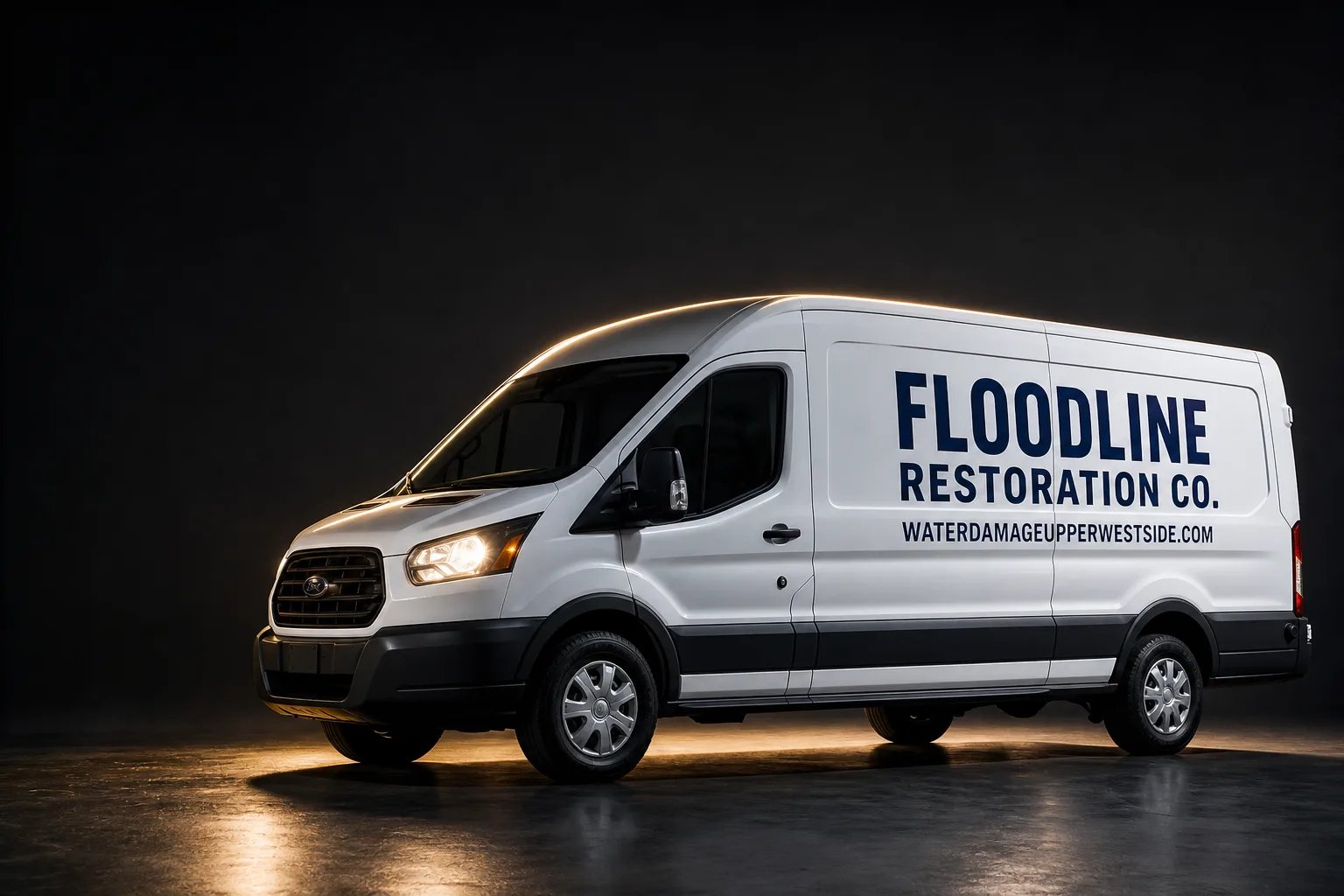
Free visual inspection and a written scope of work before any mitigation begins - photos, moisture readings, and drying logs go in your claim file
The scope we write is the scope we bill. Anything new gets shown to you, in writing, before we touch it.
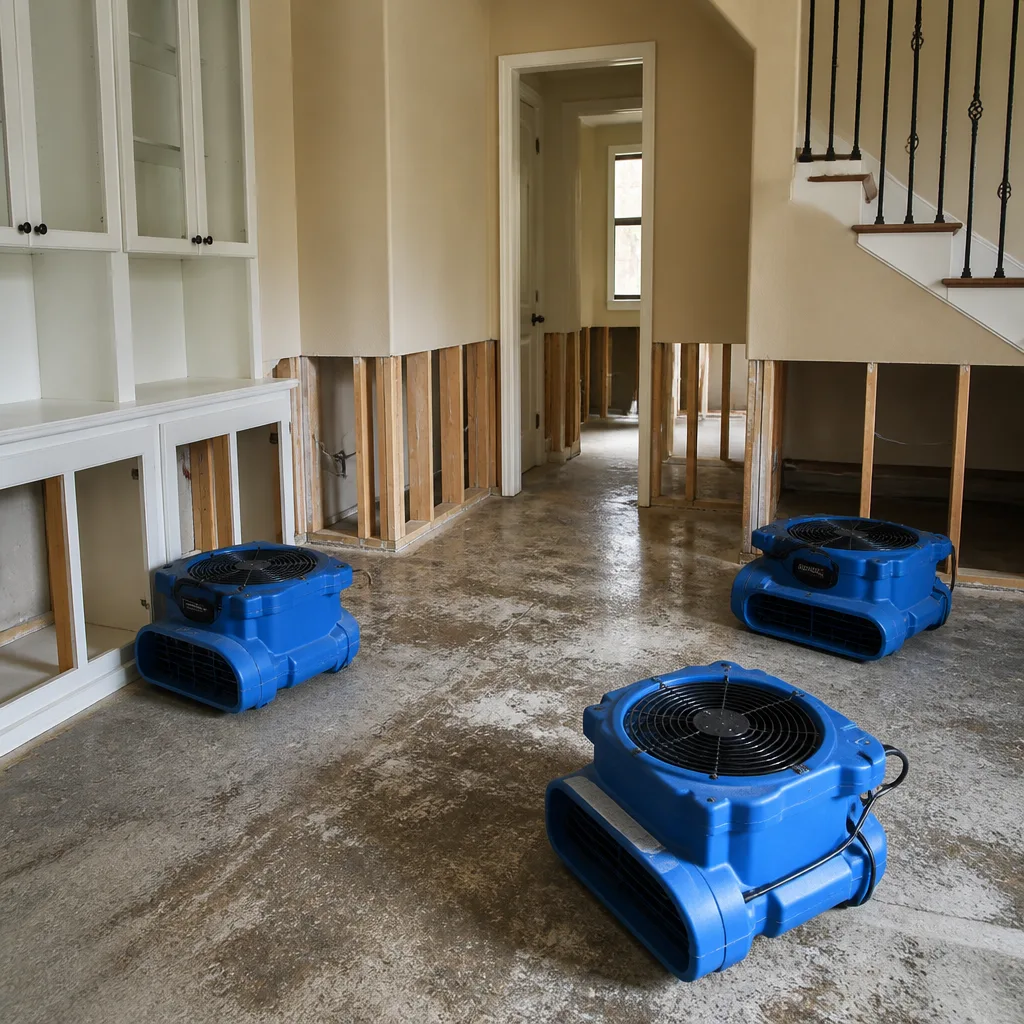
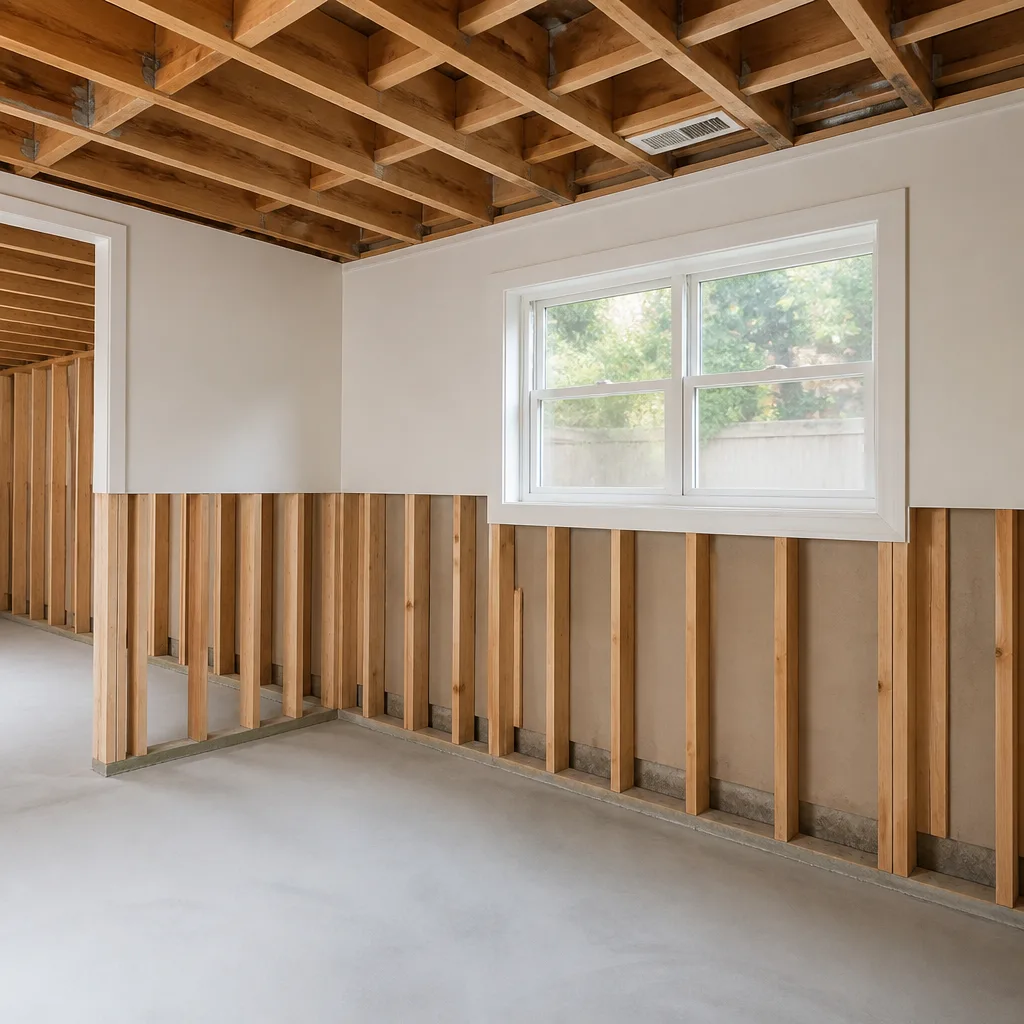
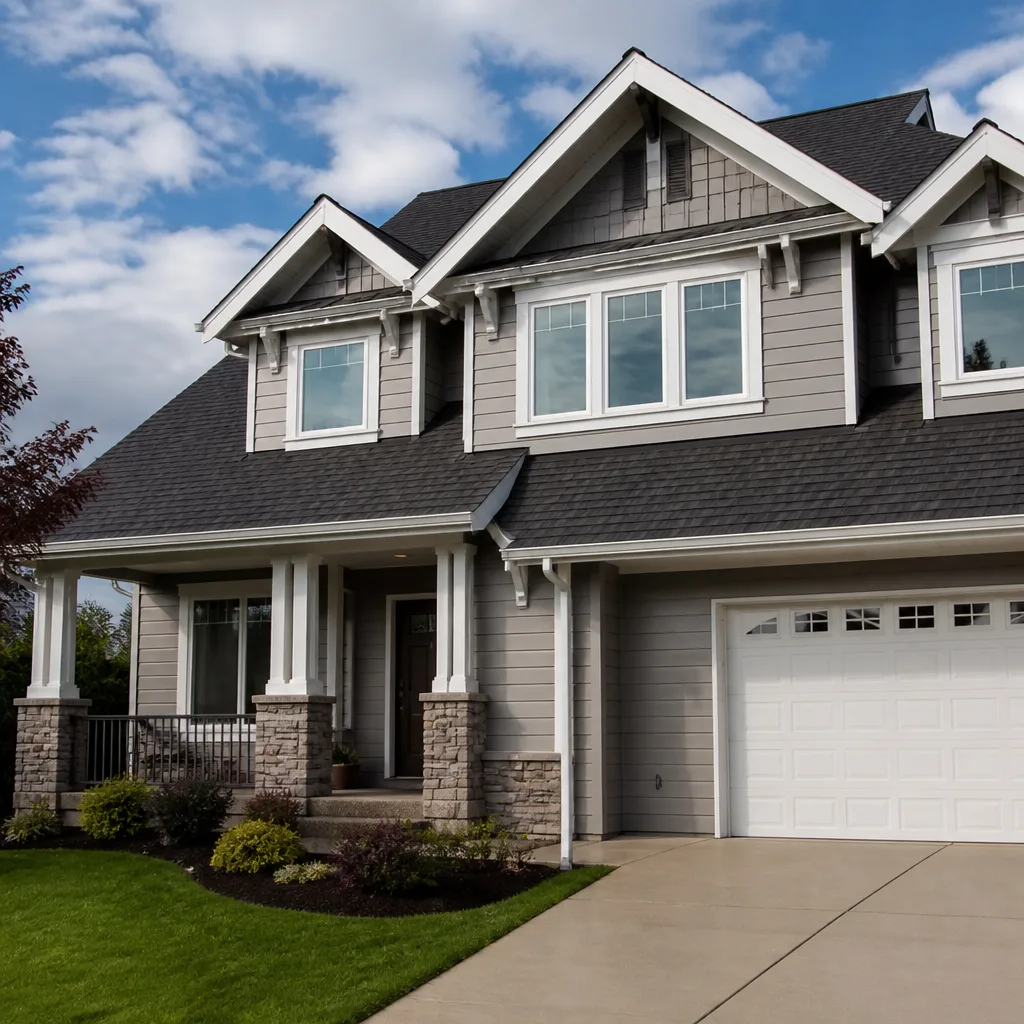
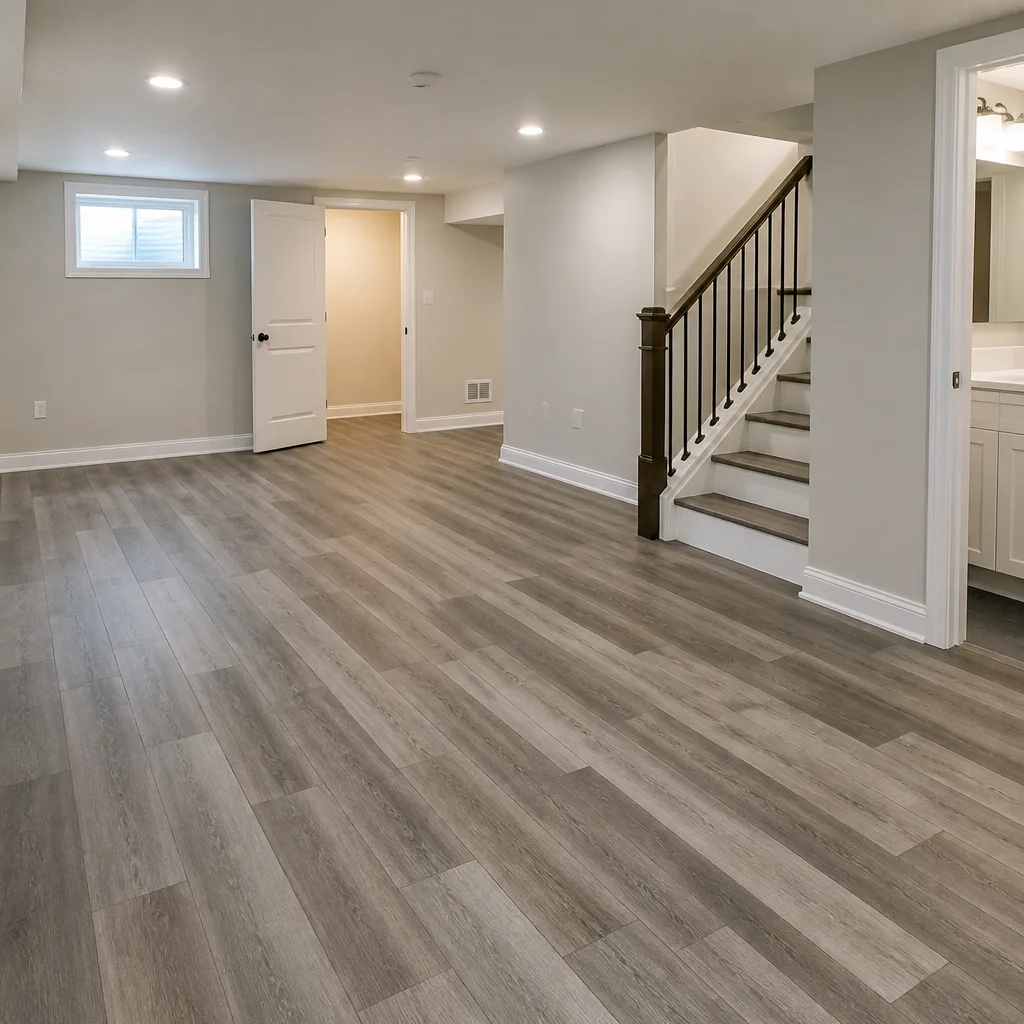
 Before
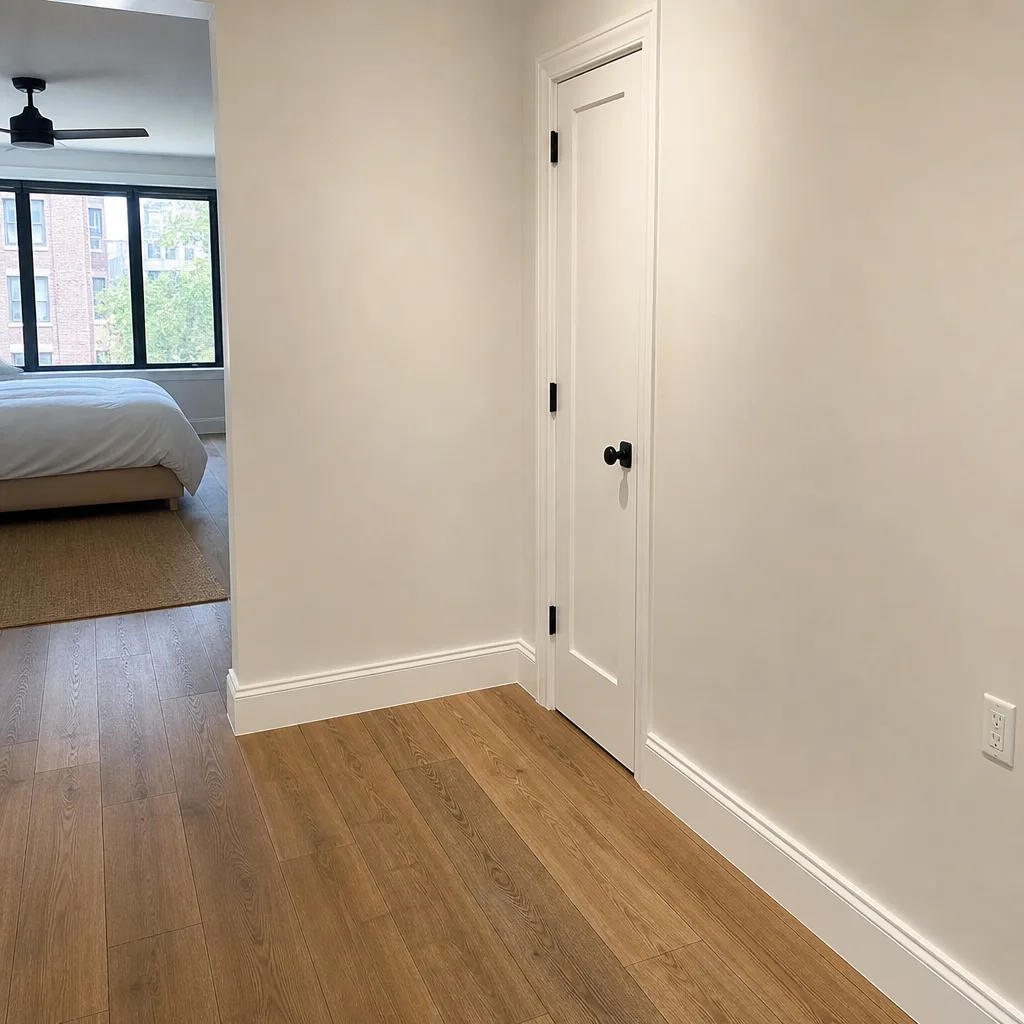 After
After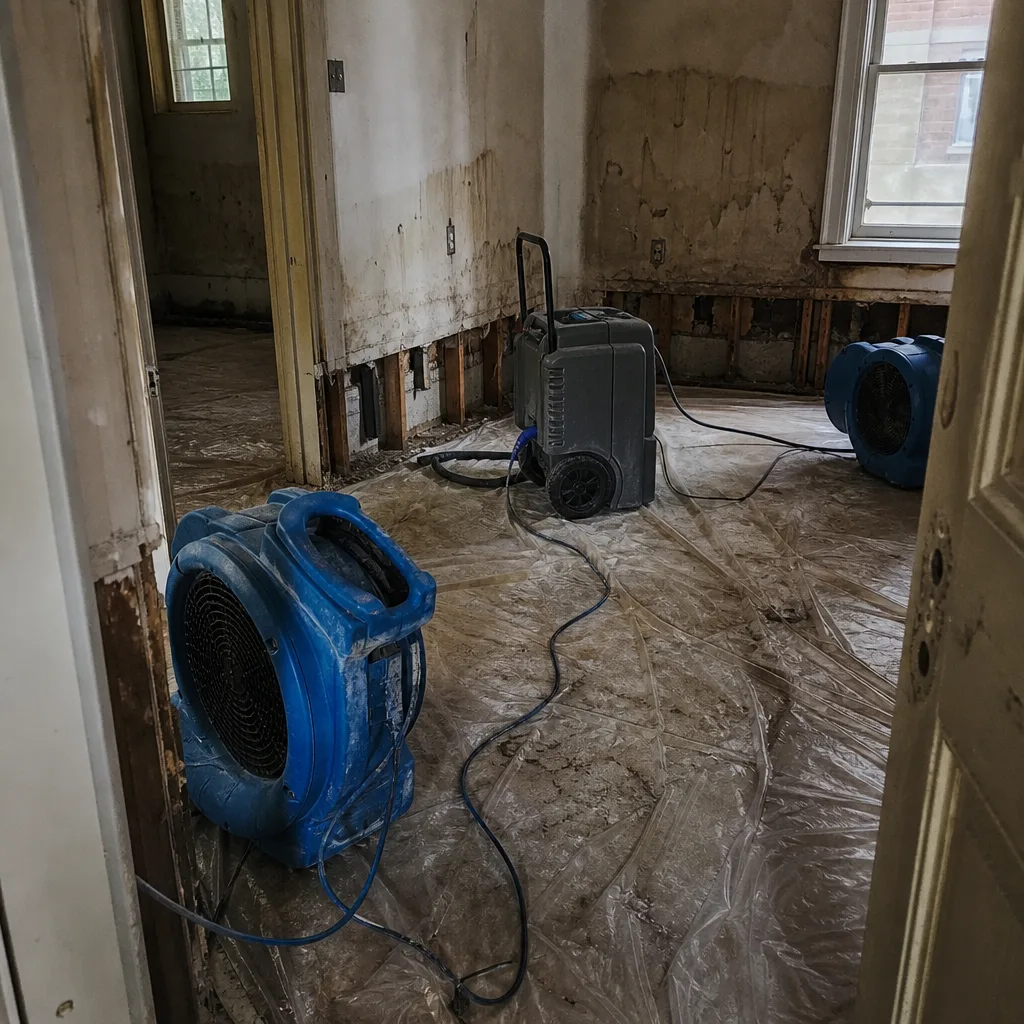 Before
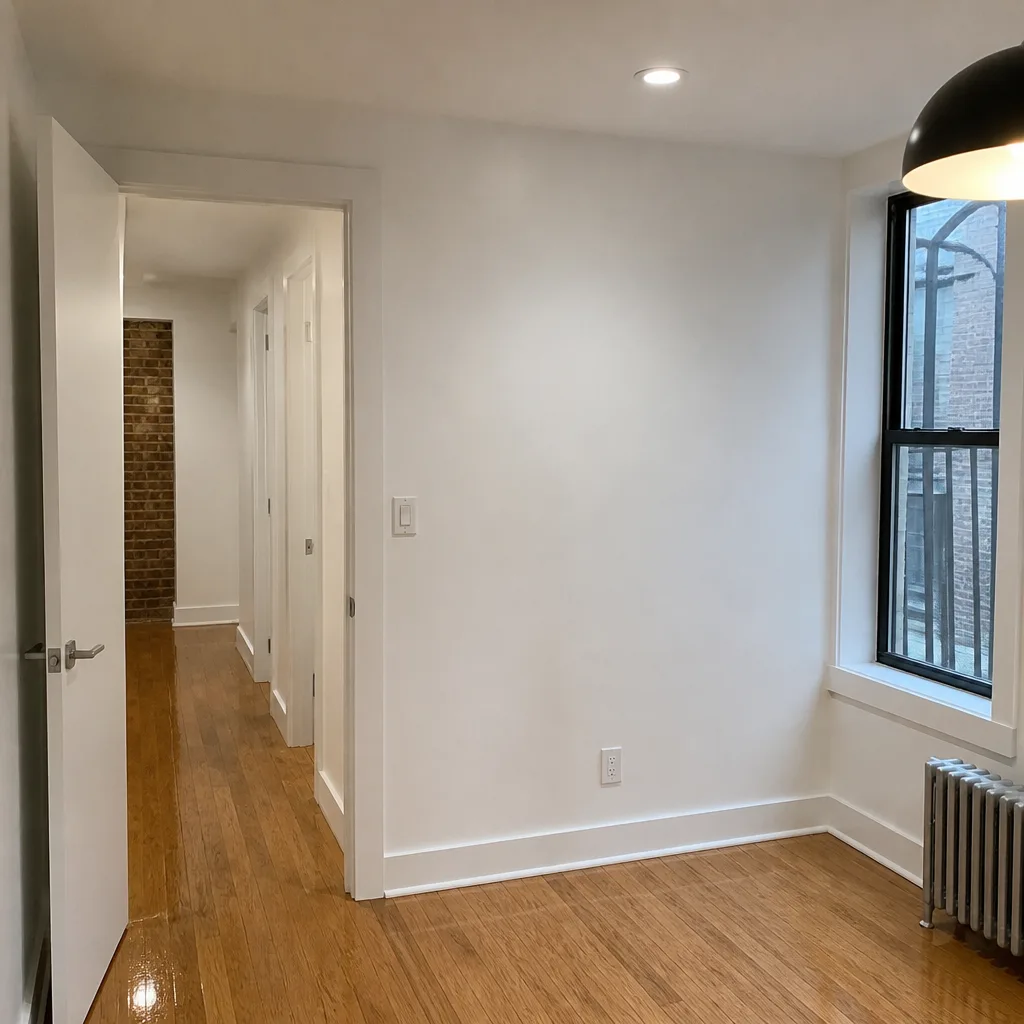 After
After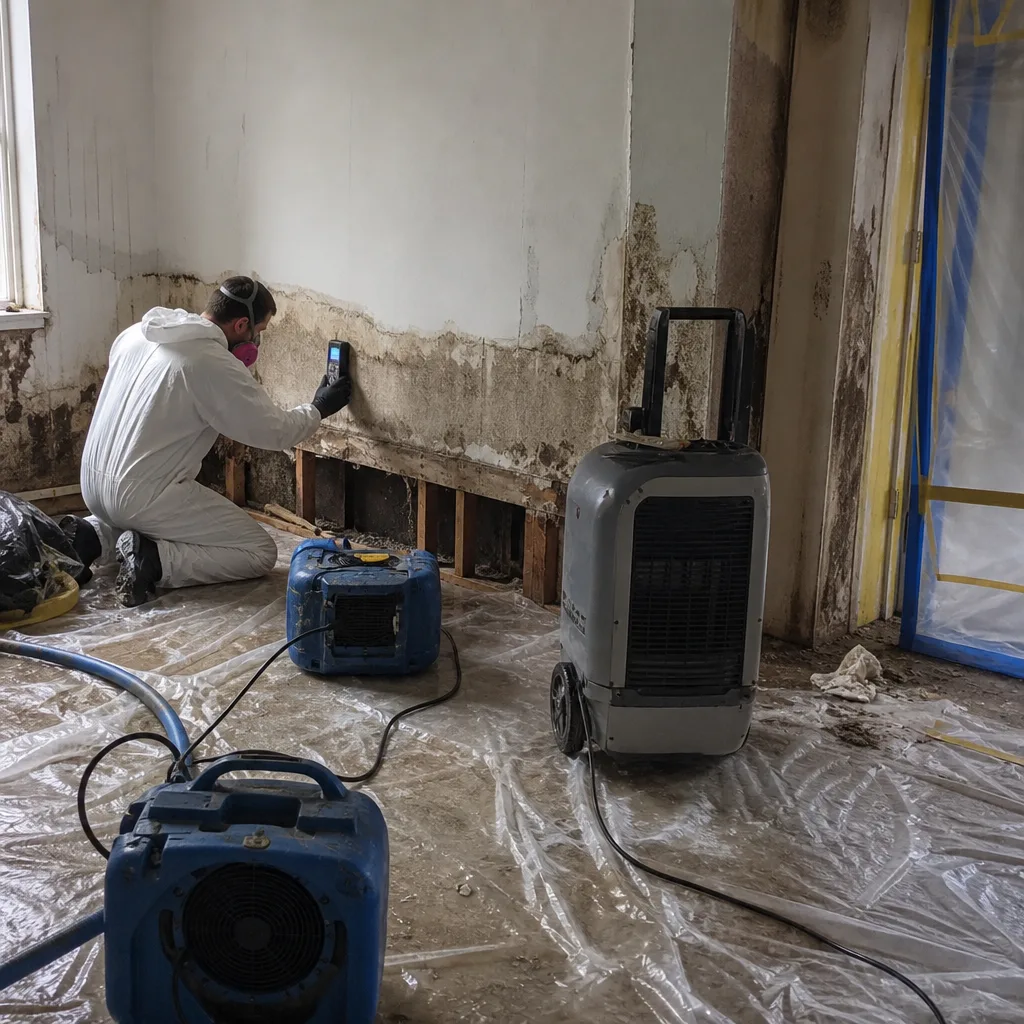 Before
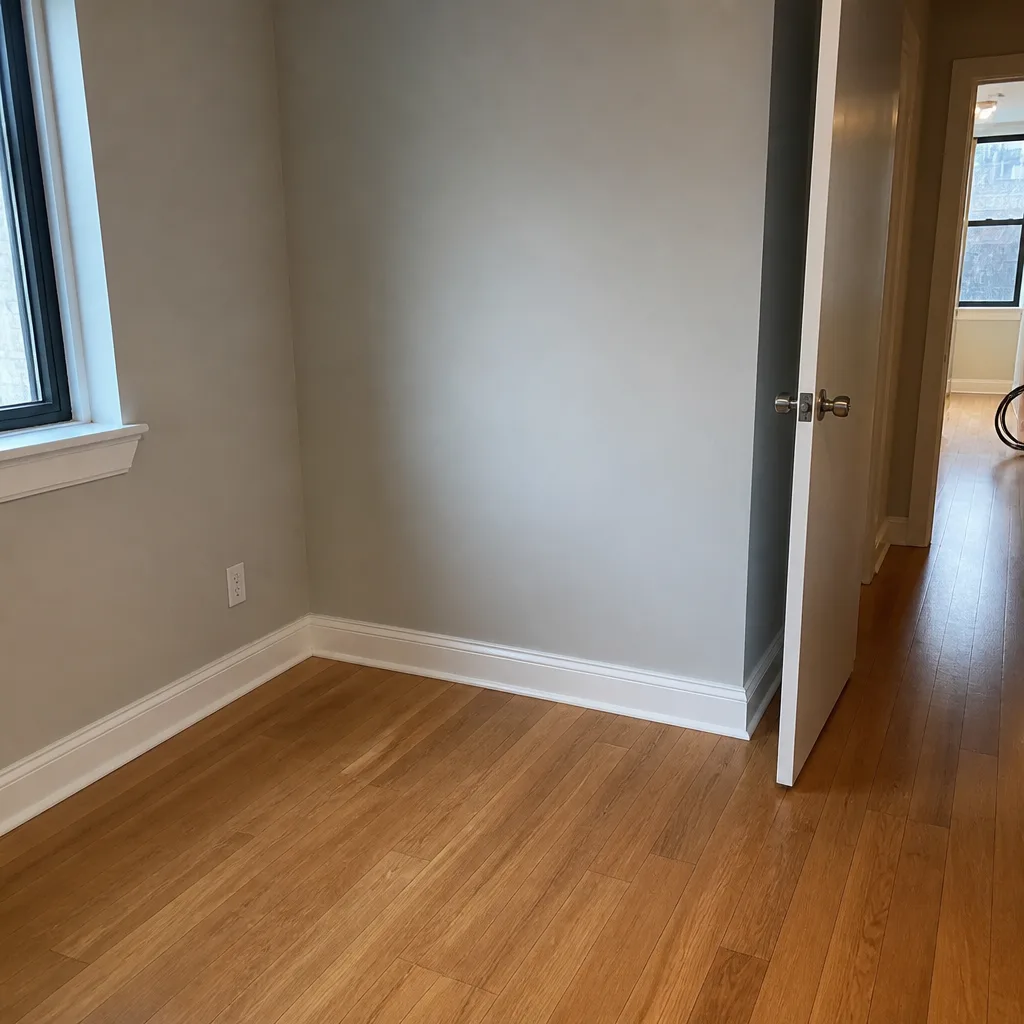 After
After24/7 Emergency Commercial Restoration in Midtown West
Commercial restoration in Midtown West rarely starts with a polite phone call. It starts with a freight elevator that’s suddenly out of service, a burst riser line soaking five floors of product, or a roof membrane that gave way during a February deep freeze. Call (845) 305-5737 and a live dispatcher answers, any hour, every day. We dispatch crews into Hell’s Kitchen, Hudson Yards, and the Garment District from our metro office, and extraction starts the same visit. The first hour matters because wet drywall in a pre-war building hits the 24 to 48 hour mold threshold faster than most property managers realize, and every hour of standing water means more tenant displacement and lost revenue. A free visual inspection puts a certified technician on site to map the damage and give you a straight answer about scope before you commit to anything. No recording, no callback queue. A person picks up.
Understanding Commercial Restoration Severity in Midtown West Properties
Commercial losses in Midtown West split into three practical severity tiers, and the building stock dictates which tier you’re in. The first tier is what we call the slow leak: a pinhole in a galvanized supply line behind a plaster-and-lath wall, Category 1 water, caught before it spreads past one or two units. The second tier is the cascading riser failure, which is the signature loss pattern in Hell’s Kitchen’s pre-war tenements. One burst fitting on a shared vertical utility riser sends Category 2 or Category 3 water down through stacked bathrooms and kitchens across five to ten units before building management can even isolate the riser. This is where moisture mapping and structural drying logs become non-negotiable, because plaster-and-lath holds water differently than gypsum board and drying targets have to be set room by room. The third tier is the large-loss event: a fire in a commercial kitchen that drives soot through common hallways and elevator shafts, or a flood-surge event near 11th Avenue that fills lower-level mechanical rooms and parking. These jobs require HEPA air scrubbing, containment chambers, and a scoped reconstruction plan before any finish work starts. The severity isn’t just about how wet or burned things got. It’s about how many units, how many tenants, and how much of the building’s original construction is now involved.
Why Midtown West Property Owners Choose Floodline Restoration Co.
- 45-minute response commitment: A certified crew is dispatched toward your Midtown West address the moment you call, not after a salesperson quotes you.
- 24/7 live answer: A real dispatcher picks up at 2 a.m. You’ll never leave a voicemail and wait for a callback.
- IICRC-certified crews: Our technicians hold WRT, FSRT, and AMRT certifications and have cleared background checks before they ever step onto your property.
- Free visual inspection: We assess the damage, map the affected areas, and give you a firm scope in writing, with no obligation.
- Direct insurance billing: We bill your carrier directly and handle adjuster communication, so you’re not the messenger between us and the insurance company.
- One team from extraction to reconstruction: The same crew that sets containment and runs drying equipment also handles the rebuild. No mid-job handoff to a subcontractor you’ve never met.
Our Commercial Restoration Process
Inspection & Assessment
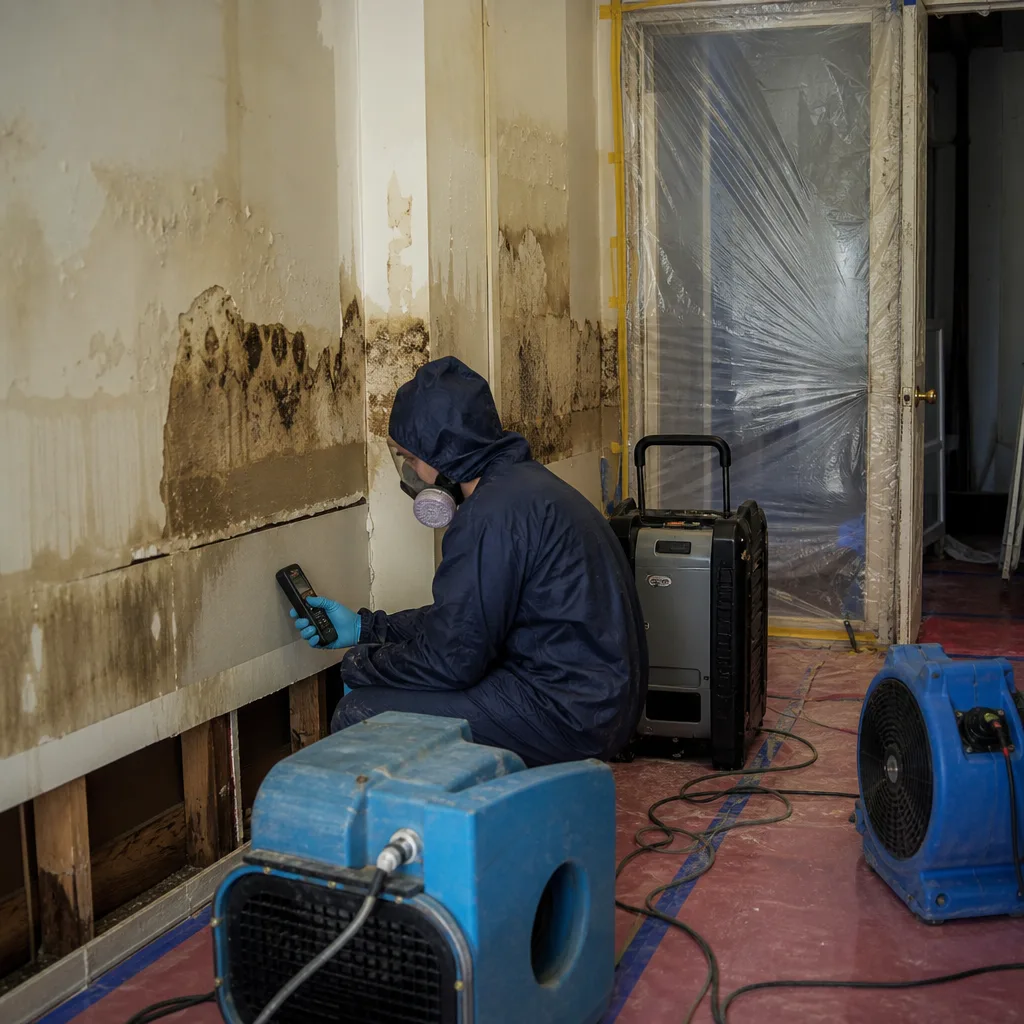
We arrive, walk every affected unit and common area, and use thermal imaging cameras and hygrometers to map the true extent of the loss. In pre-war Midtown West buildings, we specifically check shared riser chases, plaster wall cavities, and ceiling voids where water hides. You get a written scope and a straight answer about what needs to happen.
Extraction & Stabilization
Standing water comes out with professional extraction units. We isolate affected risers, shut down electrical where needed, and install containment to stop soot, water vapor, or mold spores from migrating into unaffected commercial spaces.
Drying & Dehumidification
Dri-Eaz air movers and Phoenix dehumidifiers are positioned based on the moisture map, not a guess. Daily readings are logged until every affected material hits the dry standard. In plaster-and-lath construction, this takes longer than in modern drywall buildings, and we plan for that from day one.
Cleaning & Sanitization
We clean salvageable surfaces, treat affected areas with EPA-registered antimicrobials where appropriate, and run HEPA air scrubbers to clear airborne particulates. Soot, mold spores, and sewage-borne bacteria are not things you want circulating through a shared HVAC system.
Specialty Treatment for Commercial Restoration
This is where Midtown West jobs differ from everywhere else. We coordinate asbestos surveys on pre-war plaster scratch coats, sequence abatement with building management, and document everything for your carrier. We also handle document and inventory recovery for offices and retail spaces where paper files, electronics, and stock were affected.
Repairs & Restoration
We rebuild what needs rebuilding: plaster repair or drywall replacement, flooring, millwork, paint, and finish carpentry. The 90-Day Done Right Promise applies to the entire scope, from the first extraction to the last coat of paint. If it’s not done right, we make it right, in writing.
Need Emergency Commercial Restoration in Midtown West Now?
Crews minutes away, answering live 24 hours a day. The sooner we start, the less it costs.
Working With Your Insurance Company
Insurance claims on Midtown West commercial losses go sideways when documentation is thin or when the scope gets understated because an adjuster priced the job as if it were a drywall-construction building in the outer boroughs. That’s a costly mistake in pre-war plaster stock. From the first hour, we document everything: photos of every affected room, moisture readings, drying logs with daily entries, and a line-item scope of work built around what this specific building actually requires. We communicate directly with your adjuster and carrier, because you shouldn’t have to translate restoration scope into insurance language. We bill the carrier directly when your policy covers the loss, and you’re never left playing messenger. This is a square deal, and it shows on the paperwork.
What We Provide Your Insurer
- Thorough documentation of the loss
- Photos of all damage, room by room
- Moisture readings and drying logs
- A detailed, line-item scope of work
- Direct coordination with your carrier
Built for Midtown West’s Loss Calendar
Midtown West’s commercial restoration calendar follows the weather, and the weather here does specific things to specific buildings. January and February bring deep freezes that burst aging galvanized and cast-iron supply lines in pre-war buildings along Ninth and Tenth Avenues. When a line lets go on an upper floor, the water follows the path of least resistance down the shared riser chases, and within an hour, five to ten stacked units are involved. Spring brings freeze-thaw damage to flat and low-slope roofs: membrane failures at parapet walls and roof penetrations let water into top-floor ceilings, and by the time tenants see stains, the insulation above is saturated. Summer thunderstorms dump enough rain in an hour to overwhelm aging roof drains, sending water through ceiling light fixtures and into electrical panels. And the proximity to the Hudson River puts lower-level mechanical rooms and parking in buildings near 11th Avenue in a documented storm-surge risk zone, as Hurricane Sandy proved in 2012. The pattern repeats every year. Same buildings, same weak points, same season. Knowing that calendar means we arrive already knowing what we’re looking for.
Commercial Restoration Across Midtown West’s Neighborhoods
Midtown West isn’t one neighborhood. It’s a patchwork of building types and loss profiles, and our response routes reflect that. In Hell’s Kitchen/Clinton, the dominant stock is pre-war walkup tenements and mid-rise apartment buildings with plaster-and-lath walls, original steam risers, and shared vertical utility chases. A restoration job here is never a one-unit job for long. Over in Hudson Yards, the story flips completely: curtain-wall towers with sophisticated MEP systems, strict building management oversight, and construction that demands a different restoration protocol entirely. We work within those management requirements, not around them. The Garment District, roughly from 34th to 42nd Streets west of Fifth Avenue, has a mix of converted loft buildings and older commercial floors where textile storage and sample rooms complicate water and fire losses. Along Eighth Avenue and the Port Authority corridor, retail storefronts and restaurants sit under residential units, which means a kitchen fire or a burst supply line in a ground-floor space can knock a residential tenant’s unit out of service above it. And in the blocks near Times Square, commercial tenants deal with tight freight elevator windows, 24-hour foot traffic, and building rules that make after-hours access complicated. Each area has its own rhythm, and we’ve learned it by working it.
Specialized Commercial Restoration Services We Offer in Midtown West
Office & Retail Restoration
Midtown West offices and storefronts run on thin margins, and downtime is the real cost. When a supply line breaks over a retail floor on Eighth Avenue, or a roof leak soaks a law office’s file room near Times Square, we move fast to keep the business operational. Document and inventory recovery is part of this: we triage what can be saved, dry it properly, and document what can’t, for the insurance claim.
Multi-Unit & HOA Restoration
This is the core of what we do in Midtown West. One burst pipe in a Hell’s Kitchen tenement cascades Category 2 or 3 water into five to ten stacked units before containment can begin. We coordinate with building management, sequence riser shutoffs so adjacent commercial tenants aren’t left without water, and run a single coherent restoration plan across every affected unit. The goal is to keep the building livable and the HOA board informed, not to hand them a stack of invoices and walk away.
Industrial Facility Cleanup
Industrial spaces in Midtown West are rare but real: printing facilities, commercial laundries, food prep commissaries, and below-grade mechanical rooms. These jobs often involve oil, grease, or chemical residue on top of water damage, and they demand a different level of containment and surface treatment. Our crews are trained to IICRC, RIA, and IFA standards, and we bring the equipment the job requires.
Large-Loss Response
When a fire runs through a shared hallway or a storm surge fills a parking level near 11th Avenue, this isn’t a call to a handyman. It’s a coordinated response involving multiple crews, specialized equipment, and a scoped plan that addresses every affected unit and common area. We’ve handled large-loss events in Midtown West’s most demanding buildings, and we don’t hand the job off halfway through.
Business Interruption Minimization
Every day a Midtown West commercial tenant is closed is a day of lost revenue, and the claim rarely covers all of it. Speed matters, but so does sequencing. We coordinate freight elevator access windows with building management before we start pack-out, so we’re not waiting an hour for the service elevator while wet materials sit. We work around your hours where possible, and we get you back to business as fast as the scope allows.
What happens when you call
- 1
A real person answersNo phone trees - you reach a local pro.
- 2
You get an upfront price rangeHonest numbers before anyone is dispatched.
- 3
A background-checked tech heads outLicensed & insured, dispatched right away.
- 4
You approve before work beginsNothing starts until you say go.
Commercial Restoration Costs in Midtown West, NY
A single-unit water loss in a Midtown West commercial space, caught early with no asbestos involvement, typically runs $3,500 to $8,000 for extraction, drying, and finish repair. A cascading riser failure across five to ten units in a Hell’s Kitchen pre-war building is a different animal entirely: expect $25,000 to $80,000 or more, depending on how many units are affected and whether asbestos abatement is triggered. Asbestos surveys and abatement on pre-war plaster scratch coats or pipe insulation routinely add $5,000 to $15,000 to a scope, and out-of-market adjusters frequently underprice this. Fire restoration costs in Midtown West run $15,000 to $75,000 for a contained commercial kitchen or retail fire, and large-loss events in Hudson Yards towers can exceed that significantly due to strict building-management protocols. Insurance covers most of these when the policy language is honored, which is why we document everything from the first hour. A free visual inspection is the fastest way to get a firm number: we walk the space, map the damage, and hand you a written scope before you spend a dollar.
We Also Serve Cities Near Midtown West
Commercial restoration calls from Midtown West often lead us a little north. We serve Midtown West and the surrounding area, including the Upper West Side, Upper Manhattan, Morningside Heights, and Central Harlem. Same crews, same live dispatch, same 90-Day Done Right Promise. If your building is near Midtown West but not in it, call anyway. We’ll tell you straight if we can help.
Serving Midtown West, NY - Our Local Coverage Area
We’re based in the Midtown West area and know this community well. Use the map below to see our service coverage - if you’re nearby, we can almost certainly help.
Midtown West Commercial Restoration Questions, Answered
How does a single pipe burst in one Midtown West commercial unit become a 5-10 unit restoration project?
In pre-war Midtown West buildings, supply lines run through shared vertical utility risers that connect stacked units on every floor. When a cast-iron or galvanized line bursts on an upper floor, water follows the riser chase downward, entering bathrooms and kitchens on every floor below before building management can isolate the line. One failure becomes a multi-unit job in minutes, and every affected unit has to be dried and restored as part of a single coordinated scope. Call (845) 305-5737 the moment you see water migrating, and we’ll get a crew on the way.
Why do Midtown West pre-war buildings need longer structural drying times than modern drywall construction?
Plaster-and-lath walls, which make up most of the residential stock in Hell’s Kitchen built between 1900 and the 1940s, hold water differently than gypsum board. Plaster is denser, lath gaps trap moisture, and steam radiator systems add humidity to the equation. Drying to the dry standard in these buildings often takes two to three times as long as a modern drywall buildout, and cutting corners on drying time means mold behind the walls within weeks. We log daily moisture readings and run Dri-Eaz and Phoenix equipment for as long as the building’s construction actually requires.
What special permit or access requirements apply to commercial restoration in Midtown West high-rises?
Nearly every commercial restoration job in a Midtown West high-rise requires NYC Department of Buildings permits, even for non-structural work like replacing damaged drywall or plumbing fixtures. You’ll also need to secure freight elevator access windows with building management, which means scheduling pack-out and debris removal around the building’s service schedule. Union tradespeople may need to be sequenced around riser shutoffs so adjacent commercial tenants aren’t left without water. We handle all of this as part of our scope, because it’s standard operating procedure in dense Manhattan construction and it’s non-negotiable here.
How do Hudson Yards commercial towers differ from older Midtown West offices in restoration protocols?
Hudson Yards towers are curtain-wall construction with sophisticated mechanical, electrical, and plumbing systems and strict building-management oversight. Restoration in these buildings requires coordinating with building engineers, adhering to specific hours of access, and often working under the supervision of the building’s own facilities team. The construction itself dries faster than plaster-and-lath, but the logistics are more demanding. Older Midtown West offices, especially converted lofts in the Garment District, have their own complications: aging infrastructure, undocumented past renovations, and materials that may require asbestos testing before demolition. We’ve worked in both settings and we plan the scope accordingly.
What roof-related water intrusion signs should Midtown West commercial tenants watch for after winter?
After Midtown West’s winter freeze-thaw cycles, watch for brown staining on ceiling tiles, peeling paint near parapet walls, and water dripping through light fixtures on top floors. Flat and low-slope roofs on Hell’s Kitchen pre-war buildings are vulnerable to membrane failures during repeated freeze-thaw events, and by the time tenants see visible signs, the insulation above has likely been saturated for weeks. If you see any of these signs in spring, call (845) 305-5737 for a free inspection before the next rain turns a slow leak into a ceiling collapse.
How fast can you actually get to a Midtown West commercial property?
We commit to a 45-minute response time for emergency commercial calls in Midtown West, and our crews are dispatched from our metro office the moment you call. A live dispatcher answers 24/7, and extraction equipment is running the same visit in most cases. The faster we start, the less the loss costs, and every hour of delay in a pre-war building pushes more materials past the dry standard and closer to mold. Call (845) 305-5737 and we’ll be there.
Will insurance cover commercial restoration in Midtown West, and do you bill the carrier directly?
Most Midtown West commercial policies cover water, fire, and storm losses, but the claim is only as good as the documentation. We photograph every affected area, log daily moisture readings, and provide a line-item scope of work built for your specific building’s construction, so your adjuster doesn’t underprice a pre-war plaster job as if it were drywall. We communicate with your carrier directly and bill them directly when the policy covers the loss. You’re not the messenger, and there are no surprises on the bill.
Do I really need full commercial restoration, or will a cleanup company do?
If water has soaked into walls, ceilings, or flooring in a Midtown West commercial space, a surface cleanup won’t address what’s behind the plaster or under the flooring. Water trapped in wall cavities and beneath finish materials leads to mold within 24 to 48 hours, and in pre-war buildings with asbestos-containing materials, disturbing those surfaces without proper testing creates a legal liability. Restoration means drying the structure to the dry standard, not just mopping the floor. A free visual inspection will tell you which category you’re in, and we’ll give you a straight answer, not a sales pitch.
Written by Curt Bowman, Owner at Floodline Restoration Co., serving Midtown West and the surrounding area with full-cycle commercial restoration since 2010.