

Free visual inspection and a written scope of work before any mitigation begins - photos, moisture readings, and drying logs go in your claim file
The scope we write is the scope we bill. Anything new gets shown to you, in writing, before we touch it.
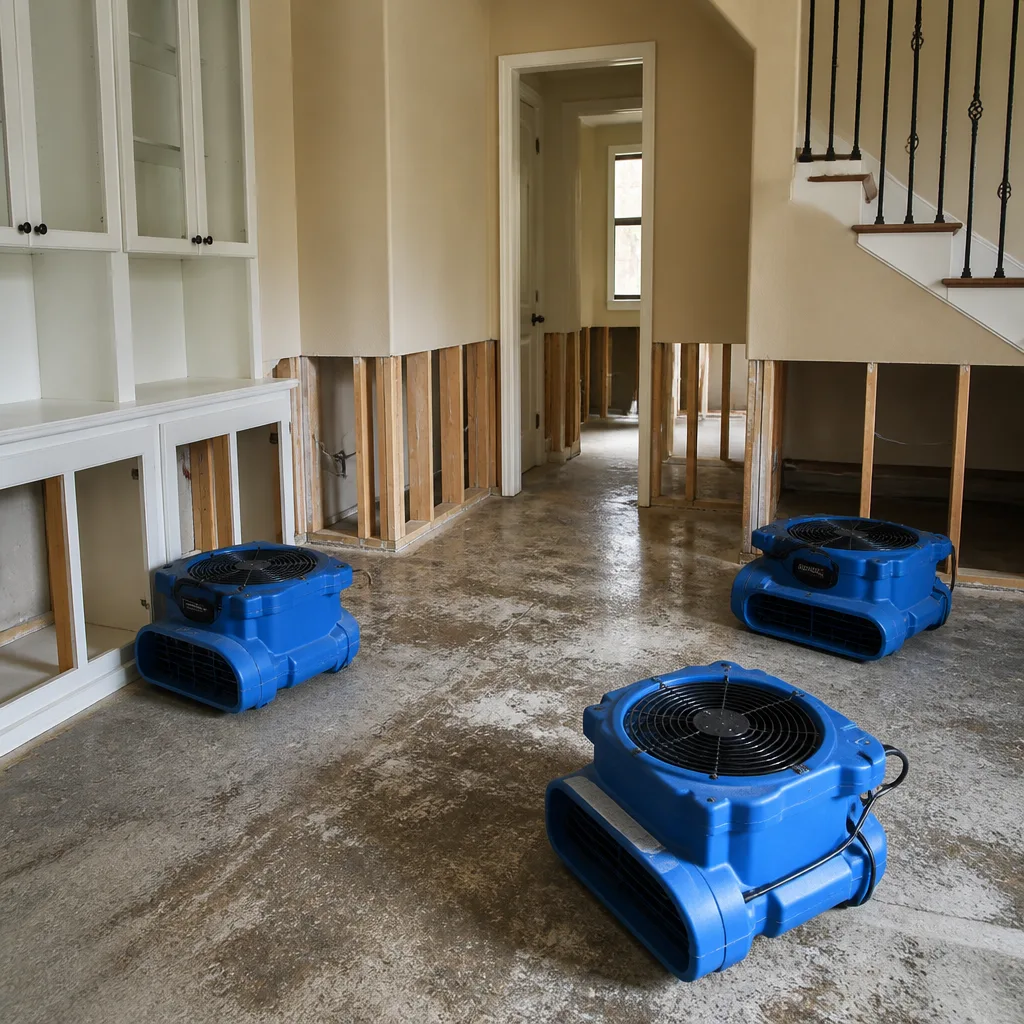
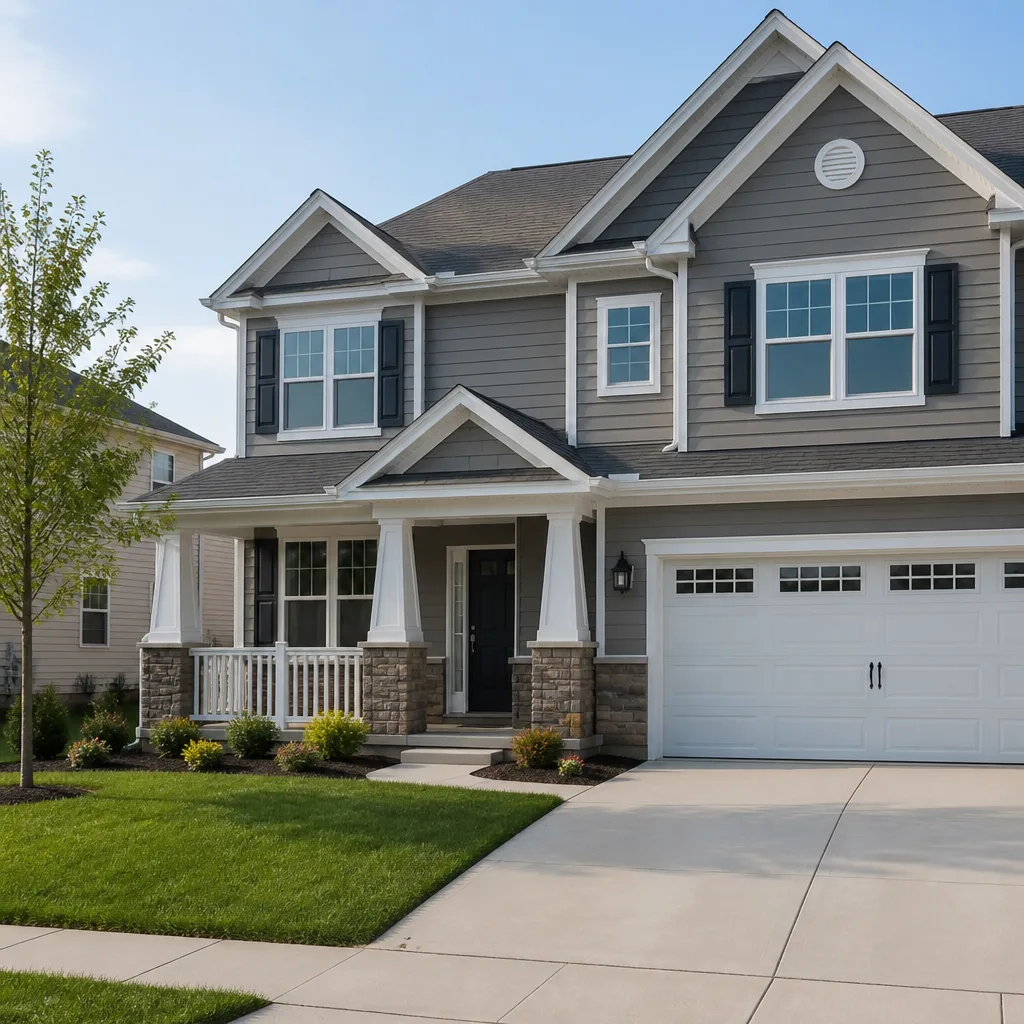
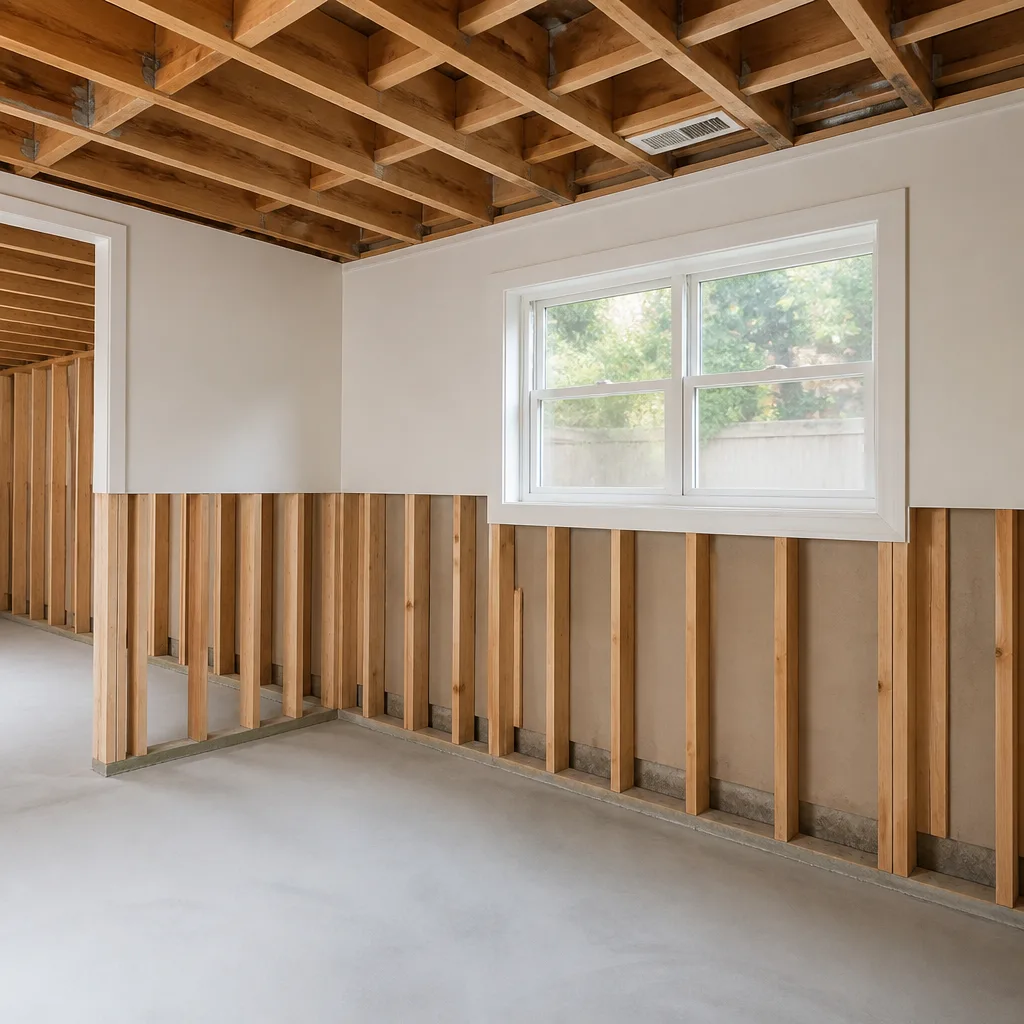
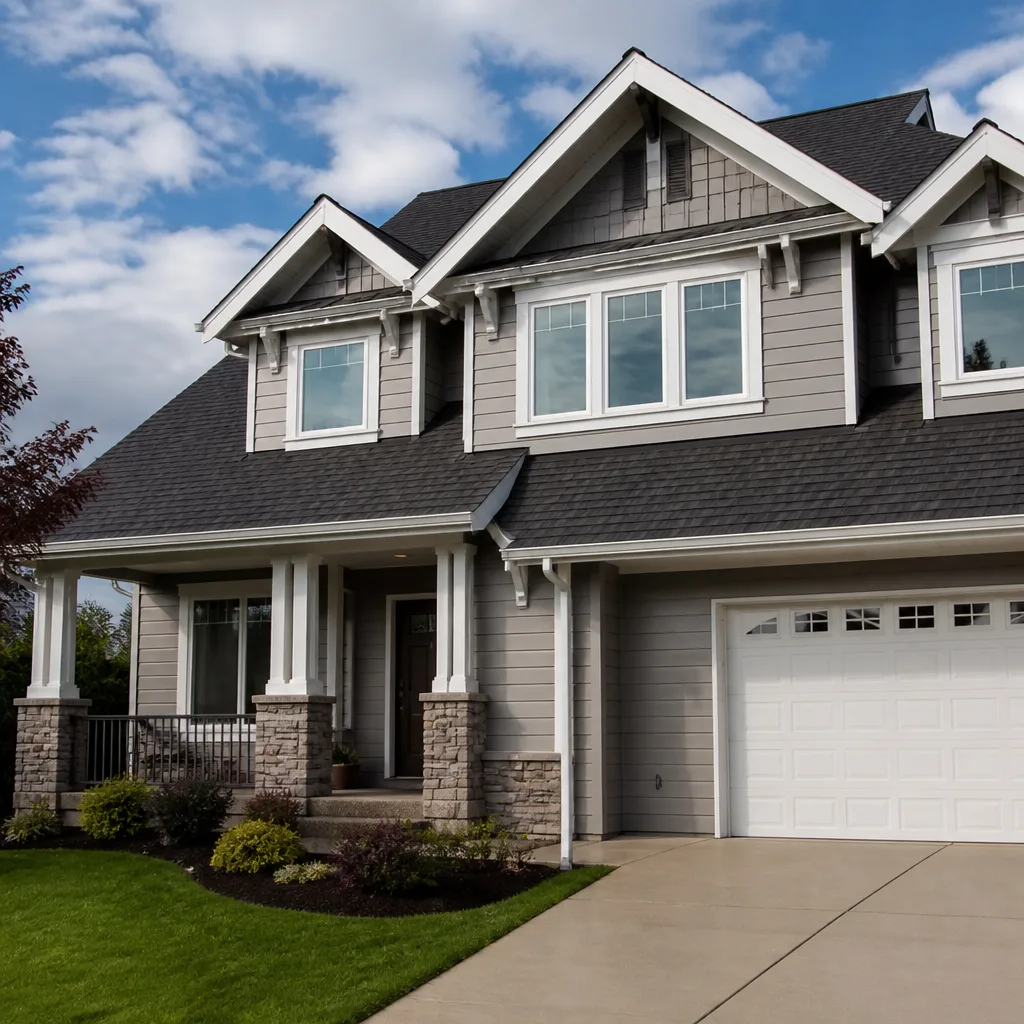
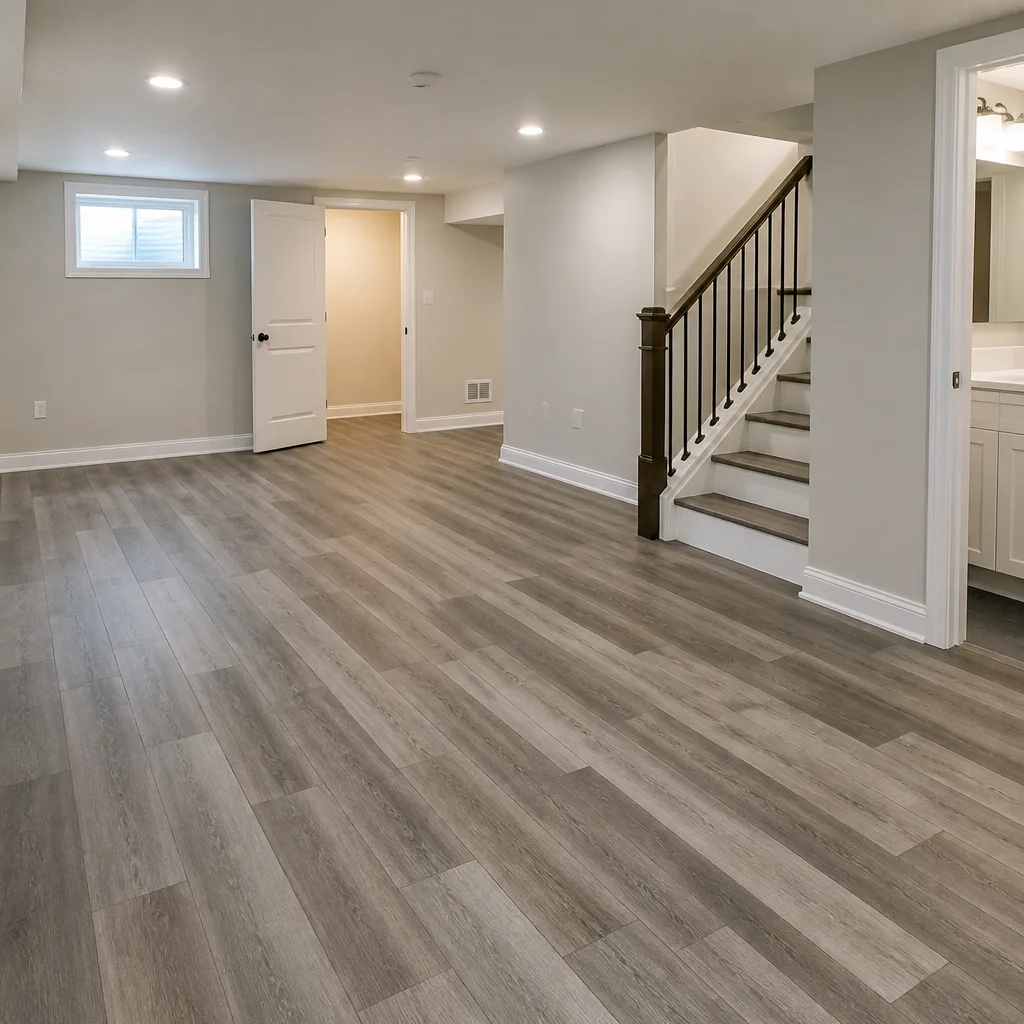
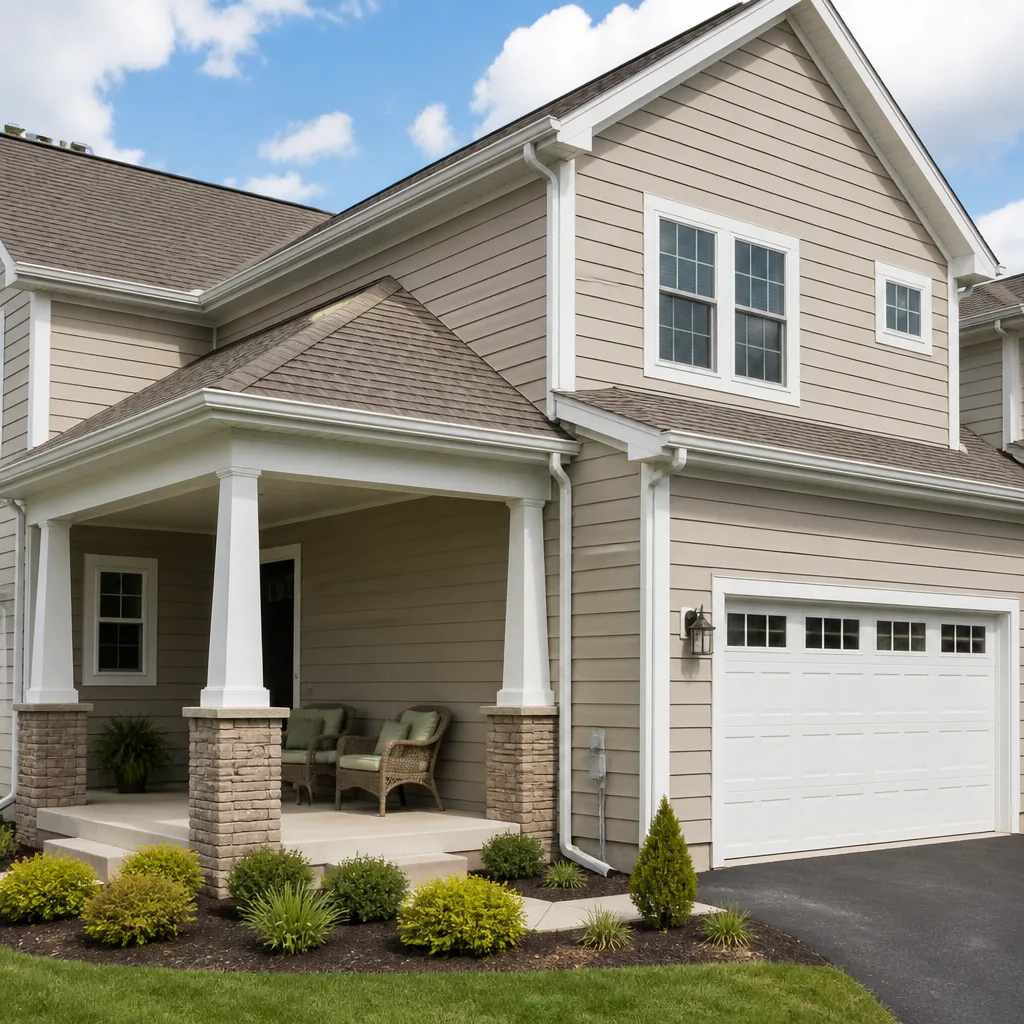
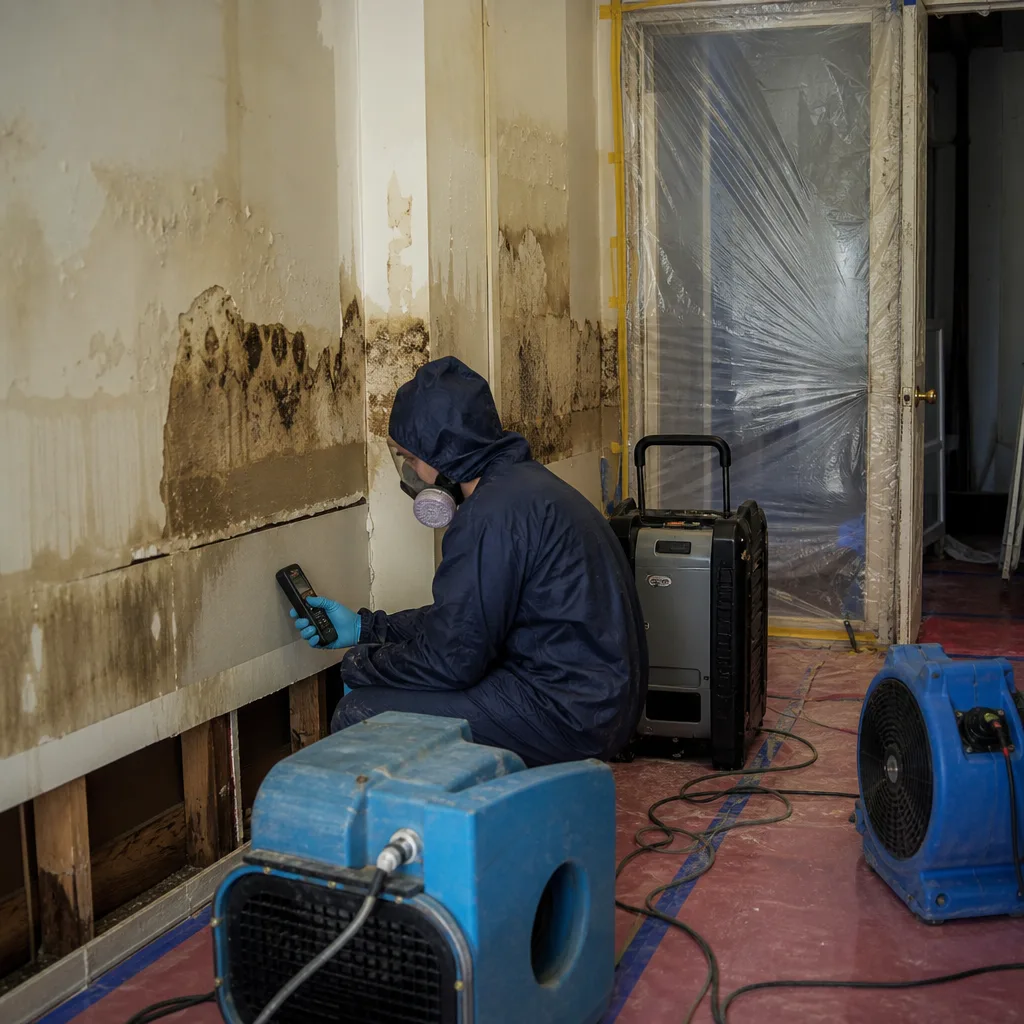 Before
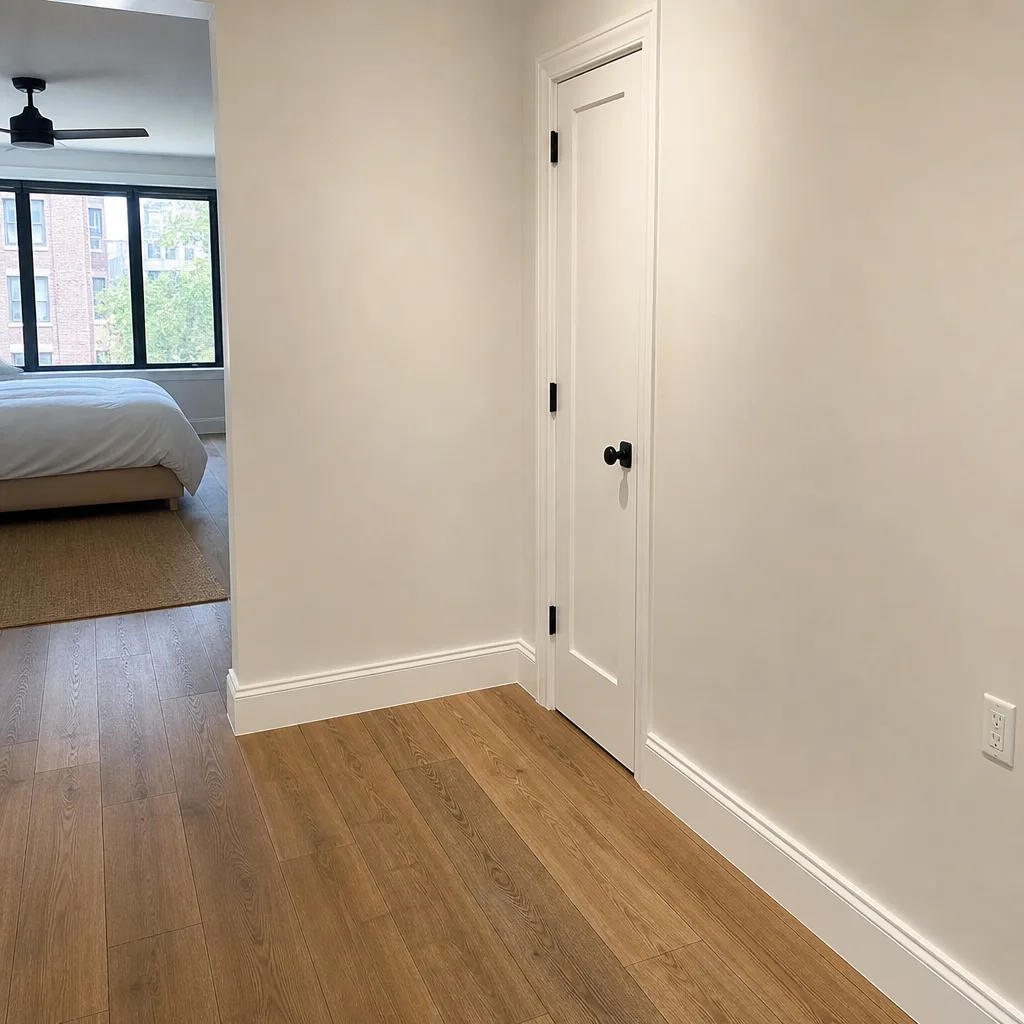 After
After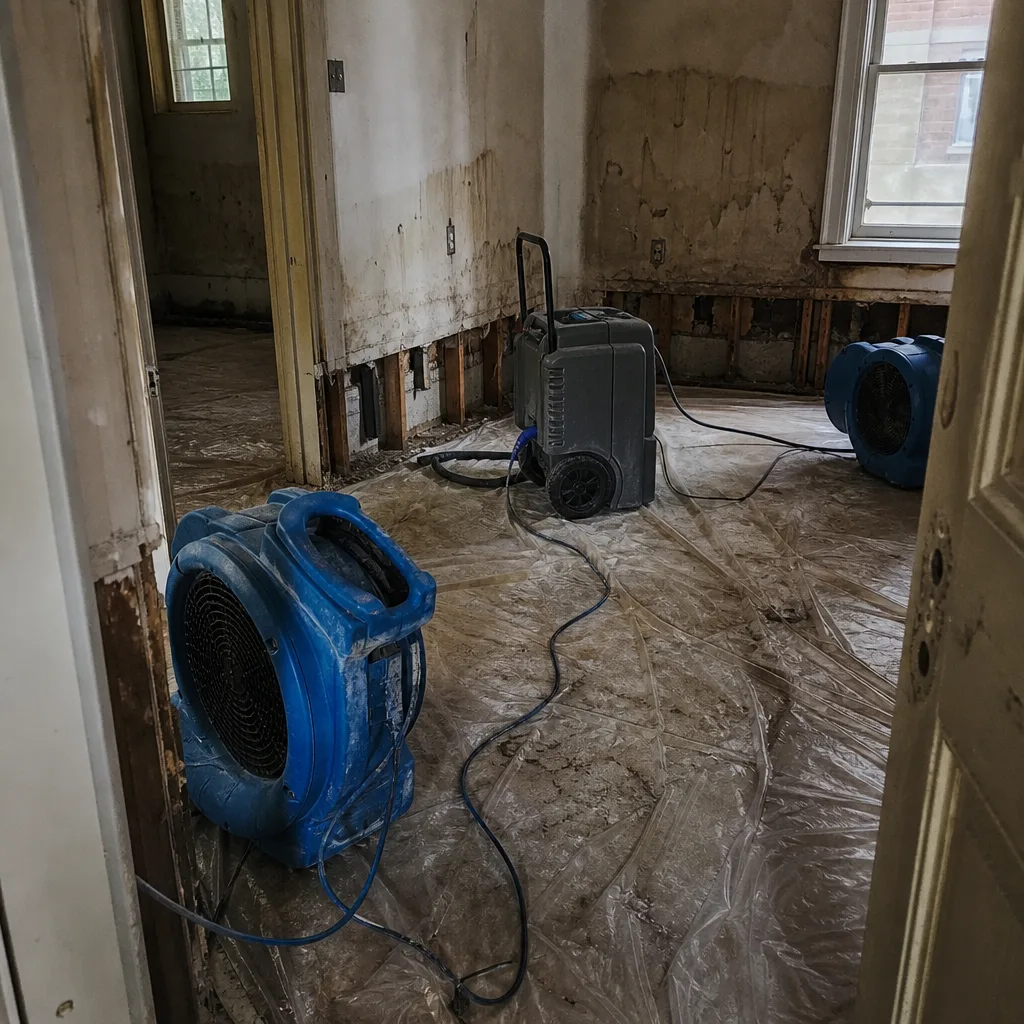 Before
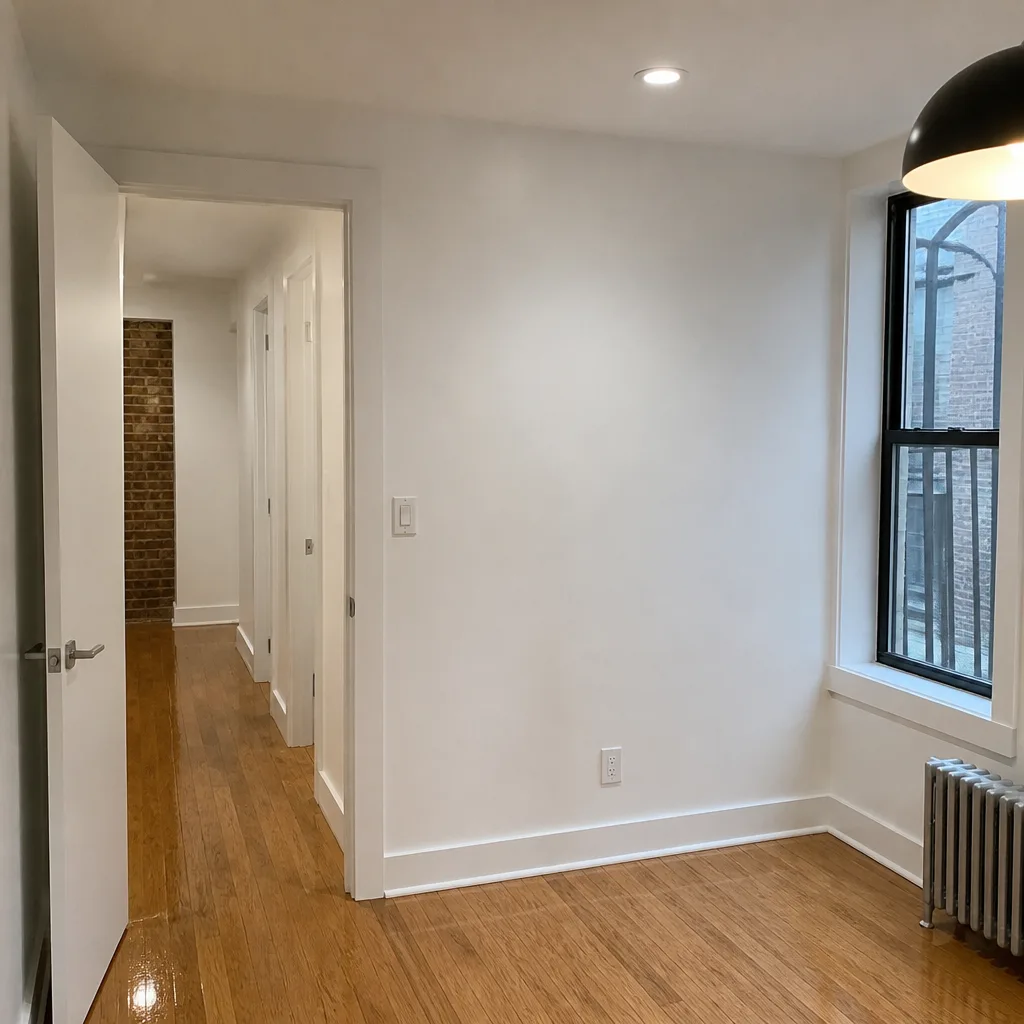 After
After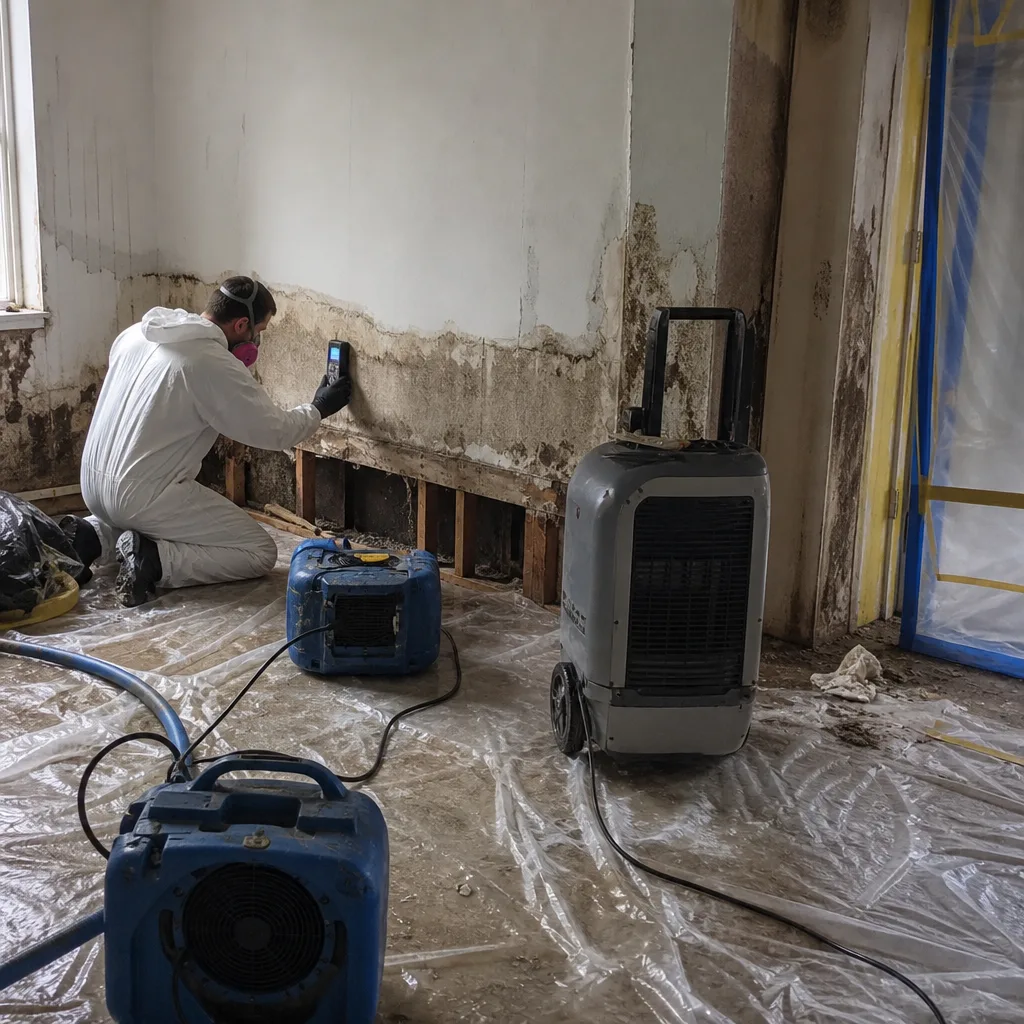 Before
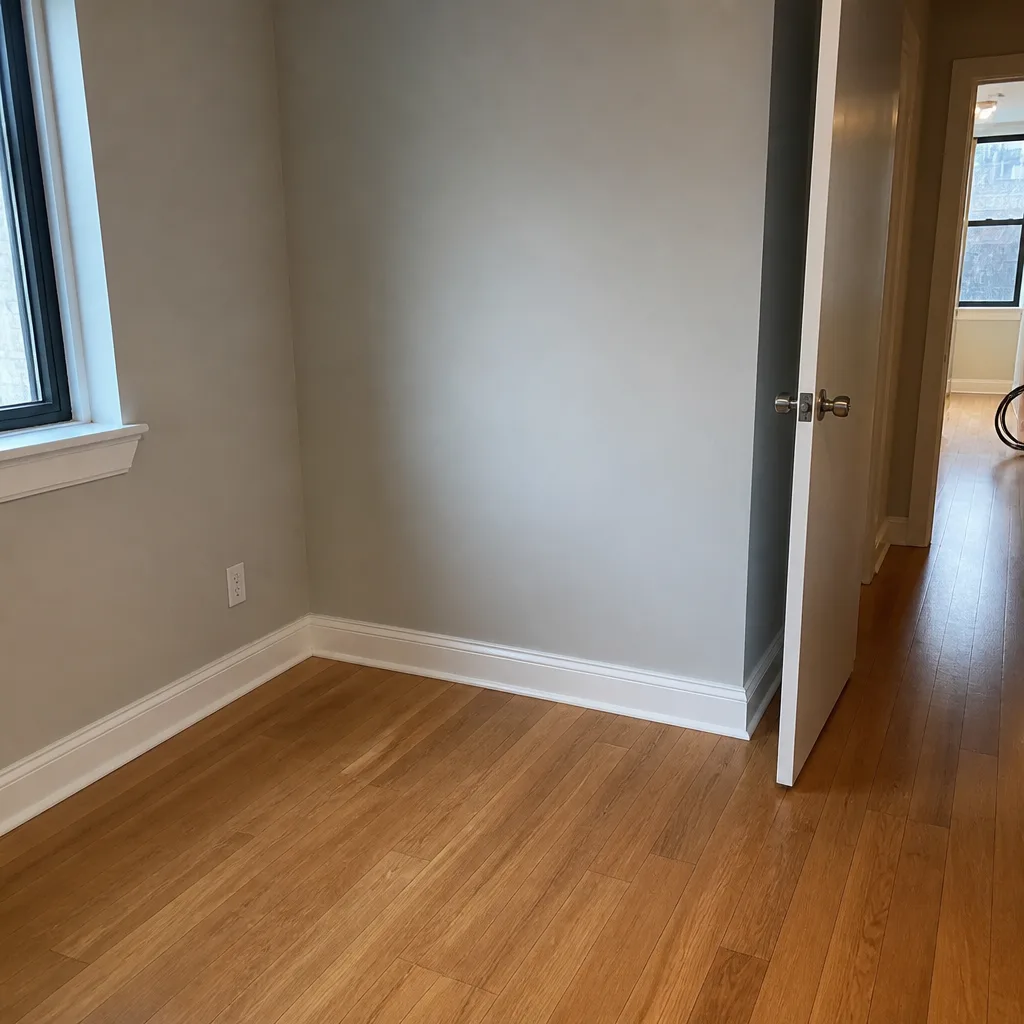 After
After24/7 Emergency Reconstruction & Cleanup in Harlem
Reconstruction and cleanup after a water loss, fire, or storm in Harlem starts with one call to (845) 305-5737. A live dispatcher answers around the clock, and our crews reach most Harlem blocks within 45 minutes for emergency extraction and stabilization. Wait, and water keeps moving through plaster walls, shared floor joists, and original flooring. The first hour decides whether you’re drying original oak or replacing it.
We’re Floodline Restoration Co., and we handle the entire job, from first extraction to finished rebuild, with the same certified crew. No mid-job handoff. No inherited subcontractors. Our Reconstruction & Cleanup team works in Harlem every week, and we know what these buildings demand.
Understanding Reconstruction & Cleanup Severity in Harlem Properties
Most Harlem buildings were framed before 1940. That means plaster over wood lath, not gypsum board. Cast-iron waste stacks. Original galvanized supply lines. And shared party walls between rowhouses, which means water does not respect property lines. A Category 1 loss (clean water from a burst pipe) in a Hamilton Heights brownstone becomes a Category 2 or 3 situation quickly when it saturates old plaster, picks up decades of dust and contaminants, and migrates into the neighbor’s wall cavity. Our Water Damage Restoration - Harlem team classifies the water category, documents moisture content in structural lumber with thermal imaging and hygrometers, and sets containment before we move air. In pre-war construction, the difference between a three-day dry-down and full gut-and-rebuild often comes down to whether extraction started the same day. In Harlem’s subdivided tenements, a single burst supply line on the top floor routinely floods four or five apartments vertically. The cast-iron stacks in these old-law buildings crack with age, and a small leak behind a kitchen wall can run unnoticed for weeks before the ceiling below gives way.
Why Harlem Property Owners Choose Floodline Restoration Co.
- 45-minute response commitment – Our Harlem-based crews are dispatched the moment you call, not after a sales rep returns your message. Extraction equipment runs on the same visit.
- 24/7 live answer, every single time – A real person picks up at 2 a.m. on a January night. Not a recording. Not an answering service. We employ live dispatch, and it shows when frozen pipes burst at the worst possible hour.
- IICRC-certified crews – Our technicians hold WRT, FSRT, and AMRT certifications and train to RIA and IFA standards. They arrive uniformed, background-checked, and ready to explain exactly what they’re doing.
- Free visual inspection – Before any work begins, we walk the property with you, identify the full scope, and put it in writing. You know what’s getting done and what it costs.
- Direct insurance billing – We document the loss from the first hour, communicate with your adjuster directly, and bill the carrier. You are not the messenger between us and the insurance company.
- One team, extraction to reconstruction – The same crew that reads the moisture map on day one handles the rebuild. No passing the job to a different company with a different standard.
Our Reconstruction & Cleanup Process
Inspection & Assessment
We arrive, assess the damage, and document everything with photos and written notes. In Harlem, this includes checking for DEP lead and asbestos triggers and identifying any LPC landmark considerations before we touch a wall. You get a written scope, not a verbal estimate.
Extraction & Stabilization
Standing water comes out first. We use professional-grade extraction units to pull water from floors, wall cavities, and any affected structural lumber. In old-law tenements, we check the cast-iron stacks and supply lines feeding the vertical units above and below to confirm the source is controlled.
Drying & Dehumidification
Dri-Eaz and Phoenix dehumidifiers plus XPOWER air movers are set to a moisture-mapped plan. We take daily readings until the dry standard is met. In plaster walls, this stage requires patience; forced air without proper containment pushes moisture into party walls and pulls in contamination from adjoining properties.
Cleaning & Sanitization
Surfaces are cleaned, sanitized, and deodorized to remove contaminants. For water losses, we apply appropriate antimicrobial treatments based on the water category. For fire losses, we address soot residues by type and surface. HEPA air scrubbers run throughout to keep airborne particles down.
Specialty Treatment
Contents that need pack-out are inventoried, photographed, and moved to our facility for cleaning and restoration. Original plaster, millwork, and flooring that can be saved is treated in place. Anything that requires LPC review for replacement in-kind is documented and flagged for the claim before demolition starts.
Repairs & Restoration
Rebuild starts only after clearance is confirmed and materials are approved. Drywall, plaster repair, flooring, trim, paint, and finish work are completed by the same certified crew that did the mitigation. You get the Keystone Standard in writing: done right, or we make it right within 90 days.
Need Emergency Reconstruction & Cleanup in Harlem Now?
Crews minutes away, answering live 24 hours a day. The sooner we start, the less it costs.
Working With Your Insurance Company
Insurance claims in Harlem take longer than in most places because of the dual-compliance layer. That’s not a reason to delay. It’s a reason to document everything from the first hour and submit a scope the adjuster can approve without weeks of back-and-forth. We’ve handled claims in landmarked brownstones and old-law tenements where the carrier initially balked at LPC-mandated materials. A line-item scope with photo documentation and moisture logs usually settles it. We coordinate directly with your adjuster, provide every document the carrier asks for, and bill them directly so you’re not floating the cost while paperwork crawls.
What We Provide Your Insurer
- Thorough documentation of the loss
- Photos of all damage, room by room
- Moisture readings and drying logs
- A detailed, line-item scope of work
- Direct coordination with your carrier
Built for Harlem’s Loss Calendar
January and February are the busiest months for Reconstruction & Cleanup in Harlem. Old galvanized supply lines freeze and split in unheated stairwells and vacant apartments, sending water through four or five floors before anyone notices. Our crews have pulled saturated plaster from top-floor tenement kitchens on 125th Street in mid-February more times than we can count. Spring brings basement seepage in converted rowhouses as snowmelt finds every crack in the foundation. Summer thunderstorms overwhelm aging roof drains on flat-roofed apartment buildings, pushing water down interior walls. Fall nor’easters do the same. The constant through every season is the building age: original plumbing, original plaster, and deferred maintenance in partially-occupied properties. When a loss happens, speed and proper containment matter more than any other factor in what can be saved.
Reconstruction & Cleanup Across Harlem’s Neighborhoods
Hamilton Heights and Sugar Hill hold some of the finest limestone and brownstone rowhouses in Harlem. Work here frequently involves original oak flooring, decorative plaster ceilings, and LPC oversight through the Mount Morris Park and Jumel Terrace historic districts. Our crews know these blocks. We’ve restored water-damaged parlors on Convent Avenue where the parquet and the plaster had to match pre-loss condition exactly, part of our Commercial Restoration in Harlem. Central Harlem, with its dense corridor of old-law tenements along 125th Street and Lenox Avenue, presents the opposite challenge: multi-unit vertical floods where one burst line means coordinating access to three or four apartments and their tenants. Strivers’ Row rowhouses demand careful containment so drying one house doesn’t push moisture into the adjoining party wall. Morningside Heights, with its larger pre-war apartment buildings, sees roof and riser failures that run through multiple floors. Response routes vary; the building type dictates approach, access, and what the claim can support.
Specialized Reconstruction & Cleanup Services We Offer in Harlem
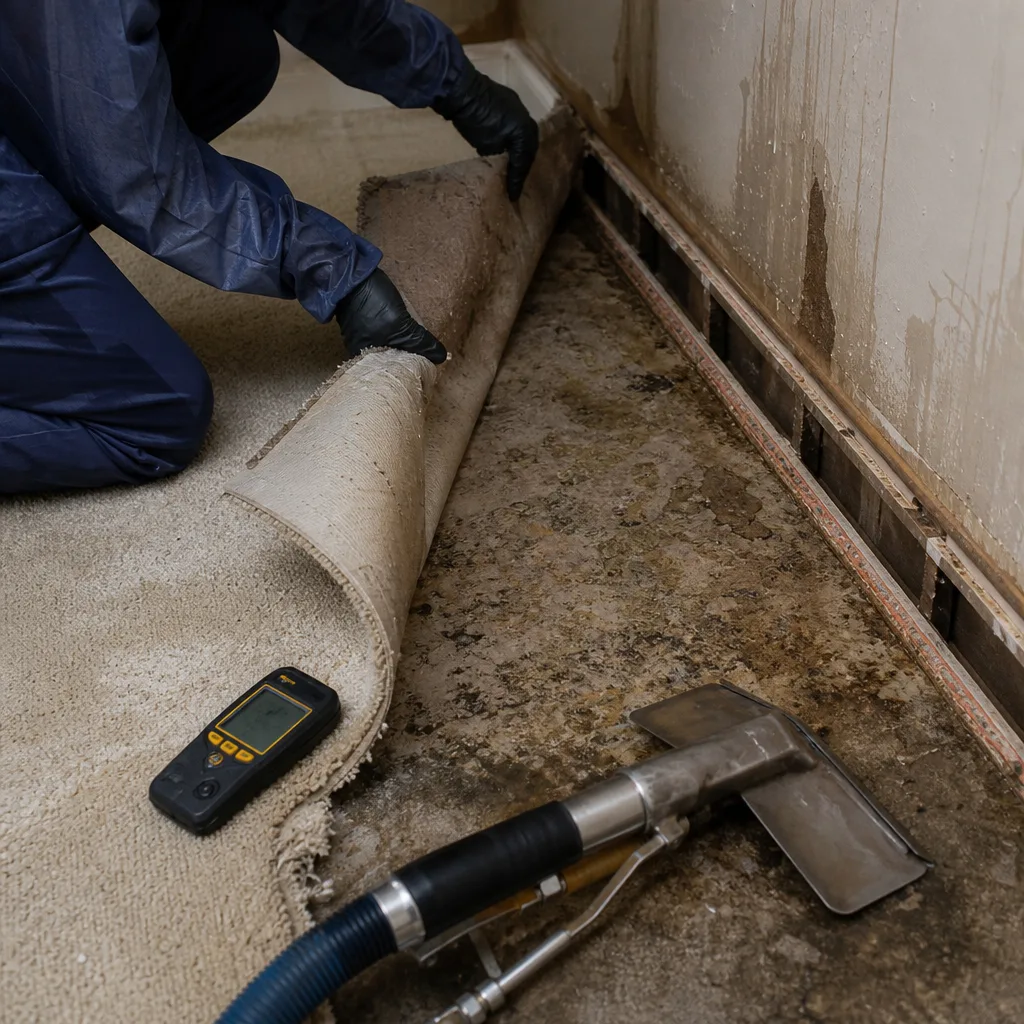
Full-Service Reconstruction
From dry-out to finish paint, our crew handles the entire rebuild. In Harlem, that means repairing lath-and-plaster walls with proper lime-based materials, matching original millwork profiles, and reinstalling flooring to pre-loss condition. LPC-mandated replacement in-kind is not a problem; we document, file, and wait for approval before we demo. The 90-Day Done Right Promise covers this work in writing.
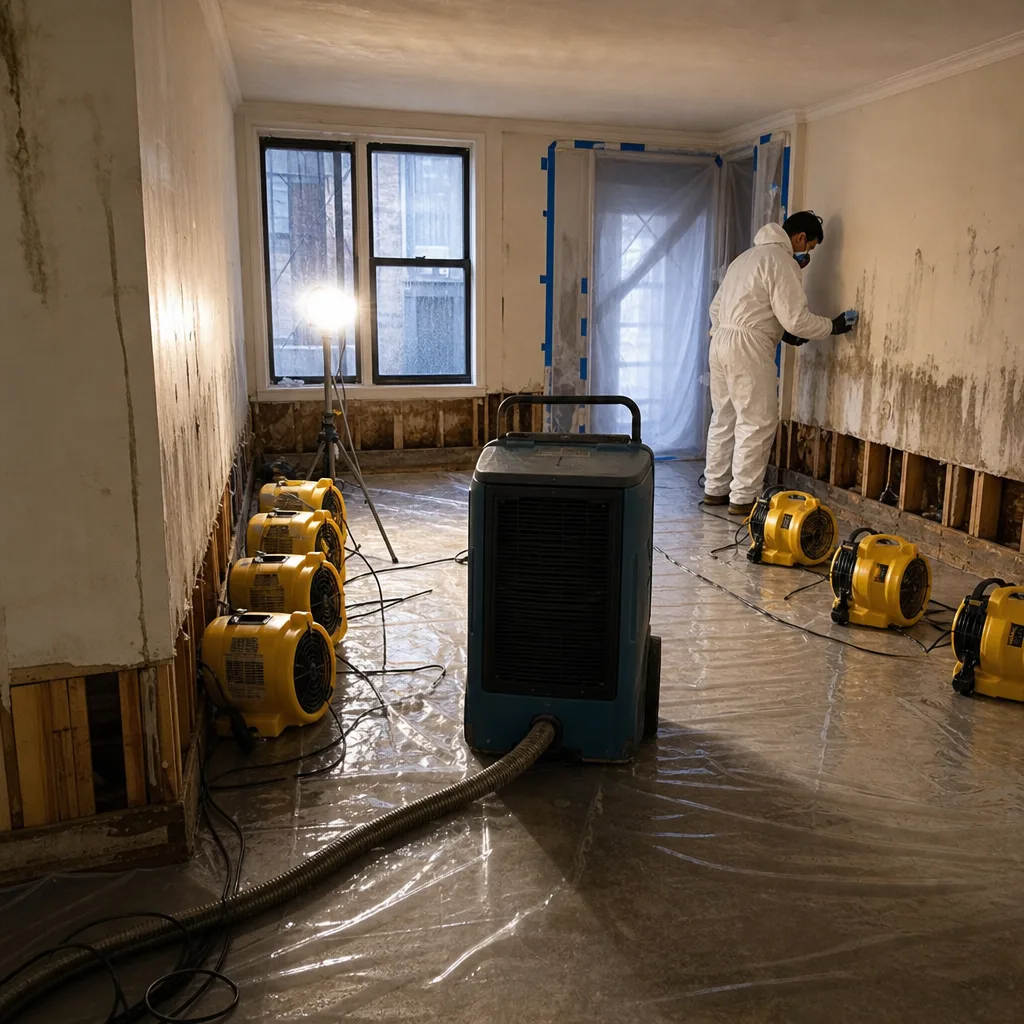
Insurance Claim Documentation
This is where most Harlem reconstruction jobs are won or lost. We provide moisture logs, thermal imaging reports, room-by-room photos, and a line-item scope that speaks the adjuster’s language. If DEP lead or asbestos clearance is triggered, we document the abatement and clearance testing so the claim covers it. Direct adjuster coordination means the carrier hears from us, not from you.
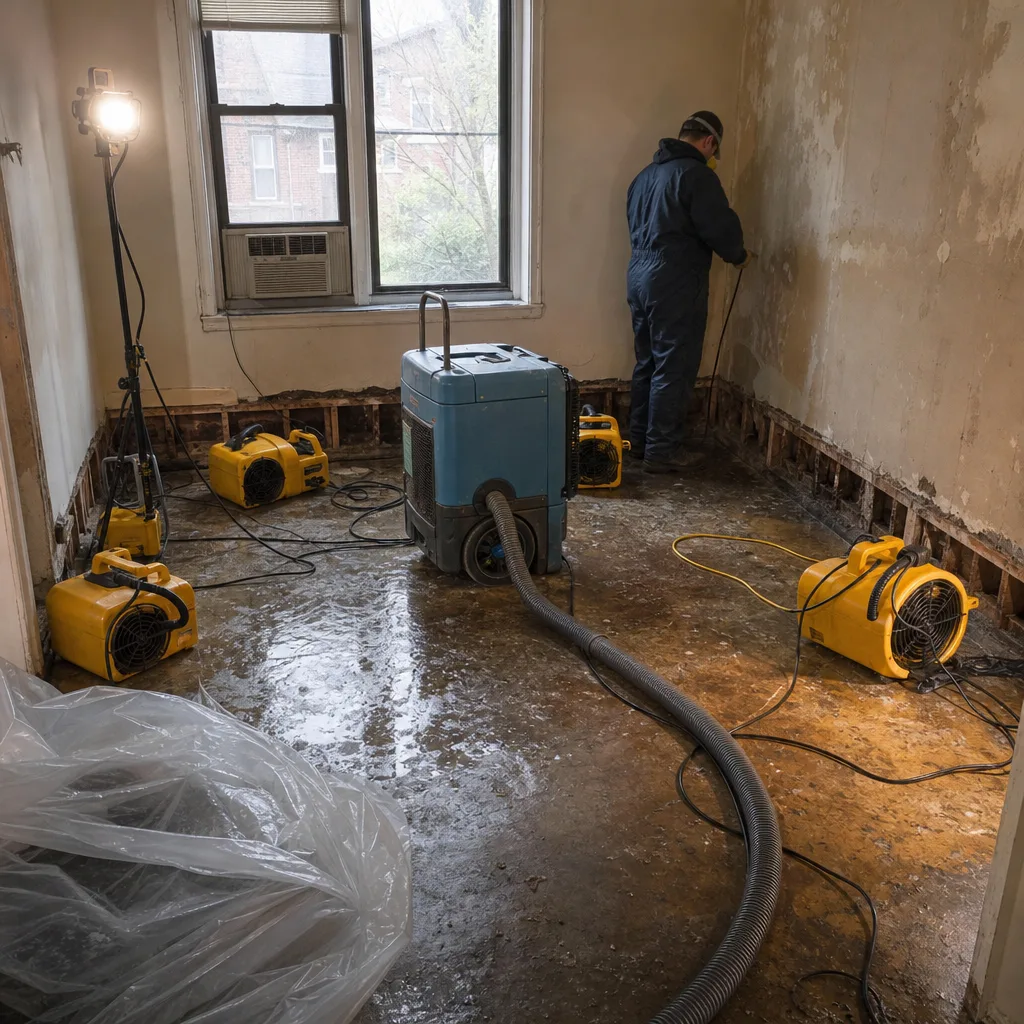
Contents Restoration & Pack-Out
When a tenement unit floods, contents usually need to move fast. We inventory, pack, and transport furnishings, clothing, and personal property to our facility for specialized cleaning and storage. Photo documentation happens at every step so nothing gets lost in the process. What can be restored is restored; what can’t is documented for the claim.
Drywall & Flooring Repair
Modern drywall appears in Harlem’s newer renovations, and we handle it efficiently. But the real skill is repairing original plaster and salvaging original hardwood. Plaster repair, skim coating, and refinishing are part of the rebuild when the building demands it. We’d rather save an original oak floor than replace it with a lookalike.
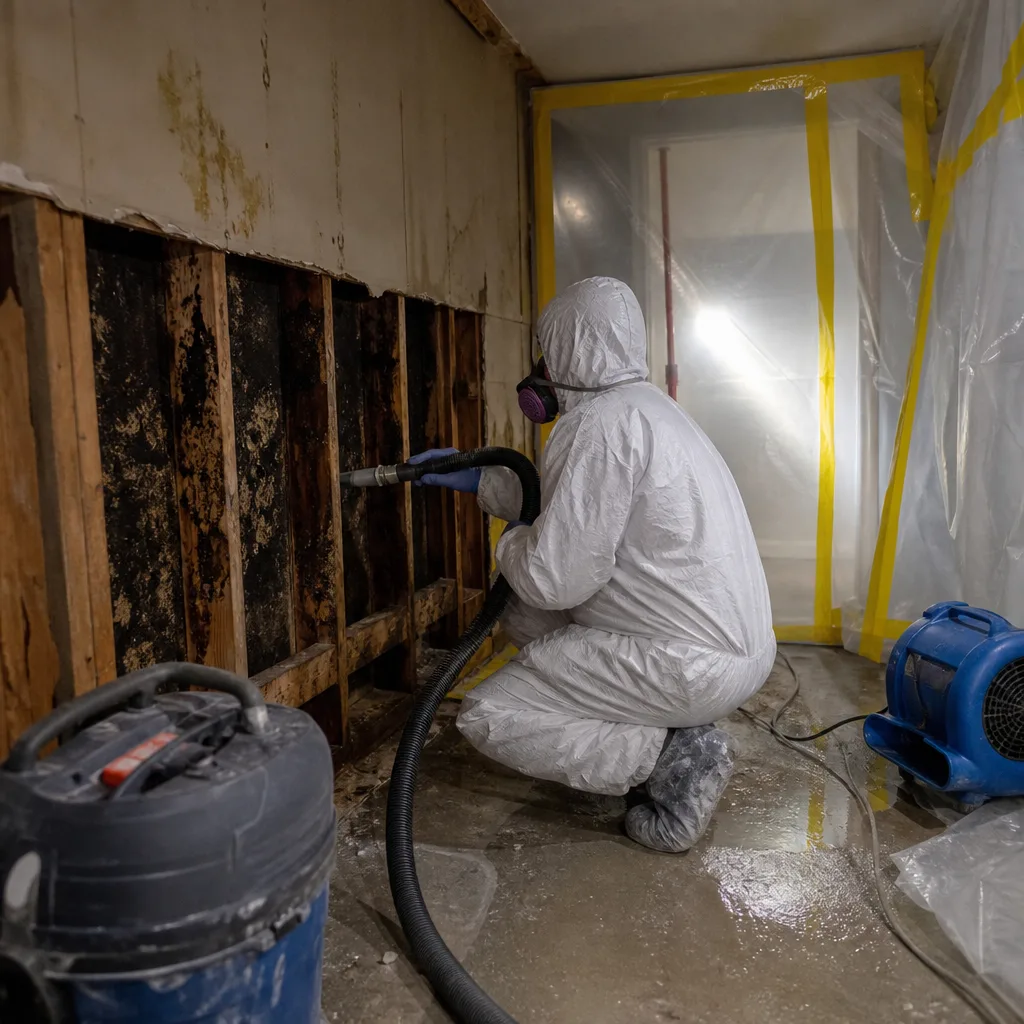
Carpet & Upholstery Cleaning
Water and soot affect soft surfaces fast. Our cleaning line uses professional-grade extraction and drying equipment to restore carpets, rugs, and upholstered pieces. We’re realistic about what’s salvageable; we won’t promise a restoration that won’t hold.
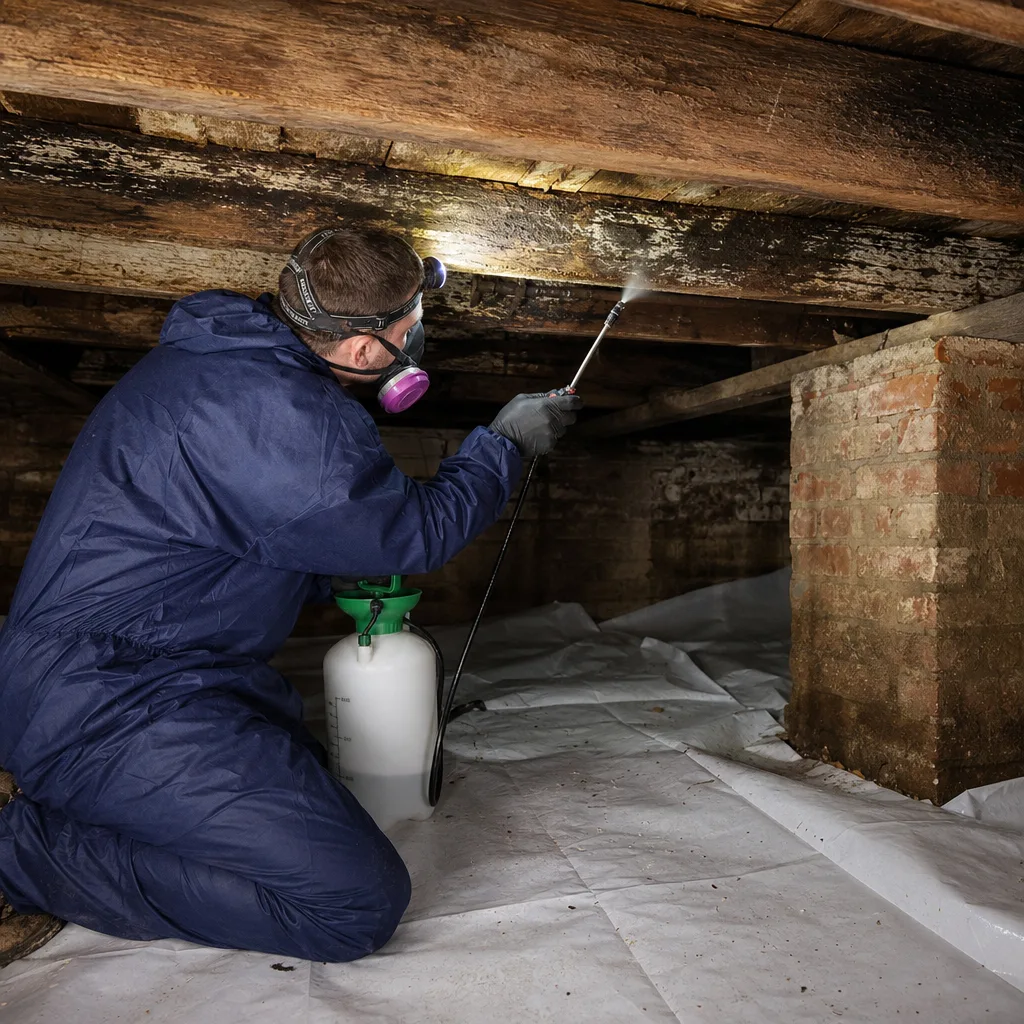
Post-Construction Cleanup
After reconstruction, the job isn’t done until the dust is gone. HEPA-filtered cleanup runs through every affected room, including cove moldings, radiator recesses, and floor gaps. Walkthrough happens with you, not after you’ve moved back in.
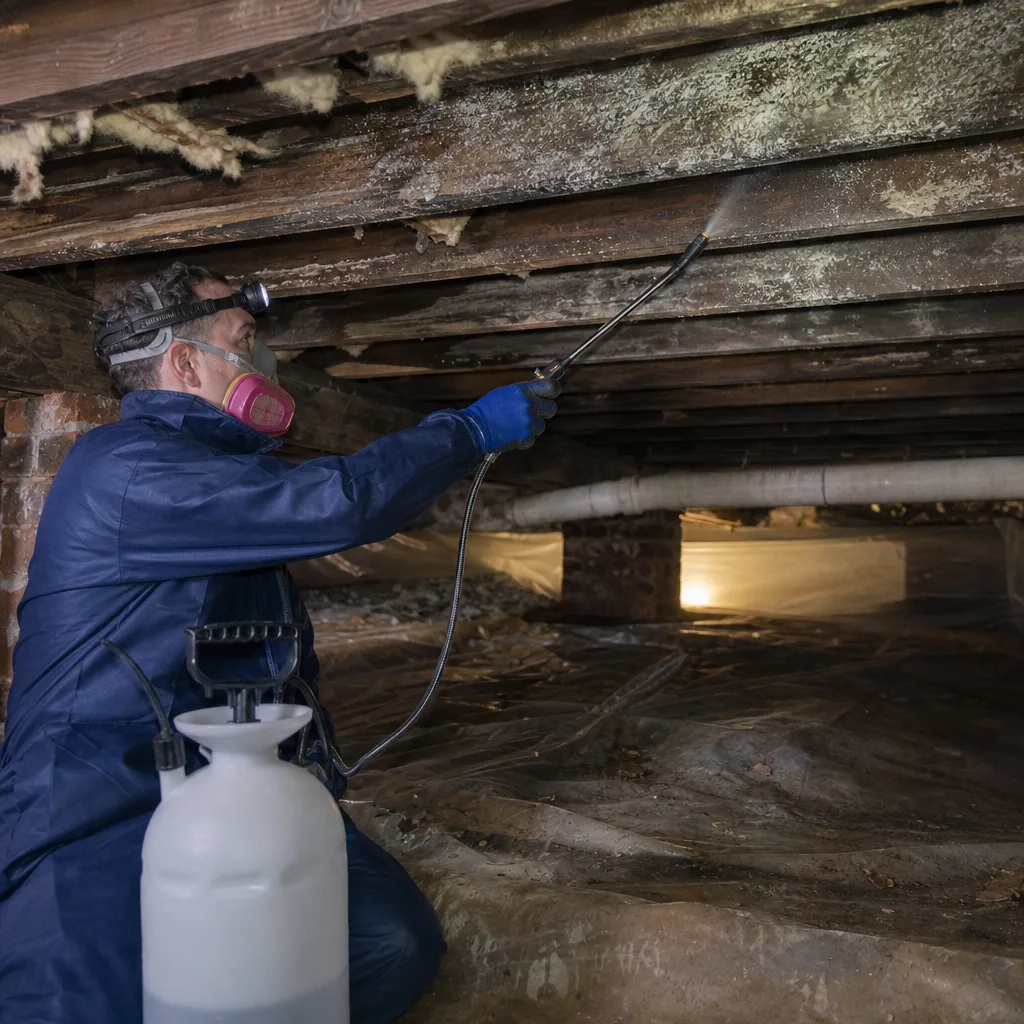
What happens when you call
- 1
A real person answersNo phone trees - you reach a local pro.
- 2
You get an upfront price rangeHonest numbers before anyone is dispatched.
- 3
A background-checked tech heads outLicensed & insured, dispatched right away.
- 4
You approve before work beginsNothing starts until you say go.
Reconstruction & Cleanup Costs in Harlem, NY
A typical water extraction and dry-out in a Harlem brownstone or tenement unit runs $1,800 to $4,500, depending on the number of affected rooms and whether party-wall containment is required. Full reconstruction after a Category 3 loss in a landmarked building can range from $12,000 to $45,000+, driven largely by LPC-mandated material replacement and DEP abatement clearance. Drywall repair runs $900 to $3,200 per room; original plaster repair runs higher, $2,500 to $6,000 per room, because of material matching and curing time. Contents pack-out and restoration typical lands between $1,500 and $8,000 depending on volume. Carpet and upholstery cleaning runs $250 to $900 per room. Insurance covers most covered perils once the scope is approved. The free visual inspection gives you a firm written scope before you commit.
Call (845) 305-5737 for a free estimate. No obligation, no pressure. We come out, we look, we put it in writing.
We Also Serve Cities Near Harlem
Our crews are on the ground across Manhattan’s north end. In addition to daily work throughout Harlem, we serve the Upper West Side, Upper Manhattan, Morningside Heights, and Central Harlem’s adjoining corridors. If your building sits near the border, call us. We’ll know the block.
Harlem Reconstruction & Cleanup Questions, Answered
In a Harlem brownstone, can you dry original plaster walls after a roof leak, or do they have to come out?
Original plaster can often be dried and saved if we start extraction and controlled drying within the first 24 to 48 hours. The key is containing the affected area so moisture doesn’t push into adjacent walls and floors. We use moisture mapping, not guesswork. If the plaster is already failing or the leak ran for weeks, removal may be unavoidable, and we will document why.
How do you handle Reconstruction & Cleanup when the water damage crosses into the neighbor’s brownstone through a shared party wall?
This is common in Harlem rowhouses. We set containment on the affected side, document moisture intrusion in the party wall, and coordinate access with the adjoining owner and their carrier. Both scopes need to be written so neither side destabilizes the shared masonry. We’ve managed multi-property losses where two or three separate owners were involved, and we bring that experience to every party-wall job.
What does LPC review actually mean for replacing water-damaged flooring in a landmarked Harlem building?
LPC review means the Landmarks Preservation Commission must approve any replacement of character-defining materials before work proceeds. That can add weeks to the timeline. What saves time is filing early with a clear scope, photos, and a materials specification that matches the original. We handle the filing and coordinate with your adjuster so the claim accounts for the wait. Starting demo before approval risks a stop-work order.
In an old-law tenement, can you really run air movers and dehumidifiers in a space with active lead paint dust?
Yes, but only after the lead hazard is addressed. If DEP lead clearance is triggered, the abatement must be completed and clearance testing passed before we run drying equipment that would spread dust through the unit. We bring this up early because missing it causes shutdowns. Our crews are trained to recognize the trigger points and flag them before any air movement begins.
How fast can you start water extraction in a Harlem brownstone after a frozen pipe bursts in January?
Our response commitment is 45 minutes for emergency calls. Extraction equipment runs on the same visit. In January, when frozen pipes burst across Harlem’s older stock, speed is everything. The faster we get water out and drying equipment started, the better the odds of saving plaster, flooring, and structural lumber. Call (845) 305-5737 the moment you see water.
Will my insurance cover reconstruction in a landmarked Harlem building?
Most policies cover the cost of restoring to pre-loss condition, which in a landmarked building means matching original materials. The challenge is documentation. We provide the scope, photos, and LPC-related documentation your adjuster needs to approve the claim without weeks of delay. Direct billing means the carrier pays us, not you, for covered work.
Do I need full reconstruction or just cleanup after a water leak in my Harlem apartment?
That depends on the water category, how long it ran, and where it traveled. If it’s clean water caught immediately, extraction and drying may be enough. If it soaked through plaster, got into the floor system, or ran into a shared party wall, you need professional drying and often some level of rebuild. The free inspection gives you an honest answer, not an upsell.
Can I stay in my home during reconstruction?
In most single-family rowhouses, you can stay if the affected area is contained and air scrubbers are running. In tenement units with lead or asbestos abatement, or where drying equipment makes the space unlivable, temporary relocation may be necessary. We’ll tell you straight what’s safe and what’s not. If relocation is covered by your policy, we document it.
Serving Harlem, NY - Our Local Coverage Area
We’re based in the Harlem area and know this community well. Use the map below to see our service coverage - if you’re nearby, we can almost certainly help.
The Harlem-Specific Reality Most Restoration Pages Skip
Here’s what separates us from a generic restoration company: in Harlem, virtually every Reconstruction & Cleanup job in pre-1940 tenements and brownstones simultaneously triggers NYC DEP lead and asbestos abatement clearance plus NYC Landmarks Preservation Commission review for historic districts like Mount Morris Park, which is why Mold Remediation in Harlem requires careful planning from the start. That dual-compliance stacking can freeze demolition for weeks while hazmat clearance and landmark approval move through separate agencies. Blocks south, in newer construction, none of that applies. A contractor who doesn’t know Harlem’s regulatory layer will start demo, get a stop-work order, and leave you with open walls and a stalled claim. We plan for it from day one. The DEP survey is scheduled before we touch a wall. The LPC filing goes in before materials are ordered. That’s the difference between a two-week rebuild and a two-month standstill.
In a Hamilton Heights brownstone on Convent Avenue, our techs arrived to a burst original galvanized supply line that had sent Category 1 water through four floors of plaster walls and into the parlor’s original oak flooring. We set containment and air movers within the hour, began moisture mapping and structural drying, and held off any removal of the water-damaged plaster until LPC approved replacement in-kind. The pre-loss condition stayed intact. The landmark violation never happened. That’s how the job gets done right.
In Harlem’s tightly-packed rowhouse blocks, another fact shapes every job: the shared party-wall masonry means a water loss or structural fire in one brownstone almost always migrates into the adjoining building. We routinely arrive to find two or three separately-owned properties with active damage, each with its own adjuster, its own policy, and its own owner who wants answers. Coordinated scope documents, negotiated access agreements, and multi-party adjuster communication are not extras here. They’re the baseline. Miss them, and demolition stops the first time a neighbor refuses access.
When you call Floodline Restoration Co. for Reconstruction & Cleanup in Harlem, you get a crew that knows these buildings, these agencies, and these claims. Not a template. Not a sales pitch. Just the work, done right, backed in writing by the 90-Day Done Right Promise.
Written by Curt Bowman, Owner at Floodline Restoration Co., serving Harlem with full-cycle restoration and reconstruction.
Call (845) 305-5737 for a free estimate. Live dispatch, 24 hours a day, every day. When water or fire hits a Harlem brownstone or tenement, the first call is the one that matters.