
Free visual inspection and a written scope of work before any mitigation begins - photos, moisture readings, and drying logs go in your claim file
The scope we write is the scope we bill. Anything new gets shown to you, in writing, before we touch it.
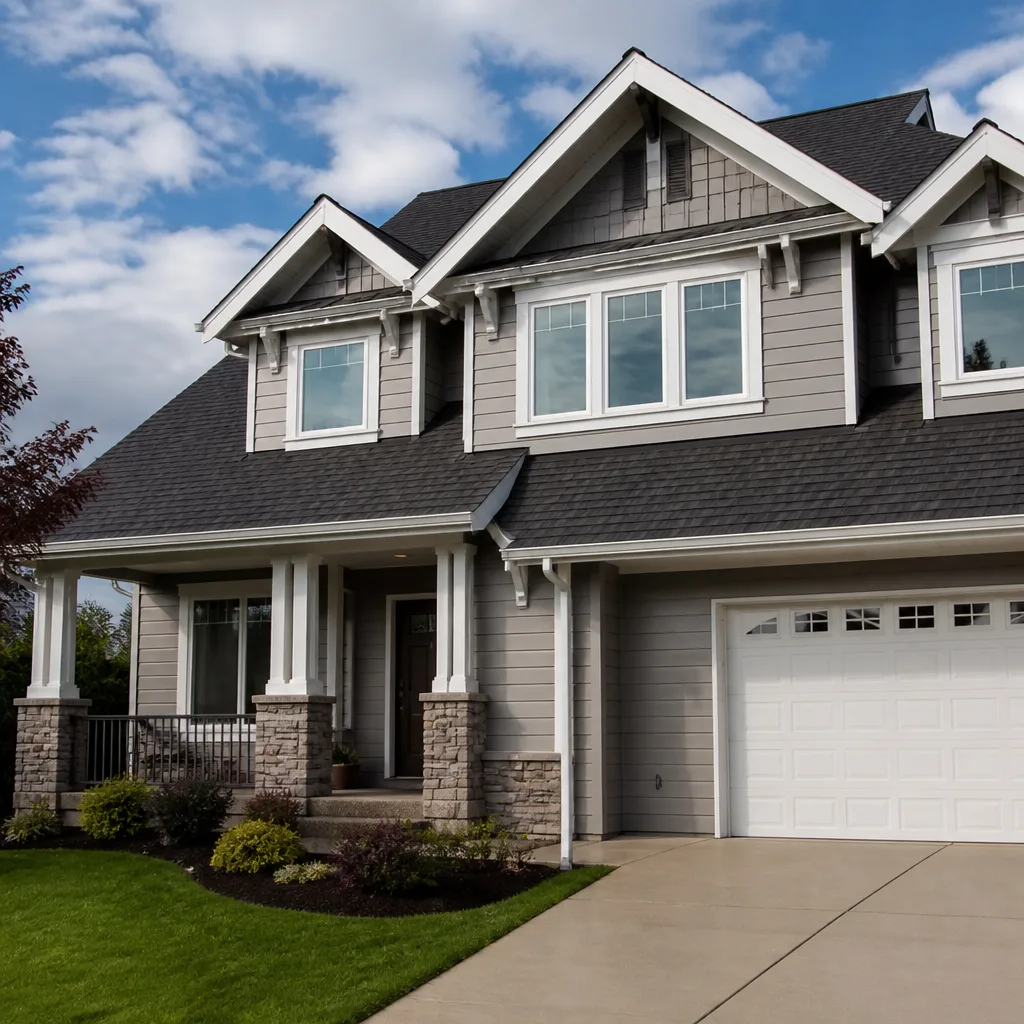
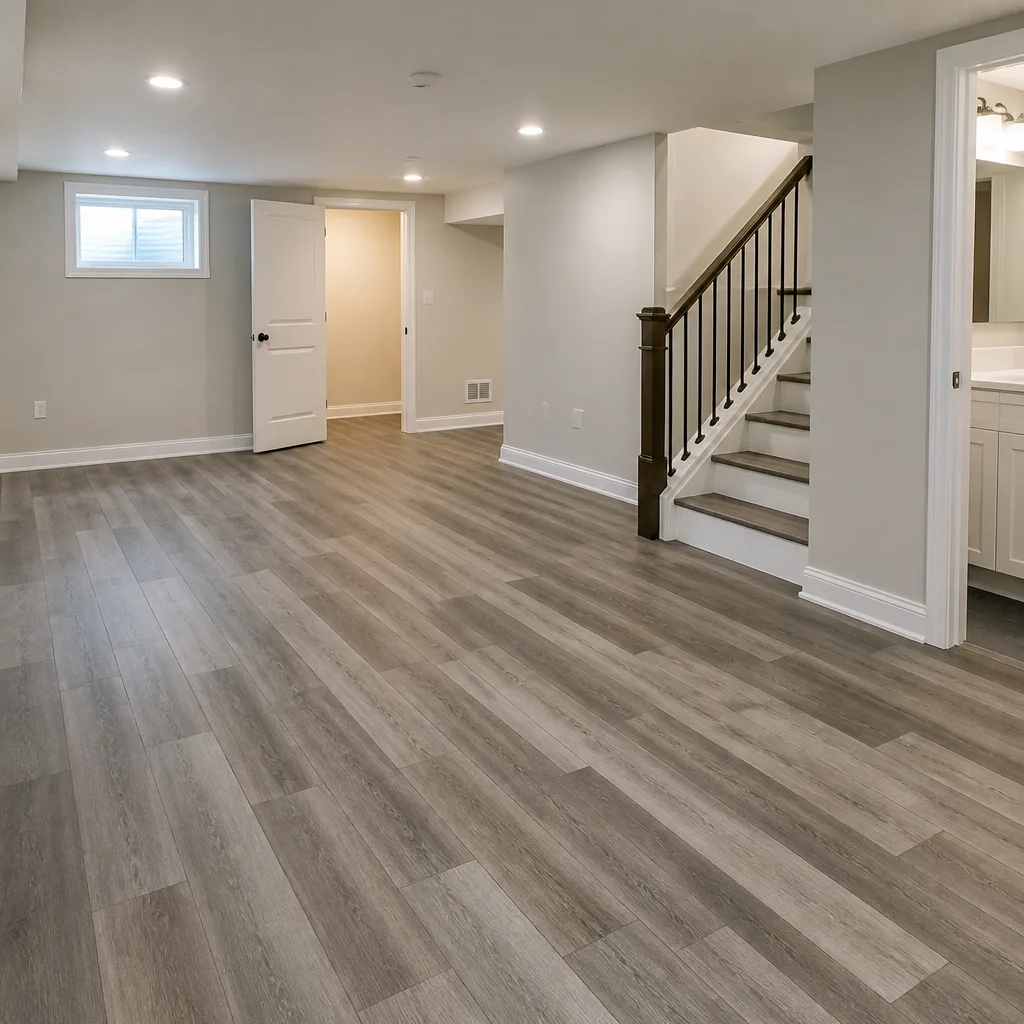
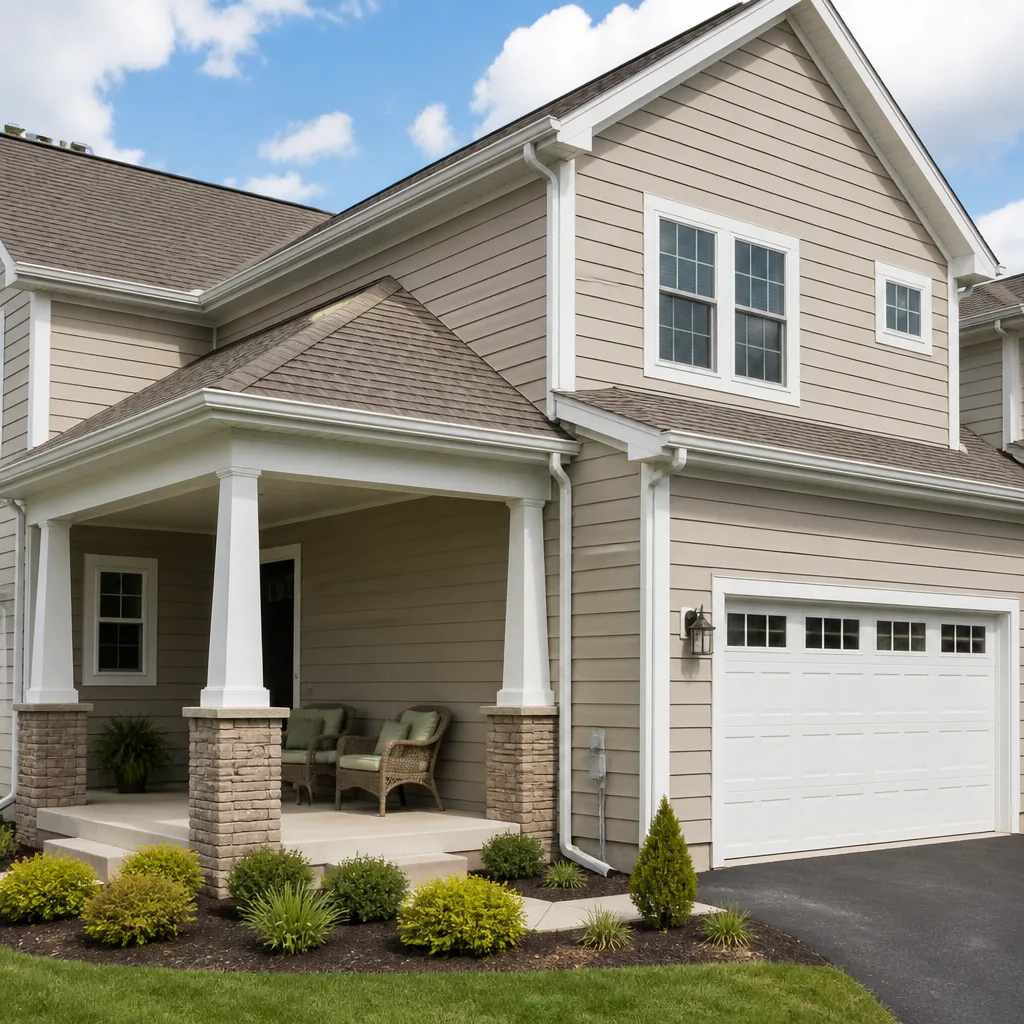
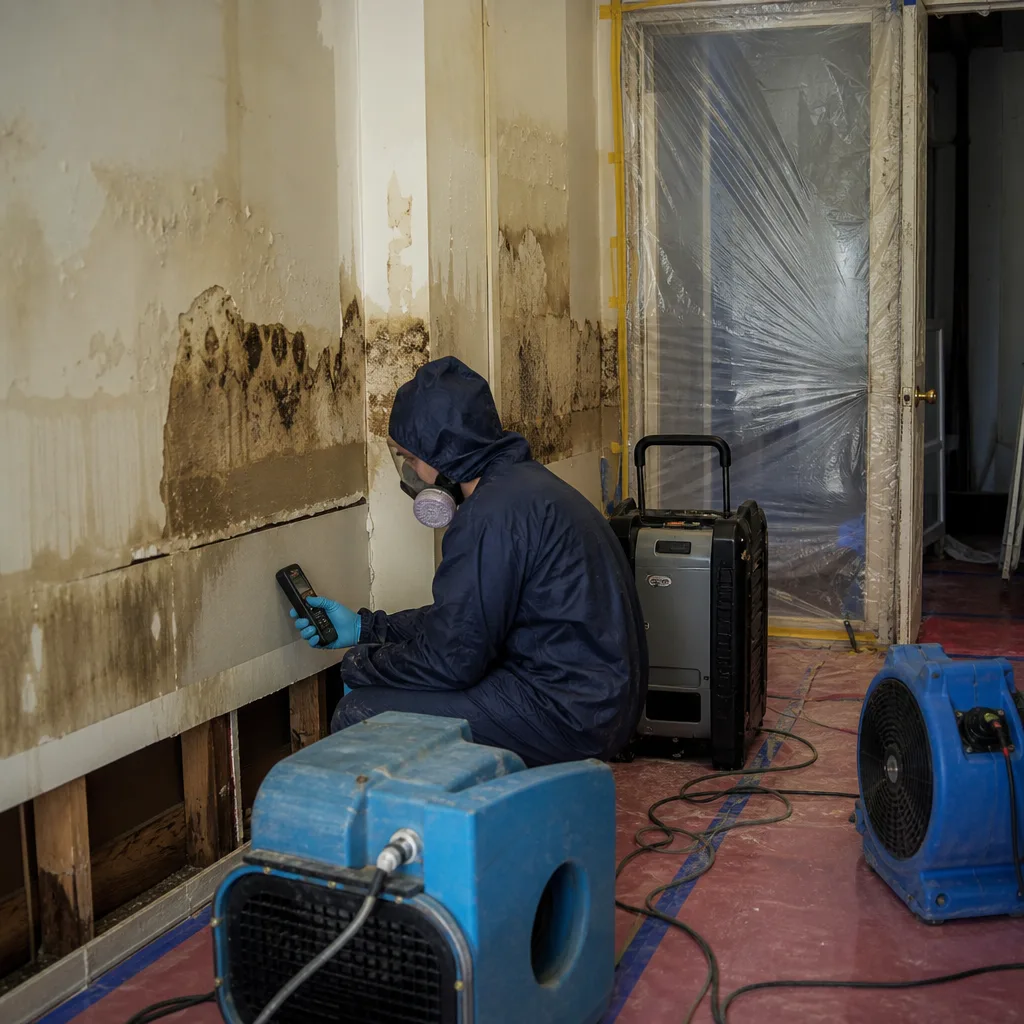 Before
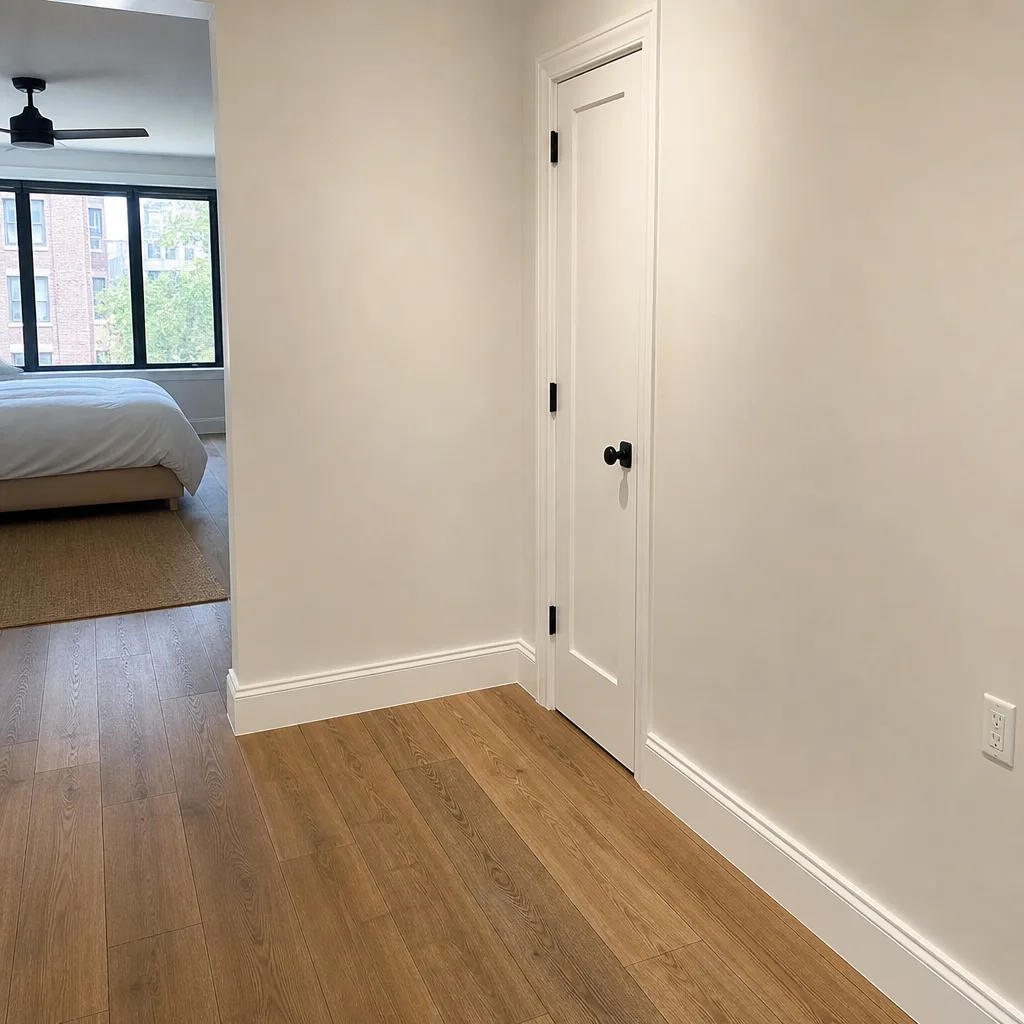 After
After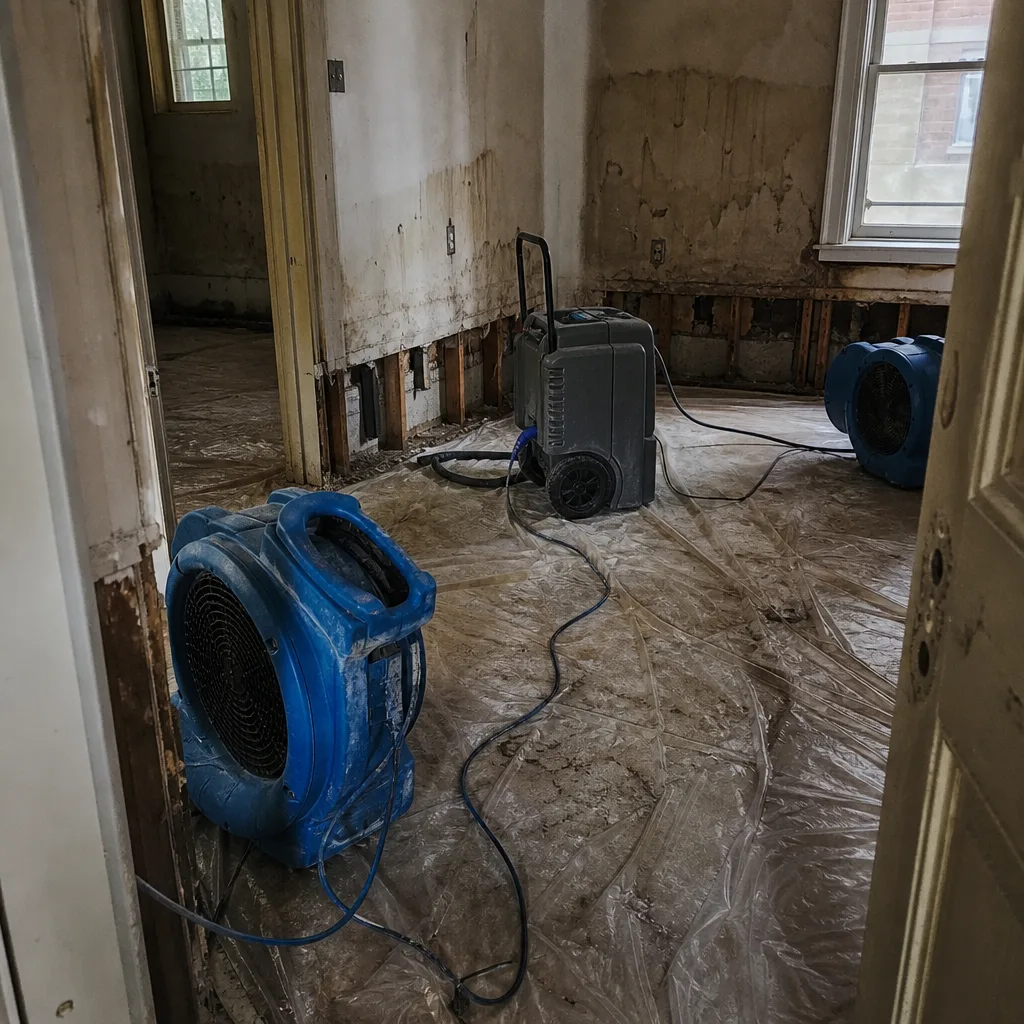 Before
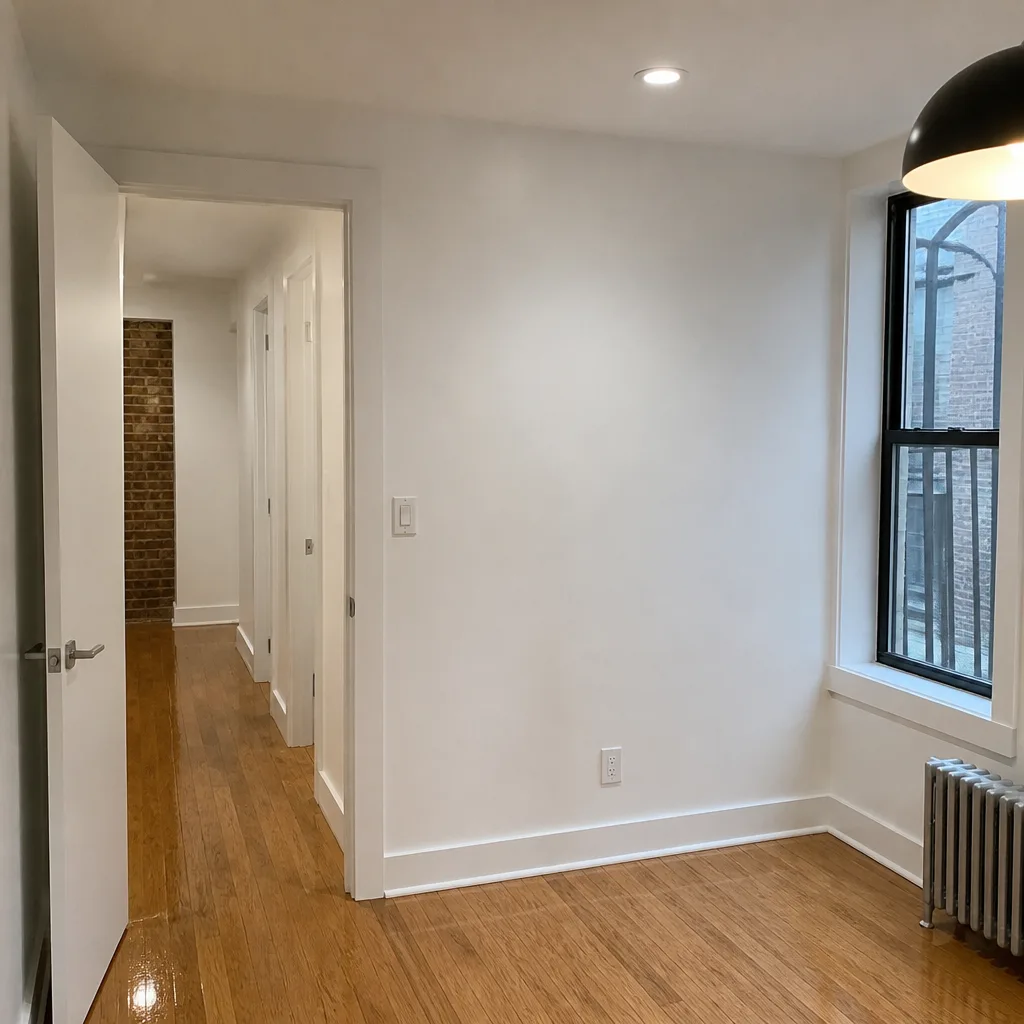 After
After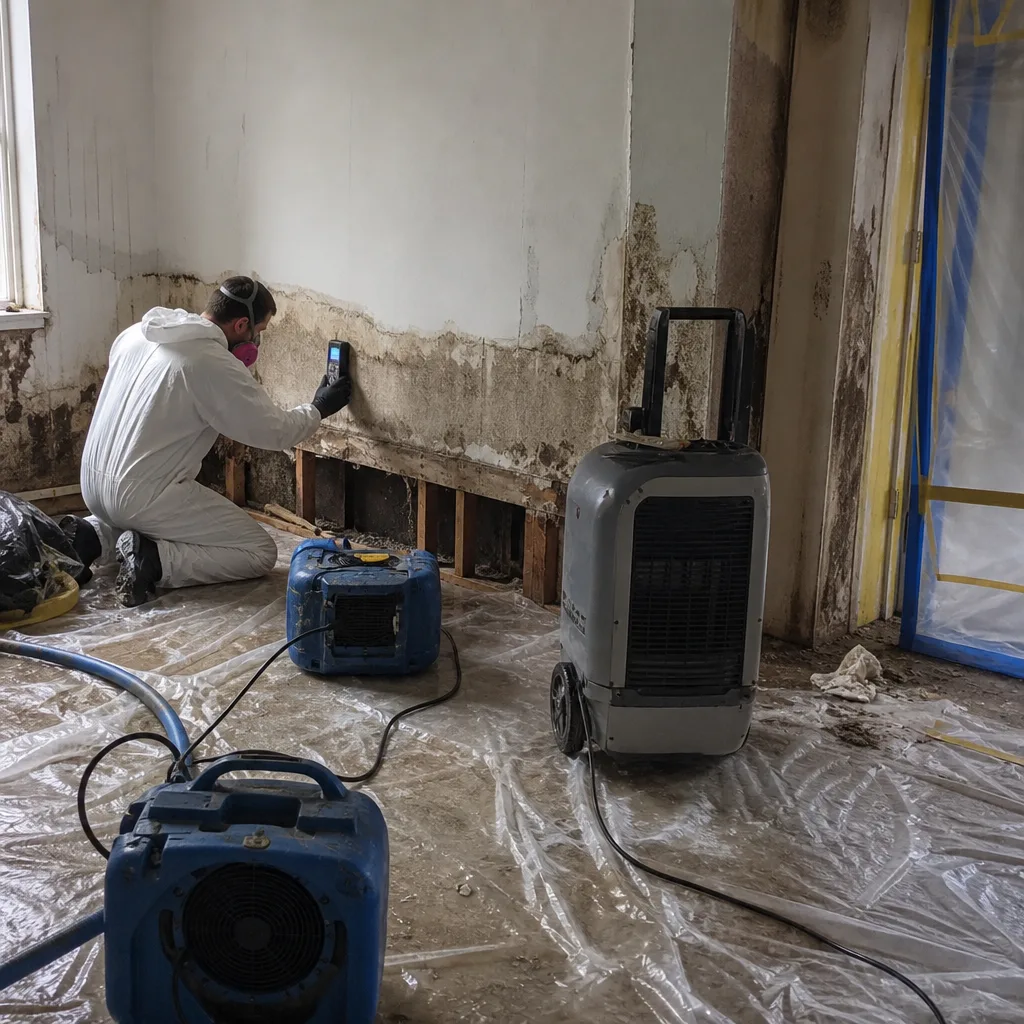 Before
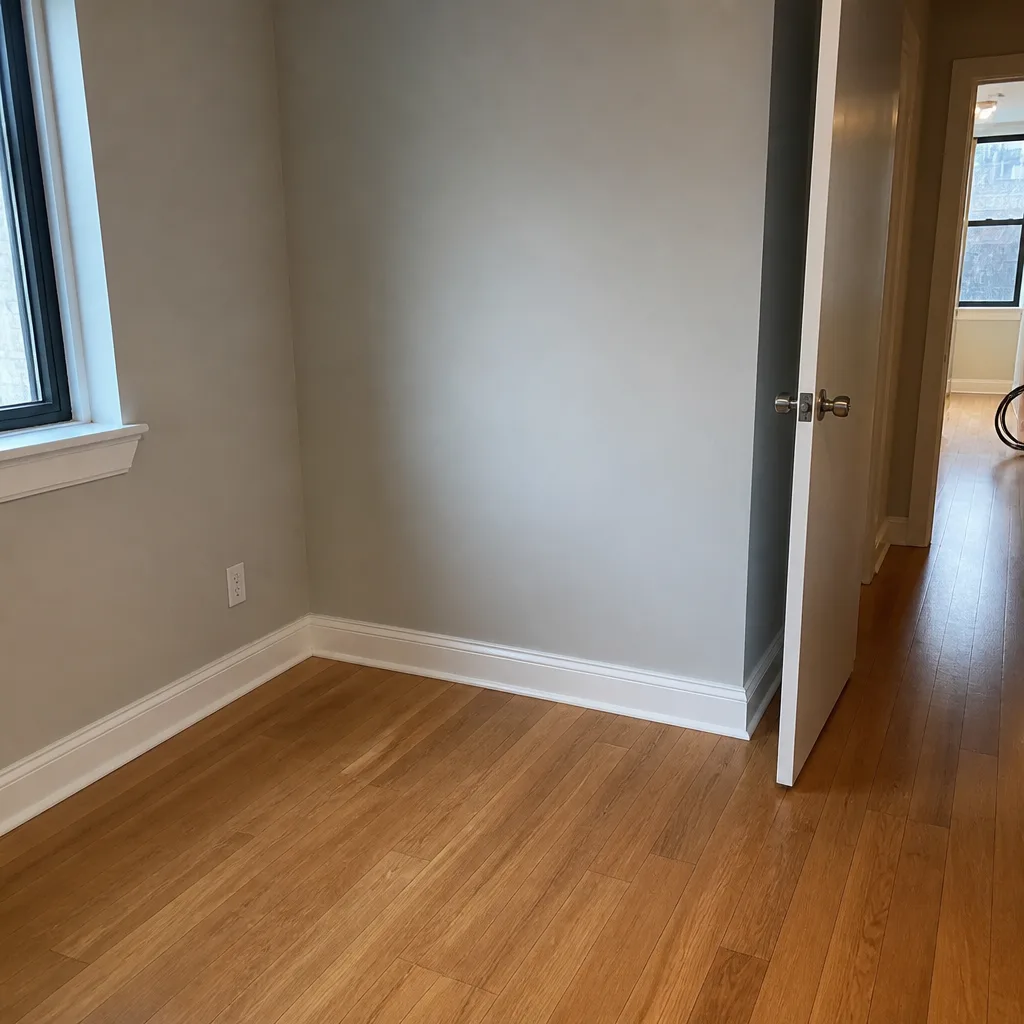 After
After24/7 Emergency Commercial Restoration in Murray Hill
Commercial water damage in Murray Hill moves fast, especially inside the pre-war co-op and condominium buildings that define this neighborhood. A burst cast-iron drain stack on an upper floor sends water through multiple units in minutes, and every hour of standing water pushes salvageable drywall closer to mold growth. Our crews answer live at (845) 305-5737 around the clock and dispatch into Murray Hill immediately, with extraction equipment running the same visit. The first hour decides whether a cleanup takes two days or demolition takes two weeks.
We start with a free visual inspection, then get to work. No waiting for a callback, no answering service runaround. A live dispatcher picks up at 2 a.m., and a certified crew reaches your Murray Hill property with professional-grade Dri-Eaz and Phoenix equipment ready to run. Done right, and backed in writing.
Understanding Commercial Restoration Severity in Murray Hill Properties
Most commercial losses we respond to in Murray Hill fall into one of three water categories, and the difference matters for your building and your tenants. Category 1 water comes from a clean supply line, a failed radiator valve, or an overflowing sink. Category 2 is grey water, which carries contamination from washing machines, dishwashers, or sump failures. Category 3 is black water, what you get when a sewer line backs up through a brownstone cellar floor drain or a cast-iron waste stack cracks, and it requires full containment, antimicrobial treatment, and often disposal of affected porous materials.
In Murray Hill’s 1910s to 1940s mid-rise buildings, the severity question is complicated by what sits behind the walls. Original galvanized supply lines corrode from the inside out, steam-heat risers fail at threaded joints, and through-wall AC sleeve penetrations leak during heavy rain. Moisture mapping with thermal imaging and penetrating meters tells us whether water reached the gypsum, the plaster, or the structural framing behind it. That data drives the drying plan, and it is documented daily until the dry standard is met.
The building-approval bottleneck adds a layer most restoration contractors do not plan for. In Murray Hill co-ops, board sign-off often delays mitigation start by 24 to 48 hours, which is long enough to push a damp drywall cavity into active mold colonization. We stage containment and air movement in common areas during that wait whenever access allows, and we document everything for the board, the owner, and the carrier.
Why Murray Hill Property Owners Choose Floodline Restoration Co.
- 45-minute response commitment to any Murray Hill commercial property, with a live dispatcher logging the call and a crew rolling immediately.
- 24/7 live answer, every time. A real person picks up at 2 a.m., not a recording. Extraction starts the same visit.
- IICRC-certified crews trained to WRT, FSRT, and AMRT standards, plus RIA and IFA protocols, so the drying plan holds up to carrier scrutiny.
- Free visual inspection with photo documentation and a written scope before any work begins. A square deal: no surprises on the bill.
- Direct insurance billing. We talk to the adjuster, we send the documentation, and you never play messenger between us and your carrier.
- One team from extraction to reconstruction. The same crew that reads the moisture map on day one handles drying, rebuild, and the final walkthrough.
Our Commercial Restoration Process
Inspection & Assessment
We map the water, not just the stain. Thermal imaging shows hidden moisture behind plaster and drywall, hygrometers measure humidity in the cavity, and a written scope details what needs to come out and what can be dried in place.
Extraction & Stabilization
Truck-mounted extraction pulls standing water from carpets, concrete, and subfloor voids. If the release is still active, we shut down the supply line or isolate the failed riser before drying begins.
Drying & Dehumidification
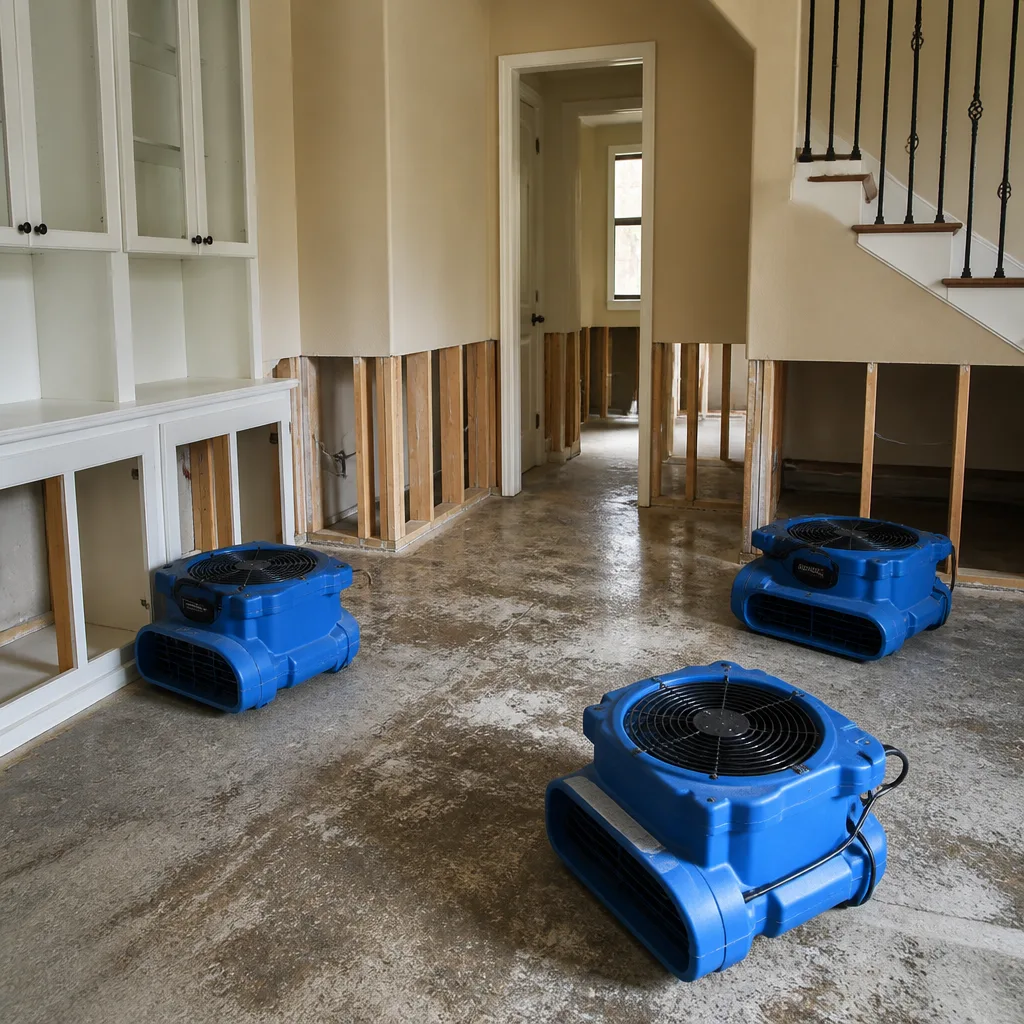
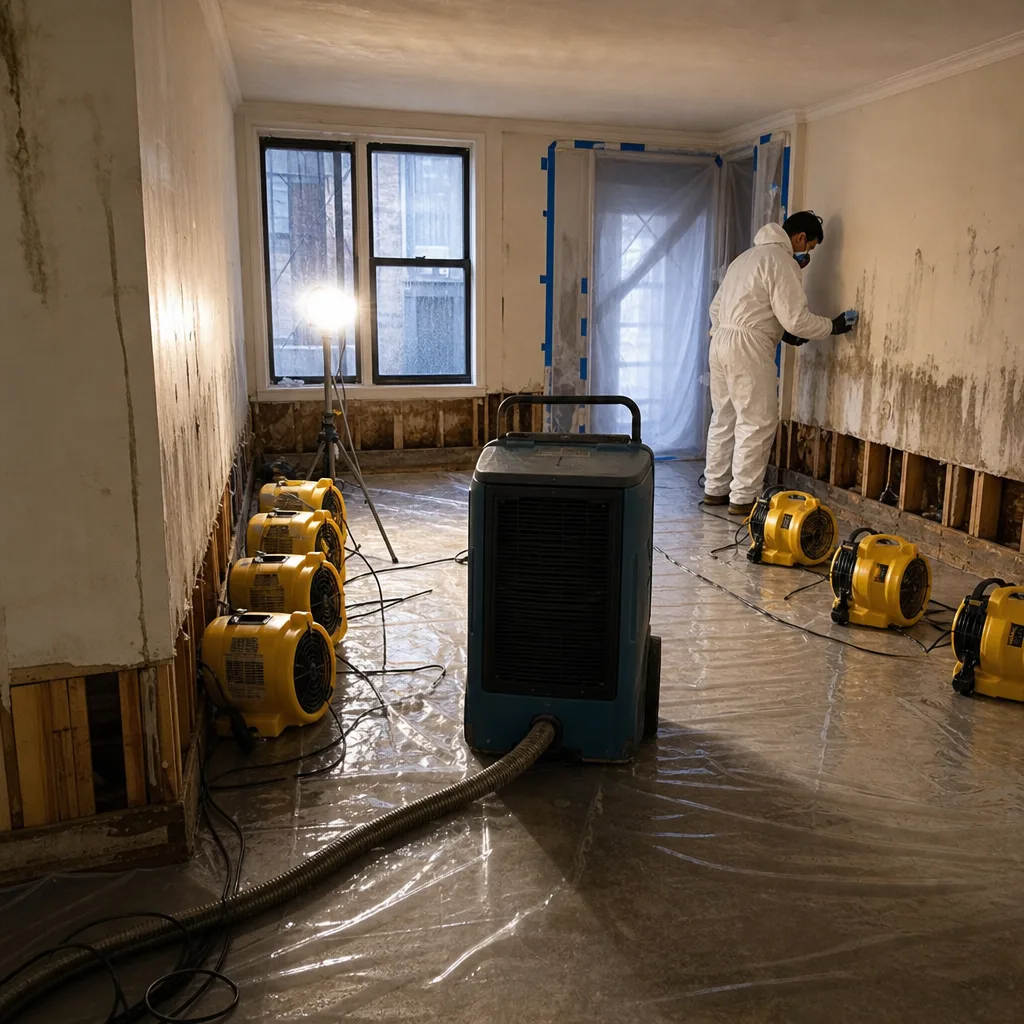
Dri-Eaz LGR dehumidifiers, Phoenix air movers, and Injectidry floor mat systems run continuously, with daily moisture readings logged until the dry standard is met. That log goes to you and your carrier.
Cleaning & Sanitization
We clean and sanitize affected surfaces with antimicrobial treatments appropriate to the water category. For category 3 black water, we set containment, run HEPA air scrubbers, and dispose of contaminated porous materials.
Specialty Restoration & Inventory Recovery
Documents, inventory, and equipment get triaged for pack-out, freeze-drying where viable, or content cleaning. Commercial tenants stay informed, and business interruption is minimized through phased workspace isolation.
Repairs & Restoration
We rebuild what needs rebuilding, from drywall and insulation to storefront framing and finished flooring. The same uniformed crew that started the job finishes it, and the 90-Day Done Right Promise covers the result in writing.
Need Emergency Commercial Restoration in Murray Hill Now?
Crews minutes away, answering live 24 hours a day. The sooner we start, the less it costs.
Working With Your Insurance Company
Commercial water damage claims in Murray Hill almost always involve a board, a property manager, and one or more insurance adjusters. We handle the claim documentation from the first hour so you do not get stuck in the middle. Our team photographs every room before and after mitigation, logs daily moisture readings, and writes a line-item scope that reflects actual damage, not inflated estimates. When the adjuster calls, we answer. When the board wants proof of dry standard compliance, we hand over the drying log.
What We Provide Your Insurer
- Thorough documentation of the loss
- Photos of all damage, room by room
- Moisture readings and drying logs
- A detailed, line-item scope of work
- Direct coordination with your carrier
Built for Murray Hill’s Loss Calendar
Murray Hill’s commercial restoration calendar tracks the neighborhood’s aging building systems through New York City’s seasons. January and February bring deep freezes that burst galvanized supply risers and radiator lines in pre-war mid-rises along Lexington and Third Avenue. Those failures flood entire vertical stacks of units before anyone notices, and the resulting claims often involve four or five separate unit owners and one very unhappy co-op board.
Spring thaw and intense April rainstorms expose leaking parapet walls and flat roofs on the 1910s-era brick buildings that line the side streets east of Park Avenue. Through-wall AC sleeve penetrations, a common feature on older Murray Hill facades, leak when driven rain hits the east-facing brick. Summer brings basement seepage and combined sewer backup into brownstone cellars during cloudbursts, and fall nor’easters push wind-driven rain through aging window frames and roof flashing. None of this is theoretical. We see it every year, and we plan equipment and staffing around the season.
Commercial Restoration Across Murray Hill’s Neighborhoods
The work changes block to block. Around Park Avenue and 34th Street, pre-war co-op high-rises with original steam heat and cast-iron waste stacks produce multi-unit vertical flooding when a riser fails well above the street, and our crews coordinate with building management to run hallway containment while board access is arranged. Over on Third Avenue between 30th and 40th Streets, ground-floor retail storefronts in mixed-use buildings take water from failed mechanical risers above, and the priority is isolating the commercial space so tenants can keep operating while structural drying runs behind plastic sheeting.
The brownstone blocks south of 30th Street and east of Lexington carry a different exposure: century-old cellar walls, combined sewer connections, and basement-level commercial or storage space that floods when the city’s aging sewers back up during heavy rain. Up near 39th and 40th Streets, larger post-war commercial buildings sit alongside pre-war walkups, and the loss patterns shift toward roof drainage failures and condensation from through-wall AC penetrations. On East 36th Street near the Morgan Library, our crew stabilized a category 2 grey-water release after a corroded original galvanized riser failed behind a sixth-floor bathroom wall, deploying Dri-Eaz LGR dehumidifiers and Injectidry floor mat systems while board sign-off delayed pack-out of water-damaged furniture in three units by 30 hours. Moisture mapping showed drywall cavity readings stayed below 15% MC only because we ran containment and air movers in the hallway during the wait.
Specialized Commercial Restoration Services We Offer in Murray Hill
Multi-Unit & HOA Restoration
This is the backbone of our Murray Hill work. A single failed cast-iron drain stack in a pre-war mid-rise routinely floods vertically stacked units, triggering simultaneous board authorization, DOB permit review, and multi-party insurance coordination, a bureaucratic cascade that can double water extraction lead times versus lower-density boroughs. We handle the logistics so boards do not have to: access scheduling, adjuster coordination, moisture documentation per affected unit, and a single written scope that covers the entire stack.
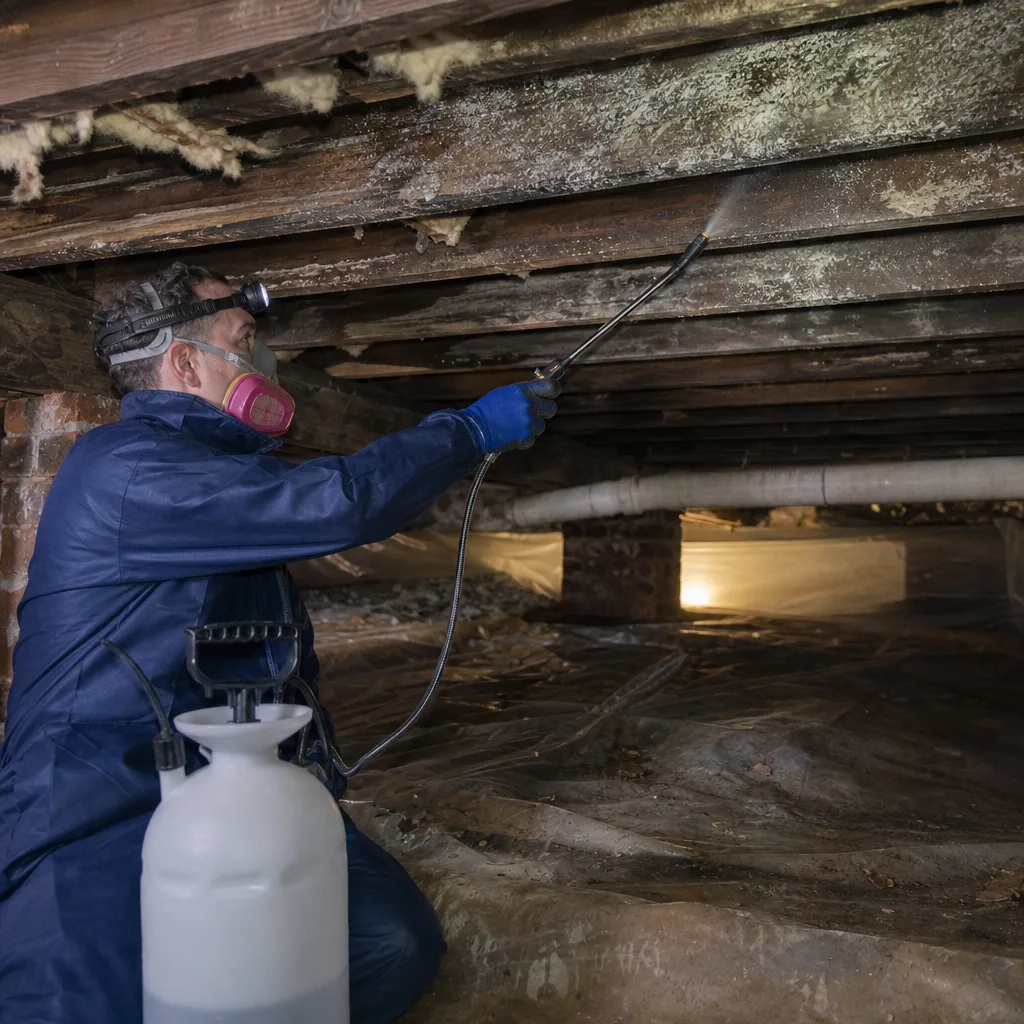
Business Interruption Minimization
Every hour your doors are closed is lost revenue, and in Murray Hill’s ground-floor retail corridors, a roof leak or riser failure can idle a storefront for days. We phase the work to keep as much of your space operational as possible, using containment barriers, negative air pressure, and after-hours drying schedules. Where partial occupancy is possible, we document the isolation so your carrier sees exactly what was affected, not a full-store claim.
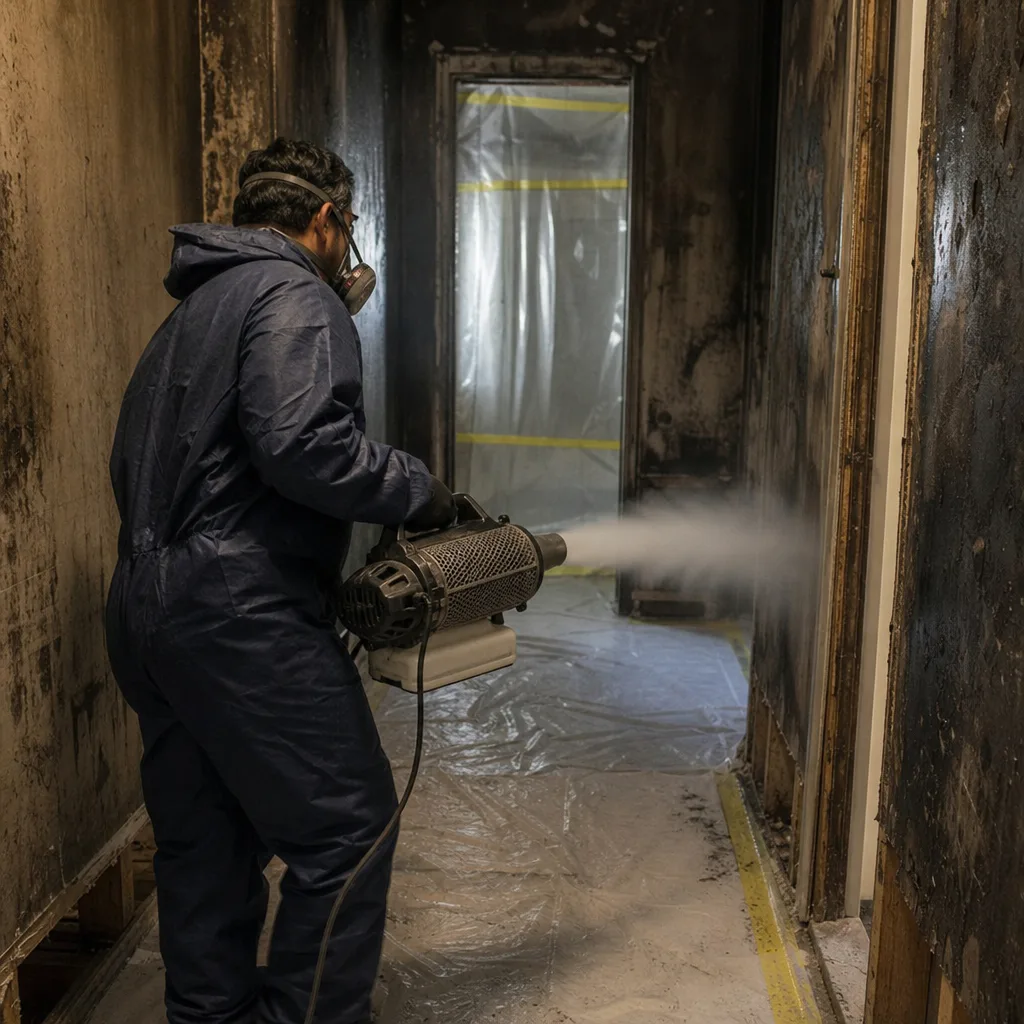
Document & Inventory Recovery
A flooded commercial space in Murray Hill means wet files, damaged product, and equipment sitting in standing water. We triage on day one: what can be cleaned on site, what needs pack-out, what should go to freeze-drying, and what is beyond salvage. Inventory gets photographed, itemized, and documented for the claim before anything leaves your property. For medical, legal, or financial offices in the neighborhood, document recovery often carries higher value than the building materials themselves, and we treat it that way.
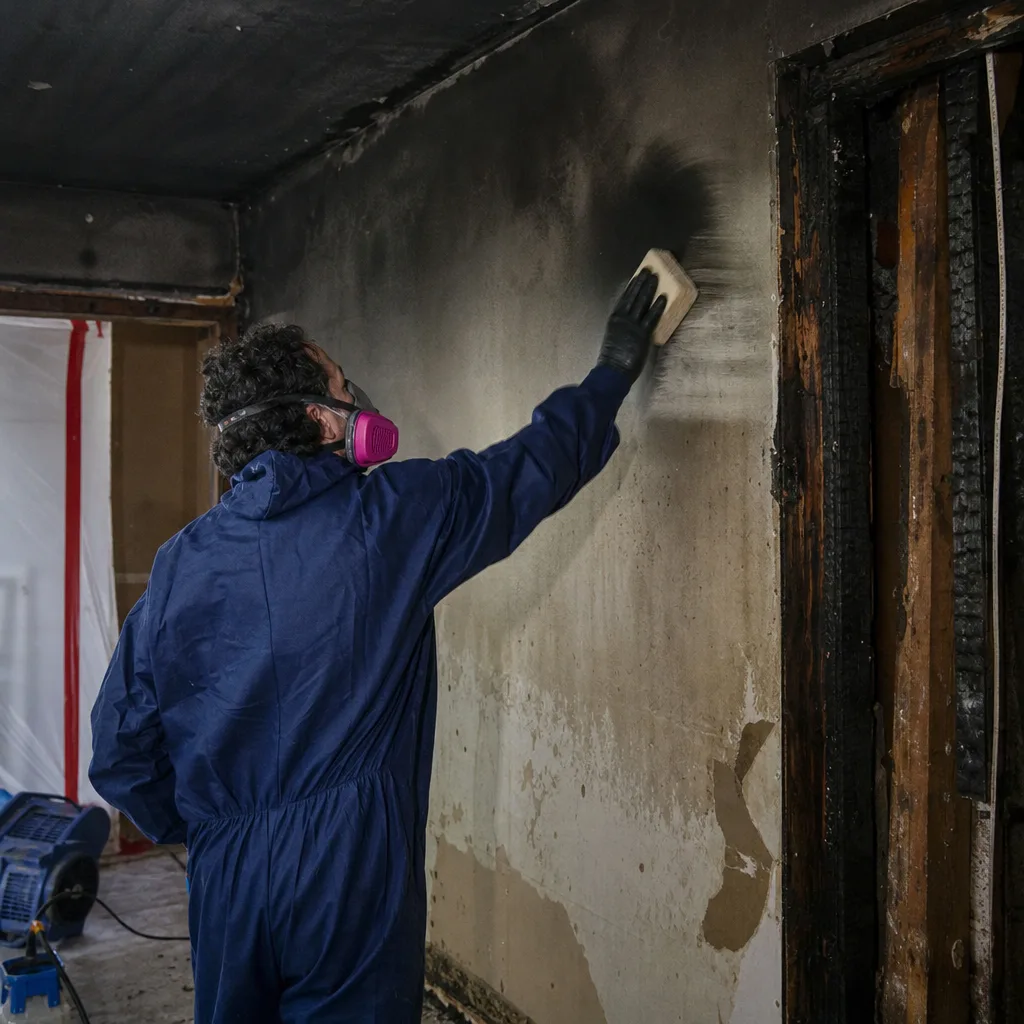
Office & Retail Restoration
From small professional suites on Madison Avenue to full-floor offices above Midtown’s retail corridors, we restore workspaces to useable condition with minimal disruption. We dry in place where materials allow, replace where they don’t, and handle finish work from paint to flooring so you’re not stitching together three contractors.
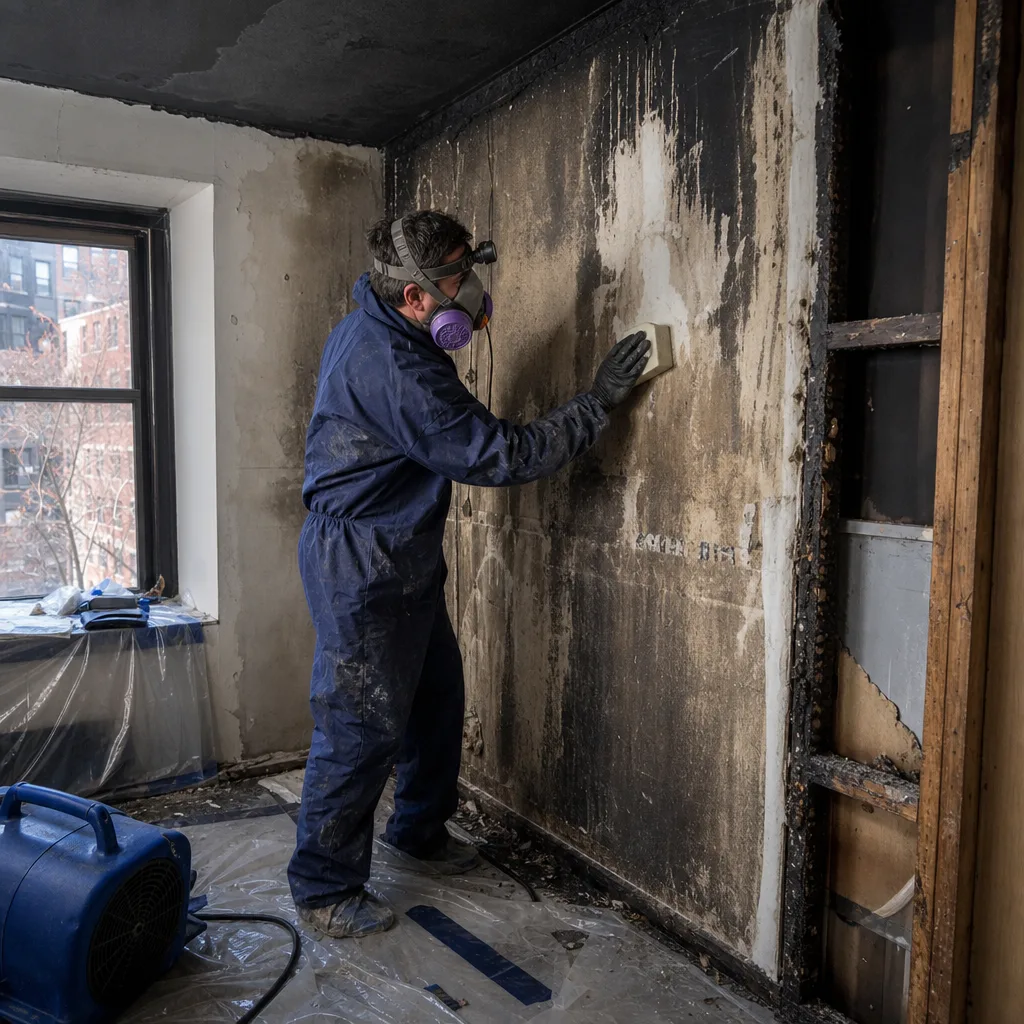
Industrial Facility Cleanup
Larger commercial and light industrial spaces in and around Murray Hill’s eastern blocks occasionally see flooding from failed mechanical systems or sewer backup. We bring truck-mounted extraction, high-capacity LGR dehumidifiers, and crew depth to handle thousands of square feet of wet slab without waiting days for a national franchise to schedule you in.
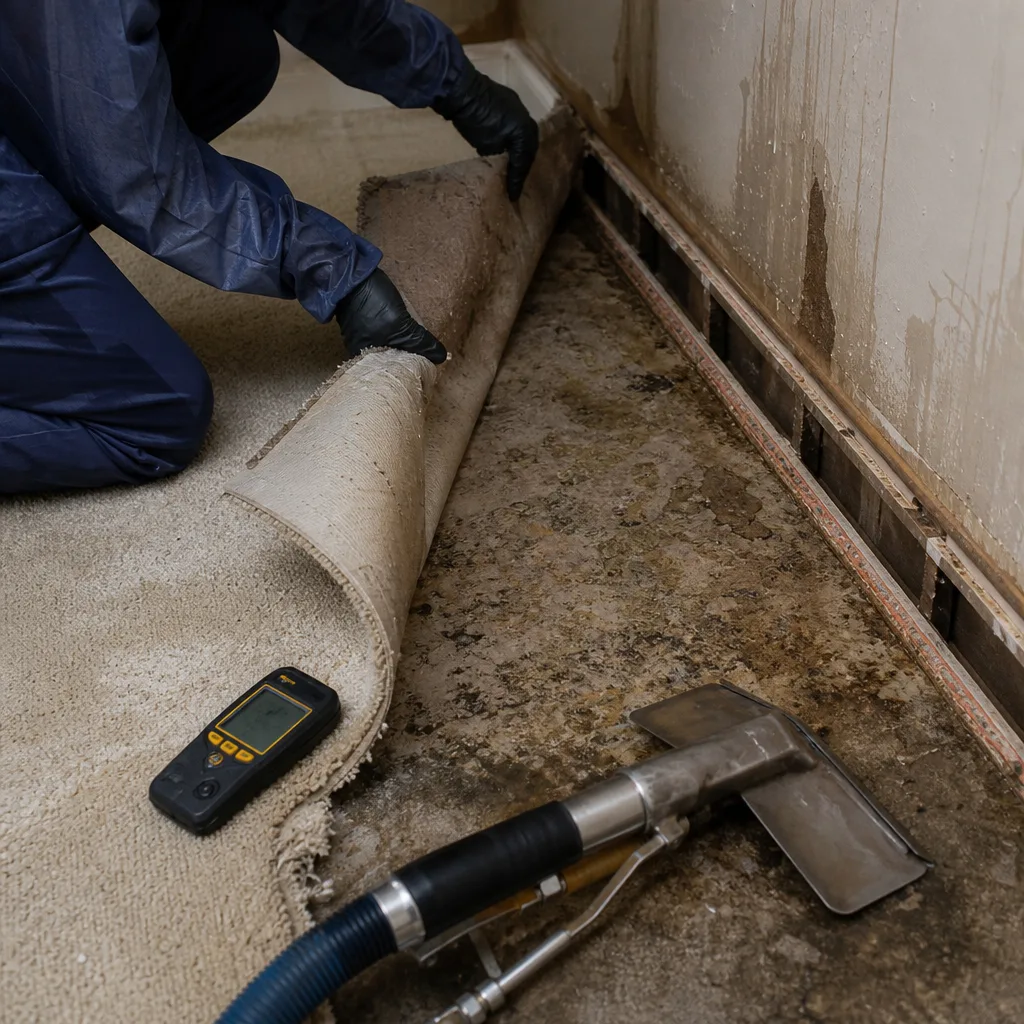
Large-Loss Response
When a riser fails at 2 a.m. and water has already reached six floors, you need a crew that can scale immediately. Our Murray Hill dispatch pulls from our New York City office’s full roster, so a category 3 multi-unit event gets multiple crews, staged equipment, and a single project lead who owns the job from first extraction to final punch list.
What happens when you call
- 1
A real person answersNo phone trees - you reach a local pro.
- 2
You get an upfront price rangeHonest numbers before anyone is dispatched.
- 3
A background-checked tech heads outLicensed & insured, dispatched right away.
- 4
You approve before work beginsNothing starts until you say go.
Commercial Restoration Costs in Murray Hill, NY
A typical commercial water extraction and dry-out in Murray Hill runs $3,200 to $7,800 depending on the affected square footage, water category, and how much demolition is required. Structural drying of a single flooded retail storefront with containment and daily monitoring typically lands between $2,900 and $6,200. Full multi-unit stack repairs after a cast-iron riser failure, including drywall, flooring, and finish work across three or four units, commonly run $18,000 to $45,000 depending on finishes and permit requirements.
What moves the price: water category (category 3 black water adds containment, disposal, and antimicrobial treatment), access delays caused by board approval, the age of finishes being matched, and whether abatement of asbestos-containing plaster or pipe insulation is triggered. Insurance covers most of these losses when documentation is thorough and the scope is written correctly. We provide the free inspection, the written estimate, and the direct carrier billing that keeps your out-of-pocket to the deductible. Call (845) 305-5737 for an exact quote, estimates are free.
We Also Serve Cities Near Murray Hill
Our crews regularly handle commercial restoration work in the Upper West Side, Upper Manhattan, Morningside Heights, and Central Harlem. If you own or manage property in those neighborhoods, the same live dispatch, certified crews, and direct insurance billing apply. For a full look at our commercial capability, visit our Commercial Restoration team page. We serve Murray Hill and the surrounding borough block by block.
Serving Murray Hill, NY - Our Local Coverage Area
We’re based in the Murray Hill area and know this community well. Use the map below to see our service coverage - if you’re nearby, we can almost certainly help.
Murray Hill Commercial Restoration Questions, Answered
Why does mold risk spike before our crew even enters a Murray Hill co-op?
Mold risk spikes because Murray Hill co-op boards often require 24 to 48 hours of sign-off and unit-access coordination before mitigation can begin. During that forced delay, standing water inside drywall cavities and behind plaster stays warm and wet, which pushes otherwise salvageable materials into active mold colonization. We counter this by running hallway containment and air movement during the wait whenever building management allows, and we document the timeline for the board and the carrier.
Can you restore a pre-war Murray Hill storefront after a roof leak without full tenant shutdown?
In most cases, yes. We isolate the affected area with containment barriers and negative air pressure, then run structural drying behind plastic while the rest of the space stays open. Phased work schedules and after-hours drying let ground-floor retailers on Third Avenue and Lexington keep operating while the leak source is repaired and the gypsum dries. Full shutdown is rare unless the leak compromised electrical or structural elements.
Does NYC Department of Buildings involvement slow down commercial water extraction here?
It can, but it doesn’t have to. DOB permit review is required when structural work, riser replacement, or abatement is involved, and that adds time to the rebuild phase, not the emergency extraction phase. We sequence the work so extraction and drying start immediately while permit applications for the repair phase run in parallel. In Murray Hill’s pre-war buildings, where riser failures often require plumbing permit review, this sequencing is the difference between a two-week dryout and a two-month stall.
How do you handle category 3 black water in Murray Hill brownstone basements?
Category 3 black water requires full containment, HEPA air scrubbing, and disposal of contaminated porous materials. In Murray Hill’s brownstone blocks, sewer backup through cellar floor drains is the usual source, and the contamination spreads across concrete, wood framing, and any stored inventory. We extract with truck-mounted equipment, remove and dispose of affected materials, apply antimicrobial treatment, and run daily air quality monitoring until clearance is documented. Your team stays out of the space until it tests clean.
What happens to inventory and documents in a Murray Hill commercial space that gets flooded?
Inventory and documents get triaged on day one. We photograph everything, itemize what is damaged, and separate what can be cleaned on site from what needs pack-out or freeze-drying. For offices and retail spaces in Murray Hill, document recovery often carries higher value than the building materials, and our documentation is written to carrier standards so the claim moves without back-and-forth. Nothing leaves your property without a signed inventory.
How fast can a crew actually reach my Murray Hill commercial property?
We commit to a 45-minute response for any commercial property in Murray Hill, and a live dispatcher answers at (845) 305-5737 around the clock. Our crews stage from the New York City office and know the neighborhood’s streets, so a 2 a.m. riser failure on Park Avenue gets the same response as a noon storefront leak on Third.
Will my insurance cover commercial water damage restoration in Murray Hill?
Most commercial policies cover sudden and accidental water damage, including burst risers, supply line failures, and sewer backup if the endorsement is in place. The claim’s success depends on documentation: photos, moisture logs, a line-item scope, and a clear cause of loss. We provide all of that directly to your adjuster and bill the carrier directly, so you’re not floating the cost while the claim processes. Call (845) 305-5737 and we’ll walk you through what your policy likely covers.
What should I do in the first 30 minutes after discovering commercial water damage in Murray Hill?
Shut off the water source if you can do so safely, kill power to the affected area if water is near outlets or panels, and call (845) 305-5737. Move small items out of standing water if it’s safe, but do not enter a space with sagging drywall or water in contact with electrical. Then document what you see with photos and wait for our crew. The faster extraction starts, the less demolition you’ll need, and the sooner your tenants can get back in.
Written by Curt Bowman, Owner at Floodline Restoration Co., serving Murray Hill with commercial restoration since 2010.