
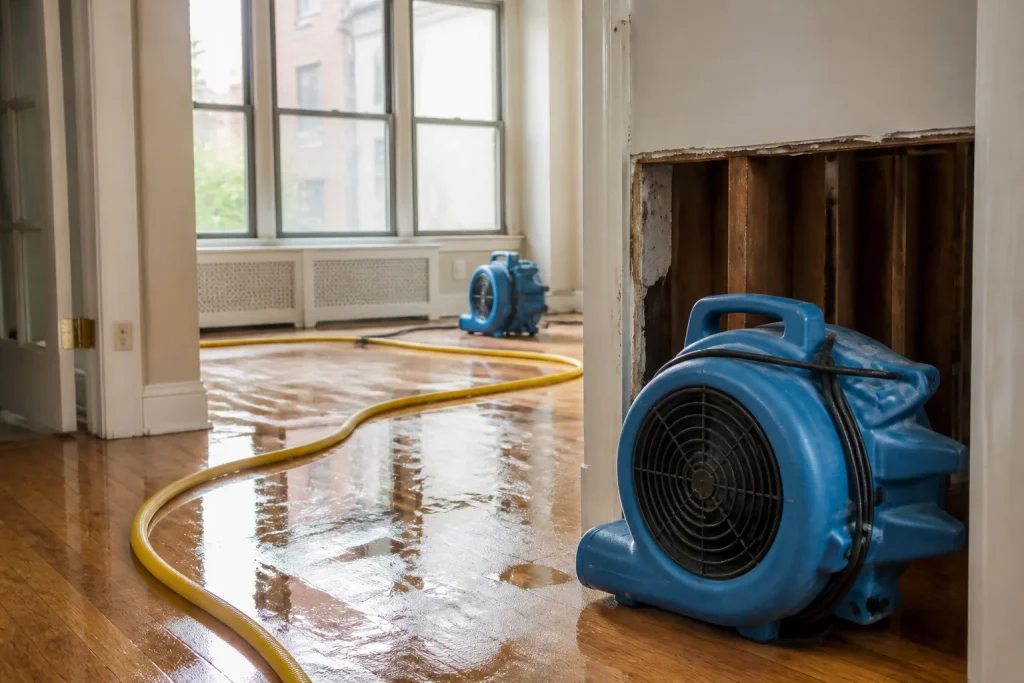
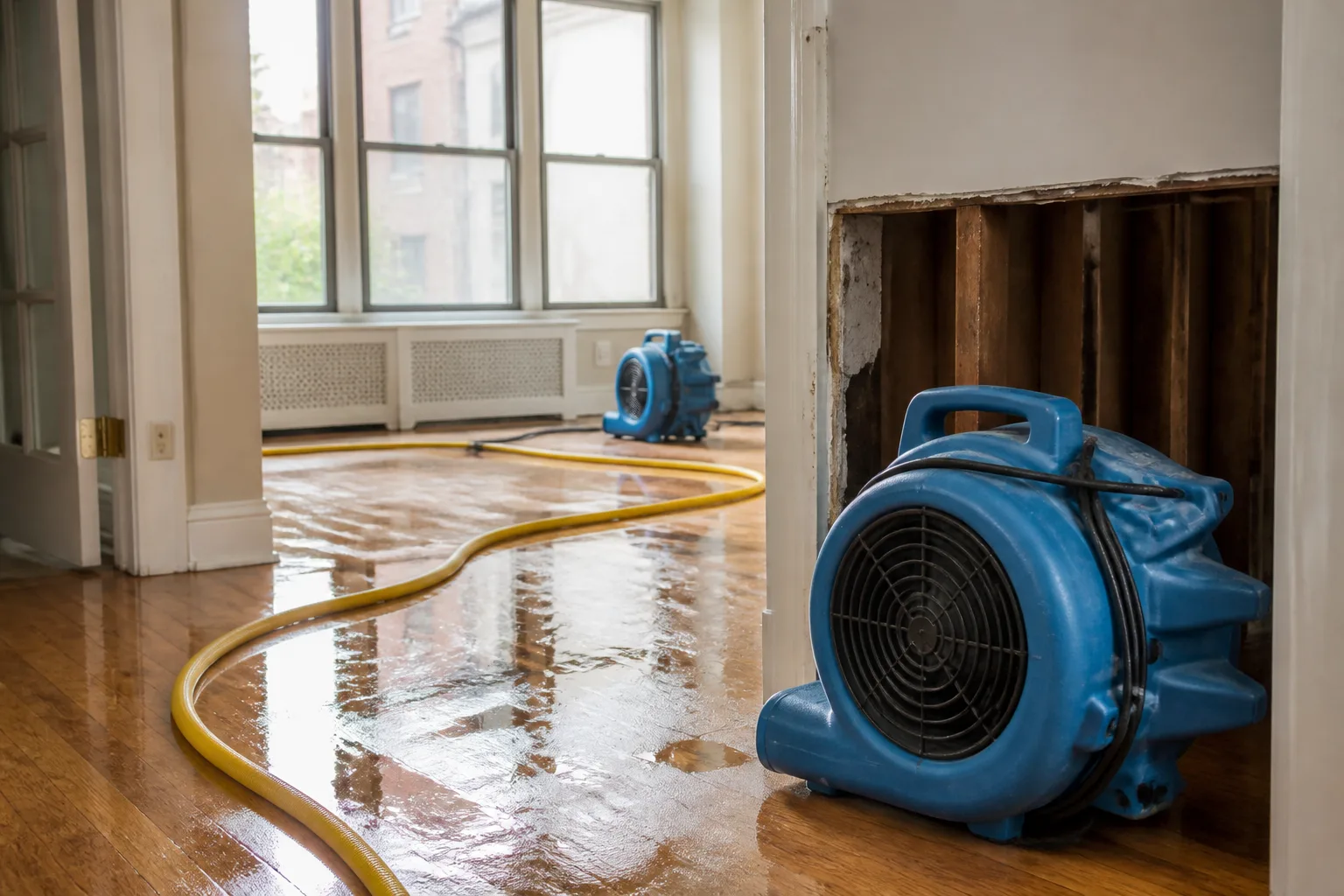
Dri-Eaz Water Damage Restoration in Upper West Side: A Homeowner’s Guide
Most homeowners are shown a dehumidifier running in the corner and told “we’ll check back tomorrow.” But without baseline psychrometric readings taken before that machine turns on, there’s no proof the drying actually worked, and no defense if mold shows up six weeks later. That’s what this guide is about: what the equipment actually measures, why that data protects you during insurance disputes, and what a proper drying log looks like. If you’d rather not wade through the technical details, call Floodline Restoration Co. home at (845) 305-5737 and we’ll walk you through it.
What Dri-Eaz Equipment Actually Measures (And Why Your Adjuster Cares)
Dri-Eaz is a brand that built its reputation on one thing: measurement. Their LGR (low grain refrigerant) dehumidifiers and axial air movers aren’t just “fans and dryers.” They’re instruments paired with a protocol. When we set up a drying chamber in an Upper West Side apartment, we don’t just plug machines in and hope. We record three numbers before anything runs: grain depression, GPP (grains per pound of moisture in the air), and CFM (cubic feet per minute of airflow).
Grain depression is the difference between the moisture content of air entering the dehumidifier and the air leaving it. A healthy LGR unit pulls 50 to 70 grains. If it’s pulling 20, the unit isn’t doing its job or the room is already near dry. GPP tells us how much water is suspended in the air itself. On an Upper West Side summer day, ambient GPP can sit at 110 or higher. A properly dried room should come down to 40 or below. CFM measures airflow across wet surfaces. Without enough air movement, evaporation stalls no matter how dry the air is.
Here’s why these numbers matter to your insurance adjuster: they’re objective. A claim that says “we ran fans for four days” is an opinion. A claim that says “GPP dropped from 112 to 38, grain depression held at 60, and all rooms hit target EMC by day four” is a measurement. Adjusters approve measured claims faster because there’s nothing to argue with.
Why Upper West Side Pre-War Construction Changes the Drying Plan
The Upper West Side is full of buildings that predate drywall by decades. Plaster over lath, old-growth hardwood subfloors, limestone facades, and cast-iron radiators. All of that changes how water moves and how drying has to be set up.
Plaster walls are dense. Water doesn’t wick through them the way it does through gypsum board. Instead, it soaks in and lingers behind the surface, often trapped between the plaster and the masonry behind it. If you only dry the air in the room, you leave that hidden moisture in place. We’ve pulled baseboards off in buildings along West End Avenue and found water still pooled behind them three weeks after a “completed” dry job by another company. The room felt dry. The wall was not.
Old-growth subfloors are a different animal than modern plywood. The grain is tighter, which means water soaks in slower but also releases slower. Drying times stretch. A modern plywood floor might hit dry standard in three days. An old-growth floor in a Riverside Drive co-op might take six. Anyone who promises a fixed “three days and done” without measuring doesn’t understand the building stock on the Upper West Side.
What does this mean for you? Your restoration crew needs to check behind baseboards, drill small inspection holes in the right places, and set air movers to push air through wall cavities and under floors, not just across the room. That’s a different setup than you’d use in a suburban drywall house. It takes more time, and it’s the only way that works.
Owned and Calibrated Equipment vs. Rental Fleet Units
Here’s something most homeowners never think about: whether the dehumidifier in your living room was serviced this year, or last year, or never. Dri-Eaz builds durable machines, but they need calibration and maintenance. A dehumidifier with a clogged coil or a failing compressor can run for a week and pull half the water it should. The room feels warm and the homeowner assumes drying is happening. It isn’t.
Companies that rent equipment job-by-job rarely see service records. Rental yards send units out because they run, not because they’ve been checked against a psychrometric benchmark. A restoration company that owns its Dri-Eaz fleet and tracks service hours knows when each unit was last tested and what it pulled on the last job. When we send a unit to an Upper West Side apartment, we know its last calibration date and its last measured grain depression. That’s the difference between actual drying and theater.
Ask any restoration company one question: “Can I see the calibration or service record for the units you’re putting in my home?” If they can’t show you something, you’re not getting measurement-based drying. You’re getting a fan and a prayer.
What a Legitimate Moisture Log Looks Like
If a Dri-Eaz-equipped crew does the job properly, you should walk away with a document. Not a vague invoice note. A room-by-room log with daily readings. Here’s what it includes:
- Baseline readings taken before equipment starts, on day one, for every affected room and material type (wall, floor, ceiling, subfloor if exposed).
- Daily GPP and grain depression readings showing the air is actually drying and the dehumidifier is actually working.
- Material moisture content readings per room, usually taken with a penetrating or non-penetrating moisture meter on wood and a moisture probe on drywall or plaster.
- Target EMC (equilibrium moisture content) for each material based on the building’s normal ambient conditions in the Upper West Side. Wood in a pre-war building typically needs to come down to 10 to 13 percent depending on the season.
- A final clearance number for each room showing all materials at or below target EMC on the last day.
If you’re never handed a log like this, walk away. Or at minimum, ask for it before you sign off on completion. The absence of a moisture log is the single biggest red flag in water damage restoration because it means no one can prove the drying worked. And six weeks later, when mold blooms behind the baseboard, you’re the one left arguing with both the contractor and your insurance carrier.
How Floodline Uses That Documentation When Disputes Surface
The 90-Day Done Right Promise, our Keystone Standard, isn’t just a line on a brochure. It’s a written guarantee that says if it’s not done right, we make it right. And the thing that makes that promise enforceable is the documentation. When we dry a home on the Upper West Side, the moisture log travels with the job. The homeowner gets a copy. The insurance carrier gets a copy. We keep a copy.
That matters on day 60, when a homeowner notices a musty smell near the baseboard and calls us. We pull the log, check the readings from that exact room, and we know immediately whether the drying held or something new happened. If it’s our work, we fix it under the promise. No arguing, no paperwork battles. If a contractor can’t show you a log, they can’t stand behind the work because they have no record of what they actually did.
This is where Water Damage Restoration in Upper West Side becomes more than just extraction and dehumidifiers. It’s about the paper trail that protects you. We’ve seen a homeowner in a Columbus Avenue brownstone get a secondary mold claim denied because the original restoration company never produced drying documentation. The homeowner had no leg to stand on. With a proper Dri-Eaz moisture log, that conversation with the adjuster is straightforward: here are the numbers, here’s the clearance, here’s what was done. Approved.
If you’re dealing with a mold issue separately, our Mold Remediation in Upper West Side work follows the same documentation protocol. Same for Fire & Smoke Damage Restoration in Upper West Side if you’re ever in that situation. The principle never changes: measurement first, documentation always.
When a Homeowner Should Walk Away (And What to Ask Instead)
After 42 years of serving local communities, we’ve heard every variation of “the other company said they’d be done in two days.” Here’s the honest truth: drying timelines on the Upper West Side are determined by the building, not the calendar. If someone gives you a fixed completion date before they take a single moisture reading, they’re guessing. And you’re paying for the guess.
Here are three questions to ask any restoration company before they set up equipment:
- “Will you take baseline psychrometric readings before you start, and will you show them to me?” If they say no or look confused, call someone else.
- “Who owns the equipment and when was it last calibrated?” Owned and serviced Dri-Eaz units matter. Rental units with unknown service history do not.
- “Will I receive a written drying log with daily readings and a final clearance number for every room?” If the answer isn’t a clear yes, you’re not hiring a restoration company. You’re hiring a cleanup crew.
When the job is done right, you should know more about your home’s condition than you did before the water event. That’s the point of measurement. A homeowner who understands GPP and EMC is a homeowner who can hold their contractor and their carrier accountable. That’s not a sales pitch. That’s just how it works.
If you’re in Upper West Side and want water damage restoration done with the documentation to back it up, call Floodline Restoration Co. at (845) 305-5737. We’ll be there when we say. And the numbers will prove we did what we said we did.
The Bottom Line
Dri-Eaz equipment is only as good as the protocol behind it. A homeowner on the Upper West Side should expect baseline psychrometric readings before drying starts, daily measurements while it’s running, and a written log with a final clearance number when it’s done. That log is your defense against mold claims, insurance disputes, and contractors who cut corners. If you’re not handed one, ask. If the answer is vague, walk away. And if you’re in Upper West Side and need help, Floodline Restoration Co. offers free estimates. Call (845) 305-5737 and we’ll talk through what’s going on in your home, no pressure and no sales pitch. Done right, and backed in writing.
Frequently Asked Questions
There is no fixed timeline. Plaster walls and old-growth subfloors common in Upper West Side pre-war buildings dry slower than modern drywall. A typical drying job runs three to six days, but the only honest answer is “until the moisture readings show it’s done.” Ask for daily readings and a target EMC so you know what the crew is measuring against.
Yes. Insurance adjusters approve documented claims faster because objective readings remove the argument. Calibrated Dri-Eaz equipment with a service record produces trustworthy data. A rental unit with unknown maintenance history produces data an adjuster may question. If you’re filing a claim, ask for the moisture log up front.
A household dehumidifier pulls 20 to 30 pints a day. A Dri-Eaz LGR unit pulls 80 to 150 pints. The difference is whether your walls actually dry or just feel dry to the touch. For anything beyond a small spill, use professional equipment with baseline readings. A small spill might be fine with a mop and a fan. A flooded bathroom floor is not.
Yes, if the drying wasn’t actually measured. Moisture trapped behind plaster or under old-growth flooring can sit for weeks. The room feels dry, the invoices say complete, and then mold appears. A proper moisture log with final clearance numbers for each room is your proof that drying reached the right threshold. Without that log, you have no way to challenge the result or hold anyone accountable.
Written by Curt Bowman, Owner at Floodline Restoration Co., serving Upper West Side since 2010.
Need Damage Restoration Help?
Call Floodline Restoration Co. - licensed & insured, here with fast after-hours help in Upper West Side.
(845) 305-5737