

Free visual inspection and a written scope of work before any mitigation begins - photos, moisture readings, and drying logs go in your claim file
The scope we write is the scope we bill. Anything new gets shown to you, in writing, before we touch it.
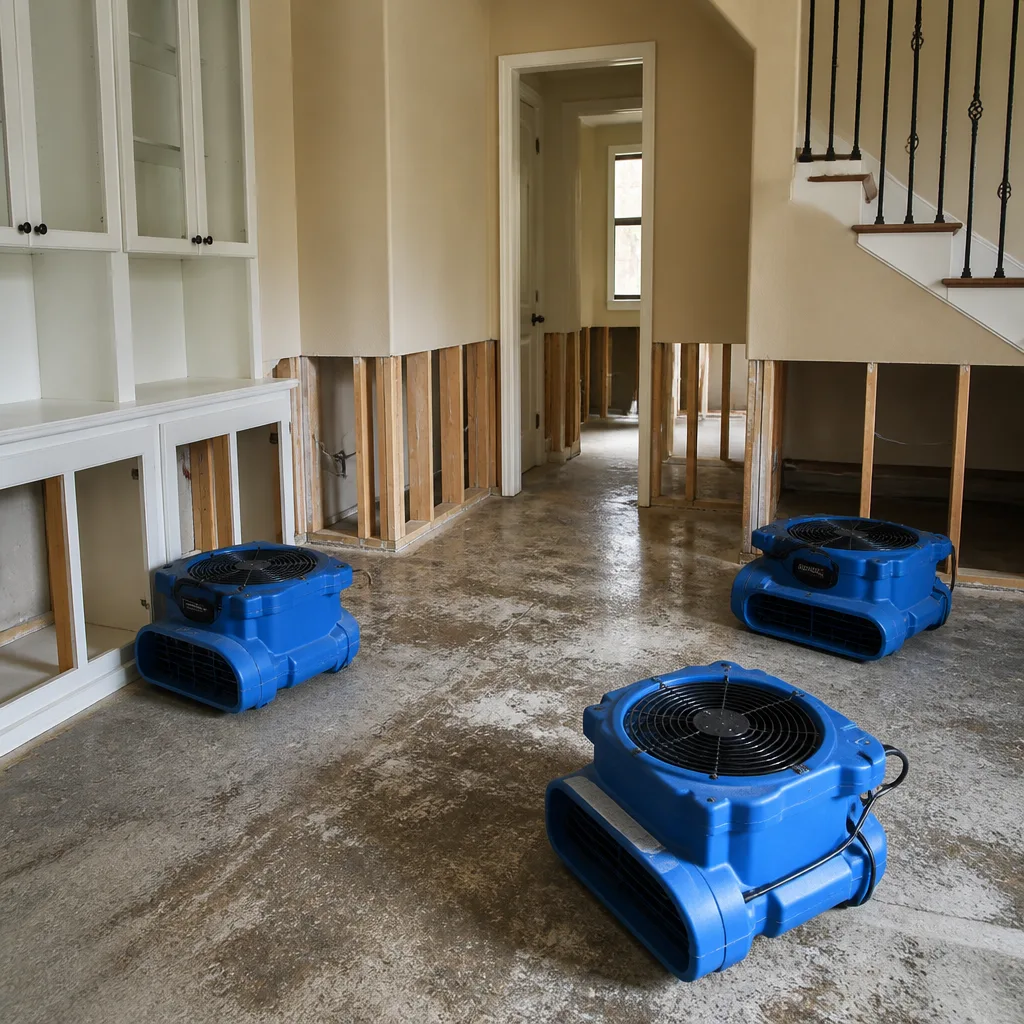
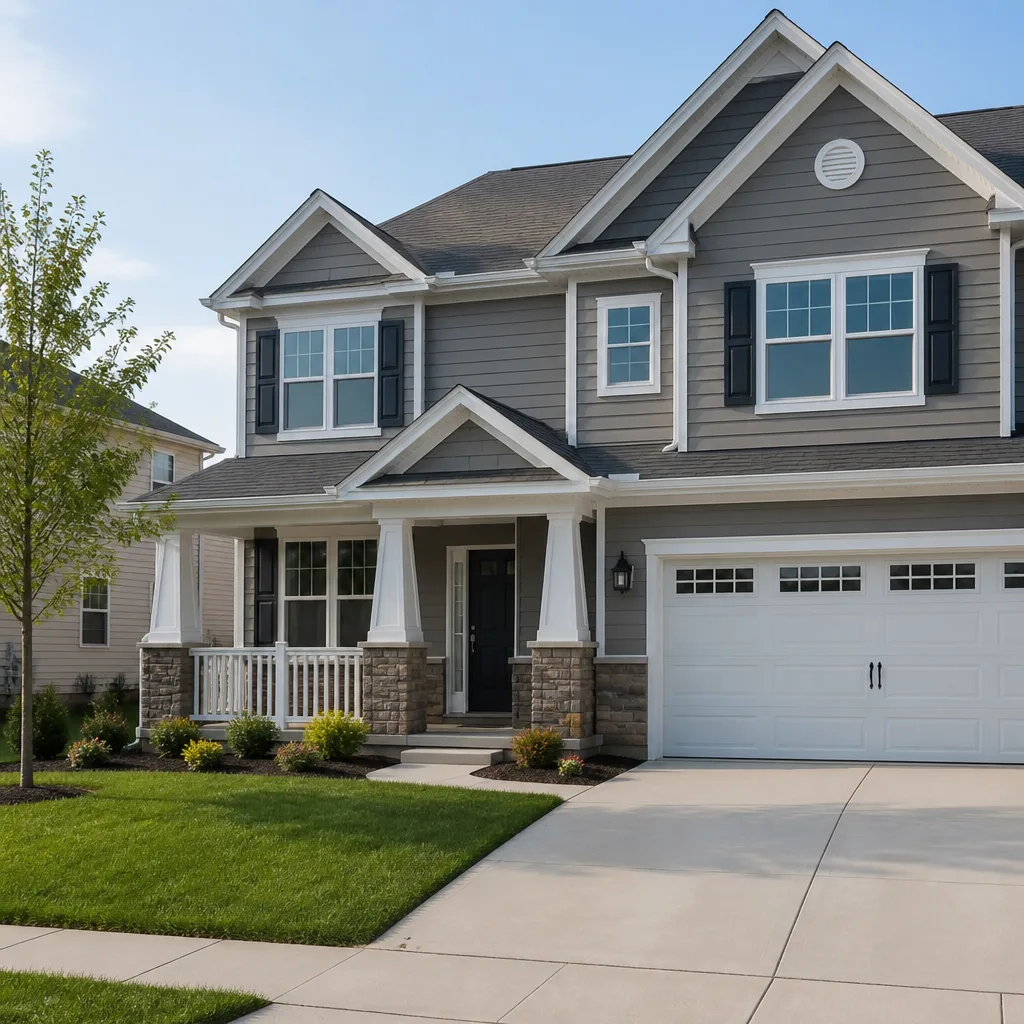
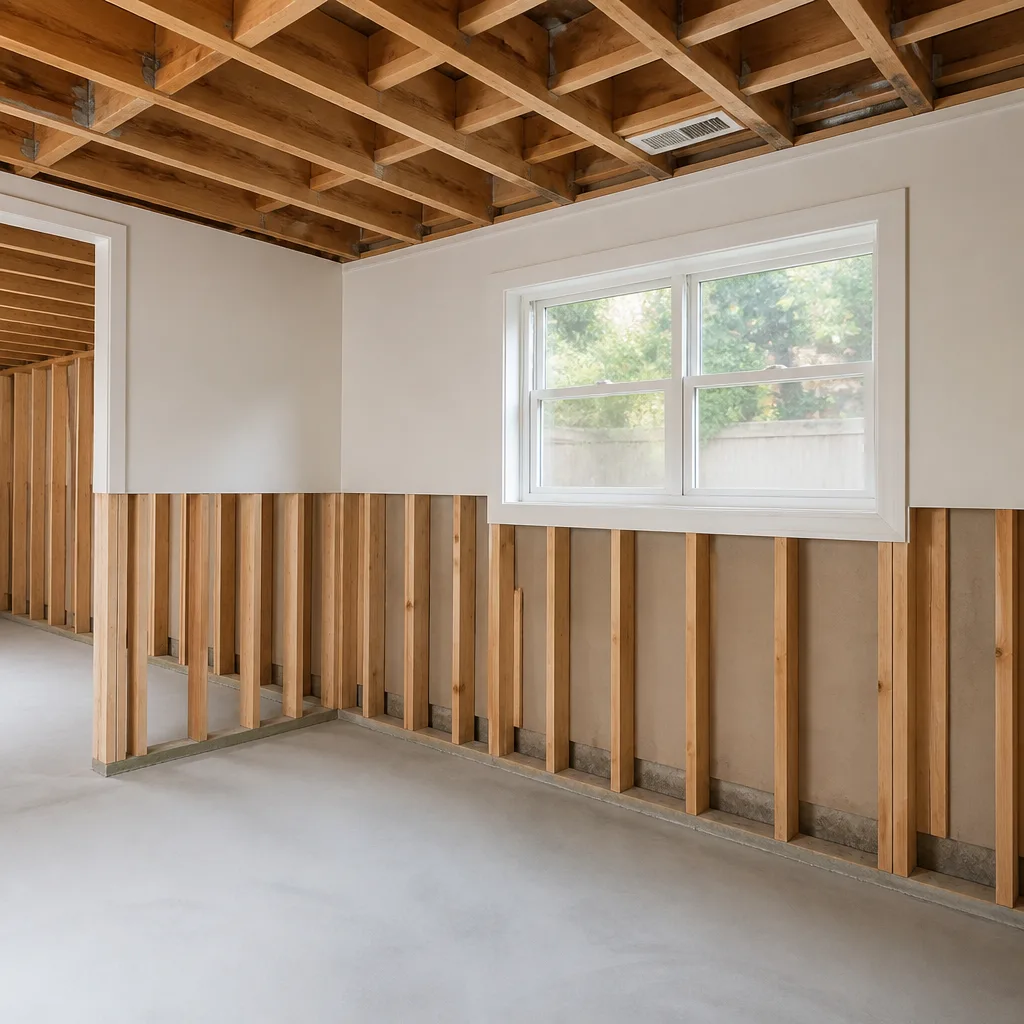
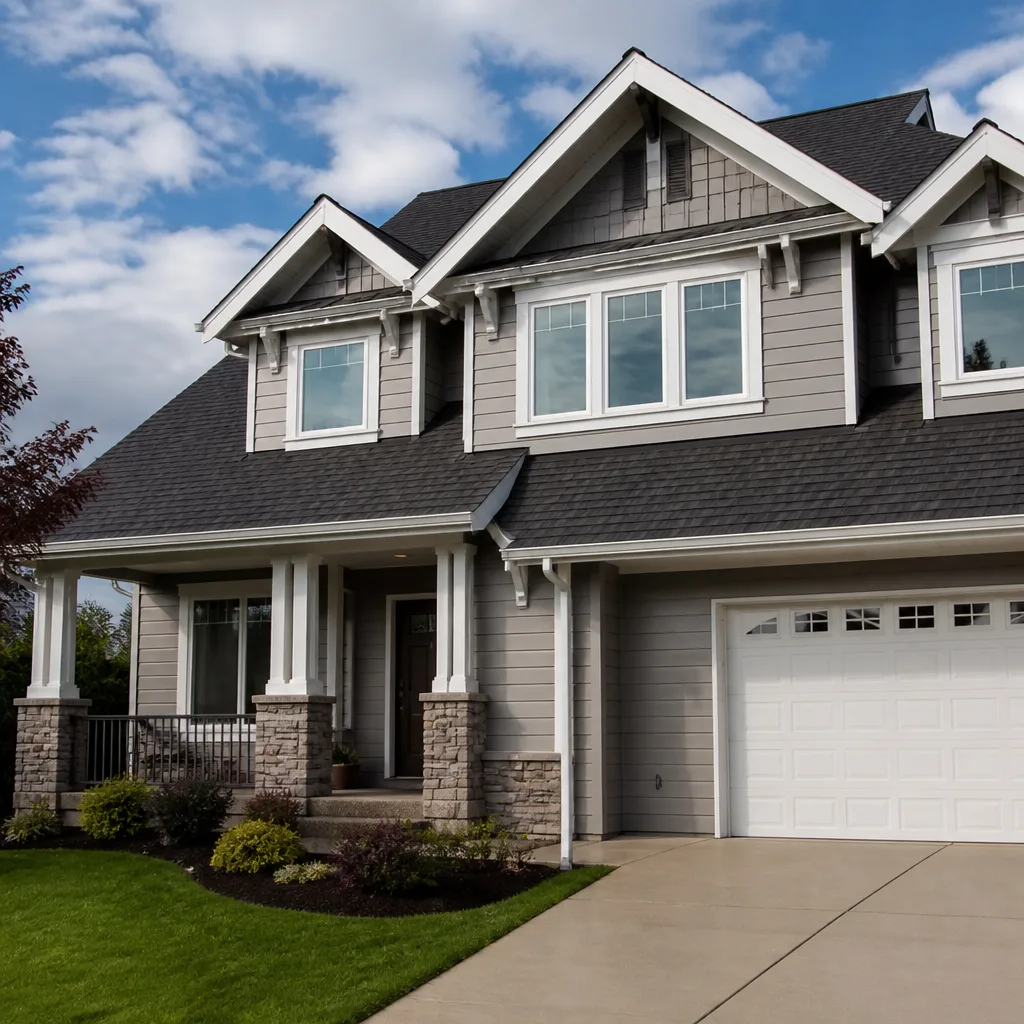
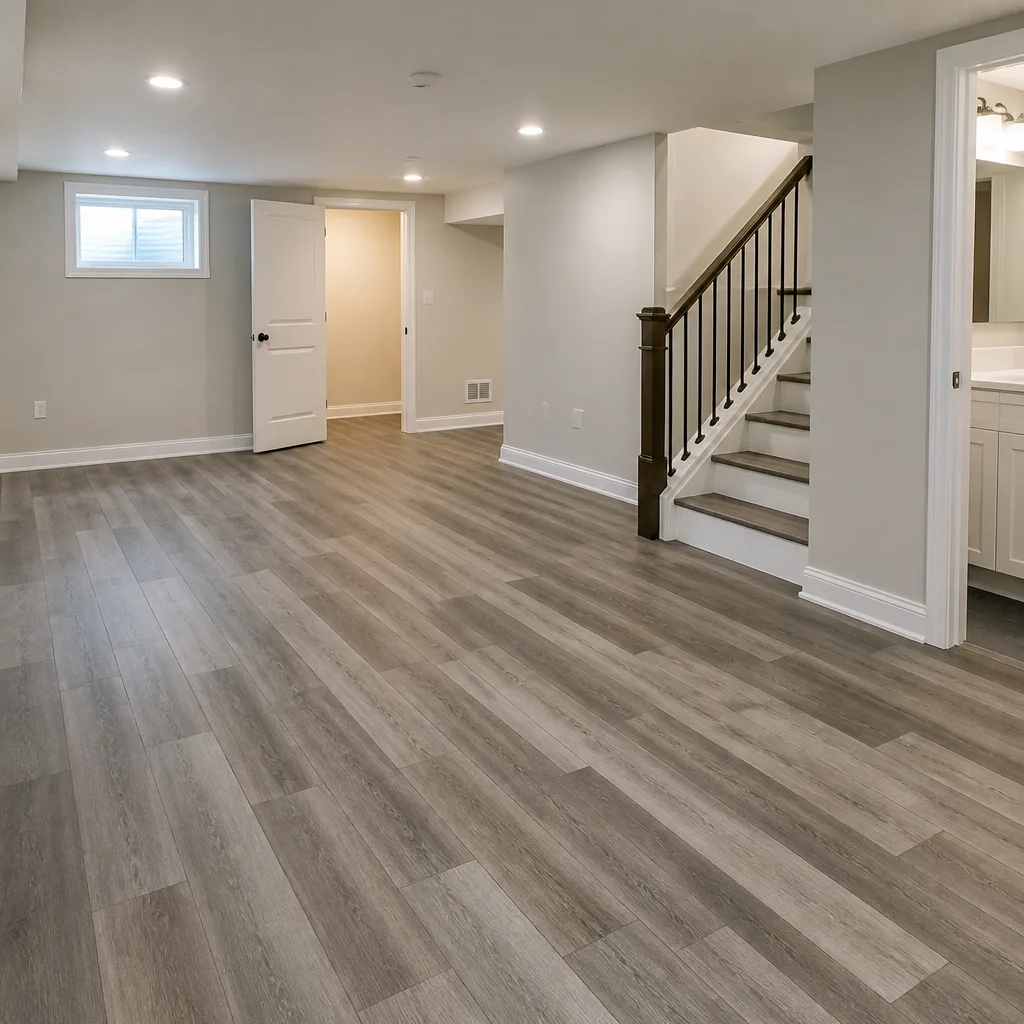
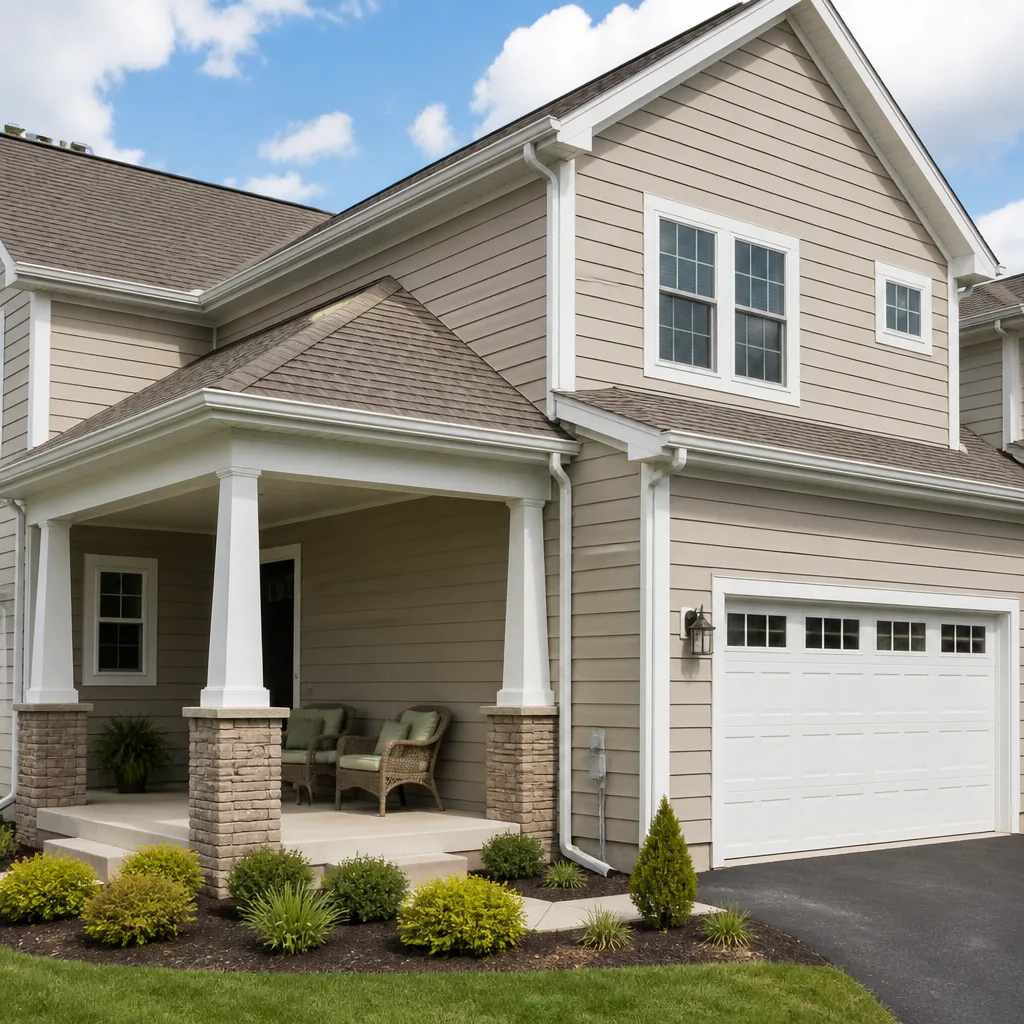
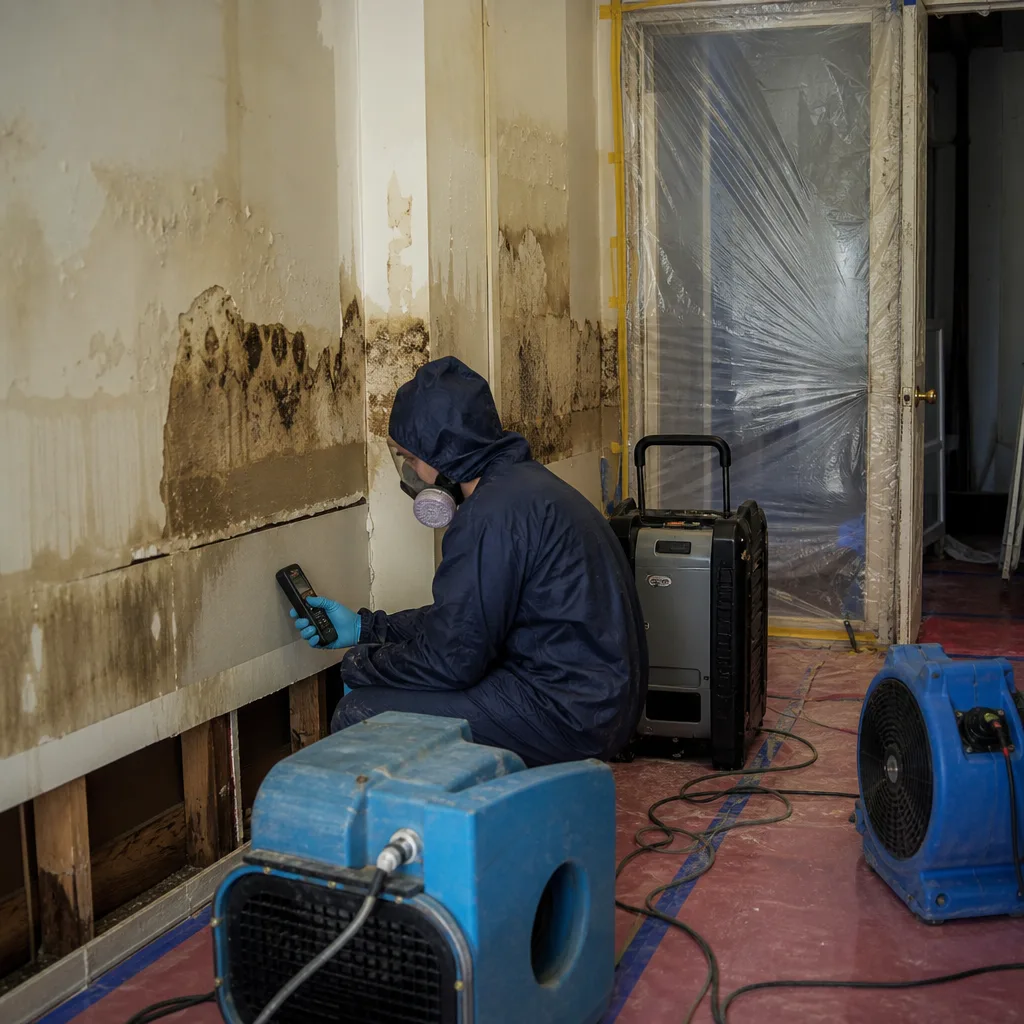 Before
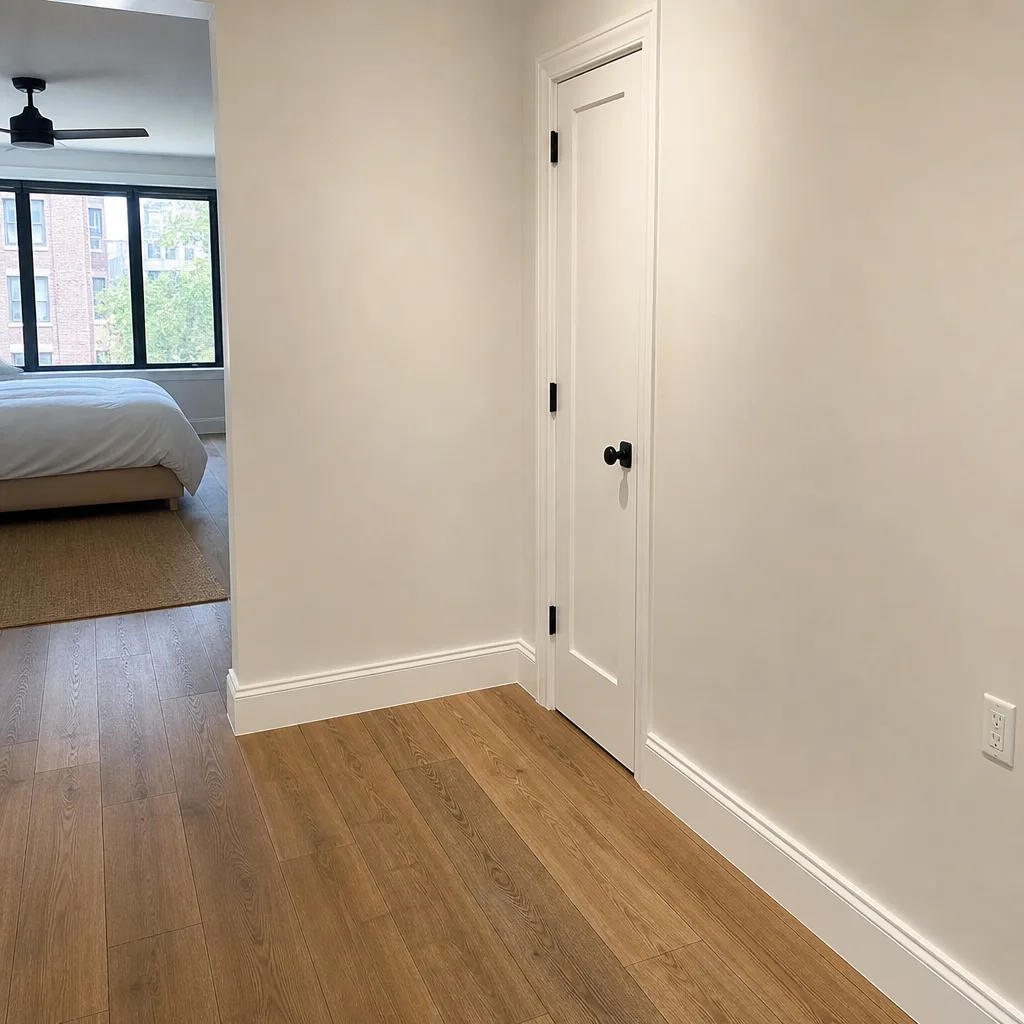 After
After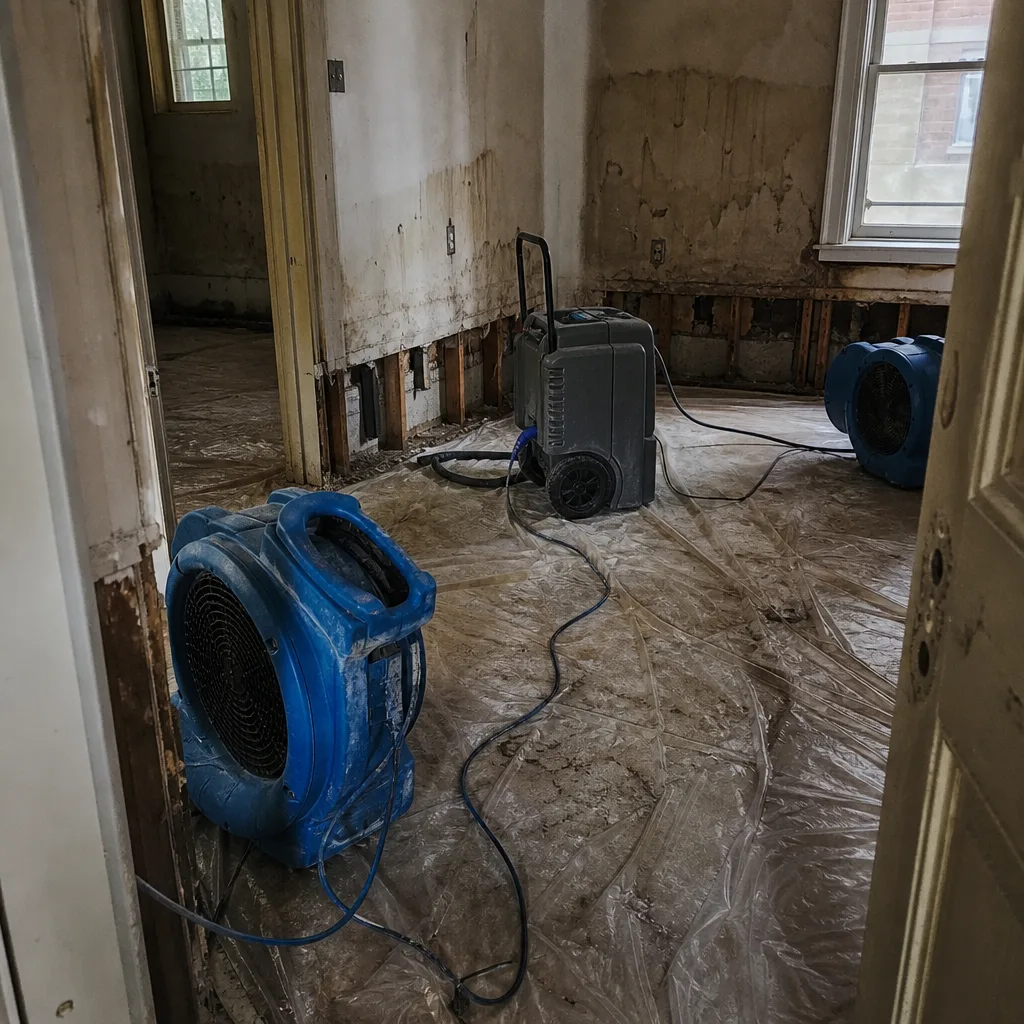 Before
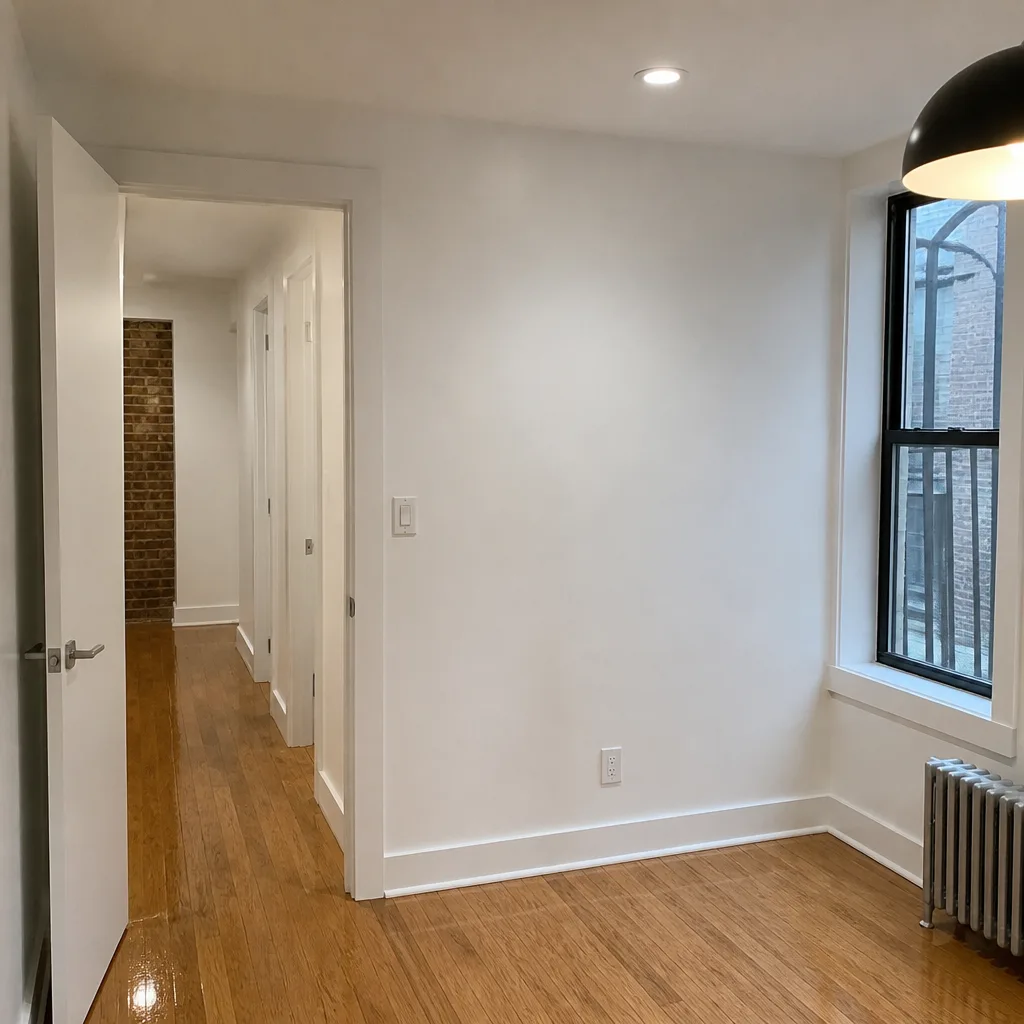 After
After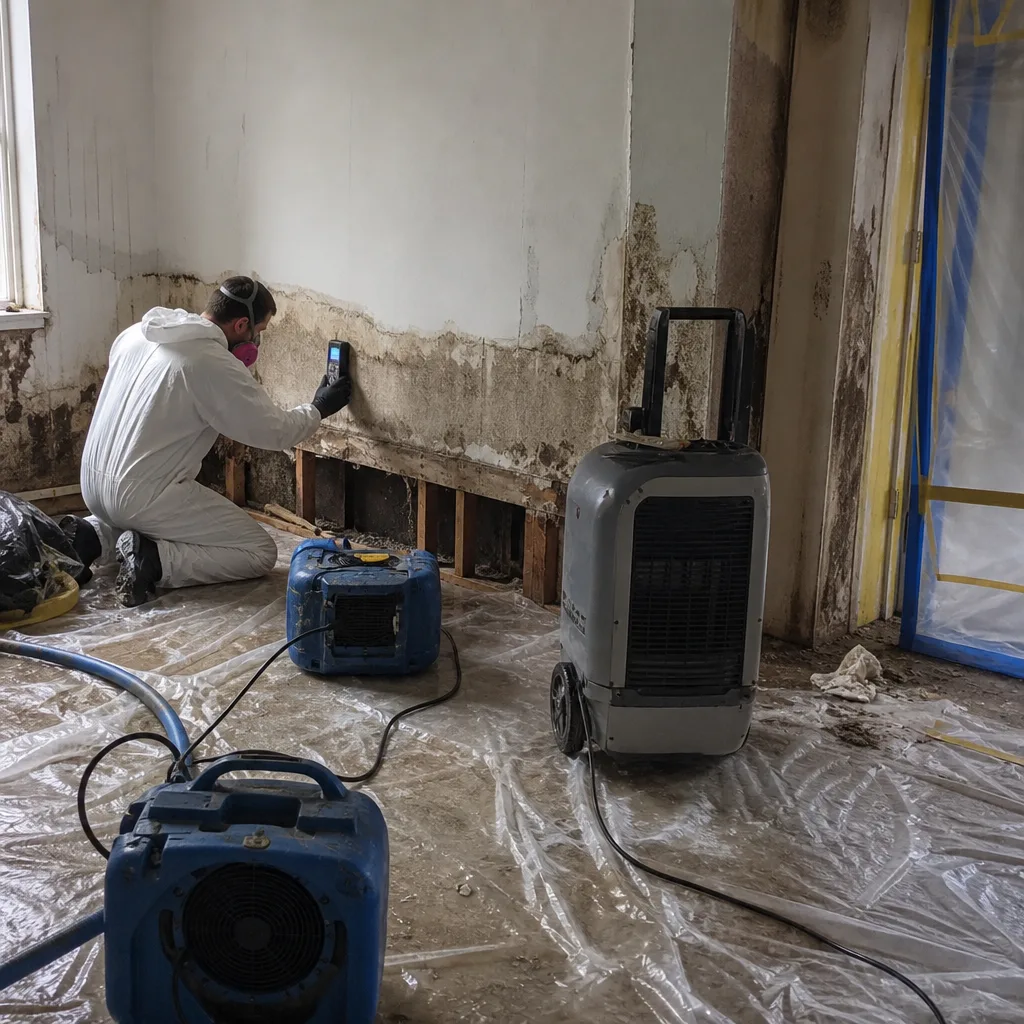 Before
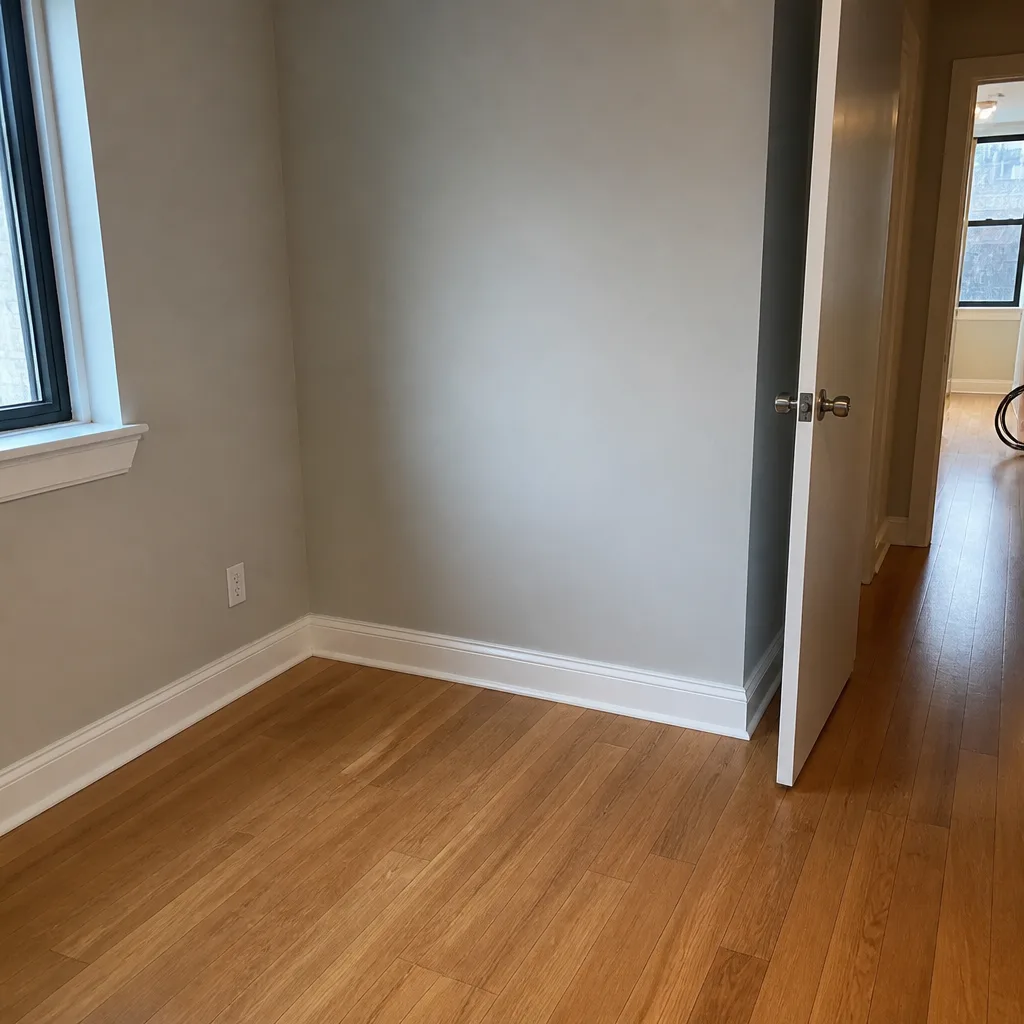 After
After24/7 Emergency Storm & Disaster Restoration in Edgewater
Storm & Disaster Restoration in Edgewater means moving fast when the Hudson River rises or Palisades wind rips a door off its track. We answer the phone live at (845) 305-5737 any hour, any day, and a crew reaches Edgewater within 45 minutes of your call. Our Storm & Disaster Restoration team starts with a free visual inspection, then gets extraction and stabilization running the same visit. The first hour after a storm breach is when category 1 water becomes category 3, when wet drywall becomes mold, and when one unit’s damage becomes a five-unit cascade. In Edgewater’s riverfront towers, that hour matters more than almost anywhere else in Bergen County.
Understanding Storm & Disaster Restoration Severity in Edgewater Properties
Storm damage in Edgewater, NJ splits into two distinct problems depending on which side of River Road you’re on. Riverside high-rises face wind-driven rain, storm surge, and projectile debris that compromises entry doors, balcony doors, and window seals. Cliff-side properties along the Palisades face something else entirely: concentrated runoff that pours off the rock face and into basements, garage levels, and foundation walls. We classify water by category on every job. Category 1 is clean water from a broken pipe or rain intrusion through a roof breach. Category 2 carries contaminants, which is what we see when runoff picks up sediment and whatever else is on the Palisades slope. Category 3 is storm surge from the Hudson, which may carry sewage, fuel residue, and salt. Each category demands different extraction protocols, different antimicrobial treatments, and different drying standards. Edgewater’s housing stock, dominated by dense condo towers along River Road and older low-rise buildings near the cliff base, means we’re often running multiple classifications on one job, floor by floor.
Why Edgewater Property Owners Choose Floodline Restoration Co.
- 45-minute response commitment: Our Edgewater-dedicated crews are positioned to reach River Road, the cliff-base uplands, and everywhere between within 45 minutes of a confirmed dispatch.
- 24/7 live answer, never a recording: A real person picks up at 2 a.m. during a nor’easter. Not an answering service that takes a message. A dispatcher who routes a crew.
- IICRC-certified crews on every job: Our technicians hold IICRC certifications including WRT (Water Damage Restoration Technician) and FSRT (Fire & Smoke Restoration Technician), trained to RIA and IFA standards.
- Free visual inspection: We assess the damage, classify the water, and map the moisture before we recommend a single dollar of work. No pressure, no padded scope.
- Direct insurance billing: We work the claim with your carrier, your HOA master policy carrier if applicable, and your adjuster. You never play messenger.
- One team from extraction to reconstruction: The same Floodline Restoration Co. crew that pulls the water out rebuilds the wall, the door, the floor. No mid-job handoff to a stranger.
Our Storm & Disaster Restoration Process
Inspection & Assessment
We arrive, walk the property, and document everything. Thermal imaging finds water behind walls. Moisture meters tell us where the damage stops and where it’s still spreading. We classify every affected area by water category and give you a written scope before any work begins.
Extraction & Stabilization
Standing water comes out first, using truck-mounted extraction units and submersible pumps for flooded garage levels. We stabilize what can be stabilized: tarping breaches, boarding up broken doors, and shutting down electrical hazards.
Drying & Dehumidification
Dri-Eaz air movers and Phoenix desiccant dehumidifiers go into every affected space, including wall cavities and under flooring. We take daily moisture readings until every surface hits the dry standard, and we hand that log to you and your carrier.
Cleaning & Sanitization
For category 2 and 3 water events, this means Biohazard & Crime Scene Cleanup in Edgewater, including antimicrobial treatment of every affected surface. For storm surge, it means specialized salt and contaminant remediation. HEPA scrubbers clean the air while we work.
Wind & Entry System Repair
In Edgewater, this step is not optional. We verify every exterior door and window in the affected zone for wind-load integrity, repair or replace track systems, and confirm impact ratings before we consider the exterior sealed.
Repairs & Restoration
Same crew, same company. We rebuild drywall, replace insulation, reinstall flooring, and restore the property to pre-loss condition through our Reconstruction & Cleanup - Edgewater services. The 90-Day Done Right Promise covers all of it, in writing.
Need Emergency Storm & Disaster Restoration in Edgewater Now?
Crews minutes away, answering live 24 hours a day. The sooner we start, the less it costs.
Working With Your Insurance Company
Storm damage in Edgewater is complicated by the number of parties at the table. A single water event in a River Road tower can pull in your unit-owner policy, your neighbor’s policy, and the building’s HOA master policy. We document everything from the first hour, in the format adjusters expect. Moisture readings per floor. Drying logs per room. Photos before, during, and after. A line-item scope of work that separates storm surge damage from pre-existing wear. We communicate directly with your adjuster, answer their questions, and push for what the policy actually covers. You signed up for storm restoration, not for a part-time job as an insurance negotiator.
What We Provide Your Insurer
- Thorough documentation of the loss
- Photos of all damage, room by room
- Moisture readings and drying logs
- A detailed, line-item scope of work
- Direct coordination with your carrier
Built for Edgewater’s Loss Calendar
Edgewater gets hit differently depending on the season, and our crews stay ready for all of it. Late summer through fall is hurricane and nor’easter season, when Hudson River surge pushes up against River Road and wind-driven rain finds every weak caulk line and worn track on a riverside balcony door. January and February bring the deep freezes that snap supply lines in high-rise plumbing stacks, and the water flows down through the vertical shafts that every Edgewater tower depends on. Spring thaw saturates the cliff side, and runoff pours down the Palisades face into upland basements and lower garage levels that were dry all winter. Summer thunderstorms roll in fast off the river, dropping enough rain in twenty minutes to overwhelm roof drains on older low-rise buildings near the cliff base. Edgewater’s loss calendar is not Bergen County’s loss calendar. This borough sits between a river that floods and a cliff that funnels water straight down. We plan for both.
Storm & Disaster Restoration Across Edgewater’s Neighborhoods
River Road is the spine of Edgewater’s waterfront, running north-south between the Hudson and the Palisades, and it’s where the most dramatic storm losses happen. Along the stretch near the old Alcoa aluminum plant site, now dense luxury towers, a single failed balcony door or broken window on an upper floor sends water down through five to ten units before anyone notices. We run containment per floor and moisture map each unit separately, because the master policy adjuster will ask for per-floor logs. Up by the George Washington Bridge approach, where buildings sit practically on the water, storm surge is the dominant threat. Edgewater Commons and the surrounding residential blocks see more wind-driven debris damage, often to storefront glass and entry doors. Closer to the cliff base, around Undercliff Avenue and the older residential streets, we see the opposite problem: basement flooding from Palisades runoff that has nowhere flat to go. Each of these areas has a different failure mode. The crew that knows which one is showing up before they arrive is the crew you want on the job.
Specialized Storm & Disaster Restoration Services We Offer in Edgewater
Emergency Board-Up
When a storm blows out a balcony door on the 14th floor of an Edgewater tower, the opening becomes a wind tunnel feeding rain and debris into the units below. We board up the opening the same visit, using hurricane-rated plywood and proper anchoring for high-rise wind exposure. This is not a cosmetic stopgap. It’s the difference between one unit’s damage and a tower-wide claim.
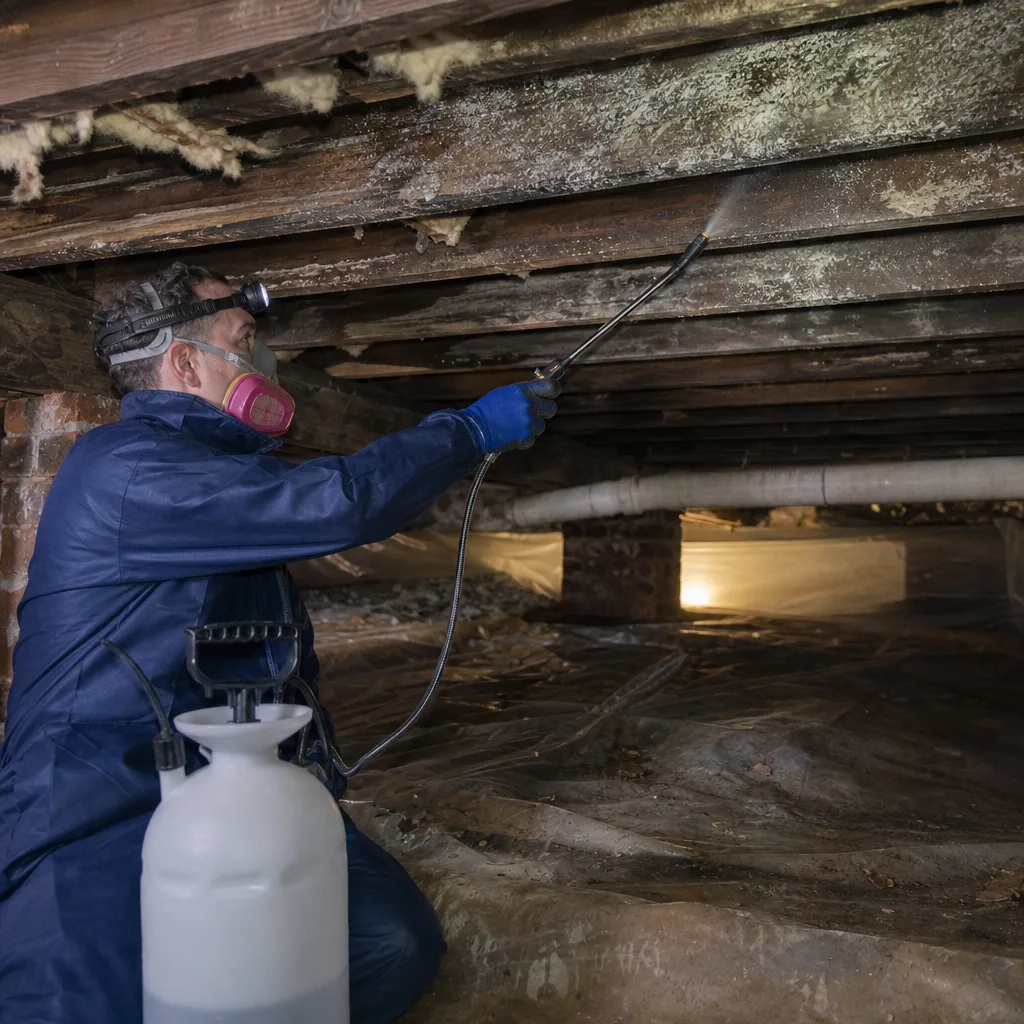
Wind Damage Repair
Edgewater’s riverfront position means gust loads are amplified by the Palisades funnel effect. We repair and replace bent door tracks, failed latches, popped seals, and wind-damaged frame components. After a storm, we verify wind-load integrity before signing off. Before a storm, we reinforce what is already compromised. Ask us about wind-rated and impact-resistant entry systems if your building is on the river side of River Road.
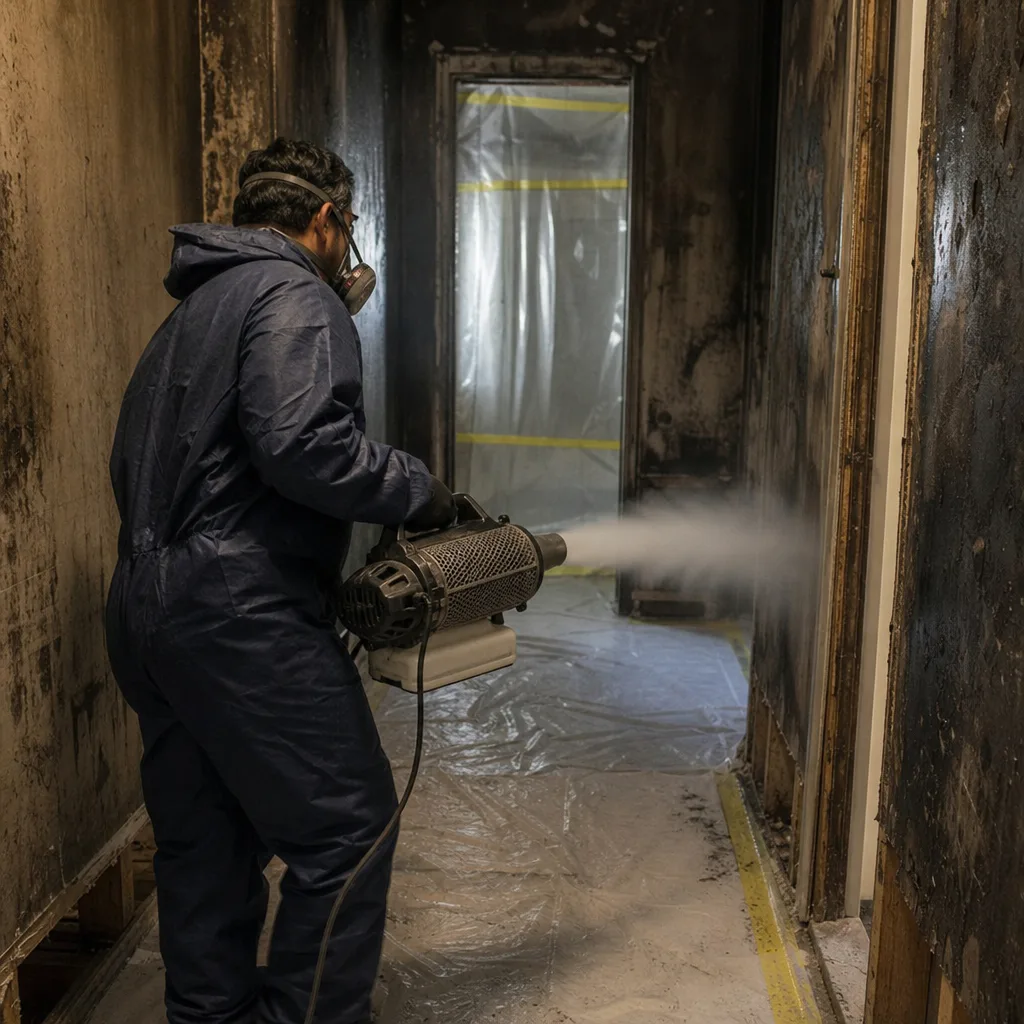
Storm Damage Cleanup
Storm surge water is not the same as pipe-burst water. It carries salt, sediment, fuel residue, and possibly sewage. We use separate extraction equipment for category 3 water, apply antimicrobial treatments after extraction, and run HEPA air scrubbers during the cleanup. This is where contractors who tackle an Edgewater condo tower like a suburban house get it wrong, and where we get it right.
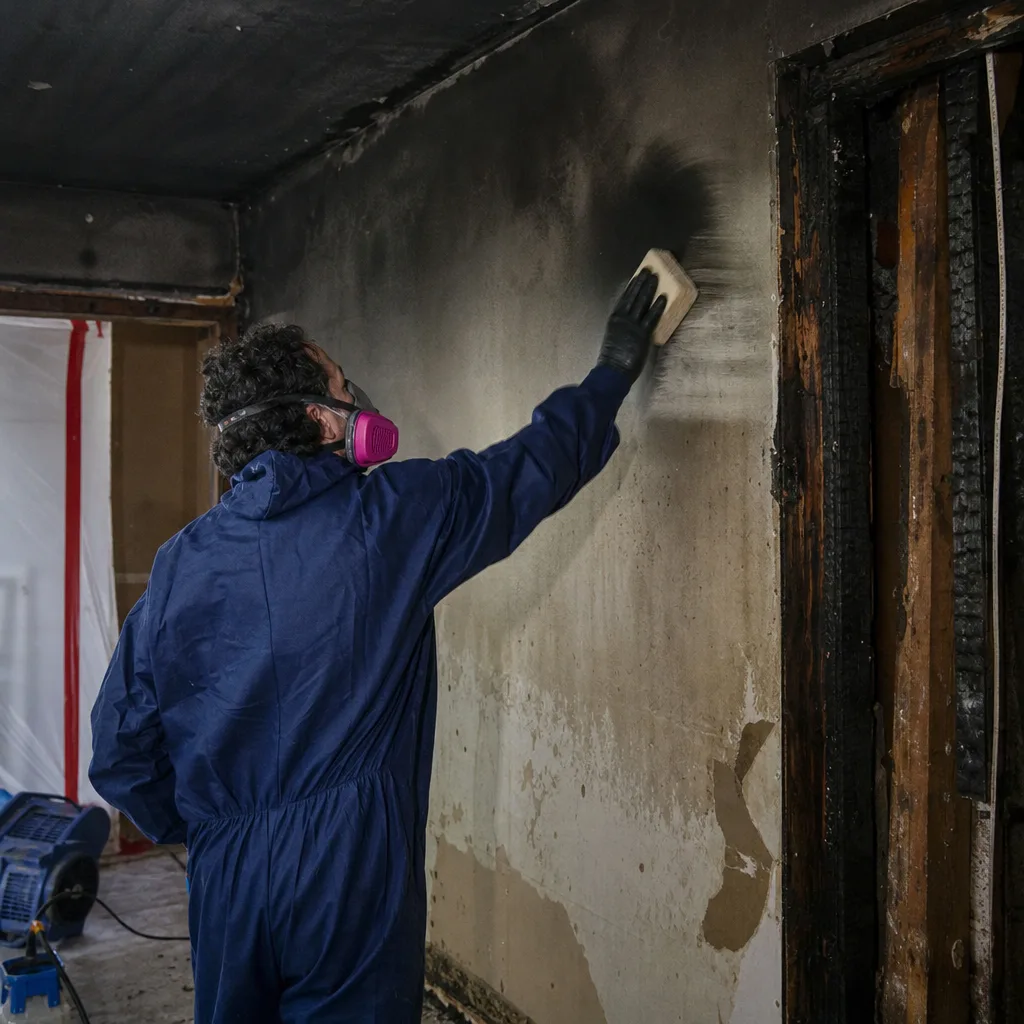
Flood Damage Restoration
Whether the water came from the Hudson or came off the Palisades, the process starts the same way: extract, classify, dry, and document. But Edgewater’s flood patterns demand local knowledge. Riverside garages and mechanical rooms flood during surge events. Cliff-side basements flood after heavy rain even when the rest of the borough stays dry. We know which building types flood how, and we plan the drying strategy accordingly.
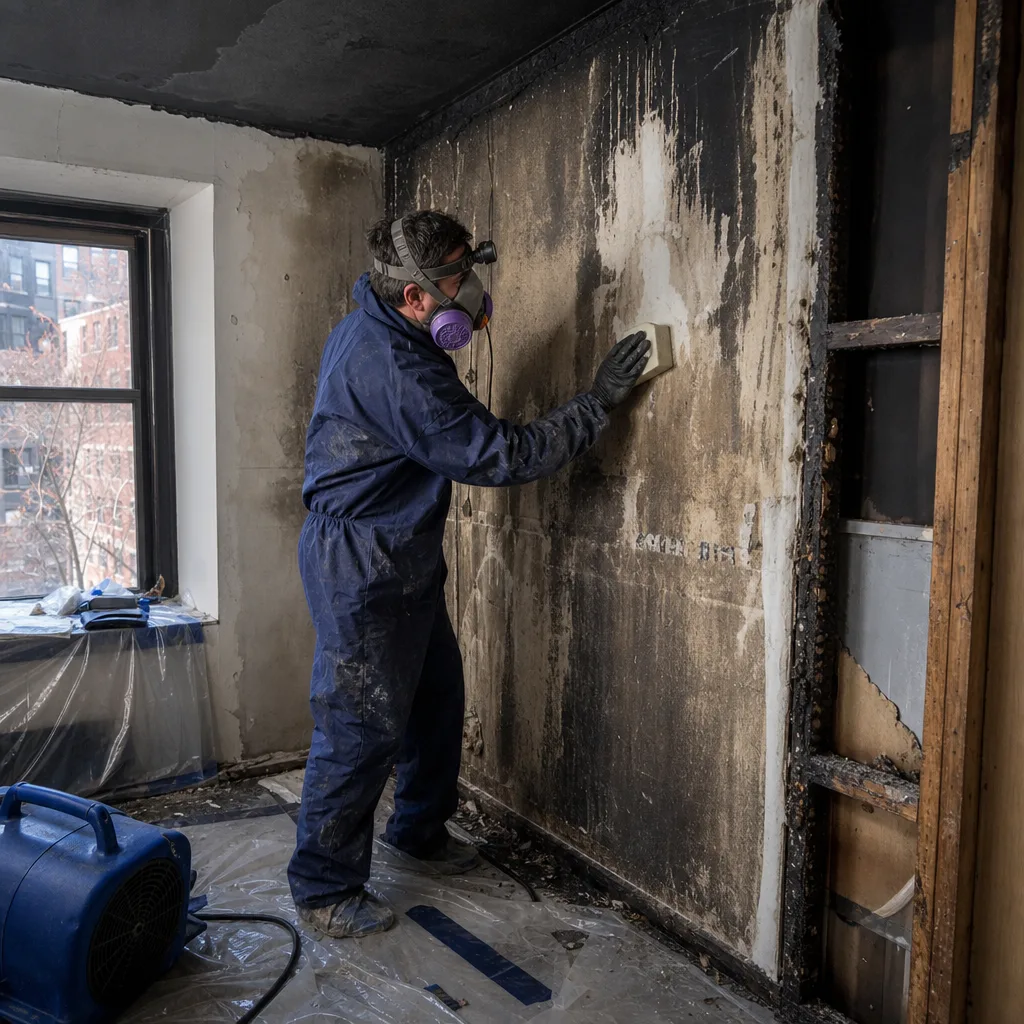
Roof Tarping
Wind-driven debris from a nor’easter can open a roof membrane on a low-rise building near the cliff base in minutes. We tarp breaches same-day, using heavy-duty poly and mechanical fastening, so the next rain event doesn’t turn a roof leak into a full-building extraction. Tarping is temporary. Stopping the water is not.
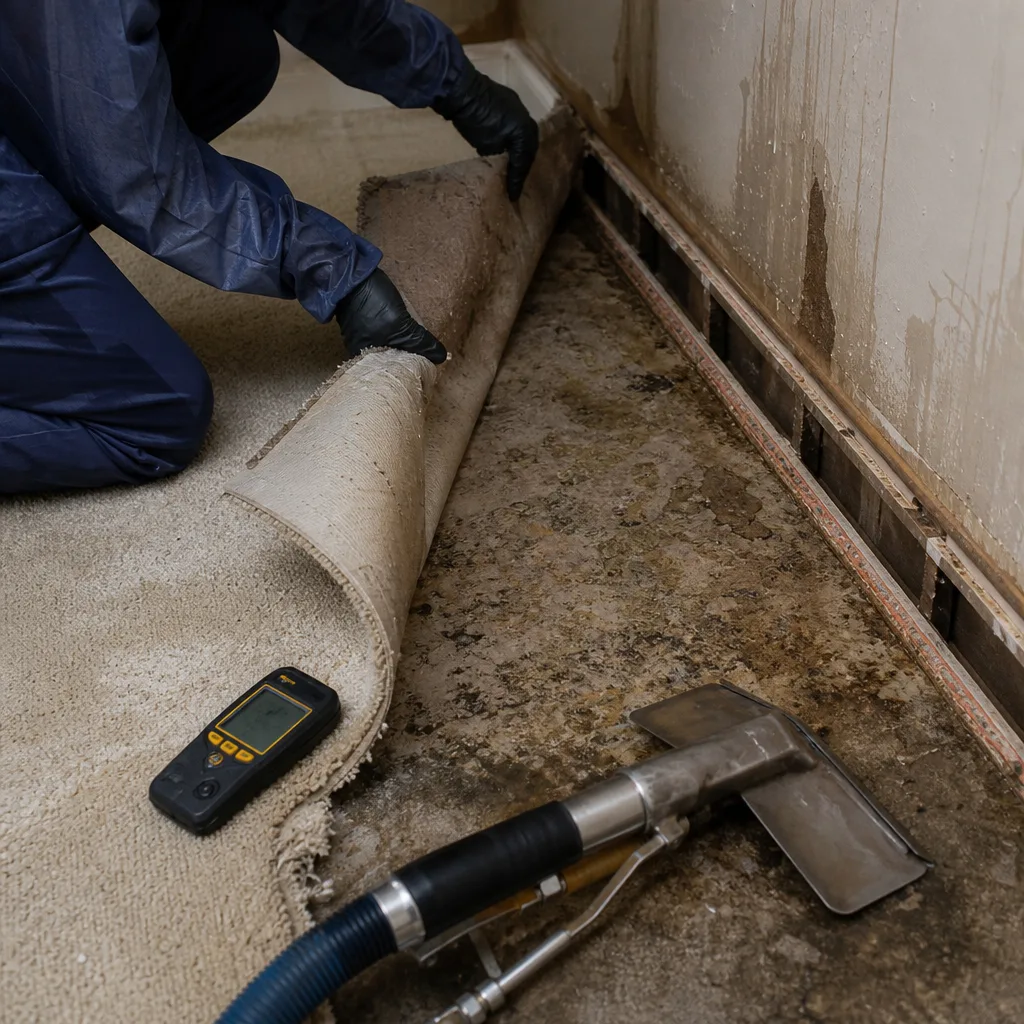
Debris Removal
Downed branches, broken glass, torn siding, and storm-blown debris need to be cleared before stabilization and drying can start. We remove it safely, document it for your claim, and leave the site clean enough for the next phase of work to begin.
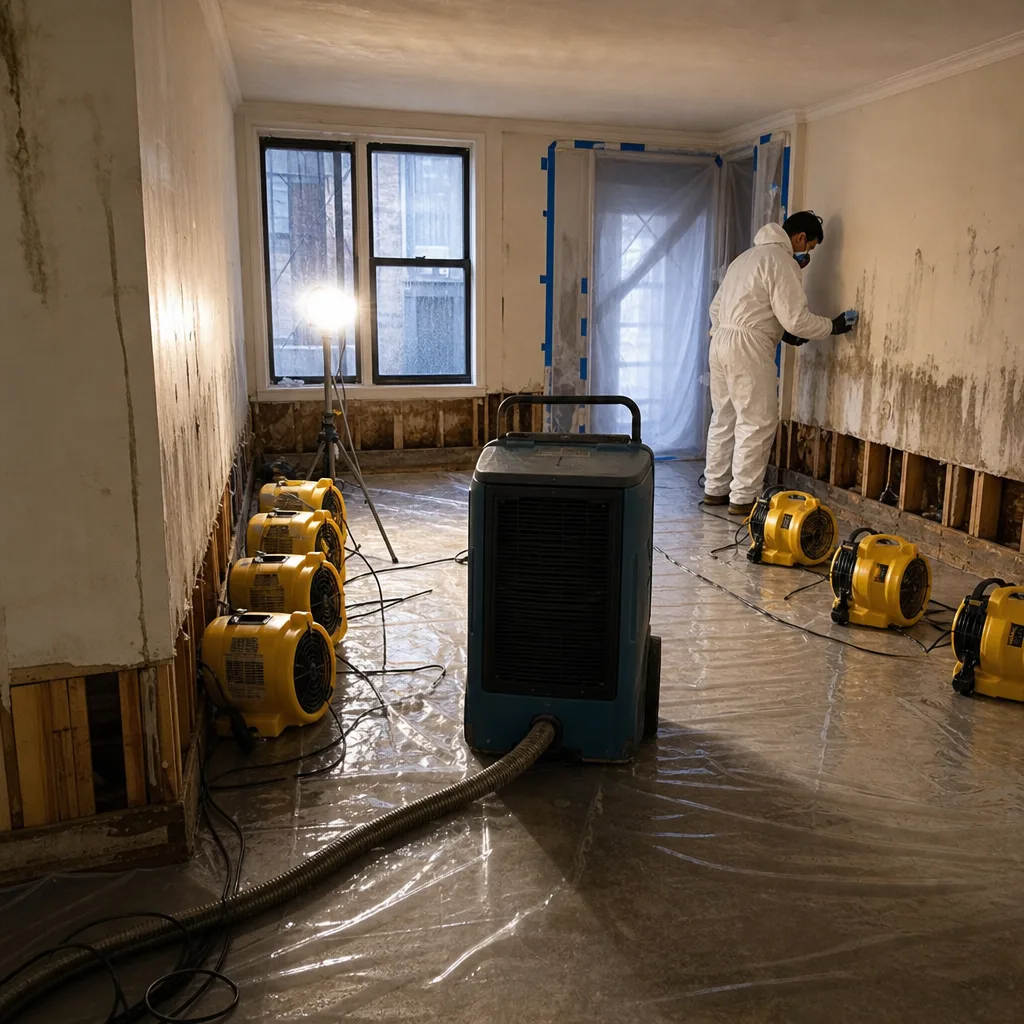
What happens when you call
- 1
A real person answersNo phone trees - you reach a local pro.
- 2
You get an upfront price rangeHonest numbers before anyone is dispatched.
- 3
A background-checked tech heads outLicensed & insured, dispatched right away.
- 4
You approve before work beginsNothing starts until you say go.
Storm & Disaster Restoration Costs in Edgewater, NJ
Storm damage restoration in Edgewater runs from a few hundred dollars for targeted wind damage repair or minor board-up work to $15,000+ for a multi-unit cascade event in a riverfront tower. Emergency board-up in Edgewater typically runs $300-$700, roof tarping $400-$900, and a full storm damage cleanup with category 3 water extraction and drying starts around $5,000 for a single condo unit and rises from there. What moves the price: building height (high-rise work means vertical transport and containment challenges), water category (surge water costs more to remediate than clean rain water), the number of affected units, and whether structural drying requires opening walls. Most storm claims are covered under insurance, and we bill carriers directly. The free visual inspection gives you a firm written scope before you commit to anything. Call (845) 305-5737 and get real numbers.
We Also Serve Cities Near Edgewater
Our crews reach North Bergen and Weehawken on the same dispatch pattern as Edgewater. If you own property across the line or manage a building in the neighboring towns, we can handle storm losses there too.
Serving Edgewater, NJ - Our Local Coverage Area
We’re based in the Edgewater area and know this community well. Use the map below to see our service coverage - if you’re nearby, we can almost certainly help.
Edgewater Storm & Disaster Restoration Questions, Answered
What wind rating should my Edgewater riverfront condo door meet to withstand Hudson River storm surge?
An exterior door on a riverside Edgewater high-rise should meet Miami-Dade County impact standards or the equivalent, which means it’s tested to withstand wind-borne debris at 130+ mph and remain intact after impact. Most builders install doors that meet code but were never tested to this standard. If your unit faces the Hudson, ask your building manager or have us inspect what’s installed. A door that meets a higher wind rating is the single best thing between your unit and a Category 3 surge event. Call (845) 305-5737 and we’ll check what’s currently on your unit.
How quickly can you board up a broken balcony door in an Edgewater high-rise to stop water from cascading into lower units?
We can board up a broken balcony door in an Edgewater high-rise within 45 minutes of arriving on site, and we’re on site within 45 minutes of your call. For a high-rise balcony door, we use proper high-wind anchoring, not just a sheet of plywood propped in place. In Edgewater’s wind environment, a badly secured board-up fails within hours. We do it right the first trip, so the water stops flowing before it reaches the units below. Call (845) 305-5737 now if water is still moving.
Do I need to coordinate with my HOA before you start storm damage cleanup in my Edgewater condo?
You don’t need HOA pre-approval for emergency mitigation in your own unit. You do need Floodline Restoration Co. to coordinate with your HOA for any work in common areas, any building-level systems affected, and for access to shared utility shutoffs. Many Edgewater towers require us to check in with the building superintendent before we begin. We handle that communication. You handle the call. Start with (845) 305-5737.
What does ‘pre-loss condition’ mean for an Edgewater condo with storm damage?
Pre-loss condition means your unit is restored to the condition it was in the moment before the storm hit: same finishes, same fixtures, same structural integrity, no hidden moisture, no lingering odors. It does not mean upgraded, and it does not mean just dried out enough to look fine. In Edgewater’s older riverside buildings, pre-loss condition often includes matching period finishes and coordinating with the HOA on building-standard materials. We put that standard in writing and stand behind it with the 90-Day Done Right Promise.
Can storm surge water from the Hudson be cleaned up with the same process as a pipe burst?
No. Storm surge water is category 3 water and requires separate extraction equipment, antimicrobial treatment after every water event, and HEPA air scrubbing during the cleanup. A pipe burst is usually category 1 and only needs extraction and structural drying. Using the same equipment and process for both spreads contamination. Any contractor who treats Hudson River surge water like clean rain water is putting your health and your claim at risk. Call (845) 305-5737 to talk to someone who does this correctly.
How long does storm damage restoration take in an Edgewater condo?
Extraction and stabilization are done on day one, same visit. Structural drying typically takes 3 to 5 days with daily moisture readings until the dry standard is met. Full restoration, including drywall, flooring, and finish work, usually takes 1 to 3 weeks depending on the scope. In a multi-unit cascade, we run containment and drying per floor, which can extend the timeline but keeps the drying process honest and the claim documentation complete.
Can I stay in my Edgewater condo during storm damage restoration?
In most single-unit storm events, yes. We set up containment around the affected areas, run HEPA air scrubbers, and keep the rest of the unit livable. If the damage involves category 3 storm surge water, failed electrical systems, or structural compromise, we’ll tell you plainly whether staying is safe. Some riverside towers require temporary relocation during major multi-floor events. We’ll coordinate with your insurer on any additional living expense coverage.
What should I do in the first 30 minutes after storm damage in Edgewater?
Shut off power to the affected area if you can do so safely. Do not enter standing water that may be electrically charged. Move what can be moved. Take photos. Then call (845) 305-5737. The first 30 minutes determine whether category 1 water becomes category 3, whether drywall can be saved, and whether one unit’s damage stays one unit’s damage. In an Edgewater tower, that last point is not theoretical.
Written by Curt Bowman, Owner at Floodline Restoration Co., serving Edgewater since our founding in 2010.