
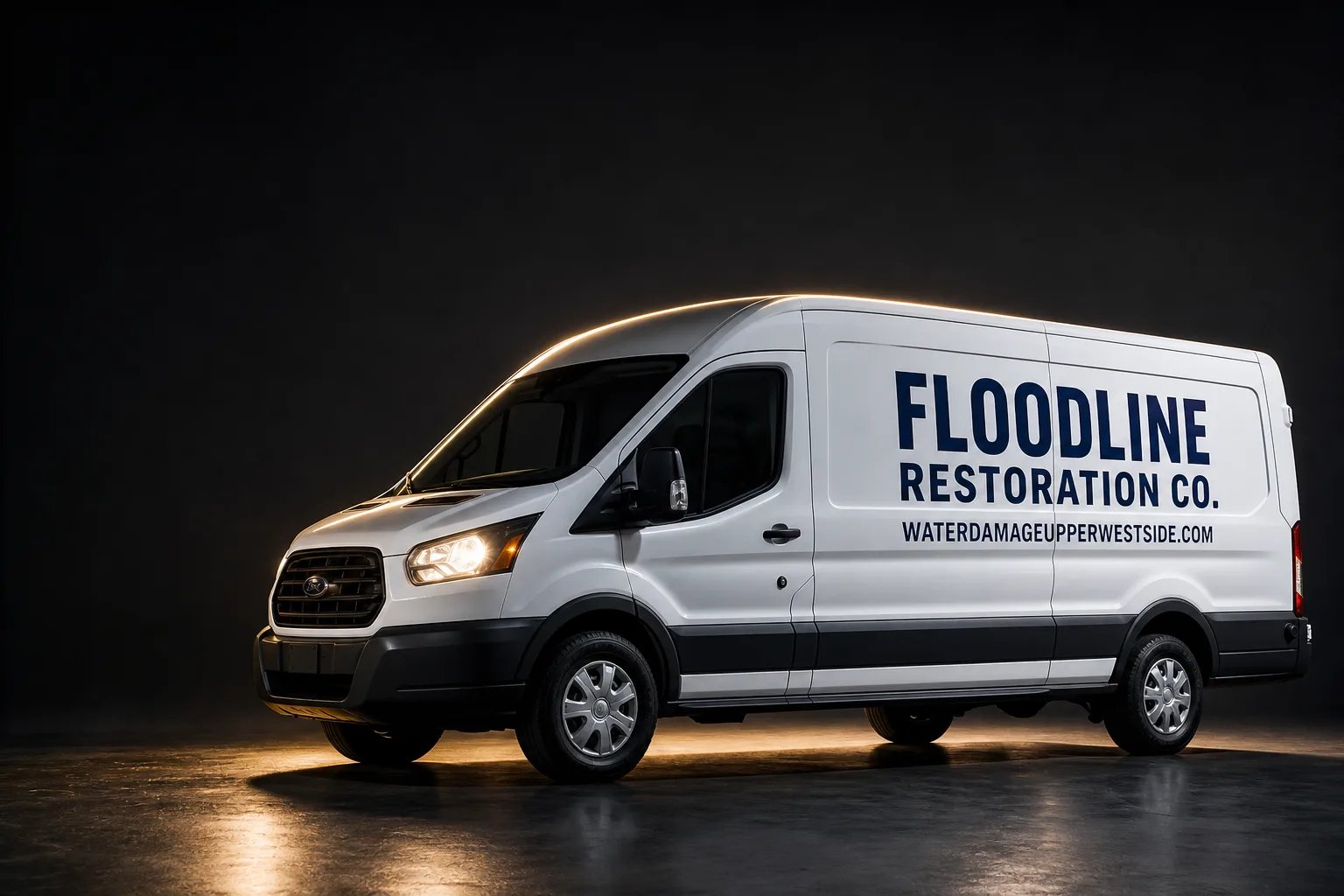
Free visual inspection and a written scope of work before any mitigation begins - photos, moisture readings, and drying logs go in your claim file
The scope we write is the scope we bill. Anything new gets shown to you, in writing, before we touch it.
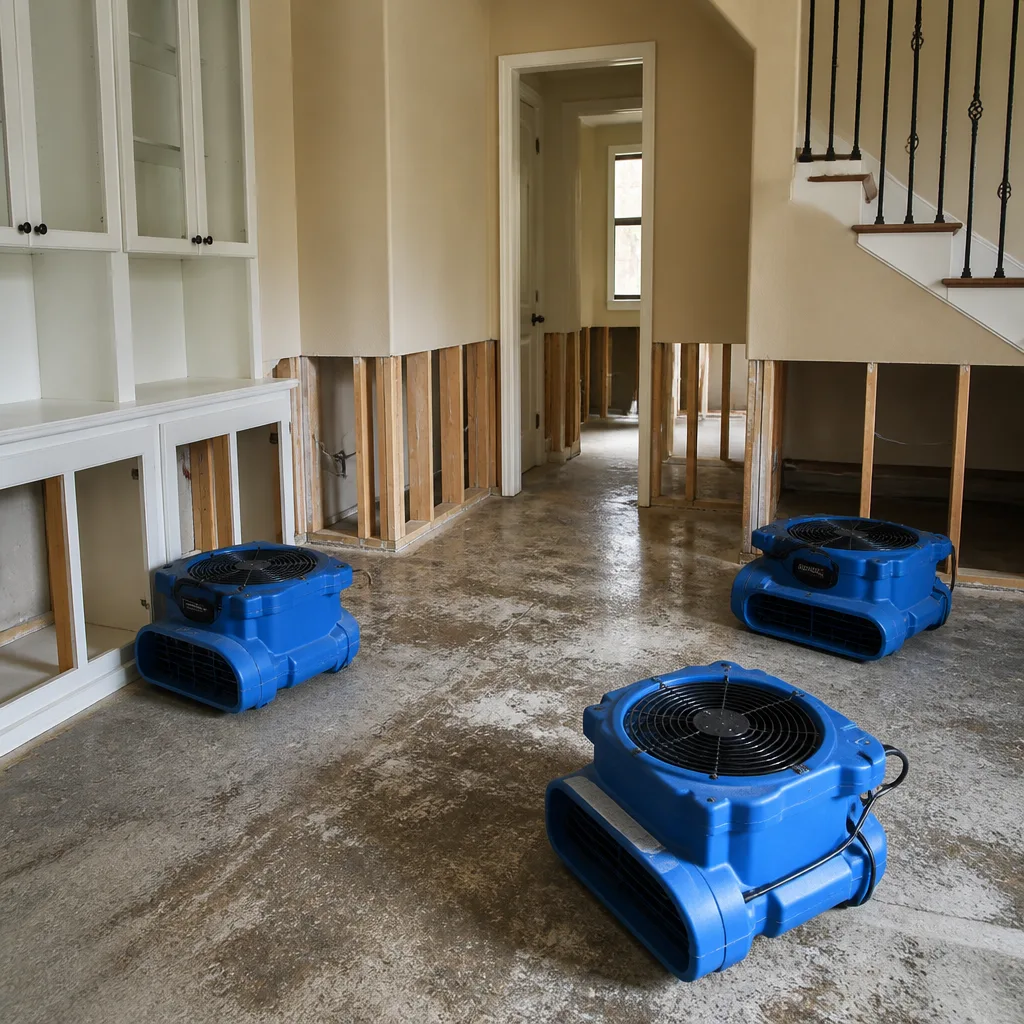
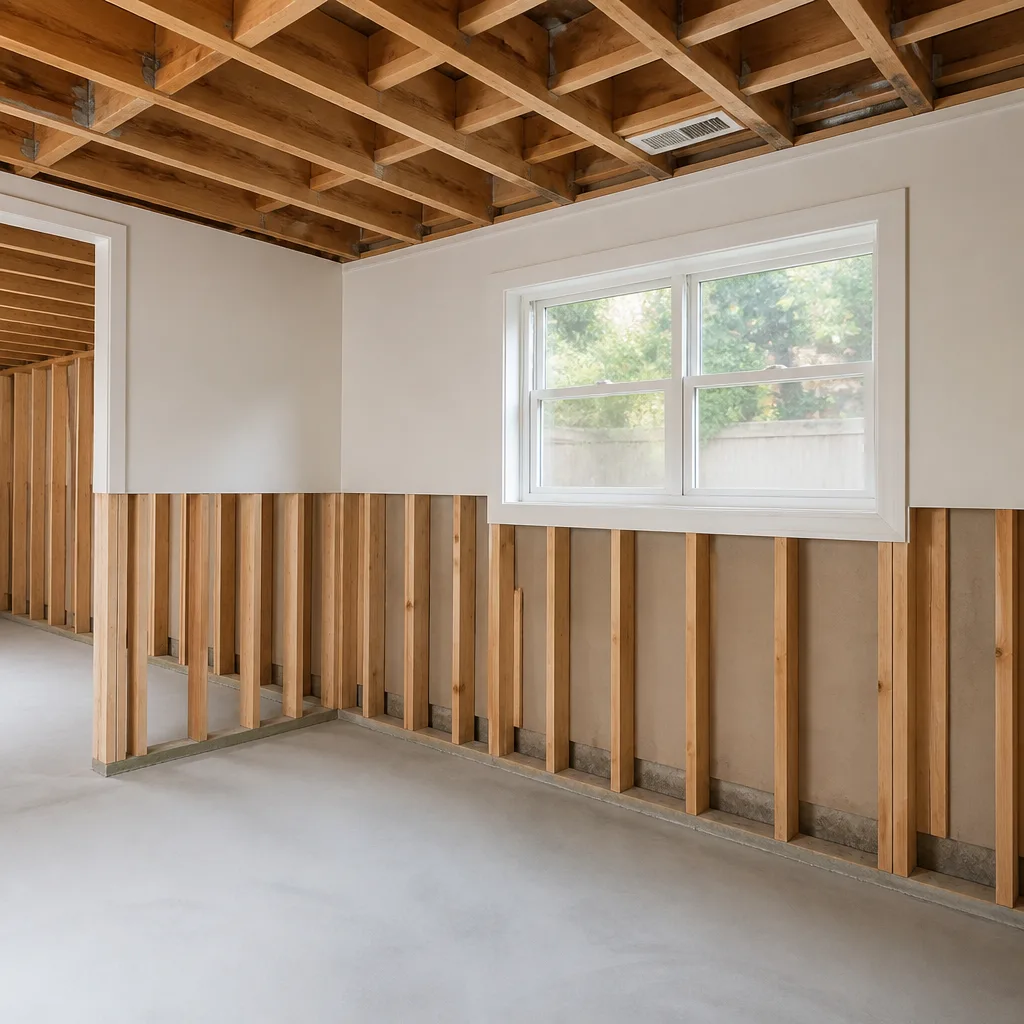
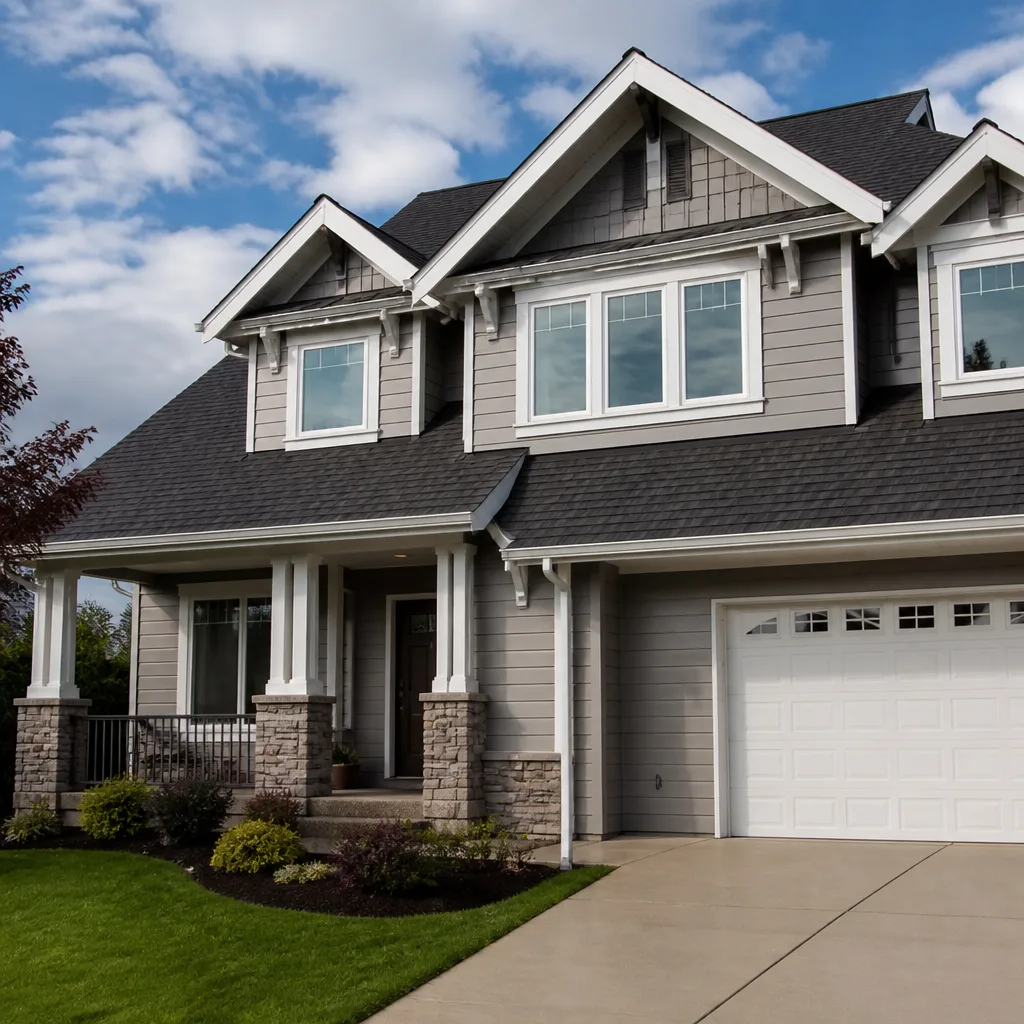
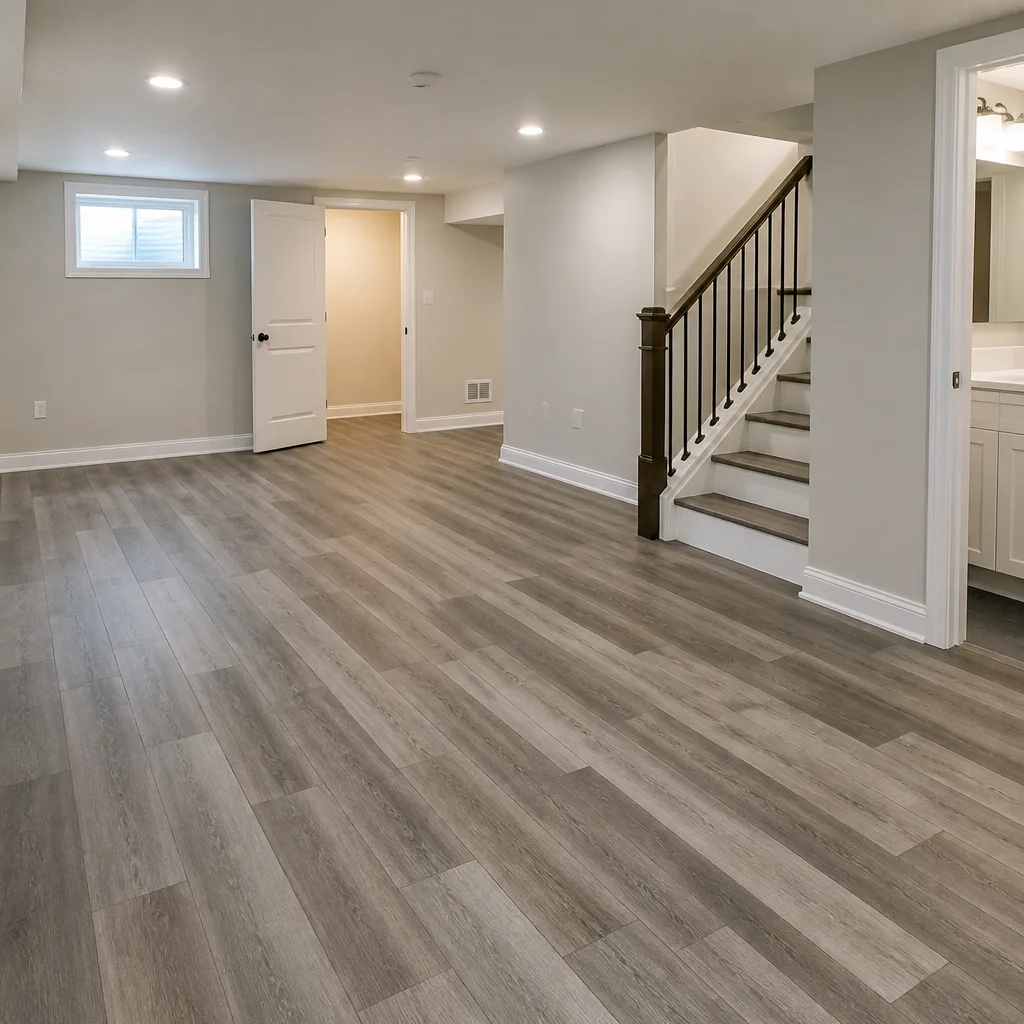
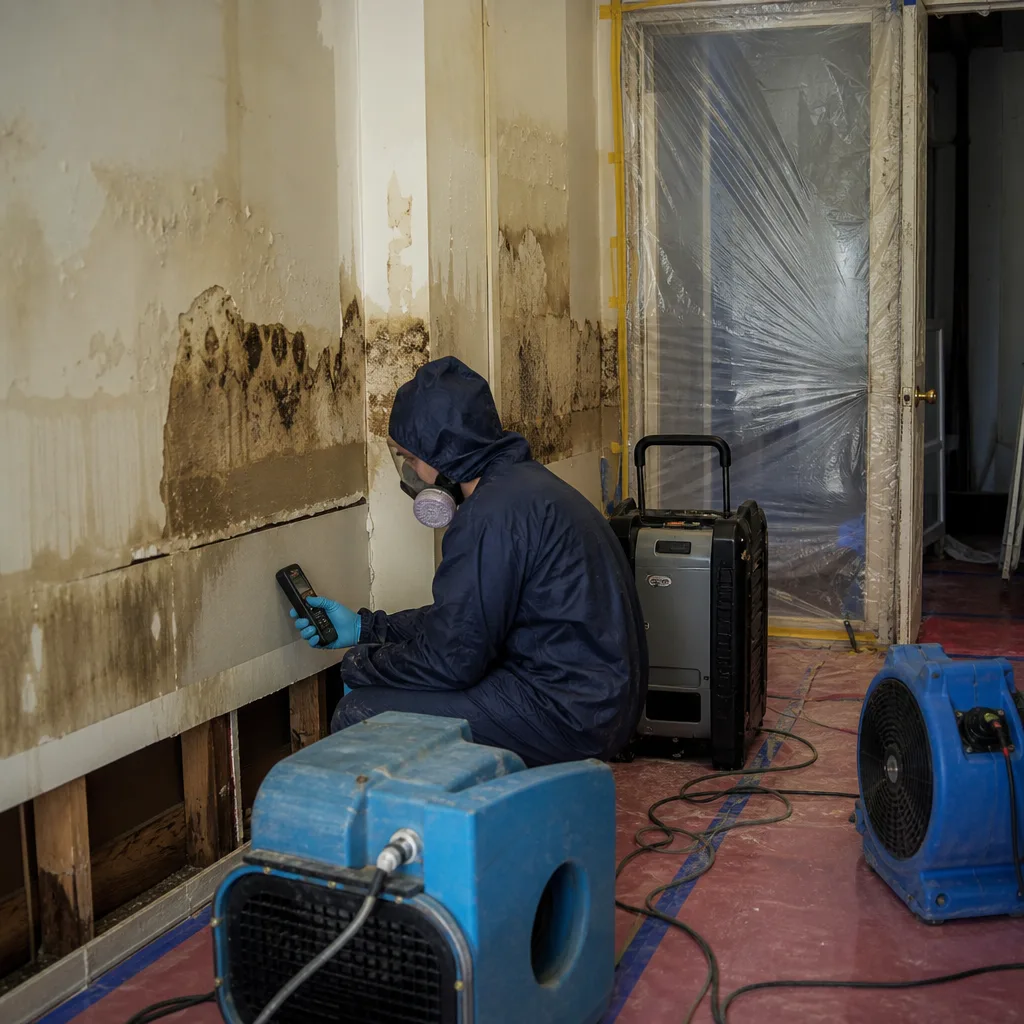 Before
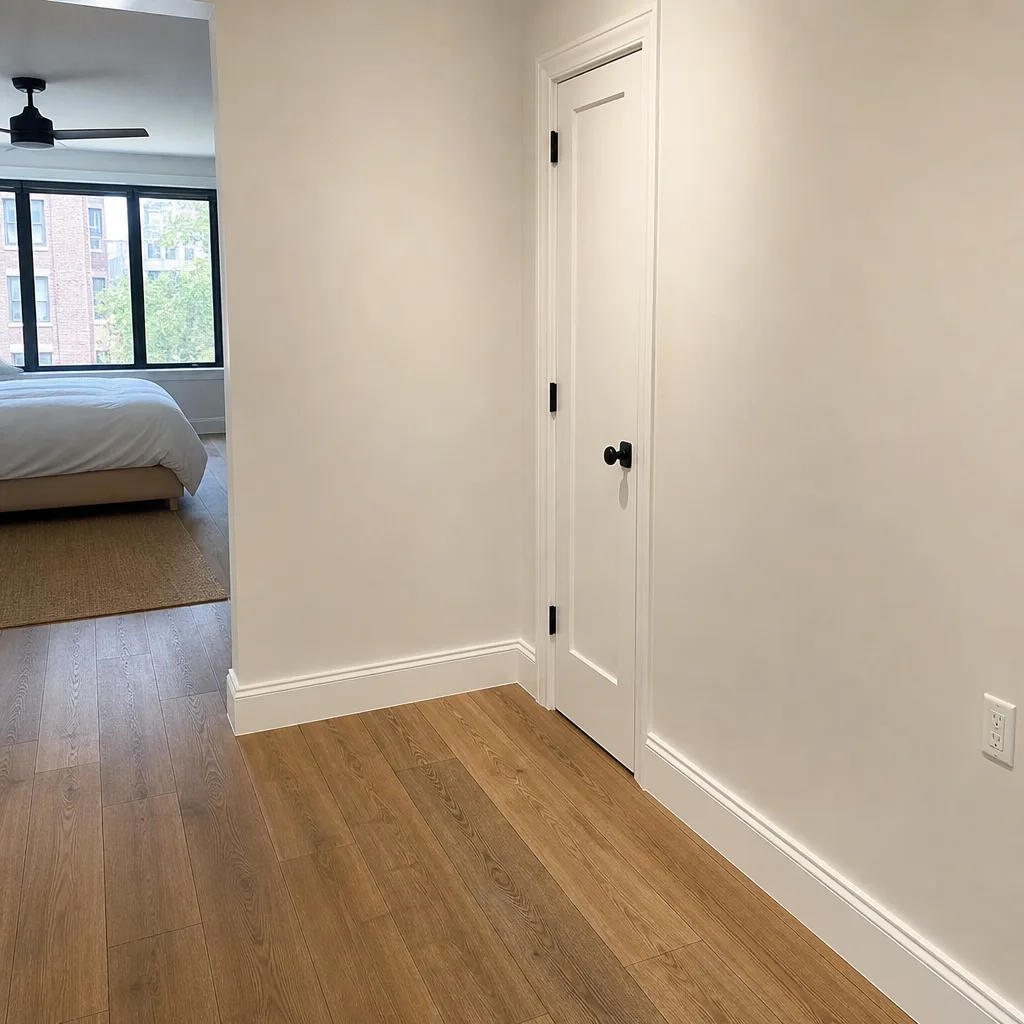 After
After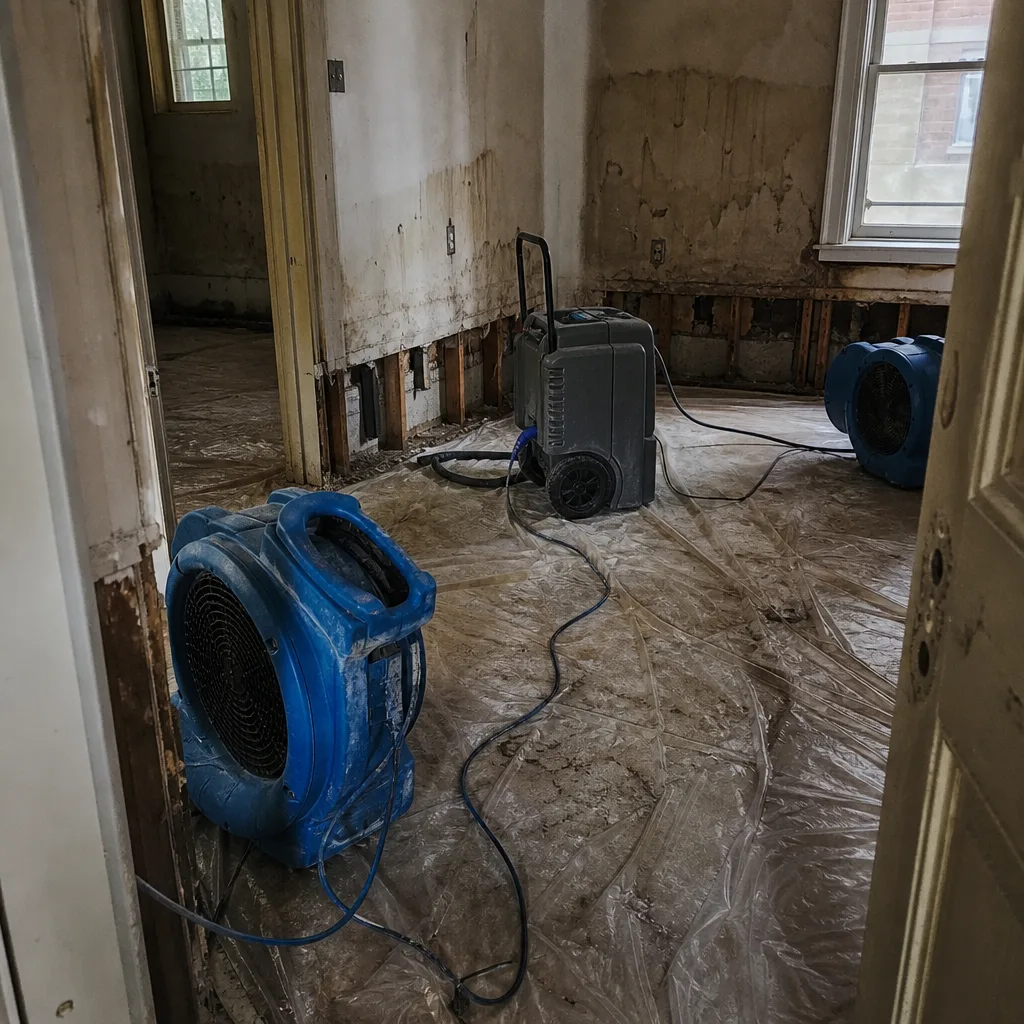 Before
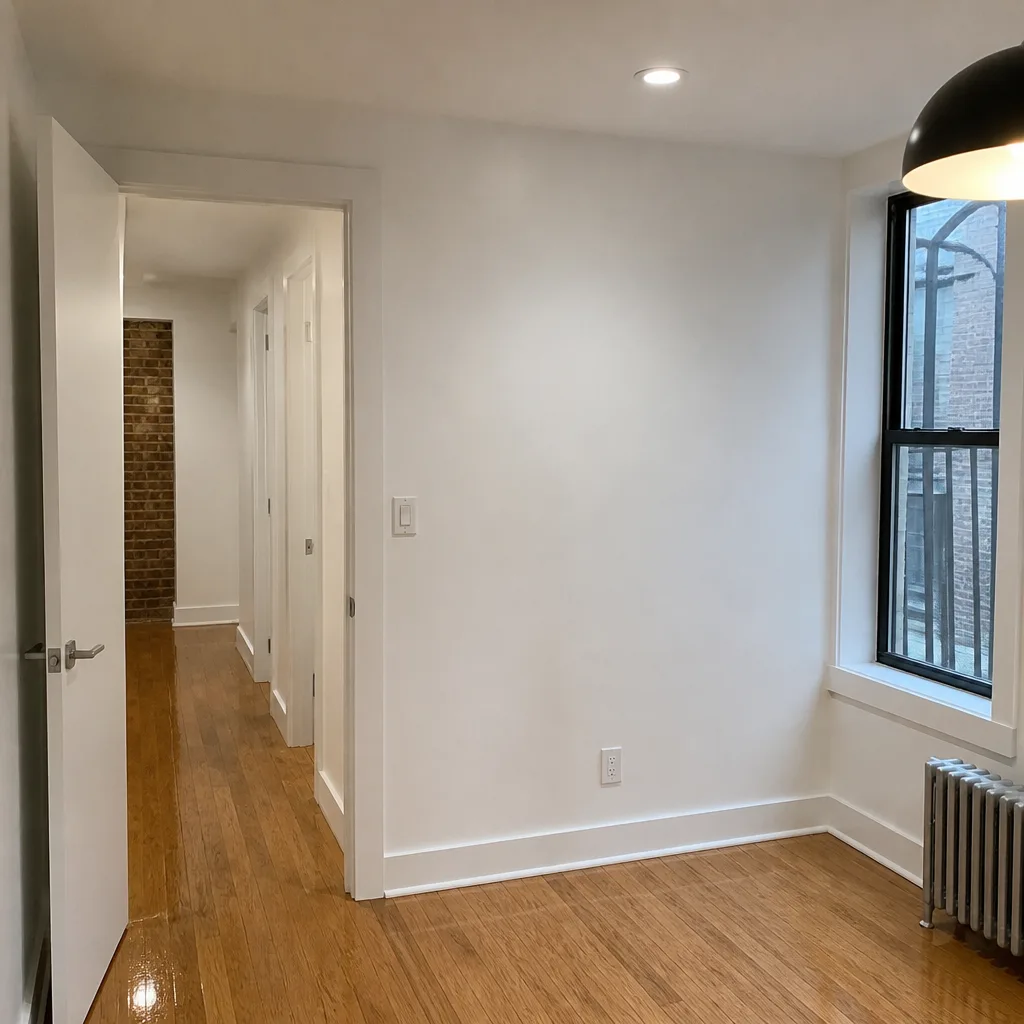 After
After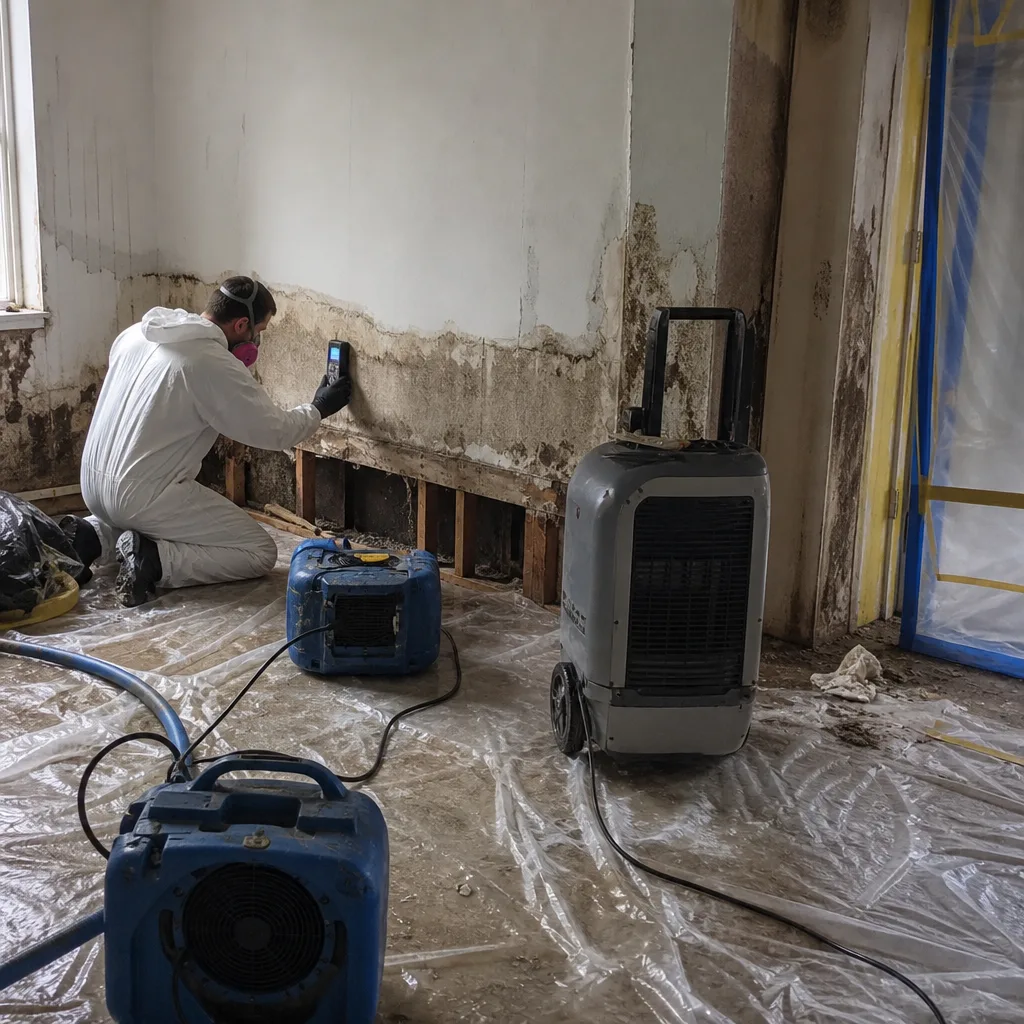 Before
 After
After24/7 Emergency Commercial Restoration in Harlem
Commercial restoration in Harlem means responding to a burst pipe in a 1910 tenement at 2 a.m., a sewage backup flooding a storefront on 125th Street, or smoke migration from a rowhouse fire on Strivers’ Row. Our crews are dispatched from right here in the New York City metro area within 45 minutes of your call, and a live person answers at (845) 305-5737 at any hour. The first hour after a commercial water loss determines whether you’re drying sheetrock or replacing it, and whether your business closes for a weekend or a quarter. We arrive with professional-grade Dri-Eaz and Phoenix equipment, start extraction the same visit, and document everything your insurer needs from the first photo. In Harlem, where pre-1940 building materials hold water differently than modern construction, that first hour matters even more.
Understanding Commercial Restoration Severity in Harlem Properties
Not all water damage is equal. Category 1 water comes from a clean supply line. Category 2 carries contaminants from appliances or sump failures. Category 3 is sewage, river water, or storm backup, and it requires full containment, antimicrobial treatment, and often disposal of saturated materials. Harlem’s building stock makes severity assessment harder than in newer neighborhoods. Plaster walls in 1890s brownstones and early new-law tenements absorb water slowly but release it even slower, so moisture hides behind lime plaster and lath long after the surface feels dry. Cast-iron drain stacks, common in Harlem’s 4-6 story walkups, crack under freeze-thaw stress and leak inside wall cavities for weeks before a stain shows. We use thermal imaging and penetrating moisture meters to find what a visual walkthrough misses. Severity is not just how wet the floor is. It is what the wall has been holding for the last ten days.
Why Harlem Property Owners Choose Floodline Restoration Co.
- 45-minute response commitment. When a pipe bursts in a Harlem commercial space, every minute means more units flooded below. Our crews are staged across the metro area and reach Central Harlem fast.
- 24/7 live answer. A dispatcher picks up at 2 a.m., not a recording. You talk to a person who can dispatch a crew immediately.
- IICRC-certified crews. Our technicians hold WRT (Water Damage Restoration Technician), FSRT (Fire & Smoke Restoration Technician), and AMRT (Applied Microbial Remediation Technician) certifications, plus RIA and IFA training.
- Free visual inspection. We assess the loss before any commitment. You get a written scope, not a sales pitch.
- Direct insurance billing. We bill your carrier directly and handle adjuster communication, so you’re not playing messenger between two parties.
- One team from extraction to reconstruction. The same Commercial Restoration crew that extracts water also rebuilds your storefront. No mid-job handoff, no inherited crew that never saw the original damage.
Our Commercial Restoration Process
Inspection & Assessment
We map moisture with thermal imaging and hygrometers, identify the water category, and check for asbestos and lead-paint triggers common in pre-1940 Harlem buildings. You get a documented scope before any demolition starts.
Extraction & Stabilization
Standing water comes out with truck-mounted extraction units and submersible pumps. We stabilize the structure, shut off the source, and protect undamaged inventory and equipment.
Drying & Dehumidification
Dri-Eaz and Phoenix air movers and dehumidifiers are placed according to a moisture map, not scattered randomly. Daily readings are logged until the dry standard is met, and we account for Harlem’s slow-drying plaster walls.
Cleaning & Sanitization
HEPA air scrubbers run throughout. Affected surfaces are cleaned and treated with antimicrobials appropriate to the water category. For category 3 losses, we contain the area and dispose of saturated porous materials properly.
Specialty Treatment
For Harlem commercial spaces, this means coordinating with LPC review in landmark districts, holding drying while hazmat clearance is pending, and packing out salvageable inventory, documents, and fixtures.
Repairs & Restoration
The same crew rebuilds what was removed. Plaster repairs, cast-iron drain replacement, storefront work, flooring, and paint. We don’t hand you a list of subcontractors. We finish the job.
Need Emergency Commercial Restoration in Harlem Now?
Crews minutes away, answering live 24 hours a day. The sooner we start, the less it costs.
Working With Your Insurance Company
We document from the first hour. Every photo, every moisture reading, every line item is built for your carrier’s adjuster. Our estimates follow industry-standard pricing software, so they get recognized fast. When your Harlem commercial space has a loss, the adjuster wants three things: proof of cause, proof of damage, and a scope that matches reality. We provide all three. For multi-unit losses in Harlem, where one burst pipe floods four or five stacked apartments or offices, we write separate scope documents for each unit, each floor, and each affected owner. That matters when multiple carriers are involved. Our team talks to adjusters directly, so you’re not relaying construction details you shouldn’t have to know.
What We Provide Your Insurer
- Thorough documentation of the loss
- Photos of all damage, room by room
- Moisture readings and drying logs
- A detailed, line-item scope of work
- Direct coordination with your carrier
Built for Harlem’s Loss Calendar
Harlem’s commercial restoration calendar follows the same rhythm every year, and it is driven by the age of the buildings and the density of the blocks. January and February bring the worst. Deep freezes hit the aging supply lines in prewar tenements and converted rowhouses, and chronic heat-service gaps in occupied buildings leave pipes exposed. A single freeze-burst on the fourth floor floods the third, second, and ground-floor retail below before anyone can shut the riser. March and April bring thaw and basement seepage in older foundations. Summer thunderstorms overwhelm antiquated drainage systems, sending storm water into subgrade commercial spaces on Lenox Avenue and Frederick Douglass Boulevard. Fall nor’easters bring wind-driven rain through aging parapets and roof drains. Every season has a signature loss in Harlem, and we plan our equipment staging and crew rotations around that calendar so we’re not figuring out the problem after you’ve already waited.
Commercial Restoration Across Harlem’s Neighborhoods
Central Harlem’s commercial corridors along 125th Street, Adam Clayton Powell Jr. Boulevard, and Lenox Avenue run through buildings from the 1880s to the 1920s, most subdivided into ground-floor retail with apartments above. A plumbing failure upstairs becomes a storefront loss below, and we’re often working in a space with active tenants still in the building. In Hamilton Heights, the landmark district around Convent Avenue and Hamilton Terrace means exterior storefront work often waits on LPC review. Mount Morris Park brings the same review process to its brownstone rows, and the shared party walls mean a loss in one building reads on thermal imaging in the next. East Harlem’s mixed-use stock spans prewar tenements and mid-century commercial buildings, each with different drying profiles. When you call us from any of these neighborhoods, the crew that arrives knows the building type before they walk in.
Specialized Commercial Restoration Services We Offer in Harlem
Office & Retail Restoration
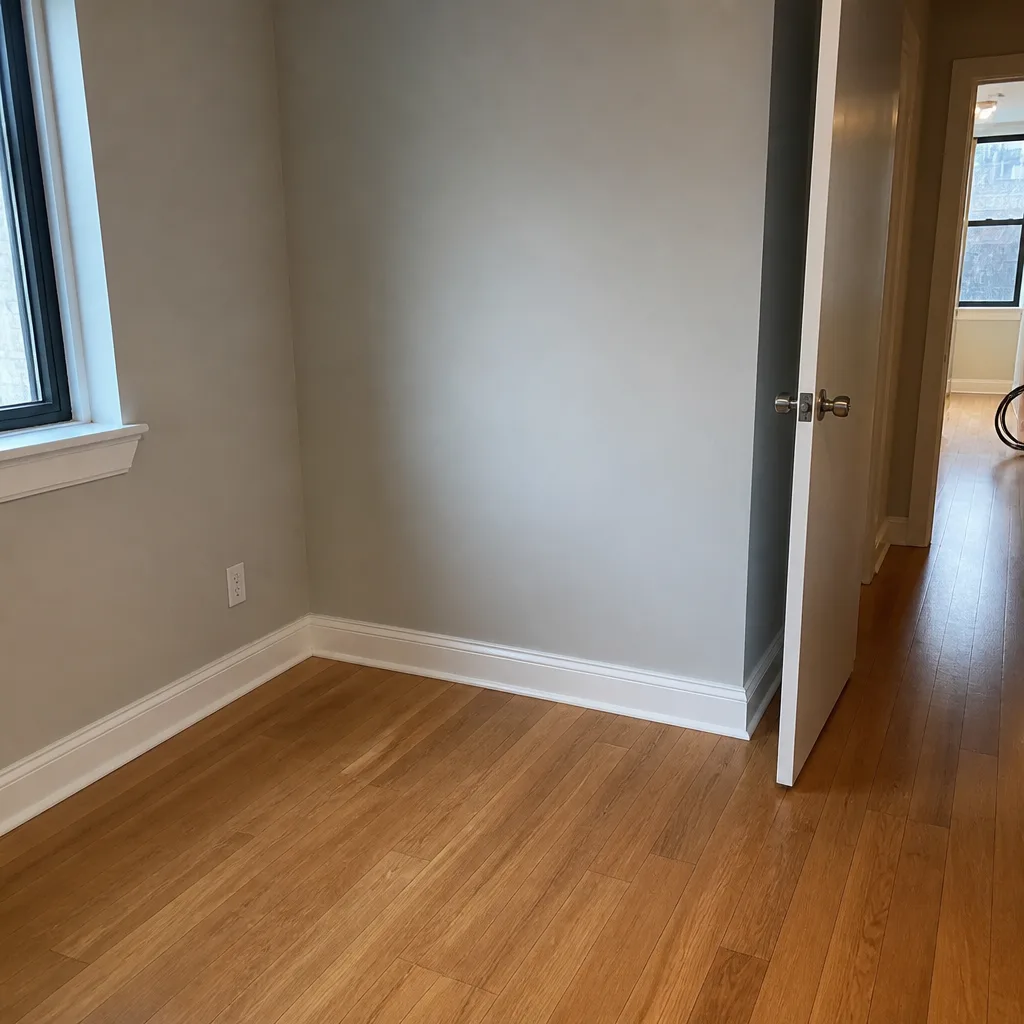
When your Harlem storefront or office floods, the goal is reopening fast without cutting corners that bite you later. We pack out inventory, restore documents and electronics where possible, dry in place where safe, and rebuild what cannot be saved. For retail spaces on 125th Street, we coordinate with building management and neighboring tenants so the work doesn’t stall.
Multi-Unit & HOA Restoration
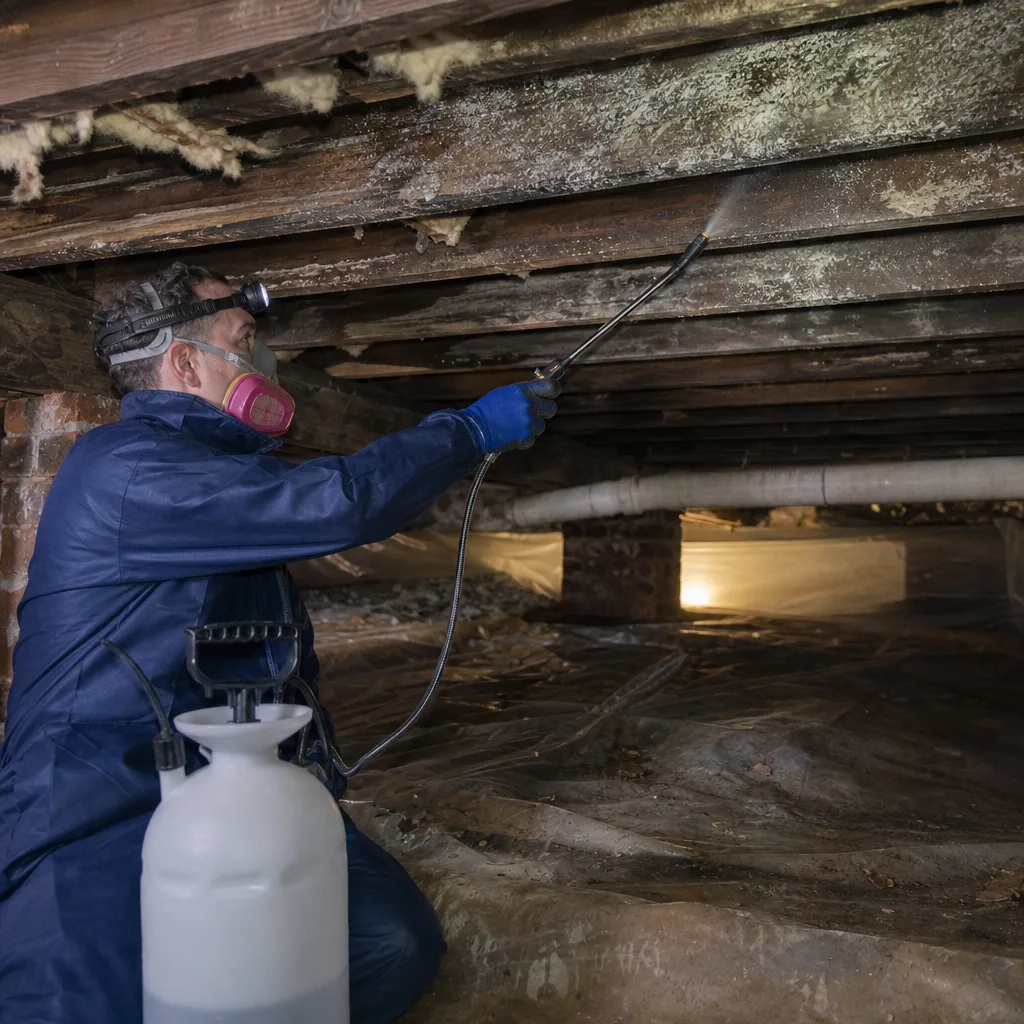
Harlem’s stacked apartments and subdivided rowhouses mean one loss touches multiple owners. We write separate scopes for each affected unit, coordinate access with building management and HOAs, and bill each carrier separately. In a four-floor flood from a burst riser, each floor gets its own documentation, its own drying log, and its own line-item estimate. This is the work most restoration companies avoid. We specialize in it.
Industrial Facility Cleanup
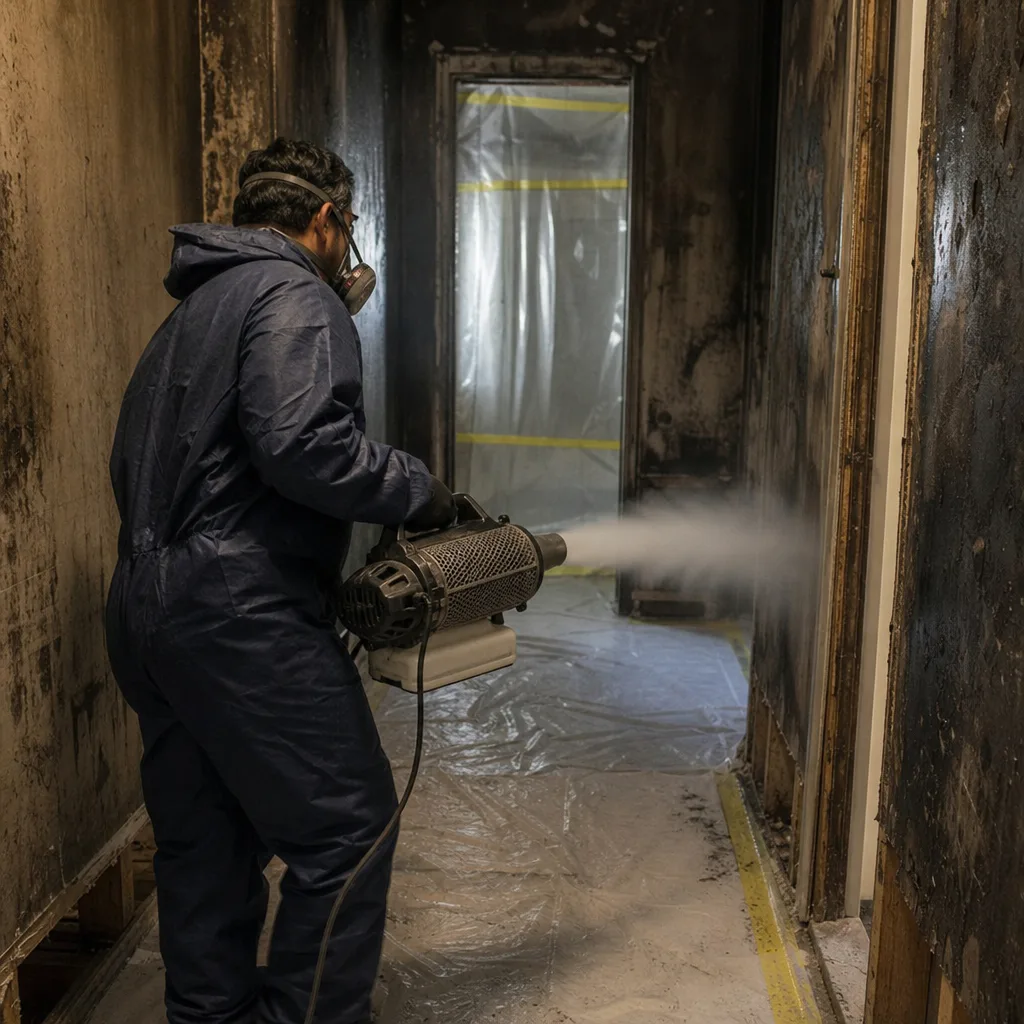
Commercial kitchens, laundry operations, automotive shops, and light manufacturing in Harlem’s mixed-use buildings present Category 2 and 3 water regularly. We bring the same containment protocols, HEPA air scrubbing, and antimicrobial treatment whether it’s a grease trap failure or a storm drain backup into a subgrade workspace.
Large-Loss Response
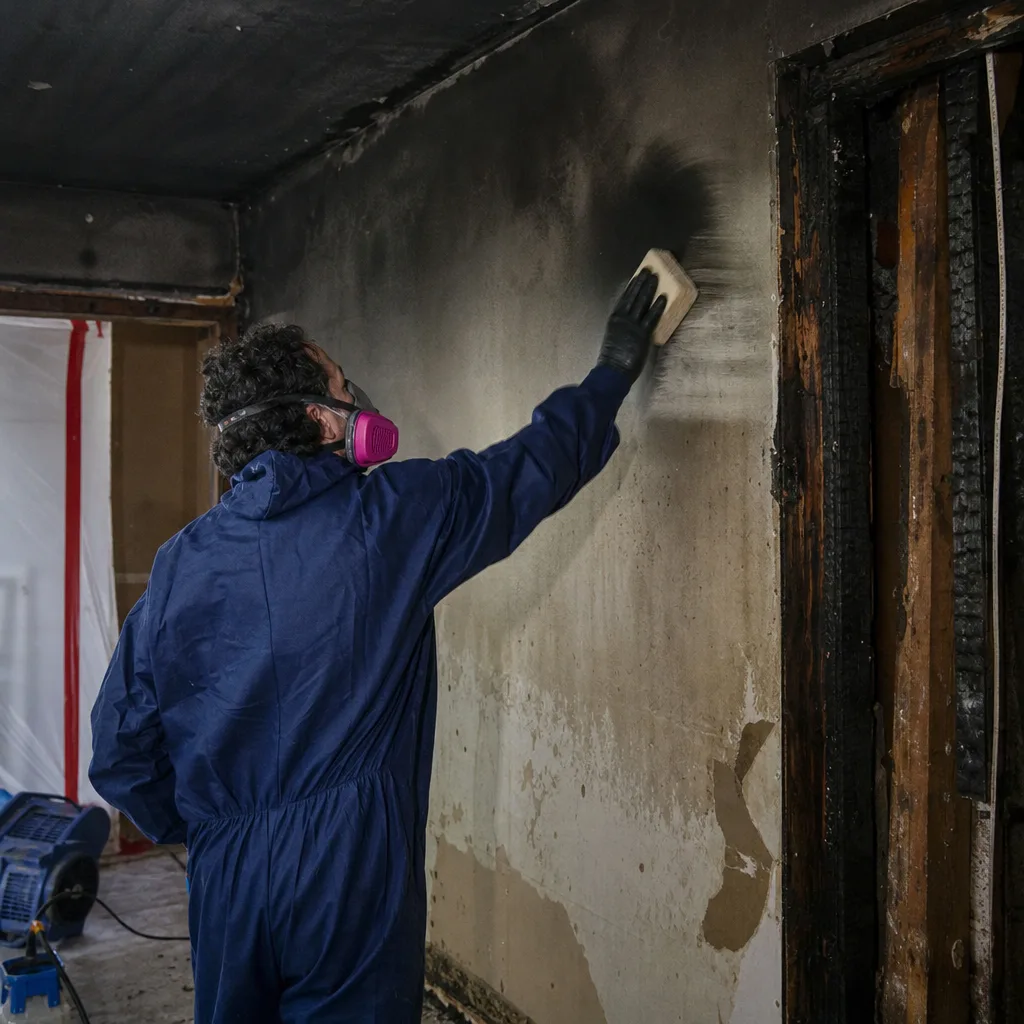
When a fire in a Harlem brownstone migrates through shared party walls into adjacent commercial spaces, or a sewer main backs up through an entire block’s basements, the scope is not one storefront. It’s three, or five, or a whole building. We stage equipment accordingly and assign a dedicated project lead. Large loss response means demolition, drying, and rebuild coordinated across multiple owners, multiple adjusters, and sometimes LPC review. Our team has done this in Harlem’s densely packed blocks where the building next door is as damaged as yours.
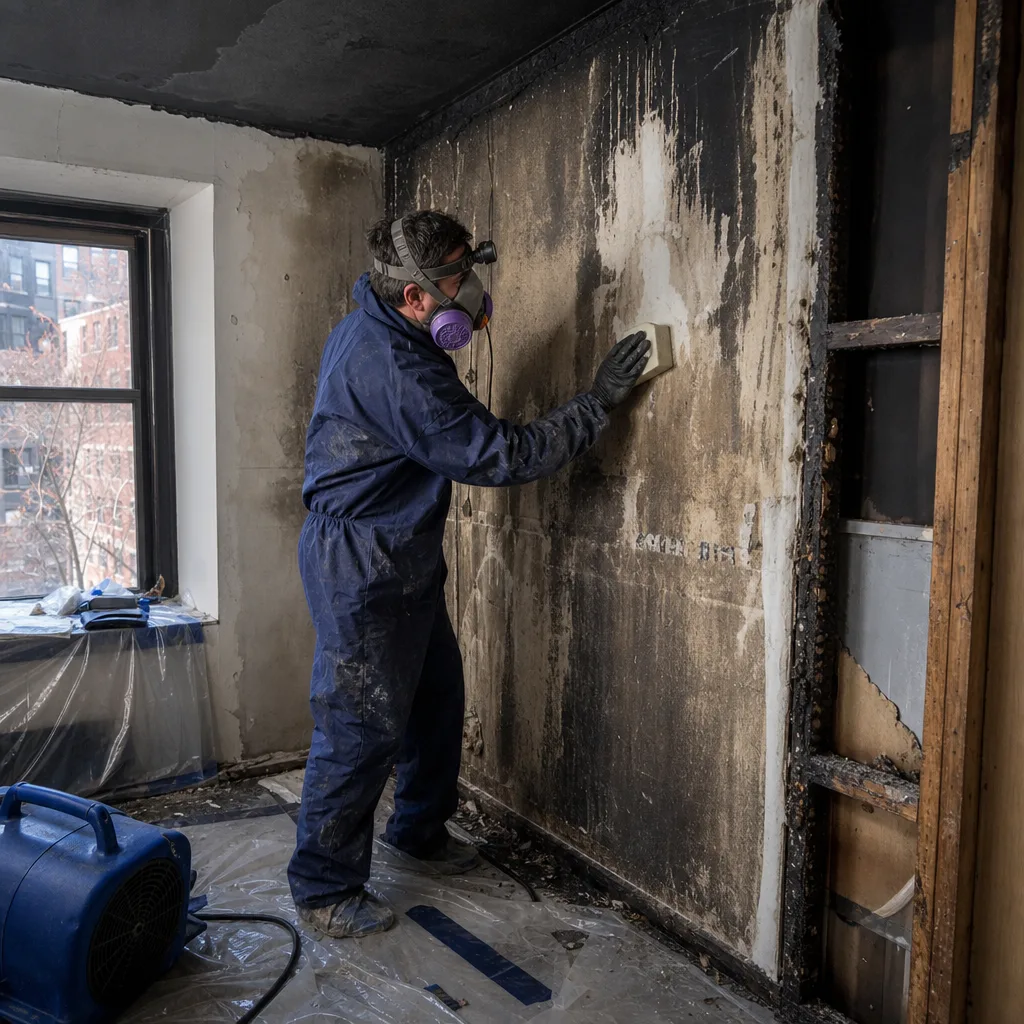
Business Interruption Minimization
Every day your Harlem commercial space is closed costs money. We sequence work to get the front of house dry and usable while the back-of-house rebuild continues. Temporary partitions, targeted drying zones, and off-hours work keep your business moving. In Hamilton Heights, our crews held structural drying at the lowest acceptable moisture readings while LPC reviewed a storefront replacement, completing cast-iron drain repairs and pack-out without reopening the space. That is what interruption minimization looks like in a landmark district.
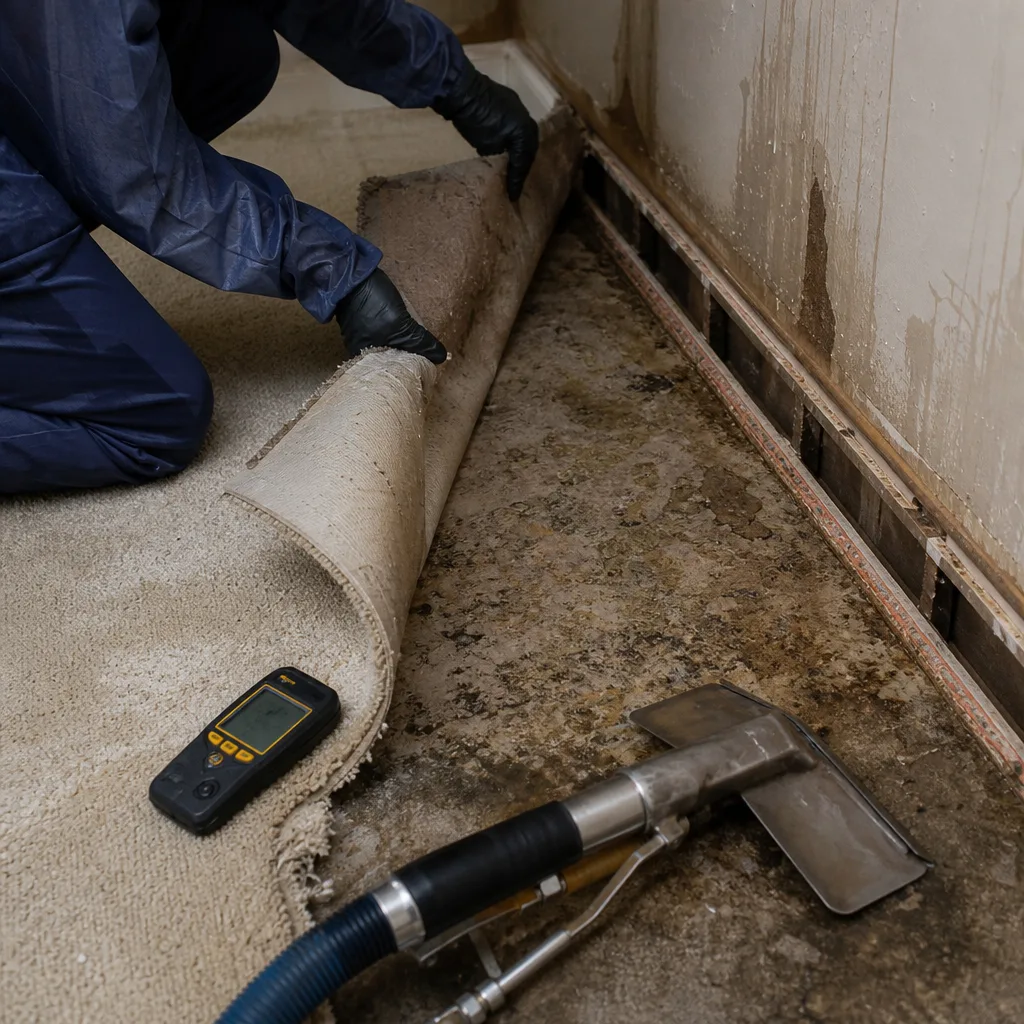
What happens when you call
- 1
A real person answersNo phone trees - you reach a local pro.
- 2
You get an upfront price rangeHonest numbers before anyone is dispatched.
- 3
A background-checked tech heads outLicensed & insured, dispatched right away.
- 4
You approve before work beginsNothing starts until you say go.
Commercial Restoration Costs in Harlem, NY
What does commercial restoration cost in Harlem? Small water losses with extraction and structural drying typically run $2,500 to $6,500. A multi-floor category 3 sewage loss in a tenement with containment, pack-out, and rebuild can range from $18,000 to $85,000 depending on how many units are affected and what materials need replacement. Smoke remediation after a neighboring fire runs $3,000 to $12,000 for a storefront. Landmark-district compliance adds review time but not necessarily cost, unless LPC requires historically accurate material replacements, which can add 15 to 30 percent to finish work. The fastest way to a firm number is a free visual inspection with a written scope. We quote a price before work starts, and we stand behind it. That is the Harlem market as we see it every week. Call (845) 305-5737 for an exact quote. Estimates are free.
We Also Serve Cities Near Harlem
Our crews respond throughout the surrounding area, including Upper West Side, Upper Manhattan, Morningside Heights, and Central Harlem. If your commercial property sits just outside Harlem proper, the same response time and the same live dispatch apply. We stage equipment across the metro area so the closest crew reaches you fast.
Serving Harlem, NY - Our Local Coverage Area
We’re based in the Harlem area and know this community well. Use the map below to see our service coverage - if you’re nearby, we can almost certainly help.
Harlem Commercial Restoration Questions, Answered
How does Harlem’s landmark-district review change the timeline for water extraction in a commercial space?
It doesn’t delay extraction. We extract and start structural drying immediately. What LPC review affects is replacement of character-defining materials: storefronts, cornices, window surrounds, interior plaster details in designated spaces. In Mount Morris Park and Hamilton Heights, we hold drying at conservative moisture readings while LPC and hazmat clearance (DEP lead and asbestos) complete, then do the finish work. Extraction and drying never pause. Only the rebuild sequencing adjusts. Call us for a timeline specific to your building’s landmark status.
What makes category 3 water in a Harlem row-house retail space more dangerous than a typical basement flood?
Category 3 water (sewage, storm backup, river water) carries bacteria, viruses, and parasites. In a Harlem rowhouse retail space, it saturates porous materials: wood flooring, plaster, drywall, inventory, cardboard packaging. Those materials wick contaminated water upward for days if not addressed. Without containment and antimicrobial treatment, mold follows within 48 to 72 hours. It’s not just wet. It’s hazardous. We contain the affected area, remove saturated porous materials, and dry the structure to industry standards before rebuild.
Why do multi-unit water losses in Harlem require separate scope documents for each floor?
Because each affected unit is usually a different owner with a different insurance policy. In a four-floor flood from a burst riser, the ground-floor retailer, second-floor office, third-floor apartment, and fourth-floor apartment each have their own carrier, their own adjuster, and their own claim. One scope document with a single line item for “flood damage” gets denied or delayed. We write floor-by-floor scopes with photos, moisture logs, and line items specific to each unit’s loss. That’s how you get paid.
Can we keep our Harlem storefront open while you dry the back office after a pipe freeze?
Often, yes. We build containment barriers and set up drying zones so the front of house stays usable. Negative air pressure keeps dust and airborne particles from migrating. We sequence work around your business hours, including off-hours drying where needed. The answer depends on the water category and the layout. Category 1 clean-water losses are the easiest to compartmentalize. Category 3 losses require full containment and often full closure. Schedule a free inspection and we’ll tell you what’s possible.
What should we do about the shared wall with our neighbor’s brownstone if they had a fire and our Harlem store now smells of smoke?
Smoke migrates through party-wall gaps, floor joists, and electrical chases. Your space can smell of smoke without ever having a flame in it. We set up air scrubbers, clean all surfaces (smoke residue is acidic and etches finishes over time), and if needed, seal the shared wall cavity. Document everything. Your insurer needs proof the smoke came from the neighbor’s loss, not a separate event. We coordinate with both properties so the scope reflects cause and origin correctly. The first step is an inspection to measure smoke particulate levels and map migration paths.
How fast can you actually get to a commercial property in Harlem?
Our commitment is 45 minutes for emergency response within the Harlem area. For a category 3 backup or an active flood, that means extraction equipment is running the same visit. For non-emergency inspections, we schedule next-day in most cases. A live dispatcher answers at (845) 305-5737 around the clock, so you’re never leaving a message while water spreads.
Will insurance cover commercial restoration in Harlem, and how does direct billing work?
Most commercial policies cover sudden and accidental water damage, fire, smoke, and storm losses. Exclusions apply for long-term maintenance issues, so if that cast-iron drain stack has been leaking for six months, the claim gets scrutinized. When we do direct billing, we submit our documentation, photos, moisture logs, and line-item scope to your adjuster directly. You receive the coverage your policy provides without playing messenger. We do not inflate scopes. We write what the building needs, and the documentation supports it.
What does the 90-Day Done Right Promise actually cover?
It covers the workmanship and the outcome. If something we repaired or rebuilt fails, or if hidden moisture caused a problem we should have caught, we come back and make it right. No arguing, no paperwork battle. It’s in writing, it’s tied to our K.E.Y.S. standards (Krafted right, Every time, Your home first, Standing behind it), and it applies to every commercial restoration job we complete in Harlem. That’s the whole point of using one crew from extraction to rebuild. We know what we did, and we stand behind it.
When water, fire, sewage, or storm damage hits your commercial property in Harlem, the first call is the one that matters most. Call (845) 305-5737 for a free estimate, and we’ll be there when we say. Done right, and backed in writing.
Written by Curt Bowman, Owner at Floodline Restoration Co., serving Harlem, NY and the surrounding communities since 2010.