

Free visual inspection and a written scope of work before any mitigation begins - photos, moisture readings, and drying logs go in your claim file
The scope we write is the scope we bill. Anything new gets shown to you, in writing, before we touch it.
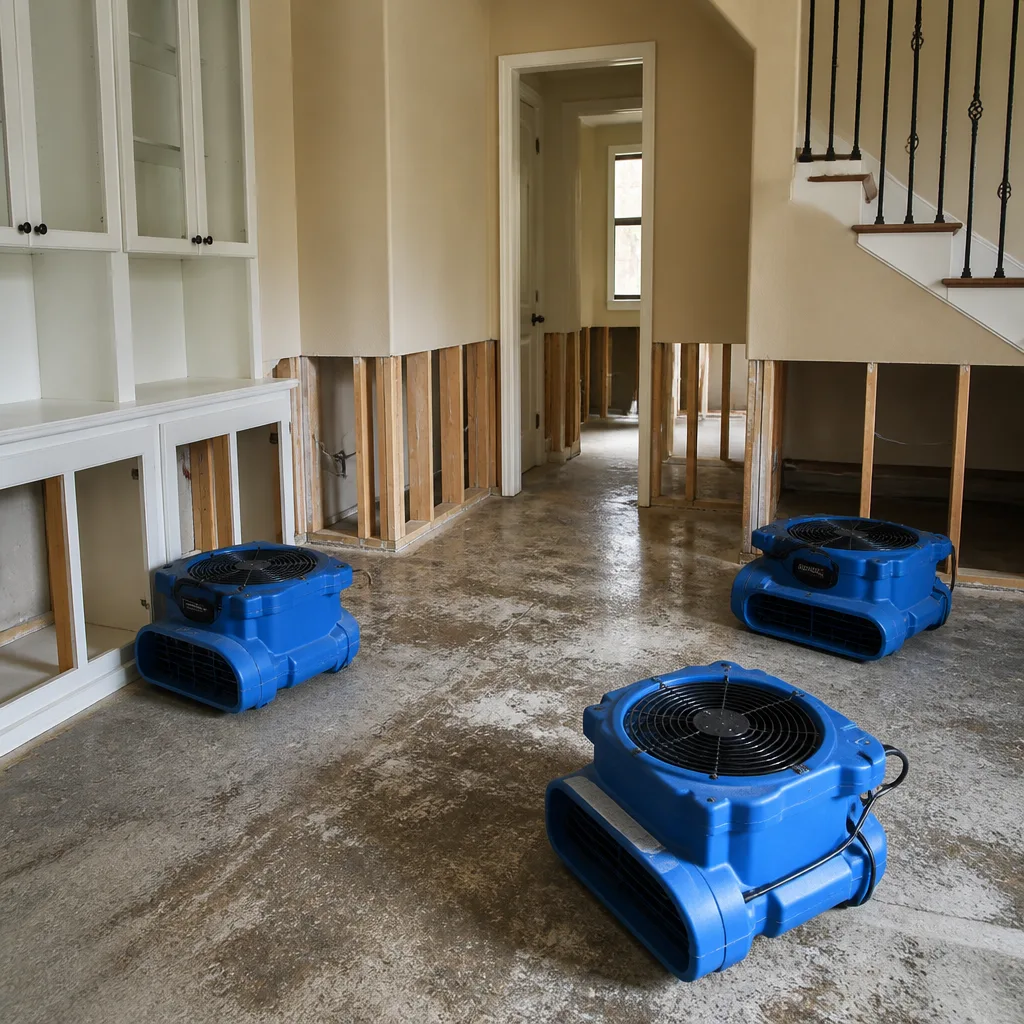
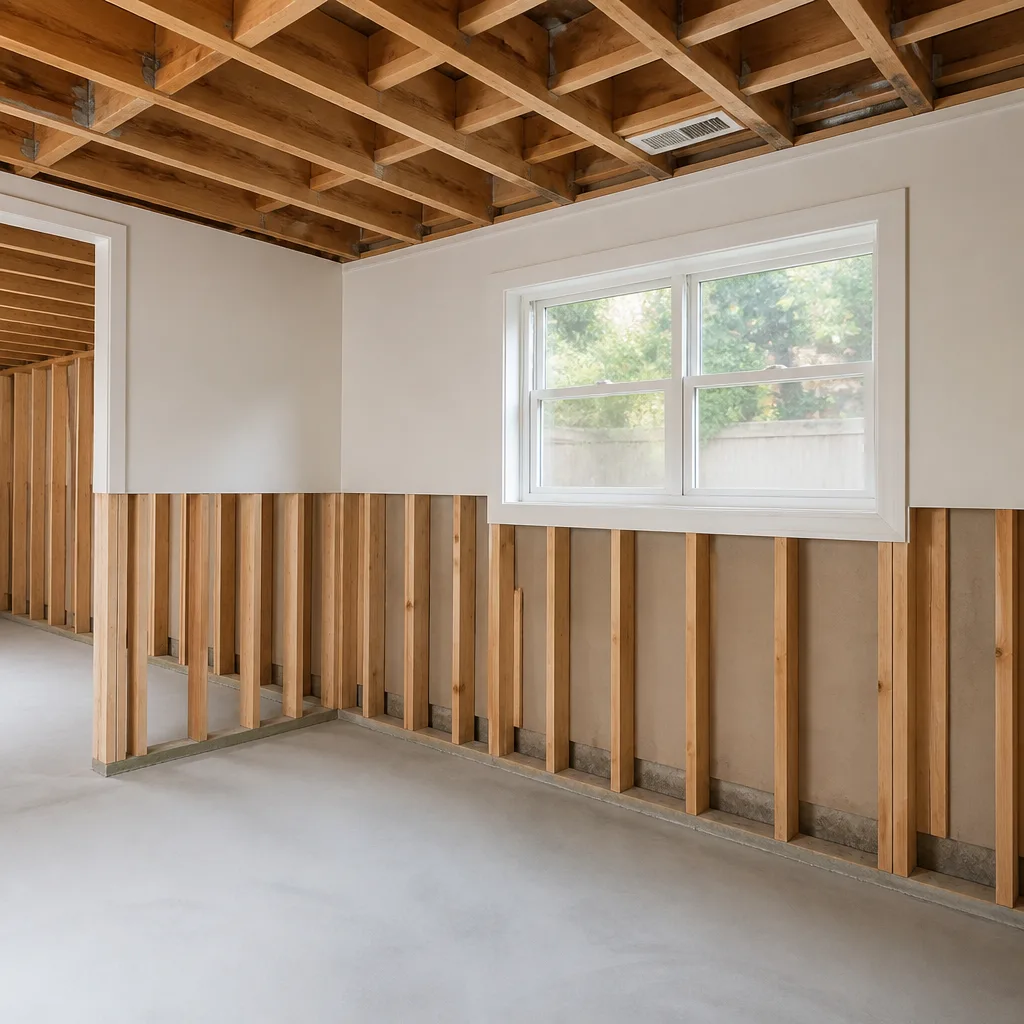
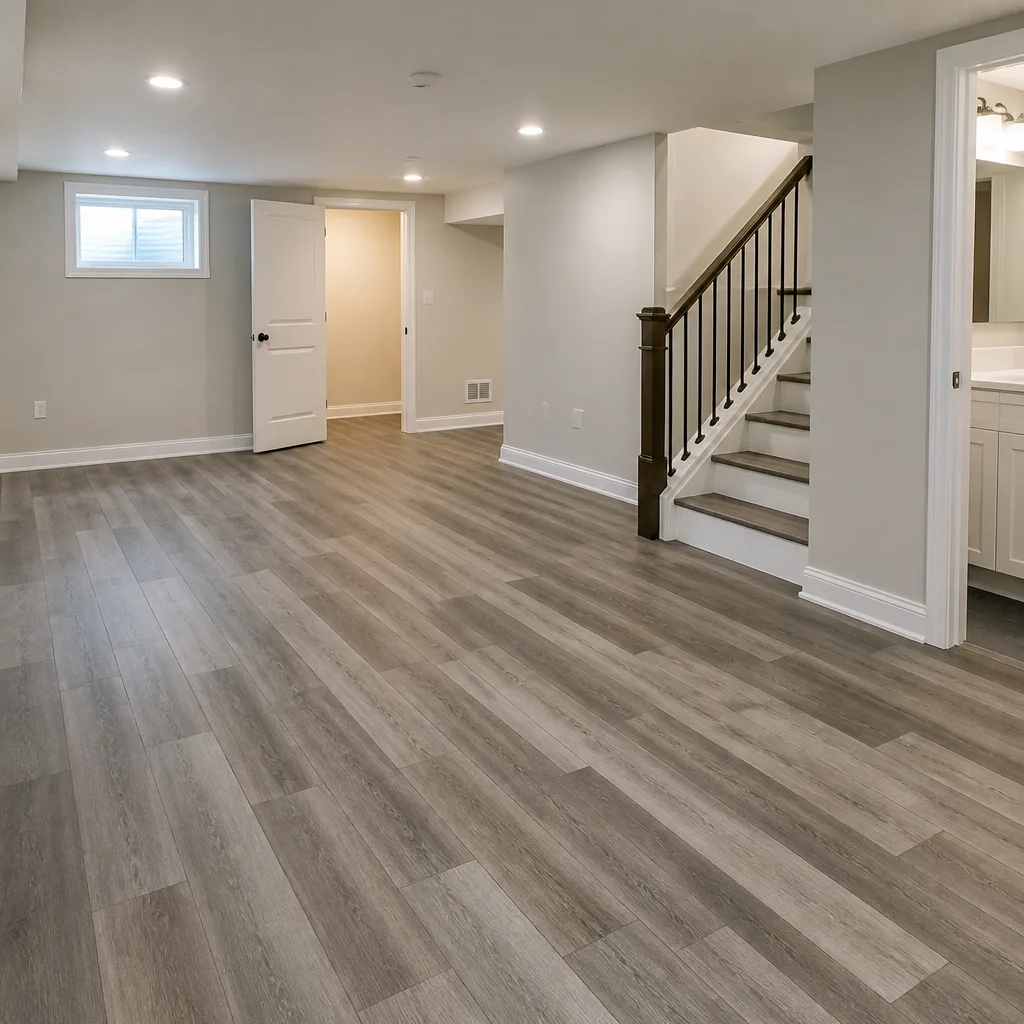
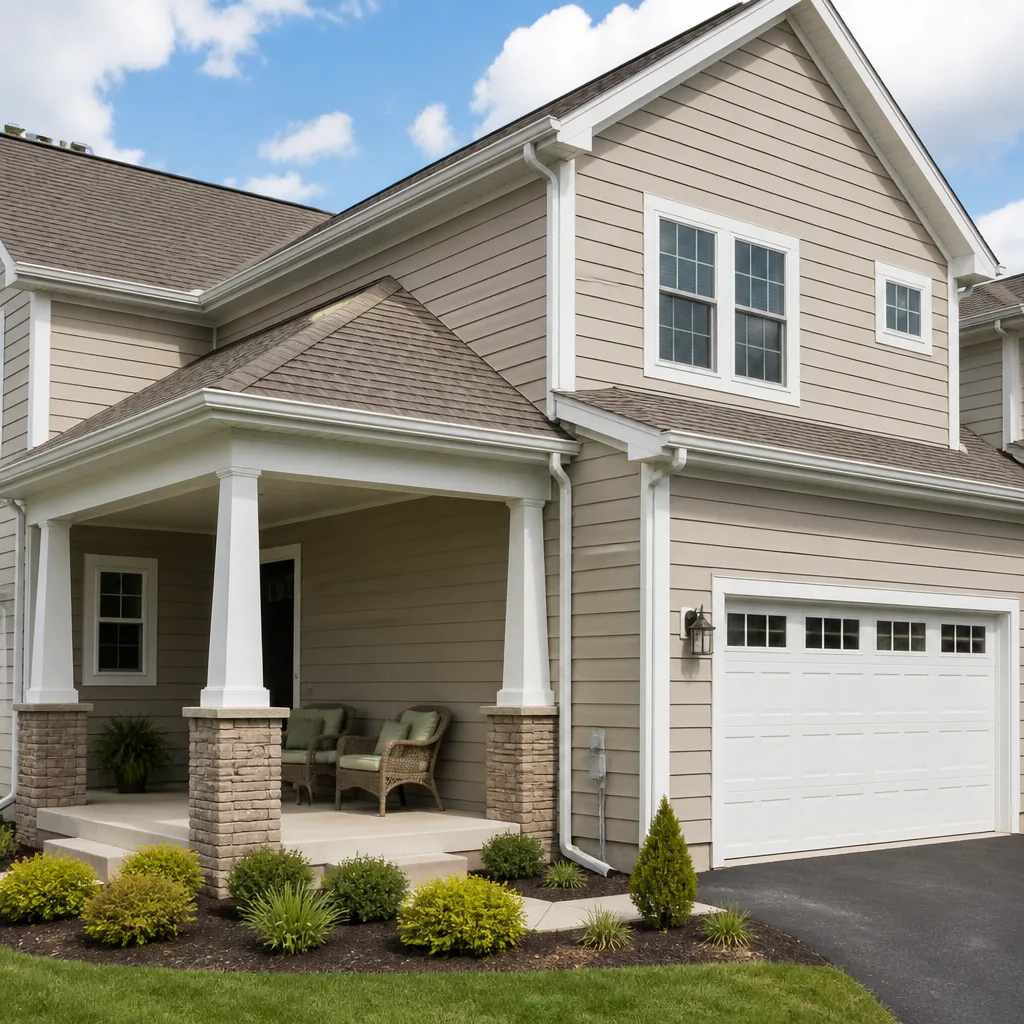
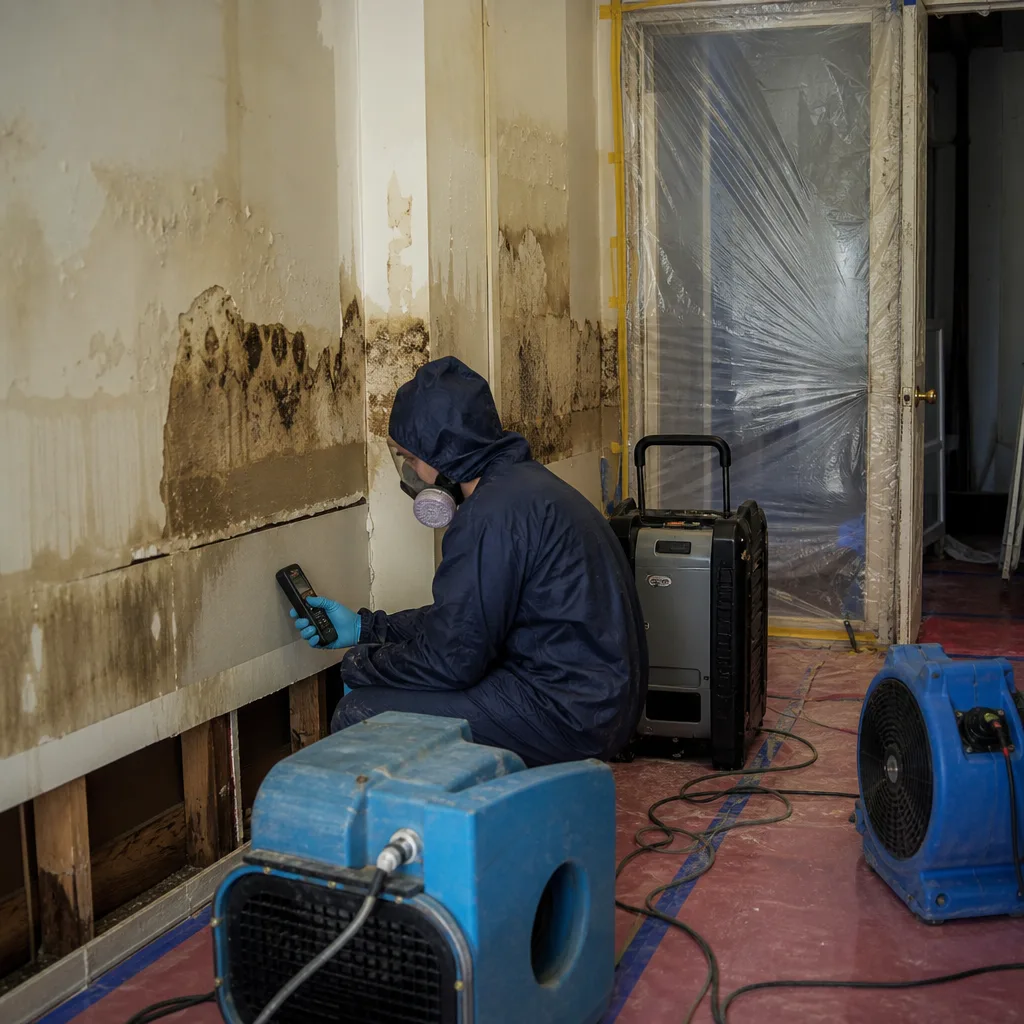 Before
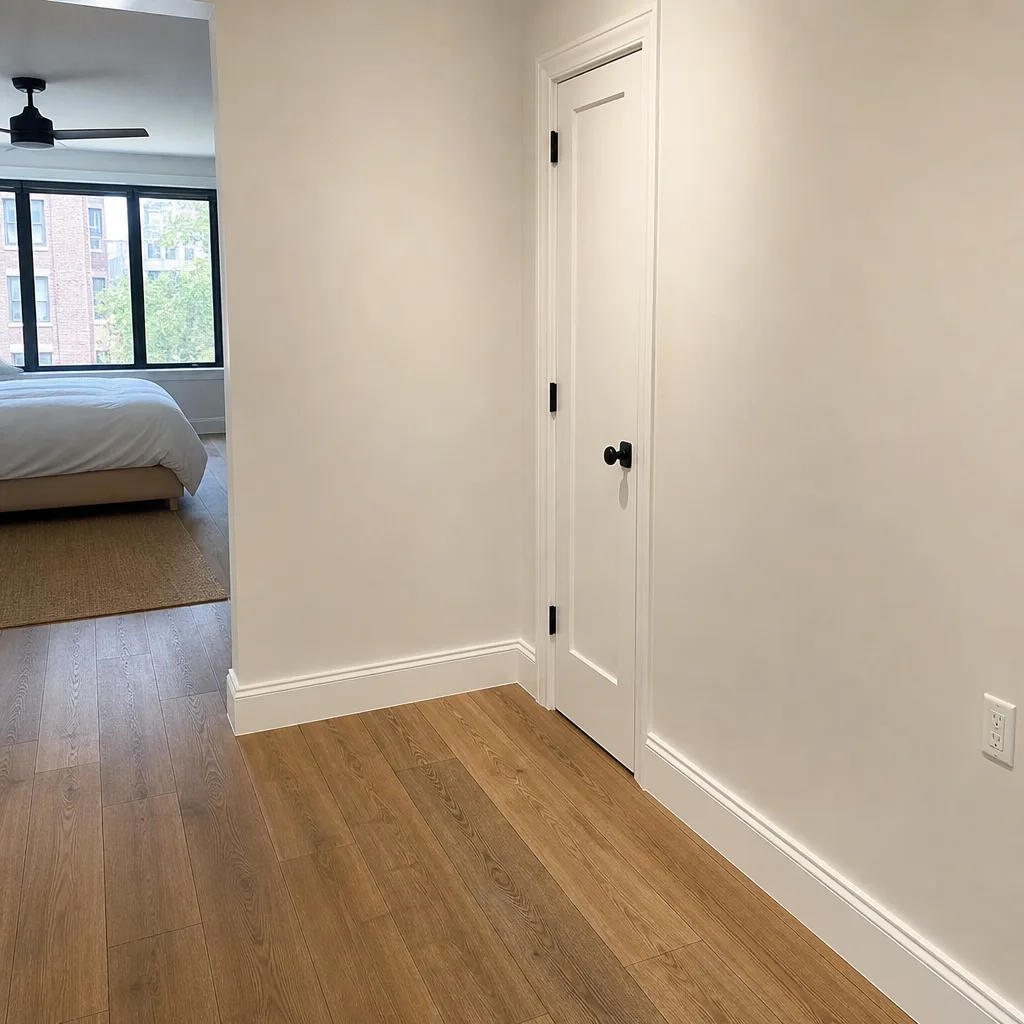 After
After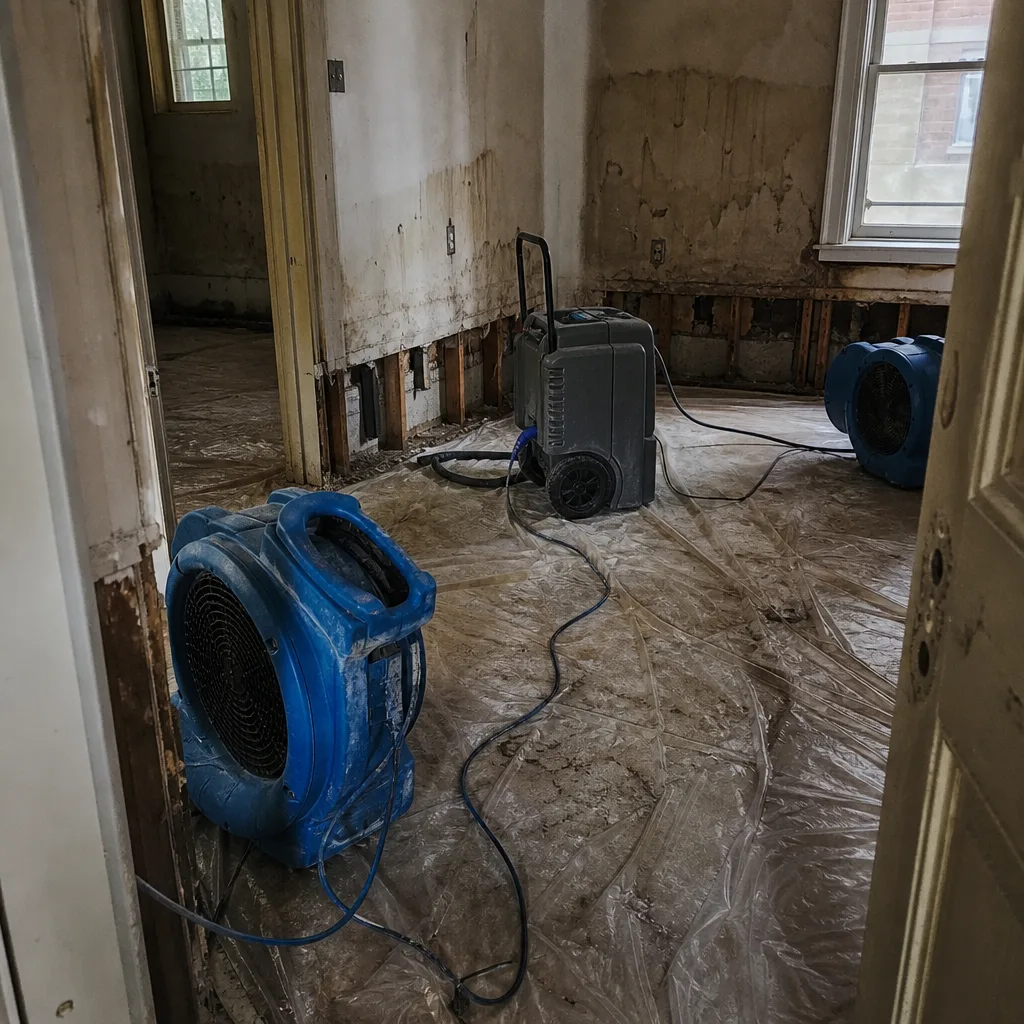 Before
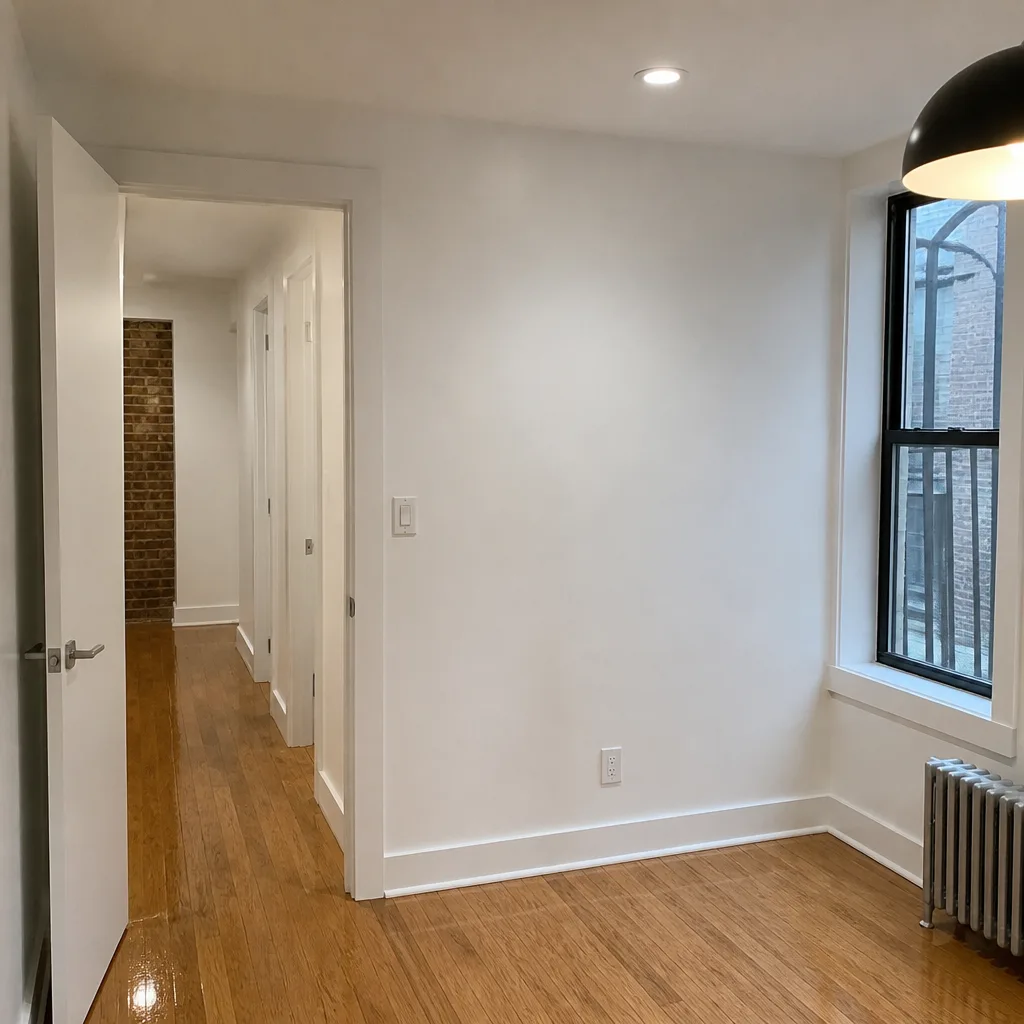 After
After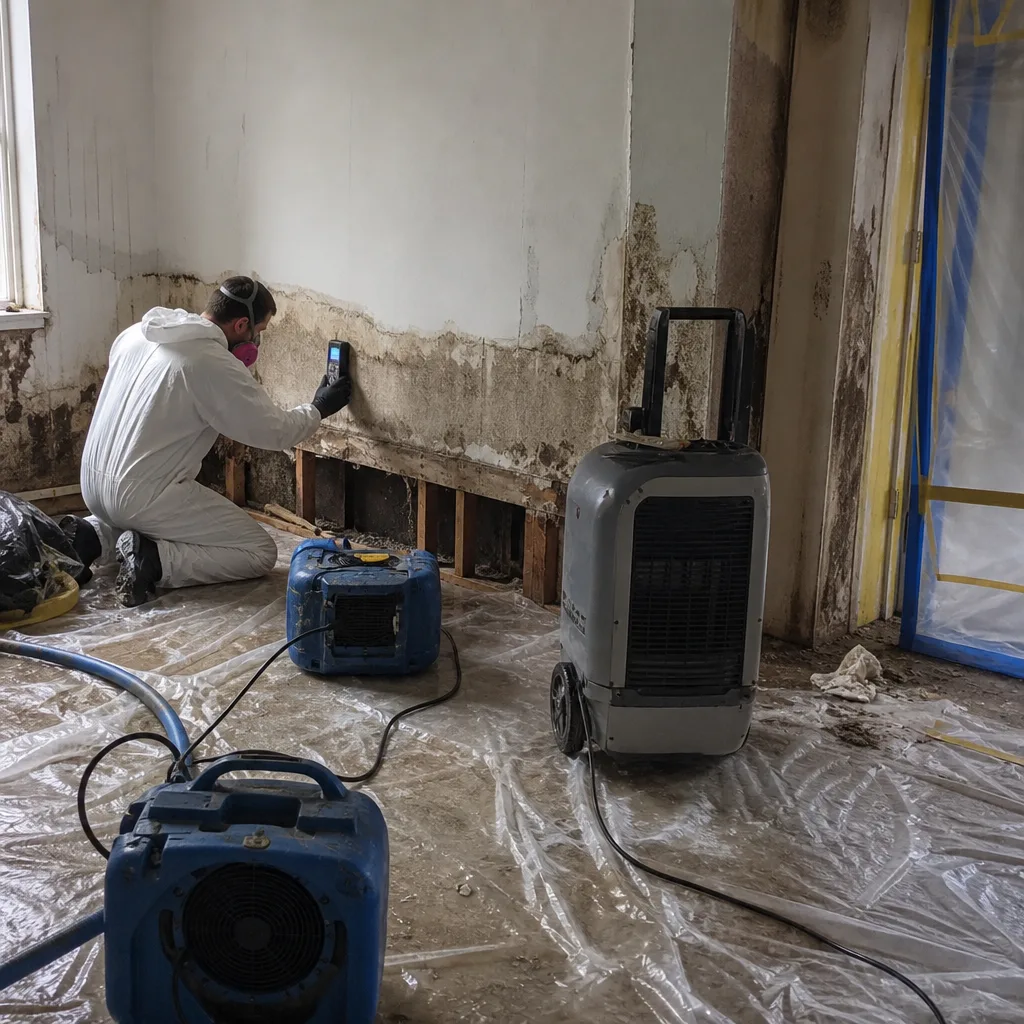 Before
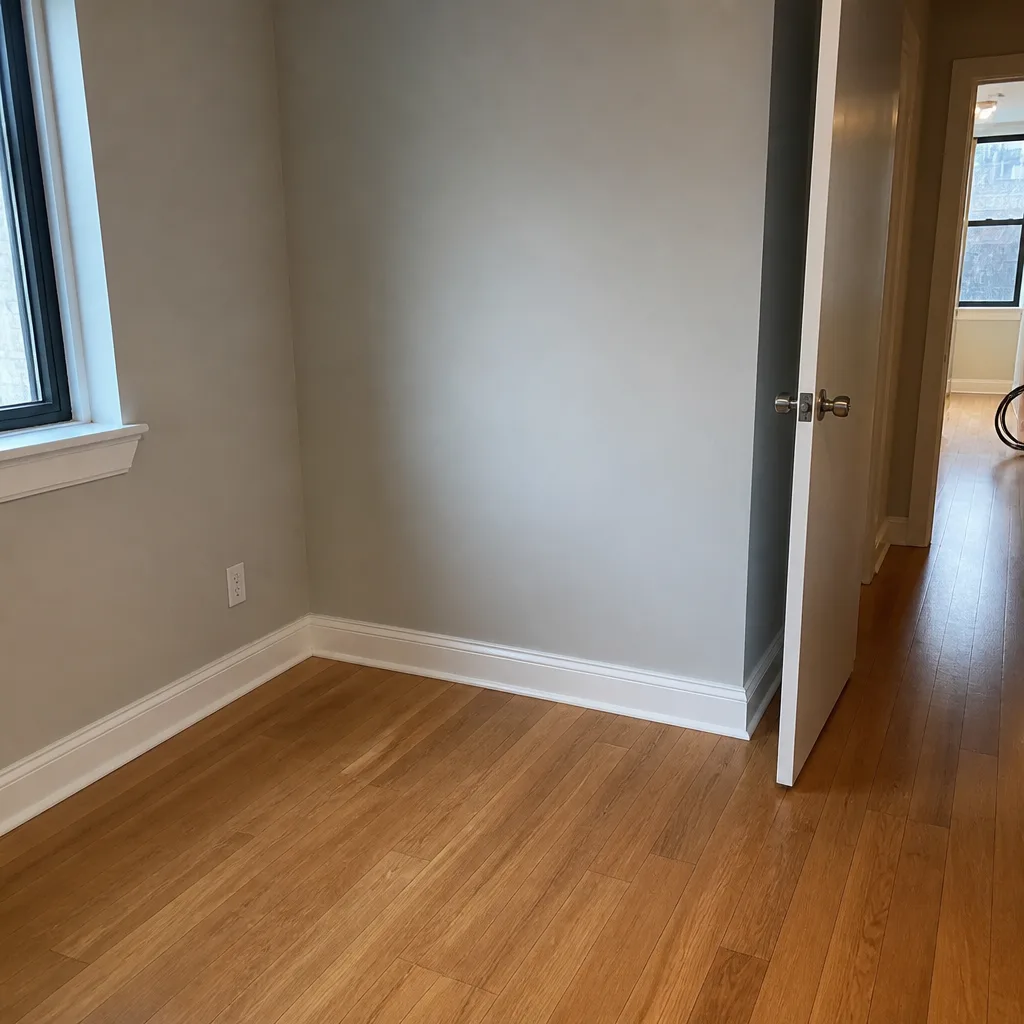 After
After24/7 Emergency Mold Remediation in Midtown Manhattan
Mold remediation in Midtown Manhattan typically runs $2,800-$6,500 for a contained 200-400 square foot affected area in a pre-war high-rise, and our crews can be inside your building within 45 minutes of your call. That number shifts depending on whether asbestos testing gets triggered, how many floors are involved, and what kind of building access management grants us. Call (845) 305-5737 right now and a live person answers, not a recording. The first hour matters because mold doubles its footprint every 24 to 48 hours behind wet drywall, and in Midtown’s tight floorplate layouts, that means spreading to the unit next door faster than anywhere else in the city. We dispatch from our New York City office, and our IICRC-certified team serves Midtown Manhattan with free visual inspections.
Understanding Mold Remediation Severity in Midtown Manhattan Properties
Mold in Midtown Manhattan doesn’t behave the way it does in a single-family house. The same 1920s steel-frame tower that survived seventy winters can hide category 2 water inside original cast-iron risers, feeding mold colonies behind lath-and-plaster walls for weeks before anyone sees a stain. We classify every job by square footage of visible growth, hidden moisture load from thermal imaging, and air sampling results collected before we touch a single surface. Minor surface growth under 10 square feet on painted drywall is one kind of job. A full floor plate with humidity above 60% and spores in the return-air plenum is something else entirely. We don’t guess. We run hygrometers in every affected room, map moisture with thermal cameras, and log daily readings until the dry standard is met. In Midtown’s pre-1980 buildings, that process can’t even start until NYC DEP-licensed asbestos testing clears the materials we need to cut into. That’s not bureaucracy. That’s the reality of working in Rockefeller Center-era construction with asbestos-containing plaster, floor tiles, and pipe insulation behind every wall.
Why Midtown Manhattan Property Owners Choose Floodline Restoration Co.
- 45-minute response commitment: We dispatch crews inside Midtown Manhattan from our New York City office, and we’ll be there when we say. No four-hour windows.
- 24/7 live answer, every call: A real dispatcher picks up at 2 a.m. Not a phone tree. Not a service. A person who knows which crew is closest to your building.
- IICRC-certified mold technicians: Our crews carry AMRT and WRT certifications, plus ASR for asbestos-aware work. They’re background-checked and uniformed on every job.
- Free visual inspection: Before we quote a dollar, we walk the affected area, take moisture readings, and tell you what you’re actually dealing with.
- Direct insurance billing: You never play messenger between us and your carrier. We submit the scope of work, the photos, and the drying logs directly to your adjuster.
- One crew from containment to clearance: The same team that sets negative air on day one handles daily readings, rebuilds the wall, and hands you the clearance test. No mid-job handoff, no inherited crew.
Our Mold Remediation Process
Inspection & Assessment
We walk the affected unit, run thermal imaging across walls and ceilings, check humidity in every room, and air-sample where spores may have spread. If the building is pre-1980, we flag it for NYC DEP asbestos testing before anyone moves a tool.
Containment & Stabilization
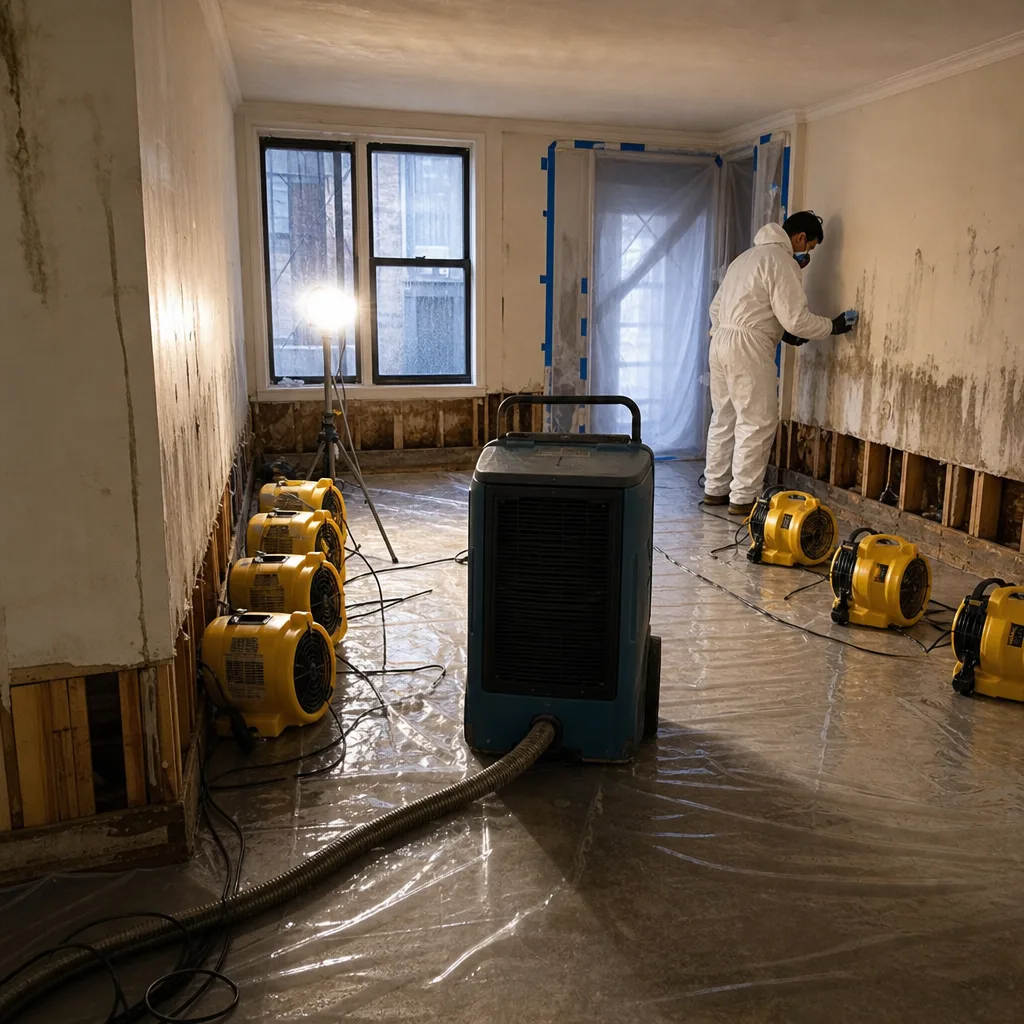
We set 6-mil polyethylene containment and negative air pressure before opening any wall cavity. In Midtown high-rises, this stage often has to fit inside a 6-8 a.m. freight-elevator window, so we pre-stage equipment in the lobby the night before.
Source Removal
Once asbestos clearance comes back, we cut out affected drywall, remove saturated insulation, and bag all contaminated material for sealed disposal. We don’t paint over mold. We remove it. The line the moisture left is where we start.
Drying & Dehumidification
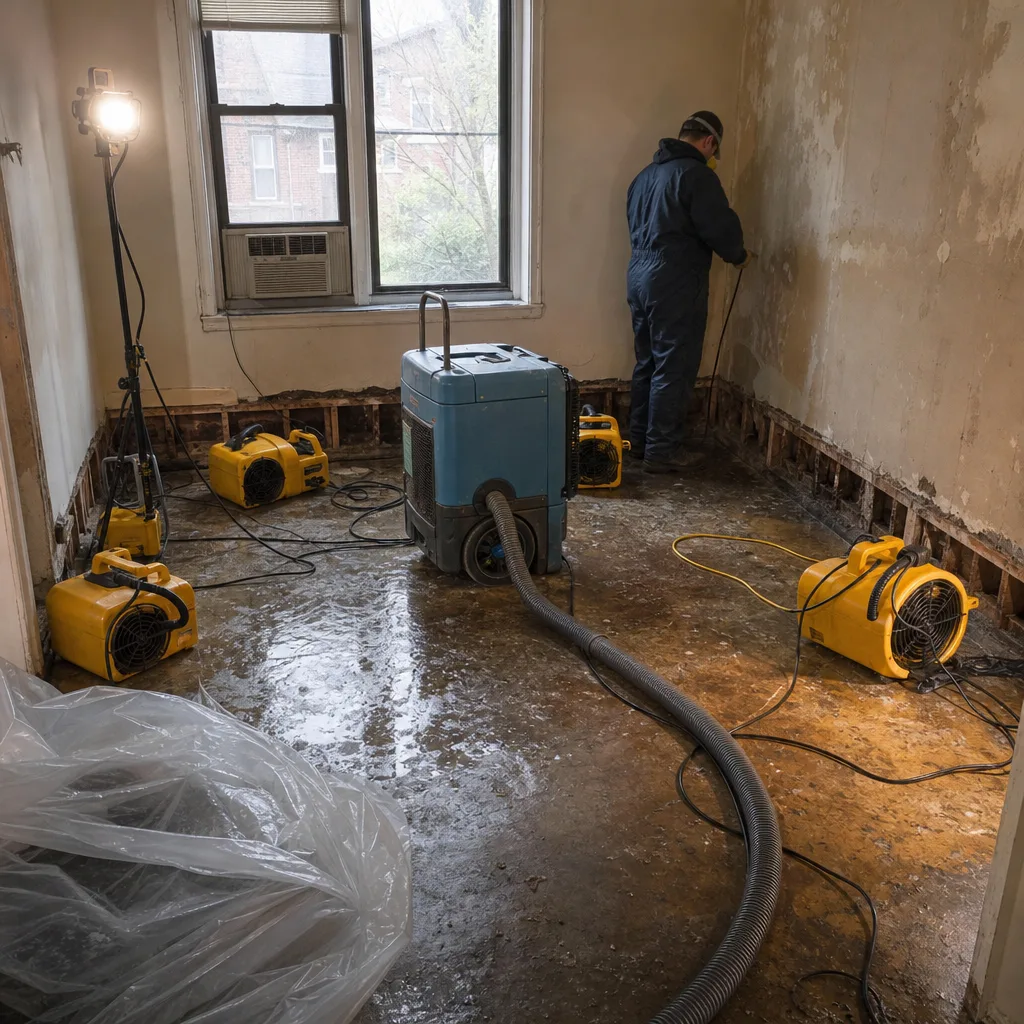
Dri-Eaz dehumidifiers and XPOWER air movers run around the clock until every cavity reads below the dry standard. Daily readings get logged and shared with you and your adjuster. In Midtown, drying inside a 1920s lath-and-plaster wall takes longer than modern drywall. We plan for that.
Air Quality Restoration
HEPA air scrubbers run through the entire drying period and for 24 hours after removal. Then we run clearance air sampling to confirm spore counts are back to background levels before we allow the unit back into normal use.
Repairs & Restoration
We rebuild what we removed, matching wall finish and paint to the surrounding area. The same crew that opened the wall closes it. Done right, and backed in writing.
Need Emergency Mold Remediation in Midtown Manhattan Now?
Crews minutes away, answering live 24 hours a day. The sooner we start, the less it costs.
Working With Your Insurance Company
Mold claims in Midtown Manhattan high-rises are never simple. A busted cast-iron riser on the 14th floor can trigger claims from fifteen different tenants, two different carriers, and the building owner’s own policy. We’ve done this dance before. From the first hour, our team photographs every affected surface, logs moisture readings daily, and builds a line-item scope of work that speaks the language adjusters expect. We submit everything to your carrier directly. You don’t forward emails between us and your insurance company. You don’t explain what category 2 water means. We handle that. If your adjuster wants a conference call from the freight elevator at 6 a.m., we’re on it.
What We Provide Your Insurer
- Thorough documentation of the loss
- Photos of all damage, room by room
- Moisture readings and drying logs
- A detailed, line-item scope of work
- Direct coordination with your carrier
Built for Midtown Manhattan’s Loss Calendar
Midtown’s mold season follows the water, and the water follows the calendar. January and February bring freeze-thaw cycles that crack original cast-iron risers in 1920s towers and burst supply lines on exterior walls. We get those calls at 3 a.m., when a pipe lets go and water is running down the elevator shaft. Spring brings roof leaks as aging parapet flashings on pre-war towers finally give way after a winter of ice. Summer thunderstorms overwhelm aging roof drains and sewer lines, sending category 3 water into below-grade mechanical rooms and sub-basements where mold colonizes unobserved. Nor’easters hit in fall and early spring, pushing wind-driven rain through curtain-wall seams on 1960s and 70s towers. Every one of those events creates a moisture pocket that turns into mold inside three days if the drying isn’t done right. We know the building. We know the calendar. We know what to expect when we walk in.
Mold Remediation Across Midtown Manhattan’s Neighborhoods
Midtown Manhattan isn’t one neighborhood. It’s a spine of commercial towers and residential high-rises running from 34th to 59th, and the mold jobs we see change block by block. Near Bryant Park and the Garment District, we work in 1920s loft buildings with original hardwood floors and cast-iron risers that fail without warning. Around Rockefeller Center, management teams run tight freight-elevator schedules and demand proof of insurance before a single dehumidifier crosses the lobby. Over in Murray Hill and Kips Bay, we see more 1950s and 60s residential buildings, where mold hides behind steam-pipe chases and original bathroom tile. Up toward Columbus Circle and Hell’s Kitchen, the towers are newer but the plumbing stacks run through dozens of occupied floors, and a leak on 8th Avenue can wick into six adjacent units before anyone notices. We route crews from wherever they are to wherever you are, and we know which building managers answer phone calls at midnight and which ones won’t release a freight elevator until Monday.
Specialized Mold Remediation Services We Offer in Midtown Manhattan
Mold Inspection & Testing
Before any demolition starts, you need to know what you’re dealing with. We run air samples, swab visible growth, and map moisture across the entire affected area. In Midtown’s pre-1980 buildings, we flag any material that may contain asbestos and coordinate with a NYC DEP-licensed testing firm before demolition begins. That step alone saves you from a stop-work order and a renegotiated schedule with building management.
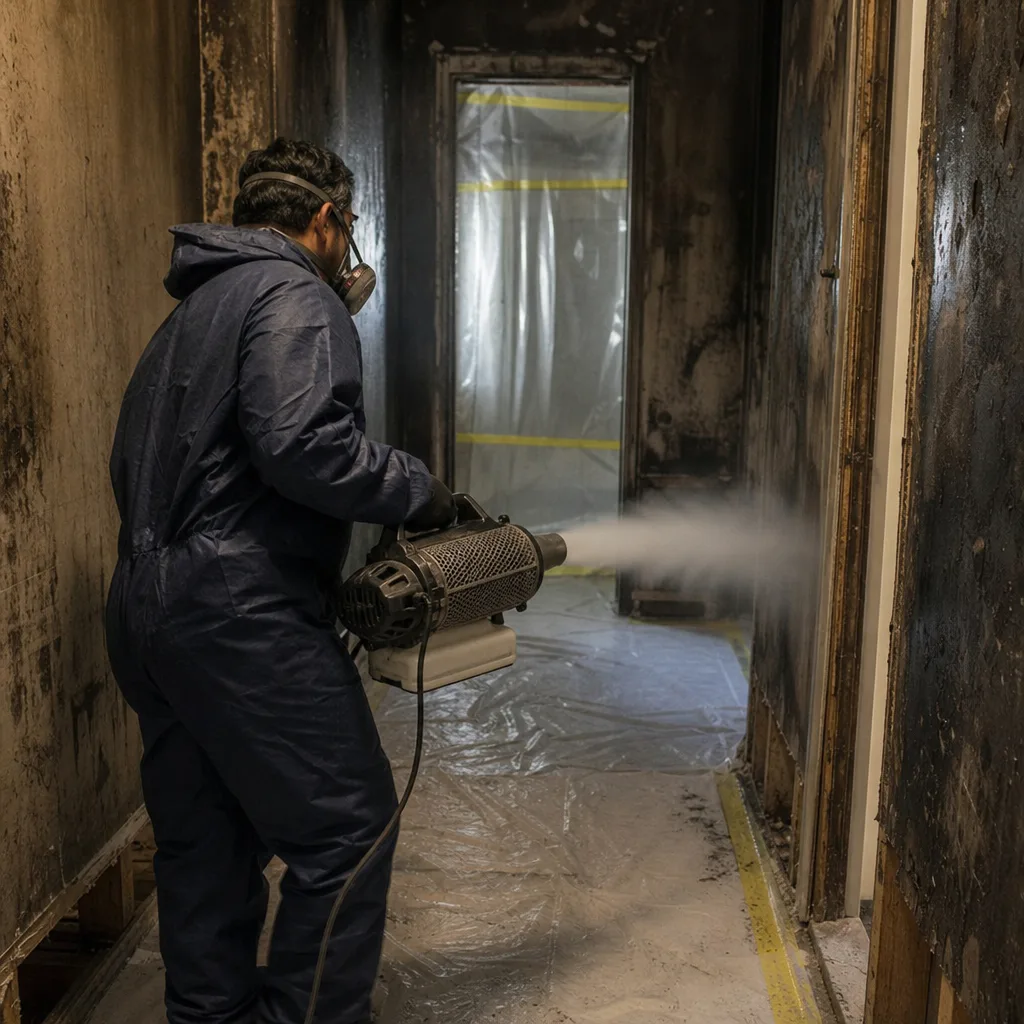
Mold Removal
This is the physical work: containment, negative air, removal of affected materials, HEPA vacuuming, and disposal. For a contained bathroom wall in a Murray Hill co-op, this is a one-day job once access is cleared. For a full-floor commercial space near Grand Central, it runs three to five days. Either way, we never paint over the problem. We remove it, dry it, and prove it’s gone with clearance testing.
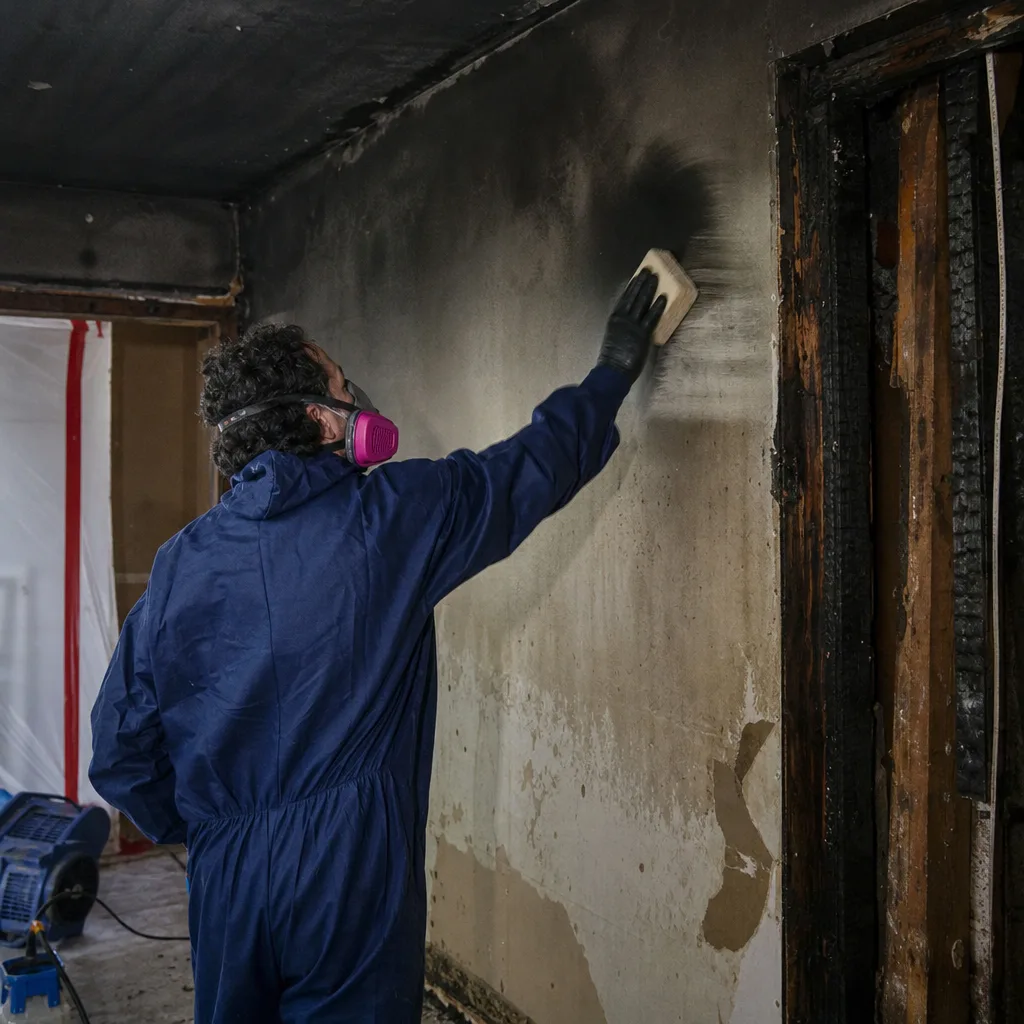
Black Mold Remediation
Stachybotrys chartarum, the mold everyone calls black mold, grows on material that’s been wet for weeks. In Midtown, that’s usually behind a kitchen wall where a slow riser leak went unnoticed between unit turnovers. We treat black mold with full containment, personal protective equipment, and air scrubbing throughout the removal. Clearance testing confirms the unit is safe before anyone moves back in.
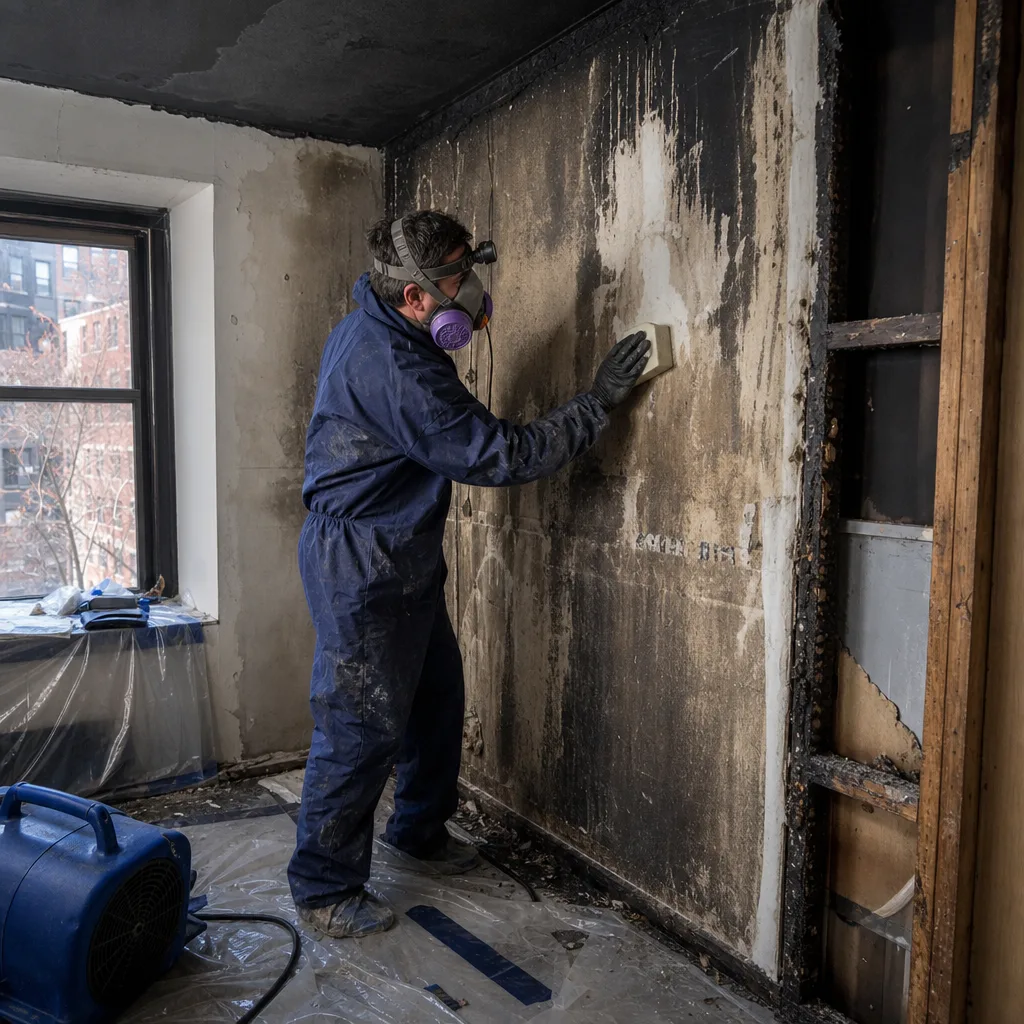
Air Quality Restoration
Mold spores don’t stay in the wet wall. They ride the HVAC plenum, the corridor ventilation, and the elevator shaft to other floors. We run HEPA air scrubbers inside containment and in adjacent spaces, then take post-remediation air samples to prove spore counts are back to what they were before the loss.
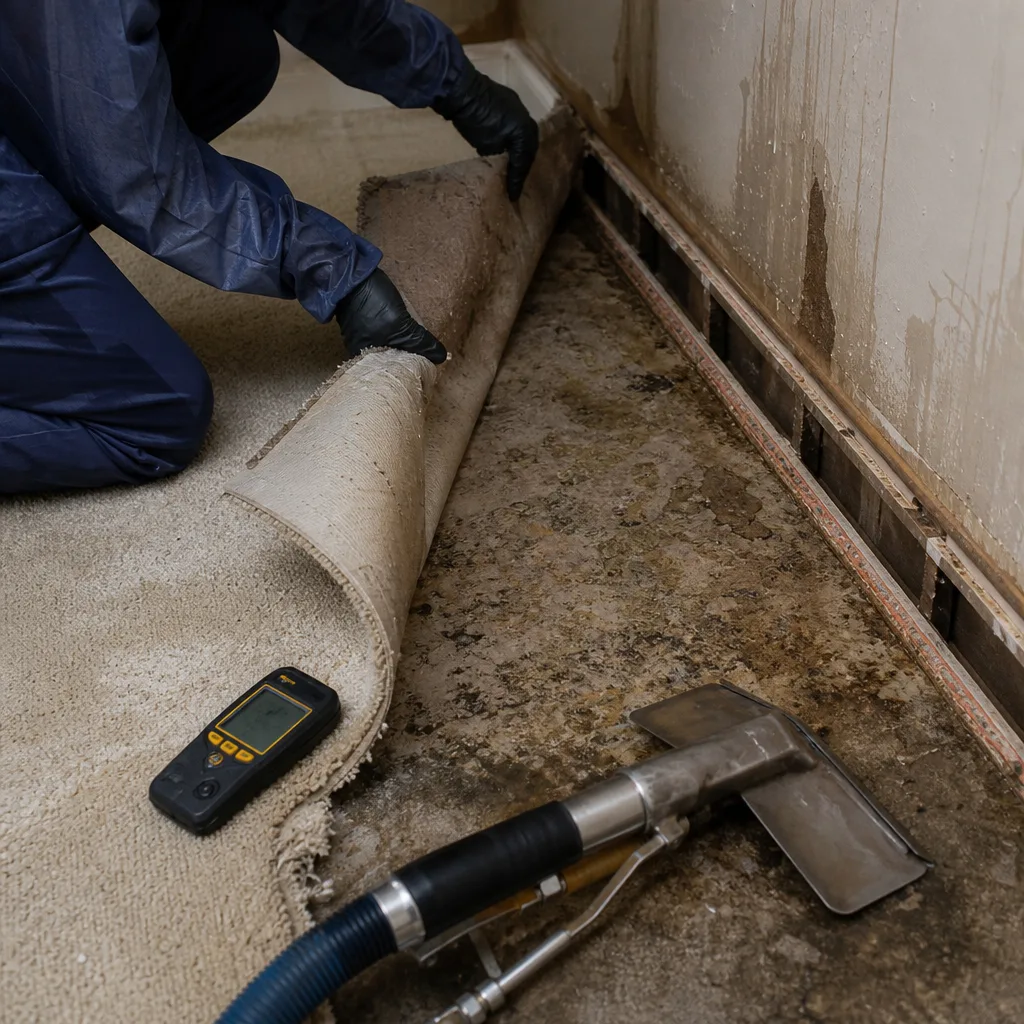
Crawl Space Treatment
Yes, Midtown has crawl spaces, mostly under the sidewalks and below-grade extensions of older commercial buildings. They’re tight, poorly ventilated, and often wet for months before anyone looks. We treat them with targeted drying, antimicrobial application where appropriate, and moisture control so the problem doesn’t come back.
Moisture & Humidity Control
Mold returns when the moisture source wasn’t killed. In Midtown’s older towers, that means finding the actual leak, not just drying the wall where the water showed up. We use thermal imaging to trace moisture back to its source, then install or recommend the right dehumidification or ventilation fix to keep the space dry long after we leave.
What happens when you call
- 1
A real person answersNo phone trees - you reach a local pro.
- 2
You get an upfront price rangeHonest numbers before anyone is dispatched.
- 3
A background-checked tech heads outLicensed & insured, dispatched right away.
- 4
You approve before work beginsNothing starts until you say go.
Mold Remediation Costs in Midtown Manhattan, NY
Here’s what Midtown Manhattan actually costs, line by line. A mold inspection with air sampling runs $450-$900 depending on the square footage and number of samples. Containment and negative air setup for a single affected room costs $800-$1,500. Mold removal and disposal for a 200-400 square foot affected area typically runs $2,800-$6,500. Asbestos testing on pre-1980 materials adds $600-$1,500 and several days of wait time. Air quality restoration with post-remediation clearance testing adds $700-$1,800. The biggest variable in Midtown isn’t the mold. It’s building access. Freight-elevator windows, insurance certificates naming the owner as additional insured, and noise restrictions during business hours all add days and labor cost. A job that’s $4,000 in a brownstone can be $7,500 in a Class A tower near Sixth Avenue. We give you a written scope before work starts, not a guess after. Call (845) 305-5737 for a free visual inspection and a firm number.
We Also Serve Cities Near Midtown Manhattan
Our crews run the full length of Manhattan’s west side and into upper Manhattan. We serve Upper West Side, Upper Manhattan, Morningside Heights, and Central Harlem with the same 45-minute response commitment and the same 90-Day Done Right Promise. Same live 24/7 dispatch. Same direct insurance billing.
Serving Midtown Manhattan, NY - Our Local Coverage Area
We’re based in the Midtown Manhattan area and know this community well. Use the map below to see our service coverage - if you’re nearby, we can almost certainly help.
Midtown Manhattan Mold Remediation Questions, Answered
How long does it take just to get mold remediation equipment into a Midtown Manhattan high-rise?
Realistically, 24 to 48 hours if building management requires freight-elevator scheduling and insurance certificates before we enter. We pre-stage equipment in the lobby the night before and work within the building’s freight window, usually 6-8 a.m. or after 6 p.m. If it’s an emergency and management waives the certificate requirement, we can be on-site and running containment in under an hour.
Do I need asbestos testing before mold removal in my Midtown office building?
If your building was built before 1980, yes. NYC DEP regulations require licensed asbestos testing on any material we’re going to disturb: plaster, floor tiles, pipe insulation, ceiling tiles. Skipping this step triggers a stop-work order and can leave your job suspended for weeks. We coordinate the testing through a licensed firm and build the wait time into the schedule so you’re not surprised.
What happens when a burst pipe floods multiple floors in a Midtown high-rise?
All affected floors get contained and dried simultaneously, with daily moisture readings on every floor and a single drying log shared across all carriers. One crew handles the entire vertical run, which keeps the drying standard consistent and the claim documentation unified. This is where our direct insurance billing matters most. You’re not juggling three adjusters and a building manager. We are.
Can mold remediation in Midtown be done during normal business hours?
Usually not, and not because we can’t work during the day. Class A towers in Midtown Manhattan restrict demolition and noisy equipment to off-hours to avoid disturbing occupied office space. That means most of our containment setup and removal work happens before 8 a.m. or after 6 p.m. Drying equipment runs continuously. The containment stays in place 24/7.
Why is moisture mapping critical in Midtown’s older high-rises?
Because lath-and-plaster walls and original drywall systems in 1920s-1940s towers don’t dry the way modern gypsum board does. Moisture hides behind plaster keys, in dead corners behind steam risers, and in the gap between the slab and the wall base. If we don’t map every cavity with thermal imaging and hygrometers, we miss a pocket, the mold returns, and we’re back in the freight elevator two months later. We map everything. Daily readings until the dry standard is met.
How fast can you actually get to my Midtown Manhattan building?
Within 45 minutes of your call to (845) 305-5737. We keep crews staged across Manhattan during the day and night, and our dispatch desk is a live person, not an answering service. When the call comes in, we know which truck is closest to your address.
Will my insurance cover mold remediation in Midtown?
That depends on your policy and the source of the water. Sudden and accidental losses, like a burst riser or a failed supply line, are typically covered including the mold remediation that follows. Long-term seepage or maintenance issues usually aren’t. We document everything from the first hour and submit directly to your adjuster, including photos, moisture logs, and the line-item scope of work. If your claim gets denied or underpaid, you’ll have the paperwork to push back.
What should I do in the first 30 minutes after I find mold or water damage?
Call us at (845) 305-5737 first, even before your building manager or insurance company. Document what you see with your phone. Don’t disturb the mold. Don’t run a fan on it. Don’t spray bleach on it. If water is still flowing, shut off the closest valve if you can do it safely. Then wait for us. We’ll handle containment, testing, and the claim from there.
Written by Curt Bowman, Owner at Floodline Restoration Co., serving New York City since 2010.