
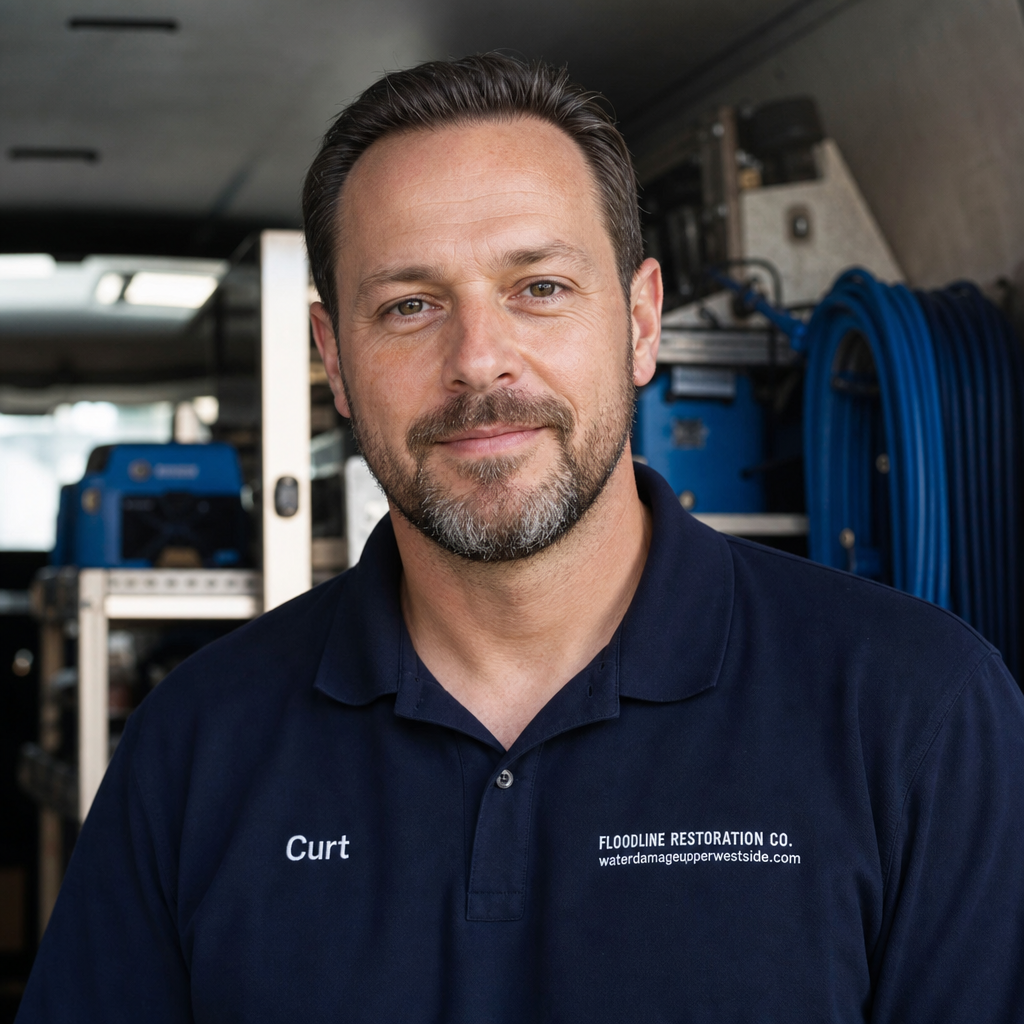
How Floodline Restoration Co. Was Born in Upper West Side
The first thing Curt Bowman noticed when he moved to Upper West Side was how many prewar buildings carried water marks that had never been properly addressed. Not the fresh kind from a burst pipe, but the pale tidelines from leaks that happened years ago, painted over, ignored. In a neighborhood where brick and steam risers are part of the deal, he saw homeowners getting sold full rip-outs when a targeted dry-out would have done the job, and other homeowners getting told a soggy ceiling was “dry enough” when the moisture meter said otherwise.
Floodline Restoration Co. came to Upper West Side because Curt kept hearing the same two stories: families waiting on adjusters while water wicked through plaster, and crews who showed up with extraction equipment but no plan for what happened after. He knew the brand’s model worked because it was built around a dispatch board, not a sales desk. A live dispatcher answers when someone calls, a certified crew gets on site, and the homeowner is handed a moisture map on day one with daily readings after that until the dry standard is hit. The line the water left is where we start. That means showing the homeowner and the carrier exactly what the meters read, every visit, until the numbers are right. No mystery, no oversell.
What Curt promised when this branch opened was simple: the same crew that dries your house is the crew that rebuilds it. Nobody inherits a job they never saw. That promise is what brought Floodline Restoration Co. to Upper West Side, and it’s the one we keep on every street from Morningside Heights down to Midtown West.
Curt Bowman’s Personal Connection to the Damage Restoration Trade
Curt Bowman got into this work the unglamorous way: he was the guy friends called when something went wrong at their place. A water heater let go in a co-op on Riverside Drive, and the owner was standing in an inch of water trying to figure out who to call first. Curt showed up with a wet/dry vac and a moisture meter, and for the next three hours, he worked the problem the way he’d been trained: find the water, track where it traveled, dry it to standard, document everything. By the time the sun came up, the water was gone. What stayed with him wasn’t the compliment; it was the realization that the homeowner had been about to call a company that would have charged her for a full gut when the damage never required it.
The trade got into Curt’s bones the way it gets into anyone who’s spent enough time in old buildings. You learn to read plaster the way some people read weather. A swelling baseboard in a Central Harlem brownstone tells you a supply line has been weeping for weeks. A cold spot on a wall in an East Harlem railroad flat tells you an exterior riser is holding condensation. The smell of wet lath has its own character, sweet and sour, and the smell of a dry wall after proper drying is almost clean. That contrast, wet to dry, is what Curt thinks about when someone asks him what he loves about the work. It’s not the damage; it’s the recovery. You see a house at its worst, and then you see it at its best, and you know you’re one of the reasons it got there.
What gets Curt out of bed is the job board. Every morning there’s a list of homes where people are worried, and every one of those worries has a physical answer: a reading, a measurement, an extraction, a dry standard. You can see your progress the way you can see a wall after it’s been patched and painted. If he weren’t doing this, Curt says he’d probably be restoring old furniture, which is the same instinct on a smaller scale: find what’s hidden, fix what’s broken, make it solid again.
Meet Curt Bowman - The Person Behind Every Job
Curt Bowman is the Owner & Founder who leads Floodline Restoration Co.’s Upper West Side branch. He came up through the trade the old way: working alongside journeymen who taught him that the job isn’t done until the reading says it’s done. He’s spent his career learning what water does inside a wall, how fire leaves its own water damage behind, and why mold spreads fastest where air doesn’t move. That experience comes from walking hundreds of water-damaged rooms, not from a training binder.
What separates Curt from a corporate franchise technician is that his name and his family’s reputation are attached to the outcome. He doesn’t hand off questions to a national help desk. He works with the crew, checks the job board, follows the moisture logs. Off the clock, Curt is a woodworker; he builds furniture in a small shop and has the same rule there as on a job site: measure twice, cut once, and don’t cover up a mistake with filler.
His commitment to Upper West Side homeowners is plain: every job gets the time it needs to be done right, and he stands behind the work. If it’s not right, we come back. No paperwork, no arguing.
Our Promise to Upper West Side Homeowners
The Keystone Standard is our promise, and it applies to water, fire and mold work: 90 days, in writing, no arguing. That’s not a slogan; it’s stamped on every job we close out. Four values hold it up, and we call them our K.E.Y.S.
Krafted right. Trained journeymen, proper materials, no shortcuts. We don’t fake a dry standard with a surface reading. We take daily recordings until the numbers say every wall cavity is dry, and we hand the log to the homeowner and the carrier.
Every time. The 400th job gets the care of the first. Curt has stood in enough restored kitchens to know that consistency is what homeowners want most. You don’t want a good crew on a good day; you want the same outcome every time.
Your home first. We work in your house the way we’d work in our mother’s house. That means floor protection, clear explanations, no surprises on the bill, and a written scope before work starts.
Standing behind it. If it’s not right, we come back. That’s the whole value. No fine print, no paperwork, no arguing.
Our Credentials
- State-licensed pros. Every pro working under our name is required to hold the license and insurance their state requires. We don’t ask homeowners to take our word for it; we show proof before the job starts.
- Insured and bonded. Every crew carries the coverage that protects your home and our people while work is underway. Coverage details are available before you sign anything.
- Years of local experience. We’ve worked in Upper West Side prewar buildings, postwar high-rises and everything between. That local experience means we know where water travels in a century-old riser chase and how long plaster takes to dry in a humid August.
- Direct insurance billing. We bill your carrier directly and coordinate with your adjuster, so you never play messenger between your insurance company and our crew.
Why these credentials matter when you’re hiring someone to work in your home: they mean you’re not betting your largest asset on a promise. A state license means the person in your house passed the state’s bar. Insurance and bonding mean you’re protected if something goes wrong. Direct billing with your carrier means the money conversation is handled by professionals instead of by you, standing in a wet hallway at 9 p.m., trying to explain line items to a claims rep.
Rooted in Upper West Side
This branch works the neighborhoods we know best: Upper West Side, Morningside Heights, Manhattan Valley, and up through West Harlem and Washington Heights. We know which buildings have steam risers that sweat in summer, which co-op boards require specific documentation before restoration starts, and which streets in Edgewater and Weehawken sit high enough to drain well after a storm. When we train new apprentices into journeymen, they learn those buildings. That’s the point: a company that plans to be in town in thirty years acts like it.
Written by Curt Bowman, Owner & Founder at Floodline Restoration Co., serving Upper West Side since 2010.